










After more than a decade of false starts, political delays and the successive exits of global energy majors, Kenya’s Turkana oil project is edging closer to reality. Gulf Energy E&P BV has secured a KSh 1.94 billion ($15 million) onshore drilling rig from the United Arab Emirates, marking the most significant operational step yet toward the company’s target of delivering first oil from the South Lokichar Basin by December 1, 2026. The acquisition is not merely a procurement exercise — it is a statement of intent from a Nairobi-based company that has staked its credibility, and a substantial amount of capital, on succeeding where a debt-laden British multinational could not.
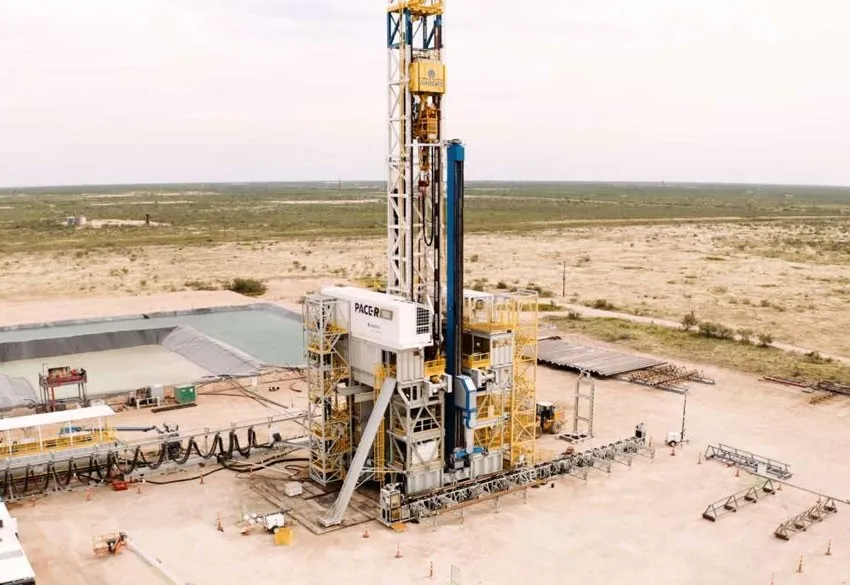
The GW70 rig, a 1,500-horsepower onshore drilling unit secured from the Great Wall Drilling Company (GWDC) under a long-term lease arrangement, is currently stationed in Abu Dhabi’s Al Dhafra region, where it has previously been deployed on projects for the Abu Dhabi National Oil Company (ADNOC). Gulf Energy says the rig is being prepared for shipment from Abu Dhabi to the Port of Mombasa before the end of March, with commissioning and acceptance testing planned for June and first drilling — known as “spud” — scheduled to commence in early July.
Build the future you deserve. Get started with our top-tier Online courses: ACCA, HESI A2, ATI TEAS 7, HESI EXIT, NCLEX-RN, NCLEX-PN, and Financial Literacy. Let Serrari Ed guide your path to success. Enroll today.
The GW70: A Rig With Proven Pedigree
The choice of the GW70 reflects a deliberate strategy by Gulf Energy to source a technically proven and operationally reliable asset rather than a lower-cost but untested alternative. According to Business Radar, the rig is a subsidiary of China National Petroleum Corporation, giving it the engineering and operational depth of one of the world’s largest state-owned energy companies. Its track record on ADNOC projects in Abu Dhabi — one of the most technically demanding and safety-conscious operating environments in the global oil industry — provides reassurance to both investors and Kenyan regulators.
Gulf Energy Chairman Francis Njogu framed the procurement in unambiguous terms: “At Gulf Energy, it’s all systems go in the journey to deliver first oil by December 1 this year. The delegation in Abu Dhabi has witnessed firsthand the advanced state of GW70, an integrated onshore oil field drilling rig which we recently secured.” Njogu also noted that securing the rig in a globally tight market — where demand for quality onshore drilling equipment remains elevated — represents a significant logistical and commercial achievement in its own right, one that demonstrates the company’s readiness to move at pace.
The contractual structure with GWDC is notably comprehensive: Gulf Energy has arranged for the company to deliver, commission and operate the rig in the South Lokichar Basin under a performance-based model that includes an active skills transfer component. This ensures that Kenyan technical personnel receive hands-on training and capacity building alongside international operators — a requirement that reflects both local content obligations and the government’s long-term goal of building domestic petroleum engineering expertise.
Government Inspection and Technical Validation
The rig procurement has proceeded under close government oversight. A high-level technical delegation — comprising officials from the State Department for Petroleum at the Ministry of Energy and Petroleum, the Energy and Petroleum Regulatory Authority (EPRA), and the Turkana County Government — recently conducted a formal inspection and familiarisation tour of the GW70 at the Al Dhafra facility in Abu Dhabi. The delegation was led by Turkana County Secretary Dr. Amb. Richard Ekai and Director for Climate Change George Emase, following a formal delegation by Governor Dr. Jeremiah Ekamais Lomorukai.
The inspection covered operational preparedness, safety mechanism verification, environmental compliance and corporate skills transfer commitments. “During the inspection, the team carried out a detailed technical evaluation of the rig’s operational systems and safety mechanisms. Recommendations were issued to fine-tune readiness and guarantee seamless performance once the rig is mobilised to Turkana,” said a communique from Turkana County Government officials. The joint public-private oversight model signals an elevated level of governmental engagement with the project that has been largely absent during the decade-plus of delays under previous operators.
FDP Ratification: The Regulatory Hurdle Still to Clear
Despite the operational momentum generated by the rig acquisition, Gulf Energy is still awaiting a critical regulatory milestone: parliamentary ratification of its Field Development Plan (FDP) for Blocks T6 and T7 in the South Lokichar Basin. The FDP, which outlines a phased production rollout targeting initial output of approximately 20,000 barrels per day (bpd) scaling to 50,000 bpd in later phases, was approved by Cabinet Secretary for Energy Opiyo Wandayi in November 2025 and forwarded to Parliament for ratification under Article 71 of the Constitution and Section 31 of the Petroleum Act.
The ratification requirement is not a formality — it represents Kenya’s constitutional mechanism for ensuring parliamentary oversight of large-scale natural resource agreements. Gulf Energy confirmed before a joint session of Kenya’s parliamentary energy committees in February 2026 that it intends to invest approximately $6 billion in the development of the South Lokichar project. The FDP covers 326 million barrels of recoverable reserves across Blocks T6 and T7 — a subset of the broader basin estimate — with total capital investment projected at $6.1 billion over the 25-year contract period.
Njogu has been direct about the timeline pressures involved: “We are approaching this FDP as Kenyans with a view to creating as many jobs and business opportunities for Kenyans, starting with our Turkana host community. We are very ready, and we have set 1st December 2026 as a target to produce oil, and we hope to expeditiously secure the FDP ratification.” The company says it expects regulatory and legislative approvals to be concluded in time and has allocated capital ahead of ratification — a calculated risk that underscores just how seriously Gulf Energy is treating the December 2026 deadline.
One decision can change your entire career. Take that step with our Online courses in ACCA, HESI A2, ATI TEAS 7, HESI EXIT, NCLEX-RN, NCLEX-PN, and Financial Literacy. Join Serrari Ed and start building your brighter future today.
The Fiscal Architecture: Revised Terms to Unlock Investment
One of the most significant enablers of Gulf Energy’s investment decision is the government’s revision of the Production Sharing Contract (PSC) governing the South Lokichar project. Kenya has granted Gulf Energy and its contractors a package of tax exemptions and preferential terms that materially improve the project’s economics compared to the terms originally negotiated with Tullow Oil.
Under the revised PSC, Gulf Energy is exempted from value-added tax on petroleum-related goods and services, import declaration fees, railway development levies, and withholding taxes on relevant services and interest payments. The original deal required developers to pay 16% VAT, 5% and 5.625% withholding tax on local and imported goods respectively, a 2% railway development levy and a 2.5% import declaration fee — a combined fiscal burden that contributing to making Tullow’s project economics unworkable.
Critically, the revised terms also allow Gulf Energy to recover up to 85% of annual crude output as cost oil annually, up from 65% under the original contract. This accelerated cost recovery mechanism dramatically shortens the time it takes for the operator to recoup its exploration and production expenditures before the government’s profit share kicks in — a structural change that improves the project’s internal rate of return and makes the $6.1 billion investment case significantly more compelling to international co-financiers.
The government’s revenue projections remain substantial despite the more favourable terms for the developer. Kenya stands to earn between $1.05 billion and $2.9 billion depending on oil prices — at $60 and $70 per barrel respectively — over the project’s life. Profit-sharing arrangements provide for a minimum 20% government entitlement in the early stages, climbing to 75% at peak production where output is expected to exceed 150,000 bpd, with a windfall tax of 26% applied on oil above $50 per barrel.
From Tullow to Gulf: A Decade of Delay Gives Way to Domestic Ambition
The story of South Lokichar cannot be fully understood without grasping the weight of what has come before. Tullow Oil made its initial discovery in the basin nearly fifteen years ago, generating significant excitement about Kenya’s potential to join the ranks of East Africa’s oil producers. But the project became a cautionary tale in frontier energy development: financing structures collapsed, partners exited, cost projections escalated, and the project’s field development plan was ultimately rejected by Kenya’s Energy Ministry for lack of adequate capital backing.
TotalEnergies and Africa Oil had already exited the project in 2023 when financing for the multi-billion-dollar plan fell apart. Tullow was left holding the bag on a project it could no longer afford to carry alone. In April 2025, Tullow announced it had agreed to sell its entire Kenyan portfolio to Gulf Energy for a minimum consideration of $120 million — a transaction structured in three tranches: $40 million on completion, $40 million at FDP approval or June 2026, and $40 million payable over five years from the third quarter of 2028. The formal Sale and Purchase Agreement was signed on July 21, 2025, with Tullow Overseas Holdings BV as seller and Auron Energy E&P Limited — an affiliate of Gulf Energy — as purchaser.
The deal gave Gulf Energy 100% of the shares in Tullow Kenya BV, encompassing the company’s entire working interests in Kenya. For Tullow, the exit was framed as a balance sheet priority: combined with the sale of its Gabonese assets, the disposal was expected to generate $380 million in cash proceeds in 2025. For Kenya, the transaction represented a rare second chance — the hand-off from a debt-burdened multinational to a domestic player with no legacy debt and a stated commitment to deliver what its predecessor could not.
Gulf Energy now holds full operating interest in Block T7 while also having acquired the upstream assets across the broader Blocks 10BA, 10BB and 13T that held Tullow’s original discoveries — blocks estimated to contain approximately 463 million barrels of potentially extractable resources, according to African Law & Business.
Export Infrastructure: Roads First, Pipeline Later
While Gulf Energy’s drilling ambitions are now underpinned by a secured rig and a clear operational timeline, the export infrastructure question remains more complex. The long-term vision for South Lokichar crude export centres on the Lokichar-Lamu Crude Oil Pipeline — an approximately 821-kilometre pipeline under the LAPSSET Corridor project that would link the Turkana oilfields to the Port of Lamu on Kenya’s Indian Ocean coast, with a capacity of up to 89,000 barrels per day. The LAPSSET Corridor Development Authority describes this as the first-phase pipeline configuration, with the broader infrastructure capable of transporting up to 120,000 barrels per day upon full development.
However, the pipeline remains in planning stages and will not be ready by December 2026. Initial crude exports will therefore rely on road transport — a model that echoes Tullow Oil’s pilot export programme in 2019, when approximately 200,000 barrels were trucked to Mombasa for export as a proof-of-concept exercise. The Permanent Secretary for Petroleum confirmed that initial oil will be transported by road, with Kenya Petroleum Refineries Limited — recently acquired by Kenya Pipeline Company — serving as a storage facility for export cargoes. Gulf Energy has also separately lobbied the government to extend the railway from Eldoret to South Lokichar, roughly 200 kilometres, which would significantly reduce per-barrel logistics costs at scale compared to heavy truck traffic.
Kenya’s Broader Energy and Fiscal Context
The timing of the rig announcement carries significance beyond Gulf Energy’s operational calendar. Kenya is grappling with a challenging macroeconomic environment characterised by elevated public debt, a tight fiscal position and pressure on foreign exchange reserves. Successfully delivering commercial oil production from the South Lokichar Basin would represent a transformative diversification of the country’s export base — currently dominated by tea, horticulture and services — while generating direct government revenue and foreign exchange inflows that would ease pressure on the current account.
According to analysis by Ecofin Agency, the first development phase is expected to produce about 20,000 bpd, scaling to 50,000 bpd in later stages. At 50,000 bpd and an oil price of $65 per barrel — the midpoint of the government’s projection range — annual gross revenue from the basin would approach $1.2 billion, a figure that represents a material addition to Kenya’s export earnings.
Turkana County stands to benefit directly through the petroleum revenue-sharing framework established under Kenya’s Petroleum Act, which provides for allocations to host communities, the county government and the national government. For Turkana — one of Kenya’s most historically marginalised regions — the prospect of meaningful revenue flows and employment opportunities from the oil sector has been a long-deferred aspiration. Gulf Energy has committed to a local content strategy designed to maximise employment and business opportunities for Turkana County residents, framing this as central to the project’s social licence to operate.
A Narrowing Window: The Global Energy Context
Gulf Energy’s Chairman has been candid about the urgency that frames the entire project. In remarks to lawmakers, Njogu noted that “the current opportunity exists against the backdrop of a rapidly evolving global energy landscape, where the window for financing new upstream oil projects is narrowing.” International financial institutions are tightening criteria for fossil fuel project financing in response to climate commitments, and new frontier hydrocarbon projects face mounting reputational and capital-access headwinds that did not exist when Tullow first drilled in Turkana.
“Frontier oil projects such as South Lokichar must demonstrate strong economics, robust fiscal stability and timely decision-making to remain competitive for capital,” Njogu told lawmakers. The message is directed simultaneously at Kenyan legislators, potential co-financiers and international observers: delay is not a neutral option. Every month without parliamentary ratification, every logistical complication with the rig’s arrival, narrows the window for Kenya to establish itself as a credible oil producer before the global energy transition makes frontier upstream projects increasingly unfinanceable.
With the GW70 rig now secured, a government delegation having completed its inspection in Abu Dhabi, and a logistics chain being assembled to bring the equipment to Mombasa by late March, Gulf Energy has demonstrated a level of operational seriousness that has been conspicuously absent from the South Lokichar story for fifteen years. Whether Kenya can match that seriousness with the timely parliamentary action needed to ratify the FDP will determine whether December 2026 marks the beginning of a new chapter in Kenya’s economic history — or another entry in a long list of near-misses.
Ready to take your career to the next level? Join our Online courses: ACCA, HESI A2, ATI TEAS 7 , HESI EXIT , NCLEX – RN and NCLEX – PN, Financial Literacy!🌟 Dive into a world of opportunities and empower yourself for success. Explore more at Serrari Ed and start your exciting journey today! ✨
Track GDP, Inflation and Central Bank rates for top African markets with Serrari’s comparator tool.
See today’s Treasury bonds and Money market funds movement across financial service providers in Kenya, using Serrari’s comparator tools.
photo source: Google
By: Montel Kamau
Serrari Financial Analyst
24th February, 2026
Article, Financial and News Disclaimer
The Value of a Financial Advisor
While this article offers valuable insights, it is essential to recognize that personal finance can be highly complex and unique to each individual. A financial advisor provides professional expertise and personalized guidance to help you make well-informed decisions tailored to your specific circumstances and goals.
Beyond offering knowledge, a financial advisor serves as a trusted partner to help you stay disciplined, avoid common pitfalls, and remain focused on your long-term objectives. Their perspective and experience can complement your own efforts, enhancing your financial well-being and ensuring a more confident approach to managing your finances.
Disclaimer: This article is for informational purposes only and does not constitute financial advice. Readers are encouraged to consult a licensed financial advisor to obtain guidance specific to their financial situation.
Article and News Disclaimer
The information provided on www.serrarigroup.com is for general informational purposes only. While we strive to keep the information up to date and accurate, we make no representations or warranties of any kind, express or implied, about the completeness, accuracy, reliability, suitability, or availability with respect to the website or the information, products, services, or related graphics contained on the website for any purpose. Any reliance you place on such information is therefore strictly at your own risk.
www.serrarigroup.com is not responsible for any errors or omissions, or for the results obtained from the use of this information. All information on the website is provided on an as-is basis, with no guarantee of completeness, accuracy, timeliness, or of the results obtained from the use of this information, and without warranty of any kind, express or implied, including but not limited to warranties of performance, merchantability, and fitness for a particular purpose.
In no event will www.serrarigroup.com be liable to you or anyone else for any decision made or action taken in reliance on the information provided on the website or for any consequential, special, or similar damages, even if advised of the possibility of such damages.
The articles, news, and information presented on www.serrarigroup.com reflect the opinions of the respective authors and contributors and do not necessarily represent the views of the website or its management. Any views or opinions expressed are solely those of the individual authors and do not represent the website's views or opinions as a whole.
The content on www.serrarigroup.com may include links to external websites, which are provided for convenience and informational purposes only. We have no control over the nature, content, and availability of those sites. The inclusion of any links does not necessarily imply a recommendation or endorsement of the views expressed within them.
Every effort is made to keep the website up and running smoothly. However, www.serrarigroup.com takes no responsibility for, and will not be liable for, the website being temporarily unavailable due to technical issues beyond our control.
Please note that laws, regulations, and information can change rapidly, and we advise you to conduct further research and seek professional advice when necessary.
By using www.serrarigroup.com, you agree to this disclaimer and its terms. If you do not agree with this disclaimer, please do not use the website.
www.serrarigroup.com, reserves the right to update, modify, or remove any part of this disclaimer without prior notice. It is your responsibility to review this disclaimer periodically for changes.
Serrari Group 2025