Kenya’s long-deferred ambition to join Africa’s oil-producing nations has received a dramatic boost as Gulf Energy E&P BV confirmed a US$6 billion (KSh774 billion) investment commitment for the South Lokichar Oil Project in Turkana County, setting an ambitious target of December 1, 2026 for first crude oil production—nearly fifteen years after the original discovery by Tullow Oil.
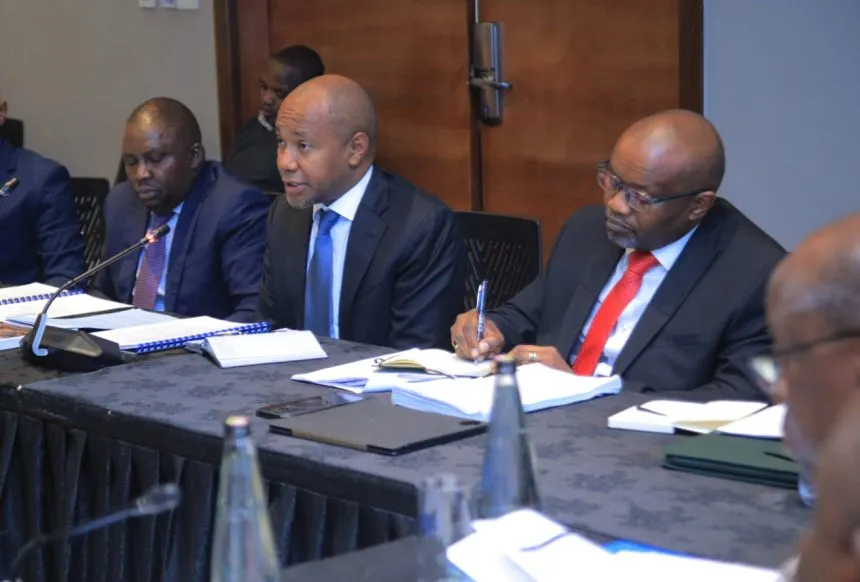
Appearing before a Joint Parliamentary Committee on Energy session on February 13, Gulf Energy Chairman Francis Njogu described the undertaking as “the single most significant private-sector-driven upstream petroleum investment in Kenya’s history,” emphasizing the company’s commitment to maintaining world-class operational standards while creating employment opportunities and business prospects for Kenyan citizens, particularly communities in Turkana County.
The announcement marks a pivotal moment for Kenya’s extractives sector and represents a remarkable turnaround for a project that had languished for years under previous operator Tullow Oil, which faced repeated setbacks including partner exits, financing difficulties, and regulatory challenges before ultimately selling its entire Kenyan portfolio to Gulf Energy’s affiliate Auron Energy E&P Limited for US$120 million in September 2025.
Build the future you deserve. Get started with our top-tier Online courses: ACCA, HESI A2, ATI TEAS 7, HESI EXIT, NCLEX-RN, NCLEX-PN, and Financial Literacy. Let Serrari Ed guide your path to success. Enroll today.
From Tullow’s Exit to Gulf Energy’s Ambitious Timeline
The South Lokichar project’s journey from discovery to potential production exemplifies both the enormous potential and substantial challenges of developing oil resources in frontier African markets. Tullow Oil began exploring Kenya’s petroleum prospects in 2010, partnering with Africa Oil and Centric Energy to acquire interests in five onshore licenses across blocks in Turkana County.
The British explorer’s first significant breakthrough arrived in early 2012 with the discovery of oil at the Ngamia-1 well, marking Kenya’s first confirmed petroleum find and generating substantial excitement about the country’s transition toward oil-producing status. Subsequent exploration and appraisal activities across blocks 10BB, 13T, and 10BA confirmed commercially viable reserves, with the disposed assets holding approximately 463 million barrels of contingent resources as of December 2024.
However, transforming these discoveries into commercial production proved far more challenging than initial projections suggested. The project encountered a cascade of interconnected obstacles including infrastructure inadequacy, regulatory complexities, community engagement challenges, and most critically, difficulty securing the substantial financing required for field development and pipeline construction to export facilities.
The situation deteriorated significantly in 2023 when Tullow’s joint venture partners TotalEnergies and Africa Oil withdrew from the project after financing for the multi-billion-dollar development plan collapsed, leaving Tullow as sole operator facing mounting financial pressure. Kenya’s energy ministry subsequently rejected Tullow’s Field Development Plan for lack of adequate capital backing, effectively forcing the British company’s exit after 14 years of investment and exploration activity.
“After 14 years in Kenya, Tullow leaves behind strong assets, and we are delighted to pass the baton to Gulf Energy, a capable Kenyan company in the lead up to first oil, making Kenya an oil-producing country,” said Rahul Dhir, Tullow’s CEO at the time of the transaction completion, as the company received the first US$40 million tranche of the US$120 million purchase price.
Gulf Energy’s Capital Commitment and Financial Capacity
Gulf Energy’s emergence as operator represents more than a simple change in ownership—it signals a fundamental shift in the project’s trajectory backed by substantial indigenous capital and local market expertise. Francis Njogu emphasized during parliamentary testimony that Gulf Energy E&P BV is “an indigenously owned company with strong financial resources to support capital-intensive projects such as the South Lokichar Oil Project.”
The company has established robust financial partnerships and maintains active lines of credit with leading local and international banking and financial institutions, positioning it to deploy the estimated US$6.1 billion in total projected capital investment over the project’s 25-year contract life. This figure encompasses infrastructure development, drilling operations, processing facilities, pipeline construction, and associated logistics required to transform Turkana’s South Lokichar basin from exploration prospect to producing asset.
Gulf Energy Ltd and its affiliated companies constitute a leading energy and infrastructure-focused group engaged in oil and gas trading, power generation, and industrial construction. As the largest supplier of refined petroleum products into Kenya and inland East African markets, Gulf Energy plays a critical role in the petroleum supply chain across the region and possesses the operational experience, technical capabilities, and market relationships necessary to advance this complex development.
“At Gulf Energy, we are approaching this FDP as Kenyans with a view to creating as many jobs and business opportunities for Kenyans, starting with our Turkana host community, as we are committed to positioning Kenya as an oil-producing country,” Njogu stated, articulating the company’s philosophy of aligning commercial objectives with national development priorities and community benefit.
Field Development Plan and Production Strategy
The Field Development Plan submitted by Gulf Energy to Kenya’s Ministry of Energy outlines a phased approach to commercial development of oil discoveries in blocks T6 and T7 within the South Lokichar basin. According to details presented to parliamentary committees, the development strategy targets initial production capacity of approximately 20,000 barrels per day, with potential to ramp up to 50,000 barrels per day in subsequent phases as additional wells are brought online and processing capacity expands.
Industry analyses suggest that at full development, the South Lokichar field could achieve production rates between 60,000 and 100,000 barrels daily, though reaching these levels will require sustained capital deployment, technical optimization, and potentially additional discoveries or improved recovery from existing reservoirs. Recoverable reserves are estimated at approximately 560 million barrels based on current geological understanding, though this figure may be revised as production experience accumulates and additional appraisal work is completed.
The FDP and associated Production Sharing Agreements present what Njogu characterized as “a technically mature and strategically phased plan to unlock Kenya’s largest onshore petroleum development, combining economic rationale, risk reduction, and clear scheduling.” The phased approach allows Gulf Energy to manage capital deployment incrementally, validate technical assumptions through operational experience, and adjust development plans based on market conditions and reservoir performance.
Crucially, the development plan incorporates substantial fiscal incentives and structural adjustments designed to improve project economics and accelerate investor returns. Energy and Petroleum Cabinet Secretary Opiyo Wandayi approved revisions to the Production Sharing Contract framework in November 2025, increasing the percentage of annual crude production that Gulf Energy can use to recover capital expenses before sharing profits with the state from 65% to 85%, allowing faster cost recovery that enhances project bankability.
Fiscal Framework and Revenue Projections for Kenya
Under the Petroleum Sharing Contract framework, the Kenyan state retains full ownership and stewardship of the petroleum resource while Gulf Energy provides technical capability and risk capital to bring discoveries into production. This structure preserves national resource sovereignty while leveraging private sector expertise and financing to overcome the substantial barriers that prevented previous attempts at commercialization.
Kenya stands to gain significant fiscal and economic benefits from the South Lokichar development despite the enhanced cost recovery provisions granted to Gulf Energy. Government projections presented during parliamentary hearings indicate potential state earnings between US$1.05 billion and US$2.9 billion over the project’s operational life, with actual revenues heavily dependent on global oil price levels during the production period.
At US$60 per barrel—a conservative baseline reflecting recent market volatility and energy transition pressures—Kenya could realize approximately US$1.05 billion (KSh136 billion) in government take through production sharing, royalties, and associated fiscal mechanisms. Should oil prices stabilize at US$70 per barrel, a level closer to recent historical averages, state revenues could reach US$2.9 billion (KSh377 billion), representing a substantial contribution to national fiscal resources over the 25-year contract period.
Beyond direct petroleum revenues, the project is expected to generate significant indirect economic benefits through employment creation, local content procurement, infrastructure development, skills transfer, and catalytic effects on auxiliary sectors including construction, logistics, engineering services, and financial intermediation. Turkana County, historically one of Kenya’s most marginalized regions with limited economic opportunities, stands to benefit disproportionately from project-related activity if local content commitments are effectively implemented.
However, extractive projects globally face persistent scrutiny regarding environmental impact, equitable revenue distribution, community displacement, and sustainable development outcomes. Civil society organizations and local communities will likely maintain close oversight of the South Lokichar development to ensure that promised benefits materialize and that potential negative externalities are adequately mitigated through robust environmental management and social investment programs.
Infrastructure Challenges and Export Pathway Solutions
One of the most significant obstacles to commercializing Kenya’s Turkana oil discoveries has been the absence of permanent pipeline infrastructure to transport crude from the remote South Lokichar basin to export facilities at the coast. Previous development scenarios envisioned construction of an approximately 820-kilometer heated pipeline linking Lokichar to Lamu Port as part of the broader LAPSSET (Lamu Port-South Sudan-Ethiopia Transport) Corridor program.
This proposed Lokichar-Lamu Crude Oil Pipeline would traverse Turkana, Samburu, Isiolo, Meru, Garissa, and Lamu counties, requiring sophisticated heating technology to maintain viscosity of the waxy, paraffinic crude characteristic of Kenya’s petroleum resources. The pipeline was designed to accommodate not only Kenyan production but potentially crude from South Sudan and Uganda as well, creating a regional export corridor that could transport up to 80,000 barrels per day to international markets via the new deepwater port facility at Lamu.
However, the LAPSSET pipeline component has faced persistent delays driven by financing constraints, environmental and social assessment complexities, land acquisition challenges, and shifting regional dynamics as partner countries pursue alternative infrastructure solutions. Uganda opted to develop its own export pipeline through Tanzania rather than participate in the LAPSSET corridor, while Ethiopia’s commitment has wavered due to partnerships with Djibouti for alternative pipeline infrastructure.
Recognizing these realities, Gulf Energy’s initial production strategy adopts a pragmatic approach to export logistics. According to statements from the State Department for Petroleum, first oil will be transported by road to coastal storage facilities rather than awaiting pipeline completion. The Kenya Petroleum Refineries Limited facility, recently acquired by Kenya Pipeline Company, will serve as storage infrastructure for accumulating crude volumes ahead of export shipments.
“We are ensuring that all the infrastructure especially in northern Kenya is improved,” noted Principal Secretary Mohammed Liban, adding that plans for construction of the 895-kilometer crude oil pipeline linking Turkana fields to Lamu Port remain in progress despite the decision to commence production using road transport. This interim solution allows Gulf Energy to begin generating revenue and validating reservoir performance while permanent pipeline infrastructure advances through planning, financing, and construction phases.
Lamu Port Development and Regional Connectivity
The broader LAPSSET corridor initiative represents one of East Africa’s most ambitious infrastructure programs, encompassing port development, standard gauge railway, highway networks, airports, and pipeline infrastructure designed to create an alternative transport and economic corridor linking Kenya, Ethiopia, and South Sudan. The project has been designated as a Presidential Infrastructure Champion Initiative by the African Union and carries a total estimated cost of approximately US$24.5 billion.
Lamu Port at Manda Bay forms the coastal anchor of this corridor, with plans calling for eventual construction of 32 berths along 6 kilometers of coastline capable of accommodating ultra-large container vessels and specialized cargo operations. Transport Cabinet Secretary Davis Chirchir recently confirmed full operationalization of the port, marking a significant milestone as Phase I berths began handling commercial cargo with projections targeting 1.2 million TEUs (twenty-foot equivalent units) by 2027.
“The Port integrated with airports, rail, oil infrastructure, and resort cities, making it a cornerstone of Kenya’s modernization strategy,” Chirchir stated after witnessing three cargo ships simultaneously offloading goods, describing the moment as “a powerful signal” that the LAPSSET vision is advancing despite years of skepticism about the megaproject’s viability.
For Kenya’s petroleum ambitions, Lamu Port’s development provides critical export infrastructure that would otherwise require billions of dollars in dedicated investment. Oil terminal facilities for loading and offloading tankers form part of the port’s master plan, though specific construction timelines remain subject to coordination between port authorities, petroleum sector regulators, and private operators including Gulf Energy.
One decision can change your entire career. Take that step with our Online courses in ACCA, HESI A2, ATI TEAS 7, HESI EXIT, NCLEX-RN, NCLEX-PN, and Financial Literacy. Join Serrari Ed and start building your brighter future today.
Local Content Strategy and Community Engagement
Gulf Energy has emphasized local content, community engagement, and alignment of mutual benefits as central pillars of its approach to the South Lokichar development. The company has developed what it describes as a “ring-fenced Local Content Strategy” designed to maximize participation of Kenyan businesses and workers in procurement, subcontracting, employment, and capacity building associated with the project.
“The South Lokichar project and the FDP we have presented to the Government present a technically mature pathway to unlock Kenya’s largest onshore petroleum development in a shared prosperity model,” Njogu stated, articulating the company’s vision of petroleum development that generates broadly distributed benefits rather than concentrating economic gains among a narrow group of stakeholders.
Company CEO Paul Limoh and Country Manager Franklin Juma emphasized during parliamentary proceedings that the project will create extensive employment opportunities, business prospects, and socio-economic benefits, particularly for Turkana County’s host community. Gulf Energy has committed to social investments intended to ensure long-term prosperity for Turkana residents, addressing historical marginalization through targeted development interventions that extend beyond direct project employment.
These commitments reflect lessons learned from petroleum developments elsewhere in Africa, where extractive projects have sometimes generated substantial revenues for national governments and operating companies while delivering limited tangible benefits to communities hosting production infrastructure. Environmental degradation, social disruption, inadequate compensation for land use, limited local employment, and exclusion from procurement opportunities have sparked conflicts between communities and operators across the continent.
Kenya’s legal and regulatory framework for petroleum development includes specific provisions requiring local content plans, environmental management protocols, community development agreements, and benefit-sharing mechanisms. Effective implementation and enforcement of these requirements will substantially determine whether the South Lokichar project achieves its stated objective of shared prosperity or replicates problematic patterns observed in other jurisdictions.
Global Energy Transition Context and Investment Window
Gulf Energy’s aggressive timeline for bringing the Turkana project into production reflects not only commercial considerations but also strategic awareness of a rapidly evolving global energy landscape. Njogu explicitly addressed this context during parliamentary testimony, noting that “the current opportunity exists against the backdrop of a rapidly evolving global energy landscape, where the window for financing new upstream oil projects is narrowing.”
International lenders are progressively tightening investment criteria for hydrocarbon projects in alignment with global climate commitments and accelerating energy transition imperatives. Capital is increasingly being redirected toward lower-carbon energy systems, renewable infrastructure, and technologies supporting decarbonization objectives rather than traditional fossil fuel developments. This trend creates particular challenges for frontier oil provinces like Kenya that are attempting to monetize petroleum discoveries relatively late in the global oil development cycle.
“As a result, frontier oil projects such as South Lokichar must demonstrate strong economics, robust fiscal stability, and timely decision-making to remain competitive for capital. Any prolonged uncertainty risks placing Kenya at a disadvantage relative to other emerging oil provinces that are actively adjusting their fiscal terms to secure investment before this window closes,” Njogu explained, articulating the strategic imperative for rapid project advancement.
This reality helps explain both the enhanced fiscal terms granted to Gulf Energy—including the elevated cost recovery threshold—and the compressed timeline targeting first production by December 2026, just over one year from the parliamentary approval process. While ambitious, the schedule reflects recognition that delays compound risks not only through escalating development costs but also through potential foreclosure of financing options as climate-focused investment policies become increasingly restrictive.
Parliamentary Approval Process and Regulatory Pathway
The Joint Parliamentary Committee on Energy, co-chaired by David Gikaria (Chairman of the National Assembly’s Departmental Committee on Energy) and William Kisang (Vice Chairperson of the Senate Standing Committee on Energy), is conducting public participation exercises and technical review of the Field Development Plan and Production Sharing Agreements ahead of ratification deliberations.
Parliamentary approval represents a critical regulatory milestone that Gulf Energy must secure before proceeding to Final Investment Decision and commencing major capital deployment for field infrastructure, drilling campaigns, and production facilities. The approval process provides opportunity for legislative oversight of fiscal terms, environmental safeguards, local content provisions, and revenue-sharing mechanisms, ensuring that agreements align with national interests and comply with Kenya’s legal framework for petroleum development.
Parliament is expected to deliberate on the FDP and PSCs before deciding on ratification in the coming weeks, according to statements from government officials and Gulf Energy representatives. The compressed timeline reflects both the company’s eagerness to advance the project and government recognition of the strategic importance of demonstrating progress on petroleum commercialization after years of disappointment and false starts.
Energy Cabinet Secretary Opiyo Wandayi has publicly expressed confidence that production will commence in 2026, signaling government support for expedited approval processes. The formation of a 33-member First Oil Technical, Commercial and Legal Working Committee mandated to fast-track full field development, negotiate final agreements, and prepare Kenya’s roadmap for crude oil exports demonstrates institutional commitment to overcoming bureaucratic obstacles that previously hindered project advancement.
Implications for Kenya’s Energy Sector and Economic Development
Successful development of the South Lokichar Oil Project would represent a transformative milestone for Kenya’s energy sector and broader economic trajectory. Commercial oil production would diversify the country’s energy portfolio, potentially reduce long-term reliance on imported refined petroleum products depending on domestic refining strategy and export decisions, and establish Kenya within the ranks of oil-producing nations in East Africa alongside Uganda, South Sudan, and potentially Tanzania.
For Kenya’s fiscal position, petroleum revenues—while subject to significant volatility based on global price movements—could provide welcome supplementary resources for infrastructure investment, debt servicing, and development expenditure. The projected US$1.05 billion to US$2.9 billion in government take over the project’s lifetime, while substantial, represents a relatively modest contribution to Kenya’s annual budget given the extended timeframe. However, demonstration effects and infrastructure legacy could prove more valuable than direct revenues if successful petroleum development catalyzes additional exploration activity and proves the viability of Kenya’s sedimentary basins.
The project’s success or failure will also influence Kenya’s attractiveness as a destination for petroleum investment more broadly. Numerous exploration blocks across the country remain underdeveloped or underexplored. Demonstrating that Kenya can successfully transition discovered resources into commercial production under attractive fiscal terms and within reasonable timeframes could stimulate renewed exploration interest, potentially unlocking additional petroleum provinces and expanding the sector’s contribution to national development.
However, petroleum development also carries risks beyond immediate operational and environmental considerations. Resource curse dynamics—whereby countries rich in natural resources paradoxically experience slower economic growth, weaker governance, and higher conflict incidence than resource-poor counterparts—represent a well-documented phenomenon requiring active policy countermeasures through transparent revenue management, diversified economic development strategies, and robust institutional frameworks.
Regional Competitive Context and East African Oil Development
Kenya’s petroleum ambitions unfold within a broader regional context of accelerating oil and gas development across East Africa. Uganda has made substantial progress toward commercial production through the Lake Albert development, with TotalEnergies and China National Offshore Oil Corporation advancing the Tilenga and Kingfisher projects alongside construction of the 1,443-kilometer East African Crude Oil Pipeline to Tanzania’s coast.
South Sudan, despite producing oil for years, faces persistent challenges related to internal conflict, infrastructure damage, and dependence on export routes through Sudan that have proven vulnerable to political disputes. The potential for South Sudan’s crude to access international markets via the LAPSSET corridor and Lamu Port could provide strategic diversification, though political instability and security concerns continue constraining the country’s petroleum sector development.
Tanzania is pursuing both offshore gas development and positioning itself as an export corridor for Ugandan crude, potentially competing with Kenya’s ambitions to serve as a regional energy hub. Mozambique, while not in East Africa proper, is developing massive offshore gas resources that could transform regional energy dynamics and potentially compete for investment capital and technical resources with petroleum projects elsewhere on the continent.
This competitive environment reinforces the urgency articulated by Gulf Energy regarding timely advancement of the South Lokichar project. Countries that successfully bring petroleum resources into production establish operational track records, build technical capabilities, develop supporting ecosystems of service providers and contractors, and position themselves to attract follow-on investment more readily than jurisdictions where projects languish in planning phases indefinitely.
Environmental and Social Governance Considerations
Gulf Energy has emphasized its commitment to operating “transparently, safely, and in full compliance with Kenyan legislation and international best practices,” recognizing that social license to operate and environmental stewardship will prove critical to project sustainability. The company’s statements acknowledge that technical and commercial success alone cannot ensure long-term viability if environmental damage or community conflicts undermine stakeholder support.
Turkana County’s arid ecology, pastoralist livelihood systems, and vulnerable populations create particular sensitivities around petroleum development impacts. Water resource management, land use conflicts between pastoral activities and industrial infrastructure, biodiversity protection, waste management, and emissions control require careful attention to avoid irreversible environmental degradation or social disruption.
Climate change considerations add additional complexity, as Turkana communities already face mounting pressures from increasing temperatures, changing precipitation patterns, and ecosystem stress. Petroleum development simultaneously contributes to global emissions driving climate change while potentially providing financial resources that could support climate adaptation investments if appropriately managed.
International environmental advocacy organizations and local civil society groups will likely maintain vigilant oversight of the South Lokichar development, documenting environmental impacts, monitoring compliance with regulatory requirements, and advocating for community rights and environmental protection. This scrutiny, while sometimes perceived as burdensome by project operators, ultimately serves to strengthen governance, improve environmental performance, and ensure that development proceeds in socially and environmentally responsible manner.
Outlook and Critical Success Factors
Gulf Energy’s US$6 billion investment commitment and December 2026 production target represent an audacious bet on Kenya’s petroleum potential and the company’s ability to overcome obstacles that defeated previous operators. Success will require exceptional execution across multiple dimensions including technical operations, stakeholder management, regulatory navigation, financing deployment, infrastructure development, and market engagement.
Parliamentary ratification of the Field Development Plan and Production Sharing Agreements represents the immediate critical milestone. Assuming approval is secured in coming weeks as anticipated, Gulf Energy will face the enormous challenge of deploying billions of dollars in capital, constructing production infrastructure, drilling development wells, establishing processing facilities, and implementing export logistics within an extraordinarily compressed timeframe.
The December 2026 target allows approximately 22 months from project approval to first production—a timeline that would be aggressive for any petroleum development but particularly so for a frontier province with limited existing infrastructure and no established track record of commercial operations. Industry observers note that most comparable projects require 3-5 years from Final Investment Decision to first production, suggesting that Gulf Energy’s timeline carries substantial execution risk.
However, the company’s local ownership, established presence in Kenya’s energy sector, financial partnerships, and apparent political support provide advantages that previous operators lacked. If Gulf Energy can leverage these strengths while maintaining technical discipline and stakeholder engagement, Kenya may finally achieve its long-sought transition to oil-producing status, unlocking economic opportunities for Turkana communities and establishing a foundation for expanded petroleum sector development in coming decades.
Conclusion
Gulf Energy’s confirmation of a US$6 billion investment in the South Lokichar Oil Project represents far more than a commercial transaction—it embodies Kenya’s renewed determination to convert petroleum discoveries into productive assets that can contribute to national development, regional energy security, and community prosperity. After years of disappointment following Tullow Oil’s inability to overcome financing and operational hurdles, the project has found new momentum under indigenous ownership backed by substantial capital commitments and government support.
The December 1, 2026 production target, while ambitious to the point of audacity, reflects strategic recognition that delays compound risks in an evolving global energy landscape increasingly inhospitable to new fossil fuel developments. Whether Gulf Energy can deliver on this timeline remains to be seen, but the company has clearly articulated both its commitment and the commercial imperatives driving aggressive project advancement.
For Kenya, successful development of the Turkana oil fields would mark a defining moment in the country’s economic evolution, diversifying revenue sources, building technical capabilities, creating employment opportunities, and potentially catalyzing additional petroleum investment. For Turkana County, the project carries both enormous promise and significant risks, with outcomes dependent on effective implementation of local content provisions, environmental safeguards, and benefit-sharing mechanisms.
As parliamentary deliberations proceed and Gulf Energy prepares for potential project sanction, the eyes of Kenya’s petroleum sector, regional energy markets, and international observers turn toward Turkana. The coming months will reveal whether this latest attempt to commercialize Kenya’s oil can finally overcome the obstacles that have frustrated previous efforts and deliver on the transformative potential that has tantalized policymakers, investors, and communities since the first discoveries over a decade ago.
Ready to take your career to the next level? Join our Online courses: ACCA, HESI A2, ATI TEAS 7 , HESI EXIT , NCLEX – RN and NCLEX – PN, Financial Literacy!🌟 Dive into a world of opportunities and empower yourself for success. Explore more at Serrari Ed and start your exciting journey today! ✨
Track GDP, Inflation and Central Bank rates for top African markets with Serrari’s comparator tool.
See today’s Treasury bonds and Money market funds movement across financial service providers in Kenya, using Serrari’s comparator tools.
photo source: Google
By: Montel Kamau
Serrari Financial Analyst
17th February, 2026