











Global commerce achieved an unprecedented milestone in 2025, with international trade flows surpassing $35 trillion for the first time in history, according to the United Nations Trade and Development Agency (UNCTAD). This remarkable 7% year-on-year expansion, representing an addition of approximately $2.2 trillion compared to 2024, occurred despite formidable challenges including escalating geopolitical tensions, rising operational costs, and increasingly uneven patterns of global demand that threatened to derail the recovery.
The final Global Trade Update of 2025 released by UNCTAD confirms that trade expansion persisted throughout the second half of the year, even as multiple headwinds converged to slow momentum significantly. Between July and September, global trade grew by 2.5% compared with the previous quarter, with goods trade rising nearly 2% and services trade surging by 4%. However, projections for the final quarter indicate a marked deceleration, with goods trade expected to advance by just 0.5% and services by 2%.
If these fourth-quarter forecasts materialize as anticipated, goods trade would contribute approximately $1.5 trillion to the year’s total—a 6% increase from 2024—while services would add roughly $750 billion, representing a robust 9% expansion. This composition underscores the increasingly important role of services in driving global economic integration, even as traditional merchandise trade faces mounting pressures from protectionist policies and supply chain restructuring.
Build the future you deserve. Get started with our top-tier Online courses: ACCA, HESI A2, ATI TEAS 7, HESI EXIT, NCLEX-RN, NCLEX-PN, and Financial Literacy. Let Serrari Ed guide your path to success. Enroll today.
Volume Growth Replaces Price Inflation as Primary Driver
A critical transformation is unfolding in the composition of trade growth as 2025 draws to a close. After two consecutive quarters in which rising trade values were partially attributable to price increases that fueled inflationary pressures, prices of traded goods are now expected to decline in the fourth quarter. This shift signals that the increase in global trade at year-end stems primarily from higher volumes—the actual quantity of goods being shipped across borders—rather than from price appreciation.
This transition to volume-driven growth reflects stable underlying demand even as inflationary pressures ease across major economies. For businesses and policymakers, this development suggests that consumer and industrial demand remains resilient, despite concerns about potential economic slowdowns in key markets. The stabilization of prices also indicates that supply chain disruptions that plagued global commerce in previous years have largely been resolved, allowing for more predictable trade flows and pricing structures.
East Asia and Emerging Economies Lead Global Expansion
Regional performance varied dramatically throughout 2025, with East Asia emerging as the undisputed leader in export growth. The region registered the strongest export expansion at 9% over the past year, supported by a remarkable 10% surge in intra-regional trade. This exceptional performance was driven primarily by China and the Republic of Korea, which capitalized on robust demand for high-technology products and maintained competitive advantages in manufacturing despite increased scrutiny of their trade practices.
Africa also demonstrated impressive resilience, with imports rising 10% and exports growing 6% over the past four quarters. This performance highlights the continent’s expanding role in global supply chains and its increasing integration into international markets, particularly in minerals, agricultural products, and manufactured goods.
South-South trade—commerce between developing economies—expanded by approximately 8%, reflecting deepening economic ties among emerging markets. This growth pattern demonstrates a significant shift in global trade architecture, as developing nations increasingly trade with one another rather than relying solely on traditional North-South trade relationships with advanced economies.
Among individual economies, Brazil and South Africa emerged as key drivers in their respective regions. Brazil’s export competitiveness in agricultural commodities, minerals, and manufactured goods helped propel South American trade forward, while South Africa continued to serve as the primary hub for intra-African commerce, accounting for approximately 20% of total intra-African trade.
India and China also posted some of the strongest growth in services exports, with both nations leveraging their competitive advantages in information technology, business process outsourcing, and professional services to capture larger shares of the rapidly expanding global services market.
Manufacturing and AI-Driven Electronics Dominate Growth
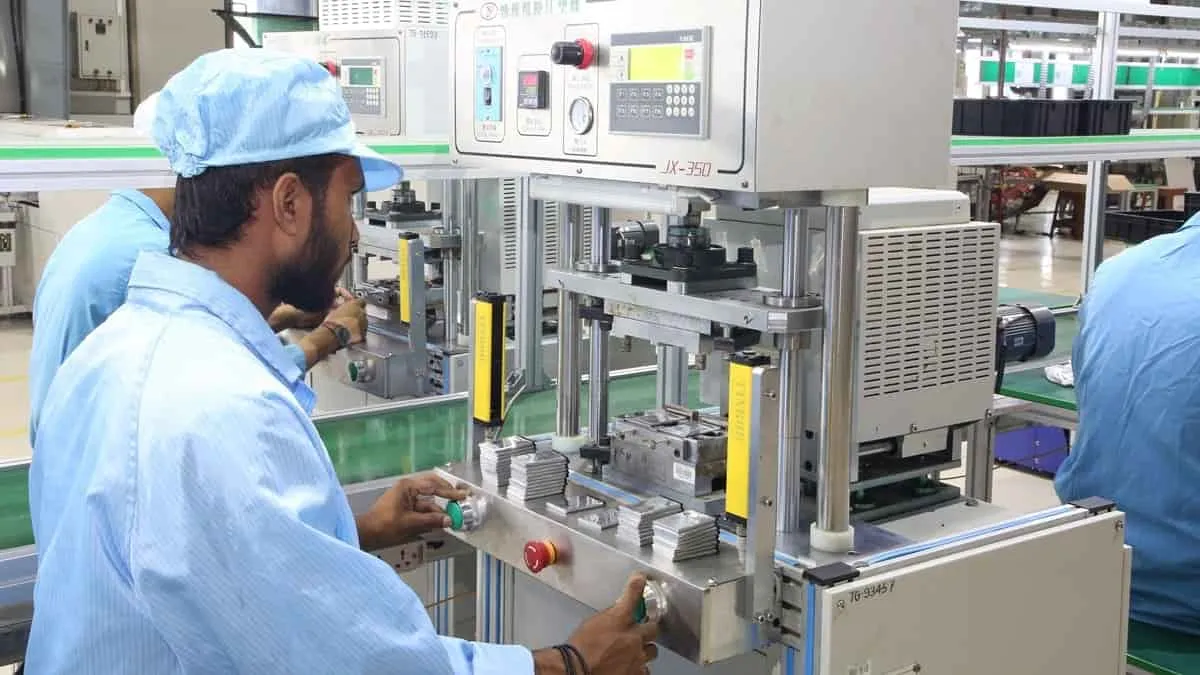
Manufacturing, particularly the electronics sector, remained the primary engine of global trade expansion throughout 2025. Electronics trade recorded exceptional growth of 14% over the past four quarters, substantially outpacing the overall 10% expansion in manufacturing trade. This surge was powered predominantly by explosive demand for artificial intelligence-related hardware and infrastructure.
The global artificial intelligence in manufacturing market is projected to soar from $34.18 billion in 2025 to $155.04 billion by 2030, exhibiting a compound annual growth rate of 35.3%. This astronomical growth trajectory reflects the rapid adoption of AI technologies across manufacturing operations, from predictive maintenance and quality control to supply chain optimization and autonomous production systems.
The AI boom has created unprecedented demand for specialized semiconductors, high-bandwidth memory chips, and advanced computing infrastructure. Sales of generative AI chips are forecasted to surpass $150 billion in 2025, driving significant growth for companies focused on AI hardware and software development. This “AI supercycle” has become a defining feature of global electronics trade, reshaping supply chains and investment patterns across the semiconductor industry.
However, this AI-driven demand has also created significant supply chain strains. Memory producers are overwhelmed by unprecedented demand from AI developers and cloud-computing giants, leading to shortages of standard DRAM and flash memory components. Inventory levels for traditional memory chips have collapsed from healthy double-digit-week stockpiles in late 2024 to just a few weeks’ supply across much of 2025, forcing manufacturers to scramble for routine components.
In contrast to the booming electronics sector, the energy and automotive industries lagged considerably. Automotive trade faced particular challenges as the sector grappled with the transition to electric vehicles, supply chain restructuring, and shifting consumer preferences. The energy sector contended with volatile commodity prices, geopolitical disruptions to supply routes, and the ongoing transition toward renewable energy sources.
Geopolitical Fragmentation and the Rise of Friendshoring
One of the most significant structural shifts in 2025 was the strengthening of friendshoring and nearshoring trends, which had temporarily reversed in 2024. These strategies, which involve relocating supply chains toward politically aligned or geographically proximate partners, gained renewed momentum as geopolitical tensions intensified and businesses sought to reduce exposure to potential disruptions.
Friendshoring, defined as the relocation of supply chains to geopolitical allies or economically friendly countries, prioritizes supply chain resilience, national security, and economic stability over pure cost efficiency. This represents a fundamental departure from decades of globalization strategy that emphasized maximum efficiency through production in the lowest-cost locations, regardless of geopolitical considerations.
According to industry surveys, 73% of global executives now rank geopolitically aligned supply chains as a top priority, reflecting widespread recognition that traditional supply chain models are vulnerable to sanctions, export controls, and other policy-driven disruptions. The United States has been particularly aggressive in implementing friendshoring policies, using tariffs, subsidies, and tax incentives to reward domestic and allied production.
Recent research indicates that foreign direct investment has become increasingly sensitive to geopolitical distance since 2018, with companies factoring political alignment into investment decisions to an unprecedented degree. This “weaponization of interdependence” has led to the formation of competing economic blocs, potentially fragmenting the previously integrated global economy.
The implications for global trade are profound. US outward foreign direct investment has shifted away from China and Hong Kong toward Mexico and India, while advanced manufacturing investment has pivoted toward major European countries, the United Kingdom, and Mexico. Apple’s production strategy exemplifies this trend, with the company relocating a significant portion of iPhone production from China to India.
However, friendshoring is not without costs and limitations. The World Trade Organization has warned that friendshoring may lead to unstable trade blocs and long-term fragmentation, potentially undermining the efficiency gains achieved through decades of globalization. As one trade expert cautioned, “A friend today may not be a friend tomorrow,” highlighting the inherent instability of trade relationships based on shifting political alliances.
Persistent Trade Imbalances and Shifting Patterns
Despite the overall growth in global trade, significant imbalances persisted throughout 2025, reshaping international economic relationships and fueling political tensions. China’s trade surplus topped $1 trillion for the first time in the country’s history in the first eleven months of 2025, as exports rose 5.4% while imports declined 0.6%.
This remarkable achievement occurred despite a steep decline in China’s trade with the United States, where exports plunged 28.6% in November, marking the eighth consecutive month of double-digit declines. The drop in US-bound shipments reflects the impact of President Donald Trump’s aggressive tariff policies, which imposed sweeping duties on Chinese goods in an effort to reduce America’s trade deficit.
However, China successfully compensated for reduced US market access by diversifying export destinations and deepening trade ties with Southeast Asia and the European Union. This strategic pivot allowed Chinese exporters to maintain robust growth despite losing significant market share in their formerly largest export market. China also established new production hubs outside its borders to gain low-tariff access to restricted markets, effectively circumventing trade barriers through supply chain restructuring.
From the American perspective, the United States’ trade deficit through August 2025 remained substantial at approximately $1.4 trillion on an annual basis, with China accounting for the largest bilateral deficit at $255.78 billion—representing 19.11% of the total goods trade deficit. Vietnam and Mexico followed as the second and third largest sources of US trade deficits, reflecting the complex ways in which supply chains have adapted to tariff pressures.
Trade concentration increased significantly in 2025, with a larger share of global commerce flowing through a smaller group of key players. This concentration makes the global trading system more vulnerable to disruptions affecting major economies or critical shipping routes, while simultaneously giving dominant players greater leverage in trade negotiations.
Regional Trade Dynamics and Performance Variations
North America experienced mixed trade performance, with exports falling 3% in the third quarter but growing 2% over the past four quarters. Imports showed stronger momentum, rising 6% over the same period, reflecting robust consumer demand despite concerns about potential recession.
Europe continued to grow throughout the third quarter, though at a decelerating pace. European exports rose 2% in the quarter and 6% over the past four quarters, while imports increased by 1% in the third quarter and 8% annually. This performance demonstrated Europe’s resilience in the face of energy challenges, inflation pressures, and geopolitical uncertainties stemming from regional conflicts.
Intra-regional trade proved particularly strong in several regions. South America saw intra-regional trade rising 3% in the third quarter and 7% over the past four quarters, reflecting deeper economic integration among Latin American nations and the success of regional trade agreements.
Africa’s trade performance highlighted both opportunities and challenges. While overall import and export growth was robust, intra-African trade continued to lag other regions, accounting for only 16% of Africa’s total trade compared to approximately 70% for intra-European Union trade and 60% for intra-Asian trade. This continued reliance on extra-African trade exposes the continent to global economic shocks and limits the potential benefits of regional integration.
Services Trade Outpaces Goods in Growth Rate
While merchandise trade grew solidly in 2025, services trade demonstrated even more impressive expansion. The anticipated 9% growth in services trade substantially outpaced the 6% increase in goods trade, reflecting fundamental shifts in the global economy toward digitalization, knowledge-based industries, and cross-border service provision.
India and China led services export growth, leveraging competitive advantages in information technology, business process outsourcing, and professional services. The COVID-19 pandemic’s legacy of remote work normalization and digital service adoption continued to drive demand for cross-border services, enabling service providers in emerging economies to compete effectively with established players in advanced economies.
Financial services, telecommunications, transportation, and professional services all posted strong growth, benefiting from technological innovations that make cross-border service delivery increasingly seamless. Cloud computing, digital payments, and telecommunications infrastructure improvements have effectively eliminated many traditional barriers to international service provision, creating new opportunities for emerging market service providers.
One decision can change your entire career. Take that step with our Online courses in ACCA, HESI A2, ATI TEAS 7, HESI EXIT, NCLEX-RN, NCLEX-PN, and Financial Literacy. Join Serrari Ed and start building your brighter future today.
Supply Chain Complexity and Transformation
The ongoing restructuring of global supply chains represented one of 2025’s most significant developments, with far-reaching implications for future trade patterns. Companies increasingly prioritized supply chain resilience over cost optimization, even when this meant accepting higher production costs or longer lead times.
Supply chain complexity has risen twofold compared to 2017, or sixfold compared to the pandemic years, according to supply chain complexity indices that account for shifts in trade flows, geographic distance, geopolitical alignment, and country risk ratings. This increased complexity stems from companies adding suppliers in new countries to diversify risk, introducing additional facilities and regulatory environments to monitor.
The reconfiguration involves three primary strategies: nearshoring (relocating production to nearby countries), reshoring (bringing production back to the home country), and friendshoring (moving production to politically aligned nations). Companies often maintain original offshore facilities while opening additional ones elsewhere, rather than completely overhauling their supply chains. This approach represents diversification rather than wholesale transformation of manufacturing strategies.
Mexico has emerged as a major beneficiary of nearshoring trends, particularly for US companies seeking to reduce dependence on Asian suppliers while maintaining proximity to North American markets. Vietnam has similarly benefited from companies seeking alternatives to Chinese production, though infrastructure and labor force constraints limit how quickly these countries can absorb large-scale manufacturing relocations.
Technology and Innovation Driving Trade Evolution
Technological innovation continues to reshape international commerce in fundamental ways. Artificial intelligence, Internet of Things sensors, and digital twin technology are enabling smarter, more adaptive supply chains in politically aligned nations. These tools provide predictive risk analysis, real-time shipment tracking, and automated compliance monitoring, allowing companies to manage increasingly complex global operations with greater efficiency and transparency.
Blockchain technology is gaining traction for trade finance and supply chain verification, potentially reducing fraud and improving transparency in international transactions. Digital platforms are streamlining customs procedures and reducing trade costs, particularly benefiting small and medium-sized enterprises that previously faced prohibitive barriers to international commerce.
The rise of e-commerce continues to transform retail trade patterns, with digital marketplaces enabling small businesses to access global markets that were previously dominated by large multinational corporations. This democratization of international trade is creating new opportunities for entrepreneurs in developing economies while challenging traditional trade intermediaries.
Sectoral Performance and Diverging Fortunes
The divergence in sectoral performance became increasingly pronounced throughout 2025. While AI-related electronics boomed, traditional consumer electronics faced headwinds from market saturation and weak consumer sentiment in major markets. Smartphones, personal computers, and gaming consoles experienced stagnant or declining demand, creating excess inventory challenges for manufacturers and retailers.
The automotive sector grappled with fundamental transformations as the transition to electric vehicles accelerated. Chinese electric vehicle manufacturers captured significant market share from Japanese and German competitors, with total Chinese car shipments jumping by more than one million units to approximately 6.5 million vehicles in 2025. This shift reflects China’s strategic investment in EV technology and production capacity, positioning the country as a global leader in the automotive industry’s future.
Energy trade remained volatile throughout the year, buffeted by geopolitical conflicts, weather disruptions, and the ongoing transition to renewable energy sources. Traditional fossil fuel exports faced long-term structural challenges as countries accelerated decarbonization efforts, while trade in renewable energy equipment, including solar panels and wind turbines, expanded rapidly.
Financial and Economic Implications
The record-breaking trade volumes of 2025 carry significant financial and economic implications for the global economy. Trade in 2025 consistently outpaced global economic growth, reversing the stagnation of 2023-2024 when trade volumes barely kept pace with GDP expansion. This renewed vigor in international commerce suggests that globalization, while transformed by geopolitical pressures, remains a fundamental driver of economic growth.
However, the benefits of trade expansion are distributed unevenly across countries and populations. Countries with strong manufacturing bases, advanced technology sectors, or strategic positions in global supply chains captured disproportionate gains, while others found themselves increasingly marginalized in global value chains. This uneven distribution of trade benefits fuels political tensions and protectionist sentiments in countries perceiving themselves as losers from globalization.
Currency fluctuations added another layer of complexity to trade relationships in 2025. Exchange rate movements significantly impacted the competitiveness of different countries’ exports, with some nations benefiting from favorable currency positions while others saw their export competitiveness erode. The interplay between monetary policy, inflation dynamics, and exchange rates created winners and losers independent of underlying productive capabilities.
Looking Ahead: A Cautious Outlook for 2026
Despite the impressive achievements of 2025, UNCTAD projects a more subdued outlook for 2026. Slower global economic activity, rising debt burdens, higher trade costs, and persistent uncertainty are expected to weigh on trade performance in the coming year. Several factors underpin this cautious assessment.
First, the global economic slowdown appears likely to continue, with major economies facing challenges from high inflation, elevated interest rates, and accumulated pandemic-era debt. Consumer and business confidence remains fragile in many markets, potentially dampening demand for imported goods and services.
Second, the geopolitical environment shows no signs of stabilization. Ongoing conflicts, great power competition, and the proliferation of economic sanctions threaten to further fragment global trade. The risk of escalating trade wars remains elevated, particularly if major economies pursue increasingly protectionist policies.
Third, the costs of international trade are rising due to higher transportation expenses, increased compliance burdens, and the investments required to restructure supply chains. These higher costs may dampen trade volumes even if underlying demand remains stable, as businesses find previously profitable trade relationships no longer economically viable.
Fourth, the environmental imperative to reduce carbon emissions is beginning to impact trade patterns significantly. Carbon border adjustments, sustainability requirements, and consumer preferences for environmentally responsible products are reshaping trade in ways that favor some products and countries while disadvantaging others. The European Union’s Carbon Border Adjustment Mechanism, set to be fully implemented in coming years, represents just one example of how climate policies will increasingly influence trade flows.
Policy Responses and Adaptation Strategies
Governments and international organizations are grappling with how to manage the tensions between economic efficiency, geopolitical security, and environmental sustainability. The challenge lies in preventing complete fragmentation of the global trading system while addressing legitimate concerns about security, resilience, and fairness.
Multilateral institutions like the World Trade Organization face an existential challenge in maintaining relevance amid rising unilateralism and bilateral deal-making. Reform of global trade governance structures appears increasingly necessary, yet political divisions make meaningful reform exceedingly difficult to achieve.
Regional trade agreements continue to proliferate as countries seek to secure preferential access to key markets and resources. The Comprehensive and Progressive Agreement for Trans-Pacific Partnership, the Regional Comprehensive Economic Partnership, and various bilateral free trade agreements are reshaping trade relationships in ways that may either complement or undermine the multilateral trading system.
Companies are adapting through increased investments in supply chain visibility, risk management, and flexibility. Scenario planning and stress testing of supply chains have become standard practice, with companies maintaining multiple sourcing options and building redundancy into critical supply chains despite the cost implications.
The Human Dimension: Employment and Social Impacts
The transformation of global trade patterns carries profound implications for workers and communities around the world. Manufacturing relocations create winners and losers, with some regions experiencing job growth and investment while others face factory closures and economic decline.
The transition to more automated, AI-driven manufacturing reduces the labor intensity of production, potentially limiting the employment benefits even in regions gaining manufacturing facilities. This “jobless growth” phenomenon poses challenges for developing countries hoping to follow traditional industrialization pathways to prosperity.
Retraining and workforce development have become critical priorities as the skills required for modern manufacturing evolve rapidly. Countries and companies that invest effectively in human capital development will be better positioned to capture the opportunities created by changing trade patterns, while those that neglect workforce development risk being left behind.
Conclusion: Navigating an Uncertain Future
Global trade in 2025 demonstrated remarkable resilience in reaching the historic $35 trillion milestone, yet the path forward remains fraught with uncertainty and risk. The forces reshaping international commerce—artificial intelligence, geopolitical fragmentation, climate change imperatives, and evolving consumer preferences—show no signs of abating.
The challenge for policymakers, business leaders, and international institutions is to manage these transformations in ways that preserve the benefits of international commerce while addressing legitimate concerns about security, sustainability, and equity. The actions taken in coming months and years will determine whether global trade continues as a driver of prosperity and development or fragments into competing blocs that undermine efficiency and cooperation.
What appears certain is that the global trading system of 2030 will look substantially different from that of 2020. Whether these changes ultimately prove beneficial or detrimental will depend on the wisdom and cooperation of leaders navigating these turbulent waters. The record-breaking trade volumes of 2025 represent not an endpoint but rather a waypoint in an ongoing journey of transformation whose ultimate destination remains uncertain.
The imperative is clear: stakeholders across the global economy must work collaboratively to build a trading system that is resilient, sustainable, and inclusive—one that harnesses the power of international commerce to address global challenges while distributing benefits more equitably across countries and communities. The success or failure of these efforts will shape economic prospects for billions of people in the decades ahead.
Ready to take your career to the next level? Join our Online courses: ACCA, HESI A2, ATI TEAS 7 , HESI EXIT , NCLEX – RN and NCLEX – PN, Financial Literacy!🌟 Dive into a world of opportunities and empower yourself for success. Explore more at Serrari Ed and start your exciting journey today! ✨
Track GDP, Inflation and Central Bank rates for top African markets with Serrari’s comparator tool.
See today’s Treasury bonds and Money market funds movement across financial service providers in Kenya, using Serrari’s comparator tools.
photo source: Google
By: Montel Kamau
Serrari Financial Analyst
10th December, 2025
Article, Financial and News Disclaimer
The Value of a Financial Advisor
While this article offers valuable insights, it is essential to recognize that personal finance can be highly complex and unique to each individual. A financial advisor provides professional expertise and personalized guidance to help you make well-informed decisions tailored to your specific circumstances and goals.
Beyond offering knowledge, a financial advisor serves as a trusted partner to help you stay disciplined, avoid common pitfalls, and remain focused on your long-term objectives. Their perspective and experience can complement your own efforts, enhancing your financial well-being and ensuring a more confident approach to managing your finances.
Disclaimer: This article is for informational purposes only and does not constitute financial advice. Readers are encouraged to consult a licensed financial advisor to obtain guidance specific to their financial situation.
Article and News Disclaimer
The information provided on www.serrarigroup.com is for general informational purposes only. While we strive to keep the information up to date and accurate, we make no representations or warranties of any kind, express or implied, about the completeness, accuracy, reliability, suitability, or availability with respect to the website or the information, products, services, or related graphics contained on the website for any purpose. Any reliance you place on such information is therefore strictly at your own risk.
www.serrarigroup.com is not responsible for any errors or omissions, or for the results obtained from the use of this information. All information on the website is provided on an as-is basis, with no guarantee of completeness, accuracy, timeliness, or of the results obtained from the use of this information, and without warranty of any kind, express or implied, including but not limited to warranties of performance, merchantability, and fitness for a particular purpose.
In no event will www.serrarigroup.com be liable to you or anyone else for any decision made or action taken in reliance on the information provided on the website or for any consequential, special, or similar damages, even if advised of the possibility of such damages.
The articles, news, and information presented on www.serrarigroup.com reflect the opinions of the respective authors and contributors and do not necessarily represent the views of the website or its management. Any views or opinions expressed are solely those of the individual authors and do not represent the website's views or opinions as a whole.
The content on www.serrarigroup.com may include links to external websites, which are provided for convenience and informational purposes only. We have no control over the nature, content, and availability of those sites. The inclusion of any links does not necessarily imply a recommendation or endorsement of the views expressed within them.
Every effort is made to keep the website up and running smoothly. However, www.serrarigroup.com takes no responsibility for, and will not be liable for, the website being temporarily unavailable due to technical issues beyond our control.
Please note that laws, regulations, and information can change rapidly, and we advise you to conduct further research and seek professional advice when necessary.
By using www.serrarigroup.com, you agree to this disclaimer and its terms. If you do not agree with this disclaimer, please do not use the website.
www.serrarigroup.com, reserves the right to update, modify, or remove any part of this disclaimer without prior notice. It is your responsibility to review this disclaimer periodically for changes.
Serrari Group 2025