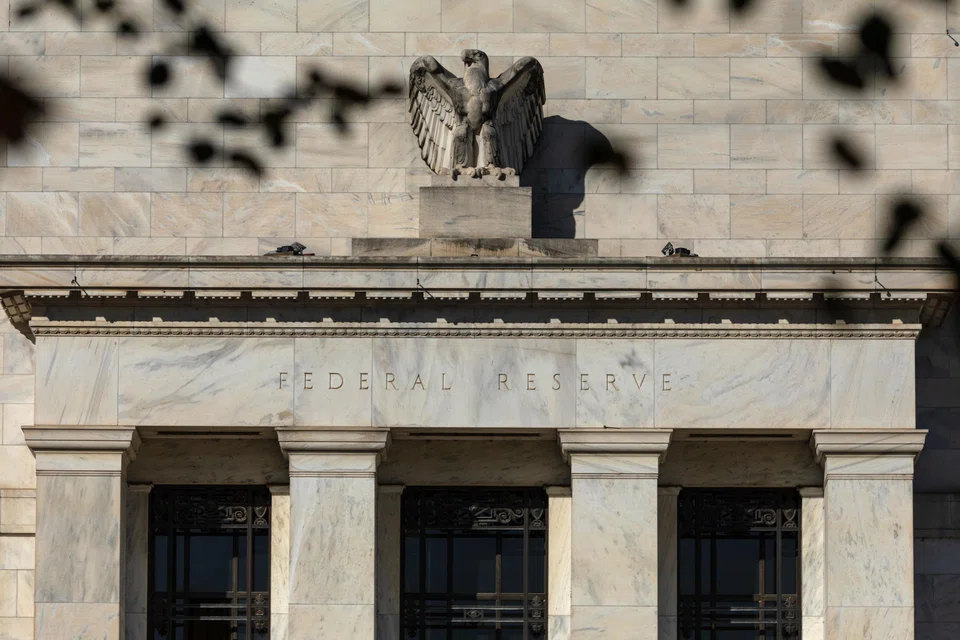












Ghana’s financial regulators have delivered one of the strongest public interventions yet in West Africa’s evolving digital asset landscape. In a joint directive issued on February 20, 2026, the Bank of Ghana (BoG) and the Securities and Exchange Commission (SEC) ordered all Virtual Asset Service Providers (VASPs) to immediately cease public advertising of digital asset and stablecoin products. Firms were instructed to remove all billboards and mass-market promotional materials within 48 hours or face sanctions.
The statement marks a decisive shift in Ghana’s digital asset oversight posture. While the country has been working toward formal regulatory integration under the Virtual Asset Service Providers Act, 2025 (Act 1154), this directive underscores a clear boundary: no mass marketing without explicit regulatory approval.
At first glance, the move appears restrictive. But viewed within the broader context of global crypto regulation, financial stability concerns, consumer protection imperatives, and the rapid expansion of stablecoin usage across Africa, Ghana’s action reflects a strategic recalibration rather than an outright rejection of digital assets.
This is not a ban. It is a regulatory consolidation.
Build the future you deserve. Get started with our top-tier Online courses: ACCA, HESI A2, ATI TEAS 7, HESI EXIT, NCLEX-RN, NCLEX-PN, and Financial Literacy. Let Serrari Ed guide your path to success. Enroll today.
The Directive: What Regulators Said
In their joint communication, the BoG and SEC expressed concern over the growing number of large-scale public advertisements promoting virtual assets and stablecoin products across Accra and other major cities.
Key components of the directive include:
- Immediate suspension of all public advertising and mass marketing of digital asset products.
- Removal of existing billboards within 48 hours.
- Confirmation that advocacy related to virtual assets is now classified as a regulated activity under Act 1154.
- Requirement for formal registration with both the BoG and SEC before conducting advocacy or advertising.
- Warning of sanctions for non-compliance.
Importantly, the regulators clarified that even VASPs operating under sandbox arrangements are not exempt from this restriction.
Until the full regulatory regime becomes operational and formal licenses are granted, all promotional activities must halt.
Regulatory Context: Ghana’s Virtual Asset Service Providers Act, 2025
The directive must be understood within the framework of Ghana’s recently enacted Virtual Asset Service Providers Act, 2025 (Act 1154).
The Act formalizes oversight of:
- Cryptocurrency exchanges
- Stablecoin issuers
- Digital asset custodians
- Token issuance platforms
- Virtual asset advocacy activities
The inclusion of advocacy as a regulated activity signals regulators’ recognition that marketing itself can materially influence financial behavior.
Under the Act:
- VASPs must register with both the central bank and securities regulator.
- Transitional provisions allow existing operators to apply for licensing.
- Advertising and advocacy will be governed by detailed forthcoming guidelines.
Ghana is not prohibiting digital assets. It is structuring their entry into the formal financial system.
Why Advertising Became the Flashpoint
Billboard marketing of digital assets signals mainstream targeting.
In many emerging markets, crypto advertising often emphasizes:
- Wealth creation narratives
- Dollar-denominated stability
- Escape from inflation
- Cross-border liquidity
While these themes resonate in economies facing currency pressure, regulators worry about:
- Retail investor overexposure
- Misleading claims
- Consumer vulnerability
- Systemic capital flight
Mass advertising accelerates adoption beyond regulatory oversight capacity.
By halting billboard campaigns, regulators are slowing adoption velocity while frameworks solidify.
Stablecoins and Ghana’s Monetary Policy Concerns
Stablecoins are central to this discussion.
Dollar-pegged stablecoins like USDT and USDC offer:
- Protection against local currency depreciation
- Cross-border payment efficiency
- Global liquidity access
However, widespread stablecoin adoption introduces monetary policy risks.
If citizens shift savings into dollar-backed digital tokens:
- Local currency demand may weaken
- Bank deposits could decline
- FX reserves may face indirect pressure
- Capital controls become harder to enforce
Ghana has faced inflation volatility and currency fluctuations in recent years. Regulators are acutely aware of how rapid digital dollar adoption could complicate macro stabilization.
Advertising fuels behavioral momentum.
Global Comparisons: Ghana Is Not Alone
Ghana’s directive aligns with international patterns.
- The UK’s Financial Conduct Authority (FCA) has imposed strict advertising guidelines on crypto promotions.
- Singapore restricts public crypto advertising in physical spaces.
- India has enforced compliance disclosures in digital asset promotions.
- The European Union’s MiCA framework regulates marketing and investor communications.
Across jurisdictions, regulators increasingly treat crypto advertising as a financial services activity requiring supervision.
Ghana’s action mirrors this global regulatory maturation.
One decision can change your entire career. Take that step with our Online courses in ACCA, HESI A2, ATI TEAS 7, HESI EXIT, NCLEX-RN, NCLEX-PN, and Financial Literacy. Join Serrari Ed and start building your brighter future today.
Transitional Arrangements: Not a Ban
The joint statement explicitly references transitional provisions under Act 1154.
Existing VASPs may:
- Apply for licensing
- Seek formal approval
- Continue operations under compliance
However, until approvals are granted, advertising must cease.
This distinction is critical.
Ghana is not banning crypto operations outright.
It is insisting that market access be regulated before marketing expansion.
Economic Implications
The directive could produce several short-term and long-term effects.
Short-Term
- Reduced retail acquisition rates.
- Temporary contraction in promotional spending.
- Increased compliance costs for VASPs.
- Market sentiment uncertainty.
Long-Term
- Improved investor protection.
- Institutional confidence in regulatory clarity.
- Reduced systemic risk.
- Structured growth rather than speculative expansion.
Regulated ecosystems tend to attract more sustainable capital.
Risks to Monitor
Despite rational motivations, the directive carries risks.
1. Informal Market Migration
Overly restrictive advertising may push activity underground.
2. Competitive Disadvantage
If neighboring jurisdictions adopt looser rules, capital may migrate regionally.
3. Innovation Suppression
Startups may face funding challenges if marketing channels close.
4. Enforcement Consistency
Selective enforcement could undermine credibility.
5. Timing Sensitivity
If detailed advertising guidelines are delayed, uncertainty may linger.
Balancing consumer protection and innovation will be essential.
Long-Term Outlook: Regulatory Normalization
Ghana’s action signals a transition from:
Speculative Expansion → Regulatory Integration
In the long run, structured oversight may:
- Encourage institutional participation.
- Support stablecoin-backed remittance solutions.
- Improve financial system resilience.
- Enhance Ghana’s fintech credibility.
Africa is increasingly central to digital asset adoption.
Regulatory maturity will determine whether adoption is sustainable.
Why This Matters
The directive highlights a deeper theme:
Digital assets are no longer fringe instruments.
They intersect directly with:
- Monetary sovereignty
- Capital mobility
- Consumer protection
- Financial stability
Advertising is not just marketing. It shapes financial behavior.
By regulating advocacy, Ghana is asserting supervisory authority over behavioral finance dynamics.
The move reflects recognition that digital asset growth must occur within systemic guardrails.
Conclusion
Ghana’s 48-hour billboard removal directive marks a pivotal moment in the country’s digital asset evolution.
Rather than signaling hostility toward crypto, the joint BoG-SEC action represents a regulatory reset aimed at ensuring that growth occurs within a formalized framework under Act 1154.
As stablecoin adoption accelerates globally, central banks across emerging markets are grappling with similar questions about monetary control and consumer protection.
Ghana’s approach — pause mass marketing, formalize oversight, then reopen under structured rules — reflects an attempt to balance innovation with stability.
The coming months will determine whether this recalibration strengthens Ghana’s fintech ecosystem or slows its competitive momentum.
Either way, digital asset regulation in West Africa has entered a more mature phase.
Ready to take your career to the next level? Join our Online courses: ACCA, HESI A2, ATI TEAS 7 , HESI EXIT , NCLEX – RN and NCLEX – PN, Financial Literacy!🌟 Dive into a world of opportunities and empower yourself for success. Explore more at Serrari Ed and start your exciting journey today! ✨
Track GDP, Inflation and Central Bank rates for top African markets with Serrari’s comparator tool.
See today’s Treasury bonds and Money market funds movement across financial service providers in Kenya, using Serrari’s comparator tools.
photo source: Google
By: Elsie Njenga
24th February,2026
Article, Financial and News Disclaimer
The Value of a Financial Advisor
While this article offers valuable insights, it is essential to recognize that personal finance can be highly complex and unique to each individual. A financial advisor provides professional expertise and personalized guidance to help you make well-informed decisions tailored to your specific circumstances and goals.
Beyond offering knowledge, a financial advisor serves as a trusted partner to help you stay disciplined, avoid common pitfalls, and remain focused on your long-term objectives. Their perspective and experience can complement your own efforts, enhancing your financial well-being and ensuring a more confident approach to managing your finances.
Disclaimer: This article is for informational purposes only and does not constitute financial advice. Readers are encouraged to consult a licensed financial advisor to obtain guidance specific to their financial situation.
Article and News Disclaimer
The information provided on www.serrarigroup.com is for general informational purposes only. While we strive to keep the information up to date and accurate, we make no representations or warranties of any kind, express or implied, about the completeness, accuracy, reliability, suitability, or availability with respect to the website or the information, products, services, or related graphics contained on the website for any purpose. Any reliance you place on such information is therefore strictly at your own risk.
www.serrarigroup.com is not responsible for any errors or omissions, or for the results obtained from the use of this information. All information on the website is provided on an as-is basis, with no guarantee of completeness, accuracy, timeliness, or of the results obtained from the use of this information, and without warranty of any kind, express or implied, including but not limited to warranties of performance, merchantability, and fitness for a particular purpose.
In no event will www.serrarigroup.com be liable to you or anyone else for any decision made or action taken in reliance on the information provided on the website or for any consequential, special, or similar damages, even if advised of the possibility of such damages.
The articles, news, and information presented on www.serrarigroup.com reflect the opinions of the respective authors and contributors and do not necessarily represent the views of the website or its management. Any views or opinions expressed are solely those of the individual authors and do not represent the website's views or opinions as a whole.
The content on www.serrarigroup.com may include links to external websites, which are provided for convenience and informational purposes only. We have no control over the nature, content, and availability of those sites. The inclusion of any links does not necessarily imply a recommendation or endorsement of the views expressed within them.
Every effort is made to keep the website up and running smoothly. However, www.serrarigroup.com takes no responsibility for, and will not be liable for, the website being temporarily unavailable due to technical issues beyond our control.
Please note that laws, regulations, and information can change rapidly, and we advise you to conduct further research and seek professional advice when necessary.
By using www.serrarigroup.com, you agree to this disclaimer and its terms. If you do not agree with this disclaimer, please do not use the website.
www.serrarigroup.com, reserves the right to update, modify, or remove any part of this disclaimer without prior notice. It is your responsibility to review this disclaimer periodically for changes.
Serrari Group 2025