











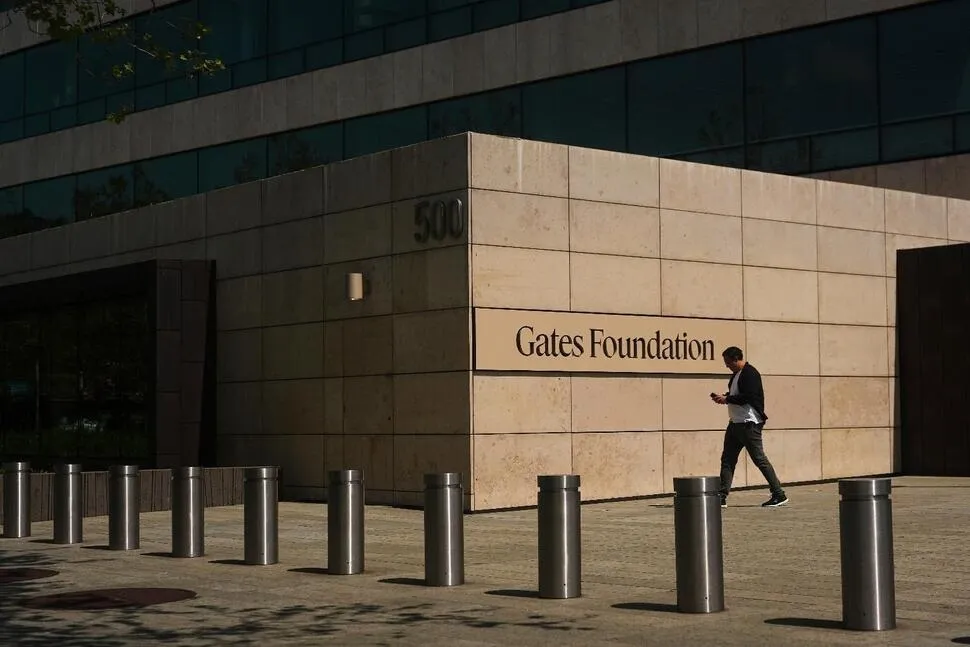
The Gates Foundation unveiled a historic $9 billion operating budget for 2026 this week, marking the largest annual allocation in the organization’s 25-year history while simultaneously announcing plans to reduce its workforce by up to 500 positions over the next five years. The dual announcement reflects the foundation’s strategic recalibration as it accelerates toward its unprecedented decision to cease operations by December 31, 2045.
The Seattle-based philanthropic powerhouse, which currently employs approximately 2,375 staff members, will implement workforce reductions incrementally through 2030, including leaving some open positions unfilled. Foundation CEO Mark Suzman emphasized that the cuts will be executed “thoughtfully, carefully, and systematically,” with annual reviews to reassess the target number, which he described as a maximum rather than a fixed goal.
Build the future you deserve. Get started with our top-tier Online courses: ACCA, HESI A2, ATI TEAS 7, HESI EXIT, NCLEX-RN, NCLEX-PN, and Financial Literacy. Let Serrari Ed guide your path to success. Enroll today.
Operating Cost Controls Drive Restructuring
The foundation’s board approved a proposal to cap operating costs at no more than $1.25 billion, representing approximately 14% of the foundation’s total budget. This ceiling encompasses staff salaries, infrastructure, facilities, and travel expenses. Without such constraints, Suzman warned that operating expenditures, currently hovering around 13% of the budget, were projected to balloon to 18% by the decade’s end.
The move represents a deliberate effort to maximize resources directed toward the foundation’s core mission rather than administrative overhead. “The board wants to ensure that the foundation is spending money prudently and with a focus on maximizing the dollars spent and resources provided to the people the foundation serves,” Suzman told the Chronicle of Philanthropy in an exclusive interview.
The $9 billion budget surpasses last year’s allocation of $8.74 billion and signals the foundation’s commitment to accelerating its impact during its remaining two decades of operation. According to the Chronicle of Philanthropy, the foundation’s budget is expected to remain relatively flat for at least four to five years, with potential increases above $9 billion if market conditions remain favorable.
Historic Closure Strategy
Bill Gates’ announcement last year that the foundation would spend $200 billion over the next 20 years before permanently closing sent shockwaves through the philanthropic sector. The decision, revealed on the foundation’s 25th anniversary in May 2025, positions the Gates Foundation as the world’s largest charitable organization to establish a definitive sunset date.
Since its launch in 2000, the foundation has distributed more than $100 billion to global causes, primarily focused on health, development, and gender equity. The commitment to double this amount over the next two decades represents what Gates described in a blog post as his determination to ensure that “he died rich” would not be among the things said about him.
Elizabeth Dale, acting executive director and Frey Foundation Chair for Family Philanthropy at Grand Valley State University’s philanthropy center, noted that sunsetting a foundation with the massive wealth of the Gates Foundation is unprecedented in scale. Dale, who works with approximately 20 foundations spending down their endowments, explained that most organizations in her network have assets below $200 million, making the Gates Foundation’s planned closure a unique case study in strategic philanthropy.
“My sense is that they spent the last year really trying to home in on their priorities and their strategy,” Dale said, emphasizing the extraordinary strategic planning required for such an undertaking.
Global Health Crisis Amplifies Foundation’s Mission
The foundation’s expanded budget comes at a critical juncture for global health. In a sobering recent blog post, Bill Gates revealed that child mortality increased in 2025 for the first time this century, rising from 4.6 million deaths in 2024 to an estimated 4.8 million in 2025.
This reversal of decades of progress has been attributed largely to humanitarian aid cuts from wealthy nations. According to modeling conducted by the Institute for Health Metrics and Evaluation at the University of Washington, global development assistance for health fell sharply in 2025, declining 26.9% below 2024 levels.
The Trump administration’s foreign policy decisions have particularly impacted global health infrastructure. The dissolution of USAID in July 2025, which had been the primary organizer and provider of U.S. foreign aid, resulted in the termination of over 5,000 contracts and dramatically reduced program implementation capacity. KFF analysis found that of 770 identified global health awards, 80% were terminated, totaling $12.7 billion in unobligated funding.
Research published in The Lancet forecasted that the shuttering of USAID could lead to approximately 14 million additional deaths by 2030, including 4.5 million among children and infants below the age of five. The Gates Foundation’s increased spending is positioned as a critical counterweight to these governmental retrenchments, though experts acknowledge that even the world’s largest foundation cannot fully compensate for the scale of public funding withdrawals.
Strategic Program Priorities
The foundation will channel increased funding into several key program areas. Women’s health, vaccine development, polio eradication, artificial intelligence applications, and U.S. education will all receive budget enhancements under the 2026 allocation.
Suzman indicated that the foundation expects to accelerate spending in three priority areas over the next two decades: maternal and child health, infectious disease prevention, and poverty reduction. While some grant sizes will increase over time, the foundation has signaled that budget augmentations will not be uniform across all programs.
The foundation’s approach to program wind-down has already begun in selected areas. Suzman confirmed that the staff reduction strategy will coincide with the previously announced conclusion of early learning solutions in the United States by 2029 and the closure of the inclusive financial systems program, both of which are expected to have achieved their objectives within the next five years.
One decision can change your entire career. Take that step with our Online courses in ACCA, HESI A2, ATI TEAS 7, HESI EXIT, NCLEX-RN, NCLEX-PN, and Financial Literacy. Join Serrari Ed and start building your brighter future today.
Artificial Intelligence: Risk and Opportunity
Bill Gates has taken a nuanced stance on artificial intelligence, simultaneously warning of its dangers while championing strategic applications. In his recent blog post, Gates cautioned that AI could disrupt labor markets and be exploited by malicious actors without proper governance and deployment frameworks.
Yet the foundation has positioned itself at the forefront of beneficial AI development. In July 2025, the Gates Foundation joined a coalition of funders pledging $1 billion over 15 years to develop AI tools for public defenders, social workers, parole officers, and other frontline workers managing substantial caseloads with limited resources.
The initiative, organized through a new entity called NextLadder Ventures, will offer grants and investments to both nonprofit and for-profit organizations. Partners in the coalition include the Ballmer Group (the philanthropy of former Microsoft CEO Steve Ballmer and his wife Connie), hedge fund founder John Overdeck, the Valhalla Foundation, and Stand Together, the nonprofit started by Kansas-based billionaire Charles Koch.
Suzman confirmed that AI represents one of the foundation’s portfolio areas slated for continued expansion, reflecting the organization’s belief that artificial intelligence can address systemic barriers to prosperity when properly designed and deployed.
Geographic Expansion and Operational Shifts
Earlier this week, the foundation announced the creation of a new Africa and India Offices Division, signaling a strategic geographic reorientation of its operations. The division will be led by Ankur Vora, a foundation veteran who has worked with the organization since 2013 and previously served as an adviser to Gates and Suzman on the 2045 closure plan.
This expansion coincides with planned downsizing of HIV and tuberculosis teams at the foundation’s Seattle headquarters, with much of that specialized work transitioning to offices across Africa. The shift reflects the foundation’s commitment to positioning expertise closer to the populations it serves while maintaining operational efficiency.
The reorganization aligns with broader trends in international development emphasizing local ownership and capacity building. By establishing stronger operational presences in India and Africa, the foundation aims to enhance its understanding of regional challenges while fostering sustainable local solutions.
Unprecedented Philanthropic Experiment
The Gates Foundation’s planned closure distinguishes it from legacy foundations such as Carnegie, Rockefeller, and Ford, which were designed to operate in perpetuity. The decision to spend down the entire $77 billion endowment by 2045, combined with Gates’ remaining personal fortune and anticipated investment returns, reflects a philosophical commitment to addressing urgent contemporary challenges rather than preserving institutional longevity.
Gates has cited Andrew Carnegie’s 1889 essay “The Gospel of Wealth” as influential in his thinking. Carnegie’s treatise argued that the wealthy bear a moral responsibility to return resources to society, a radical proposition at the time that established foundational principles for modern philanthropy.
Bill Gates, whose net worth Bloomberg currently estimates at $168 billion, has pledged to reduce his personal wealth to approximately 1% of its current value by 2045. “There are too many urgent problems to solve for me to hold onto resources that could be used to help people,” Gates wrote in announcing the accelerated timeline. “That is why I have decided to give my money back to society much faster than I had originally planned.”
Impact on Global Disease Eradication Efforts
The foundation has been instrumental in several global health initiatives that face uncertain futures amid funding cuts. Since 2000, the Gates Foundation contributed to saving 82 million lives through its support of Gavi, the Vaccine Alliance, and the Global Fund to Fight AIDS, Tuberculosis and Malaria.
The foundation’s continued commitment to polio eradication remains a centerpiece of its infectious disease strategy, with hopes to eliminate the disease within the next three to five years. However, Gates has expressed concern about the sustainability of progress without robust governmental partnership.
The 2025 Goalkeepers Report, which tracks global progress toward United Nations Sustainable Development Goals, projects that if global health funding cuts of 20% continue, they will translate to 12 million additional child deaths by 2045. If cuts steepen to 30%, projections show a catastrophic 16 million more child deaths over the same period.
Modeling featured in the report indicates that sustained investment in next-generation health innovations could save millions of children by 2045. New vaccines for respiratory syncytial virus and pneumonia could prevent 3.4 million child deaths, while emerging malaria tools could save another 5.7 million children. Long-acting HIV prevention tools like lenacapavir could help drive infections and deaths toward zero in high-burden countries.
The WHO Partnership and U.S. Withdrawal
The Trump administration’s decision to withdraw from the World Health Organization has created additional challenges for global health coordination. Gates revealed in an interview with TIME that the Gates Foundation has become the largest single donor to WHO following the U.S. exit, a position he described as inappropriate for long-term global health architecture.
“I don’t think in the long run that’s the way it should be,” Gates said, expressing hope that the U.S. would eventually articulate desired changes and resume membership. He emphasized WHO’s critical role in areas ranging from polio eradication to pandemic preparedness, noting that the foundation had funded significant improvements to WHO’s pandemic preparedness based on lessons from COVID-19.
Gates acknowledged the irony that his major philanthropic commitment was announced during a period of crisis for global health funding. However, he expressed hope that his pledge to give away virtually all of his wealth might “remind people how important and how effective these dollars are, and the basic value of reducing childhood deaths.”
Looking Ahead: Two Decades of Impact
Despite the foundation’s announced closure date, Suzman has consistently emphasized that 20 years represents substantial time to achieve transformative impact. “We are moving into what I believe is going to be the most impactful period of the Gates Foundation in its history,” he said. “We’ve learned a huge amount over the last quarter century. We’ve built expertise, credibility, and partnerships. We now have a set of goals that are allowing us to focus with greater intentionality.”
The foundation’s accelerated spending trajectory, combined with its strategic focus on maternal and child health, infectious disease prevention, and poverty reduction, positions it as a critical stabilizing force during a period of global health uncertainty. The next five years, which Gates has characterized as particularly difficult, will test whether philanthropic resources can sustain progress in the absence of robust governmental support.
The workforce reduction, while significant in absolute terms, represents approximately 21% of current headcount spread over five years. The foundation has indicated it will continue selective hiring for roles deemed critical to advancing its mission, suggesting a strategic reallocation of human resources rather than wholesale downsizing.
As the world’s third-largest charitable foundation undertakes this unprecedented experiment in time-limited philanthropy, the global health community watches closely. The success or failure of the Gates Foundation’s accelerated spending strategy may well determine whether other major philanthropies follow suit, fundamentally reshaping the landscape of large-scale charitable giving for generations to come.
For Bill Gates, now 69 years old, the commitment represents the culmination of a journey that began with his mother’s reminder that he was “just a steward” of accumulated wealth, with a moral obligation to give back. His longtime friend Warren Buffett, who has donated tens of billions to charity and tasked his children with distributing 99% of his remaining wealth, remains what Gates calls “the ultimate model of generosity.”
“He was the first one who introduced me to the idea of giving everything away,” Gates wrote, acknowledging Buffett’s influence on his philanthropic philosophy.
The foundation’s next chapter will unfold against a backdrop of retreating governmental commitments to global health, rising geopolitical tensions, intensifying climate threats, and persistent inequalities. Whether the Gates Foundation’s record budget and strategic focus can help reverse the troubling trajectory of child mortality and accelerate progress toward health equity remains an open question—one that will be answered over the next two decades as the world’s largest sunset foundation races against time to maximize its impact before permanently closing its doors.
Ready to take your career to the next level? Join our Online courses: ACCA, HESI A2, ATI TEAS 7 , HESI EXIT , NCLEX – RN and NCLEX – PN, Financial Literacy!🌟 Dive into a world of opportunities and empower yourself for success. Explore more at Serrari Ed and start your exciting journey today! ✨
Track GDP, Inflation and Central Bank rates for top African markets with Serrari’s comparator tool.
See today’s Treasury bonds and Money market funds movement across financial service providers in Kenya, using Serrari’s comparator tools.
photo source: Google
By: Montel Kamau
Serrari Financial Analyst
16th January, 2026
Article, Financial and News Disclaimer
The Value of a Financial Advisor
While this article offers valuable insights, it is essential to recognize that personal finance can be highly complex and unique to each individual. A financial advisor provides professional expertise and personalized guidance to help you make well-informed decisions tailored to your specific circumstances and goals.
Beyond offering knowledge, a financial advisor serves as a trusted partner to help you stay disciplined, avoid common pitfalls, and remain focused on your long-term objectives. Their perspective and experience can complement your own efforts, enhancing your financial well-being and ensuring a more confident approach to managing your finances.
Disclaimer: This article is for informational purposes only and does not constitute financial advice. Readers are encouraged to consult a licensed financial advisor to obtain guidance specific to their financial situation.
Article and News Disclaimer
The information provided on www.serrarigroup.com is for general informational purposes only. While we strive to keep the information up to date and accurate, we make no representations or warranties of any kind, express or implied, about the completeness, accuracy, reliability, suitability, or availability with respect to the website or the information, products, services, or related graphics contained on the website for any purpose. Any reliance you place on such information is therefore strictly at your own risk.
www.serrarigroup.com is not responsible for any errors or omissions, or for the results obtained from the use of this information. All information on the website is provided on an as-is basis, with no guarantee of completeness, accuracy, timeliness, or of the results obtained from the use of this information, and without warranty of any kind, express or implied, including but not limited to warranties of performance, merchantability, and fitness for a particular purpose.
In no event will www.serrarigroup.com be liable to you or anyone else for any decision made or action taken in reliance on the information provided on the website or for any consequential, special, or similar damages, even if advised of the possibility of such damages.
The articles, news, and information presented on www.serrarigroup.com reflect the opinions of the respective authors and contributors and do not necessarily represent the views of the website or its management. Any views or opinions expressed are solely those of the individual authors and do not represent the website's views or opinions as a whole.
The content on www.serrarigroup.com may include links to external websites, which are provided for convenience and informational purposes only. We have no control over the nature, content, and availability of those sites. The inclusion of any links does not necessarily imply a recommendation or endorsement of the views expressed within them.
Every effort is made to keep the website up and running smoothly. However, www.serrarigroup.com takes no responsibility for, and will not be liable for, the website being temporarily unavailable due to technical issues beyond our control.
Please note that laws, regulations, and information can change rapidly, and we advise you to conduct further research and seek professional advice when necessary.
By using www.serrarigroup.com, you agree to this disclaimer and its terms. If you do not agree with this disclaimer, please do not use the website.
www.serrarigroup.com, reserves the right to update, modify, or remove any part of this disclaimer without prior notice. It is your responsibility to review this disclaimer periodically for changes.
Serrari Group 2025