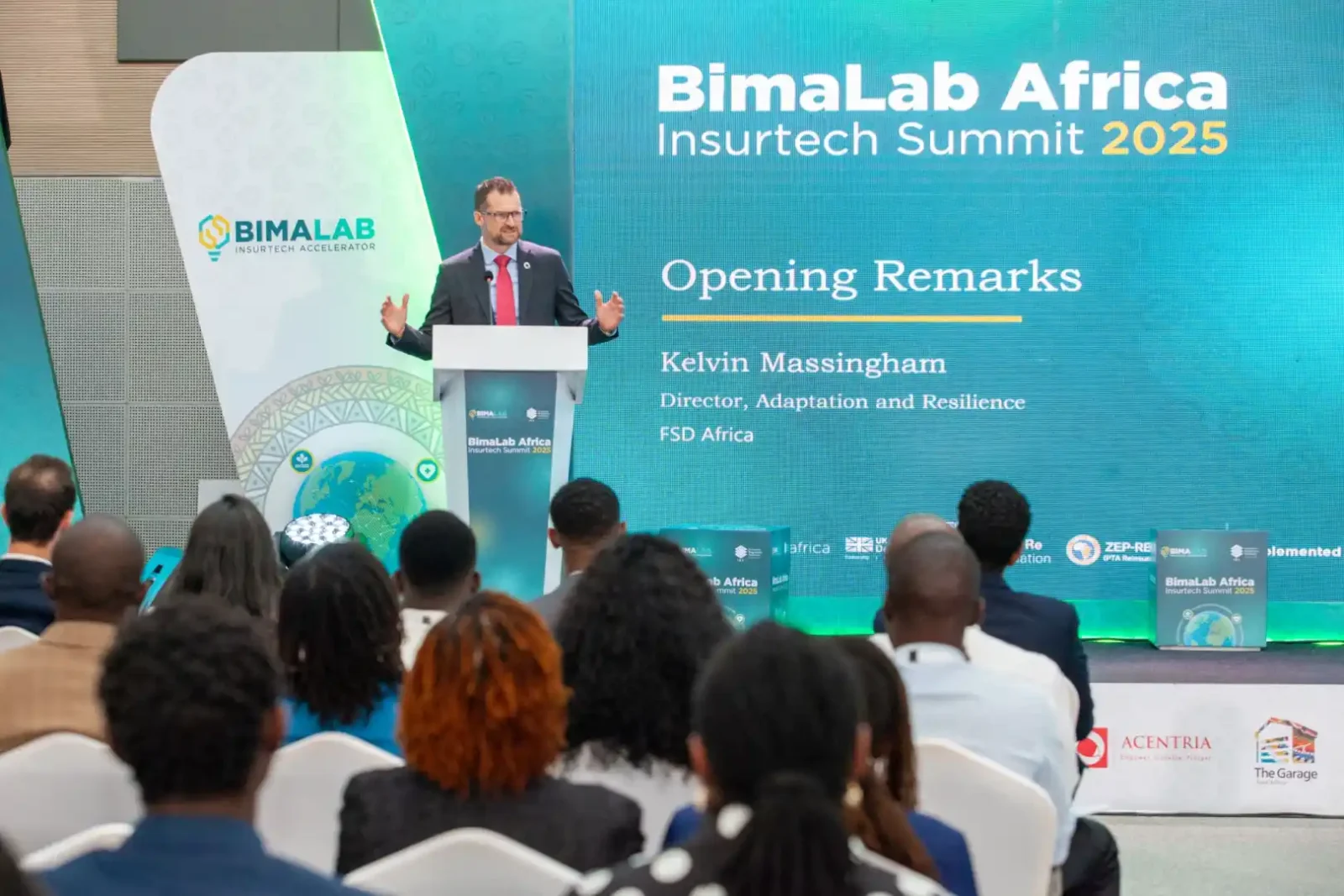
FSD Africa has launched a transformative new venture initiative aimed at closing Africa’s yawning insurance protection gap, announcing a $25–30 million Inclusive Insurtech Investment Fund (3iF) at the BimaLab Africa Insurtech Summit 2025 in Nairobi. The two-day summit, convened on November 26–27, brought together insurers, regulators, investors, innovators, and development actors under the theme “Insuring Africa’s Future: Innovation, Inclusion and Investment.”
The new fund represents a critical intervention in a continent where insurance penetration remains stubbornly below 3 percent in most markets, leaving millions of individuals, small businesses, and vulnerable communities exposed to financial shocks from which they cannot quickly recover. With approximately 80 percent of economic losses from natural disasters going uninsured in 2022—a sharp increase from 58 percent in 2021—the protection gap has widened precisely when climate change is making disasters more frequent and severe.
Build the future you deserve. Get started with our top-tier Online courses: ACCA, HESI A2, ATI TEAS 7, HESI EXIT, NCLEX-RN, NCLEX-PN, and Financial Literacy. Let Serrari Ed guide your path to success. Enroll today.
A Pan-African Venture Capital Vehicle for Inclusive Insurance
3iF is structured as a pan-African venture capital fund focused explicitly on early-stage insurtech startups that expand access to affordable and relevant insurance products. Expected to launch in January 2026, the fund will target solutions that strengthen climate resilience, improve health coverage, and deepen financial inclusion for underserved communities across the continent.
Building on the impressive track record of the BimaLab Accelerator, which has supported more than 135 startups in 28 African countries including Uganda, Rwanda, Egypt, Morocco, Nigeria, Ghana, Zimbabwe, and Malawi, 3iF is designed to bridge the financing gap that often prevents promising insurtechs from scaling their innovations beyond pilot stages.
The Fund’s focus areas align with the most pressing challenges facing African communities: climate-related risks that threaten agricultural livelihoods and infrastructure, health emergencies that can push middle-class families into poverty, and the lack of financial protection for informal sector workers who constitute the majority of Africa’s workforce.
Kelvin Massingham, Director of Adaptation and Resilience at FSD Africa, articulated the fund’s ambitious vision: “The launch of the 3i Fund opens an exciting new chapter for insurance innovation in Africa. By investing in the next generation of insurtech pioneers, we are unlocking opportunities to expand access, affordability, and resilience for millions across the continent. Our goal is to empower visionary startups to transform how insurance works for everyone—driving inclusive growth, climate resilience, and financial security for Africa’s future.”
Blended Finance Structure to Crowd in Private Capital
One of 3iF’s most innovative aspects is its blended finance architecture, specifically designed to attract private sector capital into a sector often perceived as high-risk and low-return. The fund combines junior equity from catalytic investors, anchored by FSD Africa Investments (FSDAi)—FSD Africa’s investment arm—with senior equity from commercial and strategic investors led by regional reinsurer Zep Re.
According to industry reports, FSD Africa has already committed $6 million to the fund, while its strategic partner Swiss Re Foundation has pledged $5 million. This catalytic capital sits beneath commercial equity, providing downside protection that encourages profit-seeking investors to participate in a market they might otherwise avoid.
The blended structure serves multiple purposes. First, it reduces the risk-adjusted return requirements for commercial investors, making investments in early-stage insurtechs more attractive. Second, it ensures that capital flows toward solutions specifically designed for underserved populations rather than simply seeking the highest returns in already-served markets. Third, it creates a demonstration effect, showing that inclusive insurance models can be financially viable and scalable.
3iF will provide investment growth capital to successful graduates of BimaLab as well as other promising ventures across the continent, complementing the accelerator’s technical support with the financing necessary to achieve scale. This represents a significant evolution in the BimaLab ecosystem, which has historically focused on capacity building, mentorship, and regulatory engagement without providing direct growth capital.
Regulatory Innovation Toolkit Launched Alongside Fund
Recognizing that financing alone cannot solve the protection gap, FSD Africa and partners simultaneously launched a Regulatory Sandbox Eligibility Assessment Toolkit at the summit. The toolkit provides insurance regulators with a structured methodology to assess the potential impact of new insurtech solutions, helping them decide which models should enter regulatory sandboxes for controlled testing.
The toolkit addresses a critical challenge faced by African regulators: how to enable innovation while maintaining consumer protection and financial stability. Traditional insurance regulations were designed for conventional business models involving physical branch networks, face-to-face sales, and paper-based claims processing. Insurtechs operate fundamentally differently, using digital distribution channels, data analytics, embedded insurance models, and automated claims processing.
By streamlining how regulators evaluate emerging insurtech models, the toolkit seeks to lower barriers for startups while expanding access to risk protection for informal workers, rural households, smallholder farmers, and low-income communities. Godfrey Kiptum, CEO and Commissioner of the Insurance Regulatory Authority of Kenya, which co-founded BimaLab, emphasized the importance of regulatory preparedness: “By strengthening the regulatory environment, we are laying the foundation for a more resilient and inclusive insurance ecosystem for Africa’s next decade. Building regulatory readiness for innovation is key, and BimaLab’s new toolkit will be an invaluable resource not only for us here in Kenya, but for African regulators across the continent.”
The toolkit’s practical approach reflects lessons learned from BimaLab’s work with 15 regulatory authorities across Africa to support seven insurance sandboxes. These sandboxes have enabled startups to test innovative products in controlled environments, gathering evidence about their safety and effectiveness before full-scale rollout.
BimaLab’s Expanding Ecosystem and Proven Impact
Launched in Kenya in July 2020 by the Insurance Regulatory Authority and FSD Africa, the BimaLab Accelerator Programme has evolved into one of Africa’s leading insurance innovation platforms. Backed by FSD Africa and the Swiss Re Foundation, the program combines mentorship, technical support, investor readiness, and regulatory engagement for early and growth-stage startups.
Since its inception, BimaLab has facilitated the creation of more than 150 insurance solutions that now reach over 6 million customers across the continent. The program has collaborated with 15 regulatory authorities to support seven insurance sandboxes, creating enabling environments for innovation. Notably, BimaLab-sponsored insurtechs in Kenya, Nigeria, and Ghana have signed strategic partnership agreements with major insurance players in their regions, accelerating the process of bringing new products to market.
Elias Omondi, Principal of Innovation for Resilience at FSD Africa, explained the program’s holistic approach: “Africa’s protection gap is not just a market failure, it’s a capacity and capital gap. BimaLab Africa Insurtech Accelerator combines focused technical support with catalytic funding, we enable insurtechs to de-risk innovation, scale inclusive products and reach the millions who remain unprotected.”
The program’s success stories illustrate what can be achieved when technical support meets appropriate financing. Graduates of BimaLab—such as CoverApp in Kenya, SosoCare in Nigeria, and BeNew Insurance in Cameroon—have won African Insurtech awards, demonstrating the quality of solutions emerging from the accelerator. In Ethiopia, companies like Kifiya Financial Technologies developed drought-shock micro-insurance products specifically designed for vulnerable agricultural communities.
Real-World Impact: Turaco’s Rapid Expansion
The BimaLab Africa Insurtech Summit 2025 showcased compelling examples of the ecosystem’s real-world impact. Turaco, a Kenyan micro-insurance provider and BimaLab alumnus, highlighted how program support has enabled its dramatic expansion from Kenya into Uganda, Nigeria, and Ghana. CEO and co-founder Ted Pantone reported that Turaco now insures more than one million customers and processes over 20,000 claims.
“Our vision when we launched in 2019 was to insure 1 billion people across the continent, and already, with BimaLab’s ongoing support, we have successfully expanded to Uganda, Nigeria and Ghana, and are now insuring over 1 million customers and processing over 20,000 claims,” Pantone stated. “We are proof that this programme really works.”
Turaco’s business model illustrates the power of embedded insurance for reaching previously unserved markets. Through API integrations with partners like M-KOPA (a fintech providing affordable smartphones), SafeBoda (a ride-hailing platform), and various microfinance institutions, Turaco bundles insurance with core products or services that customers are already purchasing. This embedded approach dramatically lowers customer acquisition costs while increasing conversion rates.
The company reports achieving conversion rates of over 50 percent when selling through partnerships, a remarkable figure that reflects genuine demand for properly designed, affordably priced insurance products. Customers can secure coverage with premiums starting as low as $1 per month, accessing life, health, asset, and vehicle insurance through their mobile phones.
Turaco’s success in processing claims rapidly—often within days rather than months—challenges the insurance industry’s traditional reputation for slow, contentious claims settlement. This commitment to fast, fair claims processing builds trust and encourages continued participation in insurance schemes, creating a virtuous cycle of expanding coverage.
One decision can change your entire career. Take that step with our Online courses in ACCA, HESI A2, ATI TEAS 7, HESI EXIT, NCLEX-RN, NCLEX-PN, and Financial Literacy. Join Serrari Ed and start building your brighter future today.
Africa’s Protection Gap: A Crisis of Capacity and Capital
The protection gap facing Africa is staggering in both its scale and its human cost. Insurance penetration across most African markets remains below 3 percent, compared to global averages of around 7 percent, and premiums per capita are approximately 11-fold lower than the world average. Less than 10 percent of the adult population in sub-Saharan African countries have private insurance, despite 54 percent having experienced an insurable risk in the past year.
The consequences of this protection gap are profound. When natural disasters strike, households use savings or borrow money to cope with losses, strategies that keep people in poverty or push them deeper into it. According to industry data, more than 5 percent of Kenyan households face catastrophic health expenses every year, and across Africa, 14 million low-income households fall into poverty due to out-of-pocket healthcare costs.
The agricultural sector, which contributes up to 23 percent of sub-Saharan GDP and employs more than half the workforce, remains particularly vulnerable. Fewer than 3 percent of farmers have insurance, leaving them exposed to increasingly volatile weather patterns driven by climate change. Droughts or floods trigger loan defaults, weaken banks, create food price spikes, and force governments to divert scarce funds from development to disaster relief.
Climate change is intensifying these challenges. African countries lose an estimated 2–5 percent of GDP to climate change each year, while some spend up to 9 percent of national budgets on disaster response. The continent, while having 17 percent of the world’s population and emitting only 3 percent of global CO² emissions, suffers disproportionately from climate impacts.
Understanding the Drivers of Low Insurance Penetration
The insurance protection gap in Africa results from multiple, interconnected factors. Affordability represents the most obvious barrier, as high costs of living, poverty, inequality, and persistent unemployment make insurance a luxury that many households simply cannot afford. This particularly affects people living in the informal sector or rural areas, where houses are often built in low-lying areas that make them vulnerable to natural disasters.
Financial literacy and awareness constitute another significant constraint. In many cases, appropriate insurance products exist at reasonable prices, but consumers lack understanding of insurance value propositions or appreciation for the protection insurance provides. When disaster strikes, these individuals find themselves uninsured not because products were unavailable or unaffordable, but because they did not recognize the need for coverage.
Infrastructure deficits compound these challenges. Traditional insurance distribution relies on agent networks, physical branches, and face-to-face sales processes that are costly to maintain and difficult to scale to remote or low-density areas. Many African markets lack the data systems, actuarial capacity, and underwriting expertise necessary to assess and price risks accurately, particularly for novel products targeting informal sector workers or smallholder farmers.
Finally, insurability itself poses challenges in an environment of escalating climate risks. As disasters become more frequent and severe, insurers and reinsurers grow increasingly reluctant to offer coverage for certain areas, especially low-lying regions vulnerable to flooding. Without proper risk mitigation and innovative risk finance solutions, more places may become uninsurable, and the number of perils excluded from insurance policies will increase.
Insurtech as the Solution: Technology-Enabled Innovation
Insurtech startups are uniquely positioned to address many of the structural barriers limiting insurance penetration in Africa. By leveraging digital distribution channels, mobile money integration, and data analytics, insurtechs dramatically reduce the cost of customer acquisition and policy servicing compared to traditional models.
Mobile phone penetration in Africa has reached levels that enable insurtech companies to reach customers anywhere with cellular coverage. Through partnerships with mobile network operators, fintech platforms, and e-commerce companies, insurtechs embed insurance into products and services that customers are already purchasing, eliminating the need for separate insurance sales processes.
Data analytics and artificial intelligence allow insurtechs to assess risk and price products more accurately, even in data-scarce environments. Automated claims processing reduces the time from claim submission to payout from months to days or even hours, building trust and encouraging participation. Parametric insurance products, which trigger automatic payouts based on measurable events like rainfall levels or earthquake magnitude, eliminate the need for loss adjusters and enable rapid response to disasters.
These technological innovations make insurance accessible and relevant to populations that traditional insurers have found difficult or unprofitable to serve. The result is expansion of the insurance market rather than simple redistribution of existing market share—a true growth story rather than a zero-sum competitive battle.
Strategic Priorities and Target Sectors
The 3iF fund will focus its investments on early and growth-stage insurtechs developing affordable, inclusive products. Priority areas include health insurance, agricultural coverage, climate risk protection, and MSME (micro, small, and medium enterprise) insurance—sectors where coverage gaps are widest and the potential for social impact is greatest.
Health insurance addresses one of the most pressing needs facing African households. Medical emergencies can be devastating for families across the income spectrum, with even middle-class households vulnerable to catastrophic expenses that spiral out of control. While government initiatives provide essential coverage in many countries, private insurance can help protect families from additional health-related expenses that public systems do not cover.
Agricultural insurance is critical for food security and rural livelihoods. Smallholder farmers account for more than 60 percent of the sub-Saharan economically active population, yet they operate with minimal financial protection against the weather-related risks that threaten their crops and livestock. Index-based insurance products that use satellite data, weather station measurements, or vegetation indices can provide affordable coverage that pays out automatically when trigger conditions are met.
Climate resilience more broadly represents a core focus area, recognizing that insurance serves as both a financial protection mechanism and an incentive for risk reduction. Programs like the R4 Rural Resilience Initiative, active across 10 African countries, demonstrate how insurance can be linked to community risk reduction projects, with farmers paying premiums through labor on improved irrigation and soil conservation initiatives.
MSME insurance addresses the needs of small businesses that drive African economies. SMEs represent around 90 percent of all African businesses, generating 40 percent of the continent’s GDP and up to 80 percent of jobs. Yet these businesses typically lack access to insurance products designed for their specific risks and budget constraints, leaving them vulnerable to shocks that can destroy years of wealth creation in moments.
Collaboration Across the Insurance Ecosystem
The 3iF fund will work alongside multiple stakeholders to de-risk innovation and crowd in additional private capital. Partnerships with insurers enable insurtechs to access underwriting capacity, distribution channels, and regulatory expertise. Collaborations with mobile network operators facilitate customer access and premium collection through mobile money platforms. Relationships with regulators help navigate compliance requirements and advocate for regulatory reforms that enable innovation.
This multi-stakeholder approach reflects recognition that no single actor can close the protection gap alone. Insurers bring risk management expertise and capital but often lack the technological capabilities and distribution channels to reach underserved markets cost-effectively. Technology companies have platforms and customer relationships but lack insurance licenses and underwriting capacity. Regulators want to expand financial inclusion but must balance innovation against consumer protection and financial stability.
By facilitating partnerships among these complementary actors, 3iF helps build complete value chains capable of delivering insurance products to previously unserved populations. The fund’s patient capital and technical support enable partnerships to develop, test, and refine new business models before achieving profitability.
Looking Ahead: Scaling Proven Solutions
Over time, FSD Africa expects the program to help scale proven solutions, strengthen local insurance ecosystems, and improve financial resilience for millions of people across Africa. The combination of the 3iF fund, the BimaLab accelerator, the regulatory sandbox toolkit, and the broader ecosystem of partners creates a comprehensive support infrastructure for insurtech innovation.
Success will require sustained commitment from all stakeholders. Insurtechs must continue developing products that genuinely meet customer needs at price points households can afford. Regulators must maintain openness to innovation while protecting consumers. Investors must provide patient capital that allows business models to mature. Development finance institutions like FSD Africa must continue playing catalytic roles that crowd in private sector participation.
The stakes are high. Without dramatic expansion of insurance coverage, African countries will remain trapped in cycles of vulnerability where every disaster sets back development progress and pushes households deeper into poverty. But with appropriate interventions—combining technology-enabled innovation, catalytic finance, regulatory support, and ecosystem development—the protection gap can be narrowed, financial resilience can be strengthened, and millions of Africans can gain access to the safety net that insurance provides.
The launch of the 3iF fund and the regulatory toolkit represent significant steps forward in this ongoing effort to democratize insurance across Africa. As Ted Pantone’s comments about Turaco illustrate, the vision of insuring one billion Africans may be audacious, but with proper support, it is achievable. The combination of market demand, technological capability, patient capital, and regulatory flexibility creates conditions for a transformation in how African households and businesses protect themselves against an uncertain future.
Catch Up With Our Other Headlines
28th November, 2025
Meta reportedly negotiating multi-billion dollar deal for Google chips,The Information reports
European Commission Plans Financial Relief for Baltic States Hit by Russia Sanctions
DR Congo Commits $500,000 to UN Partnership for Economic Transformation and Capacity Building
Ghana Central Bank Cuts Interest Rate to 18 Percent as Inflation Falls to Four-Year Low
Mars Wrigley Commits Sh4.3 Billion to Kenya Manufacturing Expansion, Shifts Production from Poland
Ready to take your career to the next level? Join our Online courses: ACCA, HESI A2, ATI TEAS 7 , HESI EXIT , NCLEX – RN and NCLEX – PN, Financial Literacy!🌟 Dive into a world of opportunities and empower yourself for success. Explore more at Serrari Ed and start your exciting journey today! ✨
Track GDP, Inflation and Central Bank rates for top African markets with Serrari’s comparator tool.
See today’s Treasury bonds and Money market funds movement across financial service providers in Kenya, using Serrari’s comparator tools.
Photo source: Google
By: Montel Kamau
Serrari Financial Analyst
28th November, 2025