










In the space of four days, the United States experienced one of the most turbulent episodes in its modern trade policy history. The Supreme Court struck down the cornerstone of President Donald Trump’s tariff regime; Trump responded with fury, announcing a replacement levy within hours; threatened to raise it higher over the weekend; and on Tuesday, February 24, a flat 10% global tariff took effect under a 1974 trade law that has never before been invoked. The world’s trading partners scrambled to assess what the new rules mean — and whether any of it would survive further legal challenge.
For businesses, the sequence offered only limited reassurance. A threatened 15% rate that Trump posted on Truth Social on Saturday did not materialise by Tuesday, providing what British industry described as “some relief” — but the underlying message from the week’s events was one of persistent unpredictability. The legal ground beneath US trade policy has shifted profoundly, and where it finally settles remains deeply uncertain.
Build the future you deserve. Get started with our top-tier Online courses: ACCA, HESI A2, ATI TEAS 7, HESI EXIT, NCLEX-RN, NCLEX-PN, and Financial Literacy. Let Serrari Ed guide your path to success. Enroll today.
The Ruling That Triggered the Crisis
The chain of events began on Friday, February 20, 2026, when the United States Supreme Court issued its 6-3 ruling in Learning Resources, Inc. v. Trump, holding that the International Emergency Economic Powers Act (IEEPA) — a 1977 statute designed to address national security emergencies — does not authorise the president to impose tariffs.
The majority opinion, written by Chief Justice John Roberts and joined by Justices Sotomayor, Kagan, Gorsuch, Barrett, and Jackson, rested on a straightforward statutory reading: IEEPA authorises the president to “regulate… importation,” but contains no reference to tariffs or duties. The Court found that Congress has consistently used explicit language when delegating tariff authority, and that the ordinary meaning of “regulate” does not include the power to impose taxes. Transferring one of Congress’s core constitutional powers through ambiguous wording, the majority held, was not permissible.
The ruling struck down all IEEPA-based tariffs — including the sweeping “Liberation Day” reciprocal tariffs imposed in April 2025, the fentanyl-related tariffs on Canada, Mexico, and China, and the broader country-specific duties that had defined the trade landscape for more than a year. Justices Thomas, Kavanaugh, and Alito dissented, with Justice Kavanaugh arguing in dissent that the president retained the ability to impose “most if not all” of the tariffs at issue under other statutes — an observation that proved prescient within hours.
The Tax Foundation estimated that more than $160 billion in tariffs had been illegally collected under IEEPA, with the Penn-Wharton Budget Model putting the total subject to potential refunds closer to $175 billion. From 2026 through 2034, those tariffs would have generated an estimated $1.4 trillion in federal revenue — nearly three-quarters of the administration’s total tariff revenue projections.
Trump’s Immediate Response: Invoking Section 122
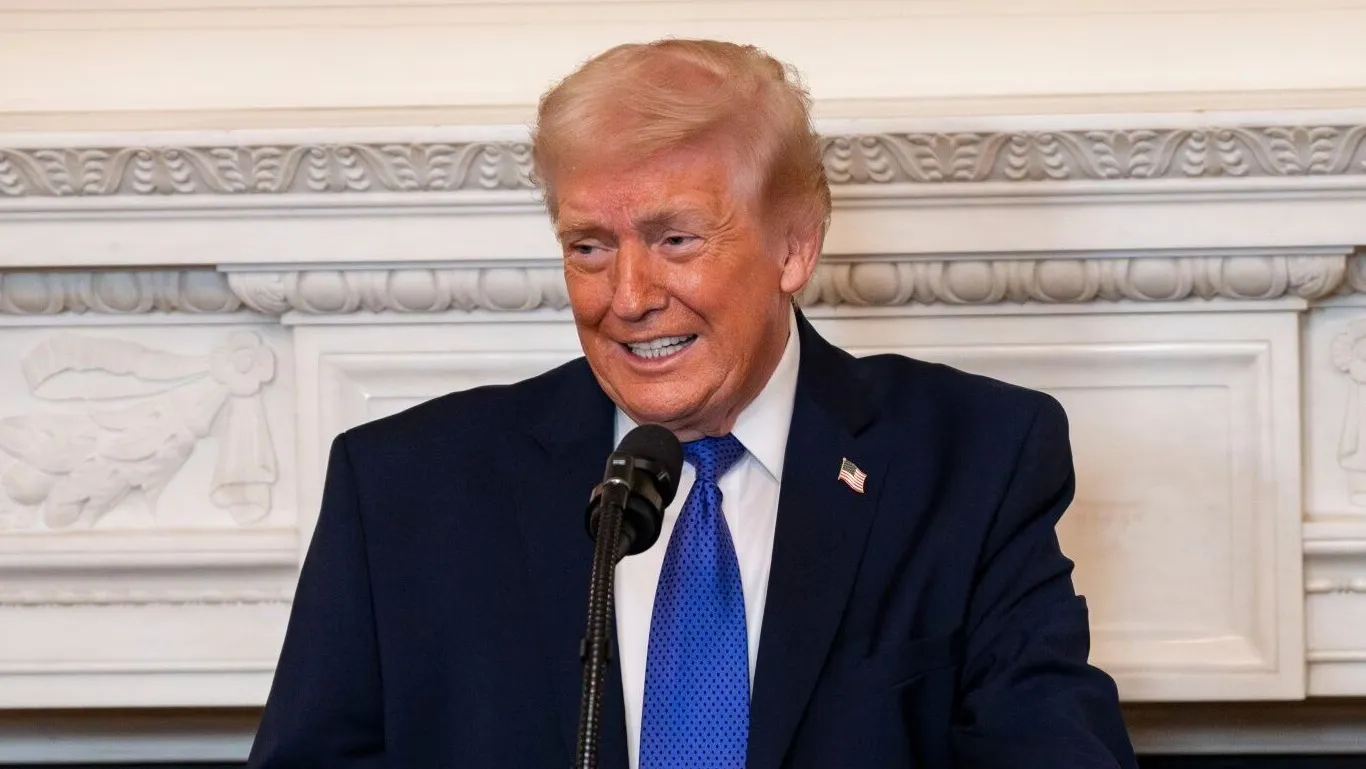
Trump reacted at a White House press conference hours after the ruling, calling the decision “deeply disappointing” and “extraordinarily anti-American.” He attacked justices who ruled against him, including his own nominees Neil Gorsuch and Amy Coney Barrett. And before the day was out, he announced a new 10% global tariff under Section 122 of the Trade Act of 1974 — a provision that has never previously been used in the history of American trade law.
Section 122 is a fundamentally different instrument from IEEPA. It was enacted during an era of economic uncertainty following President Nixon’s attempt to address balance-of-payments deficits, specifically to provide the president with emergency authority to prevent depreciation of the dollar in foreign exchange markets. Under the statute, the president may impose a temporary import surcharge of up to 15% for a maximum of 150 days, provided he finds there are “large and serious” balance-of-payments deficits. Any extension beyond 150 days requires an act of Congress.
According to the White House fact sheet, the proclamation cited the United States’ $1.2 trillion goods trade deficit, the first-ever negative balance on primary income recorded in 2024, and a net international investment position of negative 90% of GDP as the basis for finding a “fundamental international payments problem.” The 10% surcharge applies to all imports regardless of country of origin, on top of existing Most Favoured Nation duties, with exemptions for products already subject to Section 232 tariffs — covering steel, aluminium, copper, lumber, automobiles, and certain motor vehicles. Several agricultural products, pharmaceuticals, some electronics, and civil aircraft are also excluded.
The new tariff took effect at 12:01 a.m. EST on Tuesday, February 24, and is set to expire on July 24, 2026, unless Congress votes to extend it.
The following day — Saturday, February 21 — Trump announced on Truth Social that he would raise the rate to 15%, writing that he would “be, effective immediately, raising the 10% Worldwide Tariff on Countries, many of which have been ‘ripping’ the U.S. off for decades… to the fully allowed, and legally tested, 15% level.” As of Tuesday, the 15% uplift had not been formally implemented, but the administration indicated it could be introduced at any time.
One decision can change your entire career. Take that step with our Online courses in ACCA, HESI A2, ATI TEAS 7, HESI EXIT, NCLEX-RN, NCLEX-PN, and Financial Literacy. Join Serrari Ed and start building your brighter future today.
Legal Challenges Already Forming
The section 122 tariffs are unlikely to escape legal scrutiny. Economists and trade policy experts began raising doubts about the law’s applicability within hours of the announcement — and the architecture of the new tariffs leaves significant questions unanswered.
Atakan Bakiskan, a US economist at Berenberg bank, noted that “the current US trade deficit may not meet the condition of ‘large and serious balance-of-payments’ deficits” that Section 122 requires. A balance-of-payments deficit is not the same thing as a trade deficit: as Cato Institute economist Alan Reynolds and others have pointed out, the US does not face a balance-of-payments deficit under a flexible exchange rate, because the capital account surplus fully funds the trade deficit. Critics argue Section 122 was designed for a fixed exchange rate era and is legally inapplicable in current conditions.
Jennifer Hillman, a trade law expert at Georgetown University, told the Guardian she expects a legal challenge to the Section 122 tariffs even though they are temporary. “It’s going to be very interesting to look at whether companies or groups get a lot bolder at challenging the Trump administration” over other aspects of trade policy, she said.
The Brookings Institution noted that Section 122, Section 232 of the Trade Expansion Act of 1962, and Section 301 of the Trade Act of 1974 are now the administration’s primary remaining statutory avenues for reimposing the trade regime it had built under IEEPA. Each contains procedural prerequisites or limits on duration, amount, and scope that IEEPA — as an emergency statute — did not require. Analysts at JPMorgan said in a note that their base case is that the average tariff rate will “settle around the current rate of 9-10%,” with most eventual tariffs coming through Sections 301 and 232. “The country- and product-specific impact of Section 301 and 232 tariffs could be vastly different from those under the IEEPA tariffs,” they warned.
Trump also announced plans to initiate new Section 301 investigations into unfair foreign trade practices — investigations that could take two to three months even under an expedited process. The Section 122 tariff bridge is, in part, designed to hold the line commercially while those investigations proceed.
FedEx Leads the Refund Charge
The ruling opened the door to what trade attorneys expect to be a flood of refund litigation. FedEx, the global shipping giant, filed suit in the US Court of International Trade on Monday, February 23, seeking a “full refund” of all IEEPA tariff duties it had paid to the United States — the first major American corporation to do so following the Supreme Court decision.
The complaint named as defendants US Customs and Border Protection (CBP), its commissioner Rodney Scott, and the United States itself. FedEx did not disclose the exact dollar value of its claim, though the company warned in September 2025 that tariffs would cost it approximately $1 billion during fiscal year 2026.
The Supreme Court ruling, while decisive on the question of IEEPA’s legality, offered no guidance on refunds or how the repayment process should work. It simply held that IEEPA tariffs were unlawful and left the remedial mechanics to the Court of International Trade. Justice Kavanaugh, in his dissent, warned that the refund process would be a “mess” — an assessment that is already proving accurate.
Treasury Secretary Scott Bessent acknowledged on Sunday that the refund process could take “weeks or months.” Business groups, however, have said they expect full repayment and believe CBP should be able to update its payment systems to facilitate it. Costco, Revlon, EssilorLuxottica, Kawasaki, Bumble Bee, Yokohama Tire, and dozens of smaller firms had already filed similar refund suits before Friday’s ruling, and more are expected to follow FedEx’s lead.
The Yale Budget Lab estimated that consumers now face an average tariff rate of 9.1% following the ruling, compared with the higher levels prevailing under the full IEEPA regime. Research from the Federal Reserve Bank of New York found that nearly 90% of tariff costs under the Trump regime had been borne by American firms and consumers — a finding that complicates the administration’s political narrative that tariffs are paid by foreign exporters.
The EU: A Deal in Limbo
The disruption has rippled swiftly into US relations with its largest trading partners. The European Parliament suspended its ratification process for the US-EU trade agreement — known as the Turnberry Deal, struck in July 2025 between Commission President Ursula von der Leyen and President Trump — after MEPs concluded that the legal basis of the agreement had fundamentally changed.
Bernd Lange, chair of the European Parliament’s trade committee and the man who controls ratification, said: “A key instrument used on the US side to negotiate and implement the Turnberry Deal is no longer available. The situation is now more uncertain than ever.” The Turnberry Deal set a 15% US tariff rate for most EU goods, with the EU committing to remove duties on many American goods. The new Section 122 surcharge, applied on top of existing Most Favoured Nation rates, could push total tariff burdens on some EU products significantly above that 15% ceiling — for some cheeses, for instance, the combined effect could reach about 25%.
EU Trade Commissioner Maroš Šefčovič moved quickly to contain the damage. He spoke directly with US Trade Representative Jamieson Greer and Commerce Secretary Howard Lutnick over the weekend, and on Tuesday addressed the European Parliament’s International Trade Committee, telling lawmakers that both US counterparts had reassured him they stood by the Turnberry agreement. “Of course, what is now ahead of us, this is the transitional period where they are figuring out how to deal with this really landmark court ruling and we are talking every day,” he said, pointing to the 150-day window as a deadline for resolution by July 24.
Šefčovič urged the EU not to create pretexts for the US to abandon its commitments: “What I would like to avoid is creating a pretext for someone in the United States to say ‘you are not respecting your commitments, so why should we do so?'” Greer, separately, told CBS’s Face the Nation that trade deals “remain in place,” saying: “We want them to understand these deals are going to be good deals. We expect to stand by them.”
What Businesses Face Now
For British and European businesses exporting to the United States, the immediate picture is one of constrained but manageable pain — assuming the 15% uplift does not materialise, and assuming the Turnberry Deal is ultimately respected. William Bain, head of trade policy at the British Chambers of Commerce, described the 10% rate as providing “some relief” compared with the threatened 15%, but warned that the sequence of events underscored exactly how difficult it is for exporters to plan.
“It is far from clear what will happen next, and whether a higher tariff rate is still on the way. Despite the immediate reprieve, there is fresh uncertainty for UK firms exporting goods to the US,” he said. “This makes it very difficult for firms to understand the prices and margins they will be able to secure for their goods, currently under production, for export in several months’ time.”
The core problem is structural, not merely numerical. US trade policy has cycled through emergency declarations, legislative workarounds, court challenges, and weekend social media announcements at a pace that makes commercial planning a near-impossible exercise. Brookings scholars noted that the US average effective tariff rate had climbed to nearly 17% at its peak under IEEPA — the highest since the early 1930s — and that the Tax Foundation estimated tariffs had added roughly $1,000 to average US household costs in 2025, rising to as much as $1,300 in 2026.
Whether the Section 122 tariffs represent a stable interim equilibrium or simply the latest chapter in an ongoing legal and political battle over who controls American trade policy remains the central question. “It would be surprising if the Trump administration, after the 150 days during which the tariffs remain in effect, were to back down from its protectionist trade policy agenda,” Berenberg’s Bakiskan assessed. “During this 150-day period, it will likely explore new pathways to move closer to its preferred tariff regime.” With Section 301 investigations under way and a dozen Section 232 probes already in progress, those pathways already exist.
The tariff war did not end with the Supreme Court’s ruling. It simply changed its legal address.
Ready to take your career to the next level? Join our Online courses: ACCA, HESI A2, ATI TEAS 7 , HESI EXIT , NCLEX – RN and NCLEX – PN, Financial Literacy!🌟 Dive into a world of opportunities and empower yourself for success. Explore more at Serrari Ed and start your exciting journey today! ✨
Track GDP, Inflation and Central Bank rates for top African markets with Serrari’s comparator tool.
See today’s Treasury bonds and Money market funds movement across financial service providers in Kenya, using Serrari’s comparator tools.
photo source: Google
By: Montel Kamau
Serrari Financial Analyst
25th February, 2026
Article, Financial and News Disclaimer
The Value of a Financial Advisor
While this article offers valuable insights, it is essential to recognize that personal finance can be highly complex and unique to each individual. A financial advisor provides professional expertise and personalized guidance to help you make well-informed decisions tailored to your specific circumstances and goals.
Beyond offering knowledge, a financial advisor serves as a trusted partner to help you stay disciplined, avoid common pitfalls, and remain focused on your long-term objectives. Their perspective and experience can complement your own efforts, enhancing your financial well-being and ensuring a more confident approach to managing your finances.
Disclaimer: This article is for informational purposes only and does not constitute financial advice. Readers are encouraged to consult a licensed financial advisor to obtain guidance specific to their financial situation.
Article and News Disclaimer
The information provided on www.serrarigroup.com is for general informational purposes only. While we strive to keep the information up to date and accurate, we make no representations or warranties of any kind, express or implied, about the completeness, accuracy, reliability, suitability, or availability with respect to the website or the information, products, services, or related graphics contained on the website for any purpose. Any reliance you place on such information is therefore strictly at your own risk.
www.serrarigroup.com is not responsible for any errors or omissions, or for the results obtained from the use of this information. All information on the website is provided on an as-is basis, with no guarantee of completeness, accuracy, timeliness, or of the results obtained from the use of this information, and without warranty of any kind, express or implied, including but not limited to warranties of performance, merchantability, and fitness for a particular purpose.
In no event will www.serrarigroup.com be liable to you or anyone else for any decision made or action taken in reliance on the information provided on the website or for any consequential, special, or similar damages, even if advised of the possibility of such damages.
The articles, news, and information presented on www.serrarigroup.com reflect the opinions of the respective authors and contributors and do not necessarily represent the views of the website or its management. Any views or opinions expressed are solely those of the individual authors and do not represent the website's views or opinions as a whole.
The content on www.serrarigroup.com may include links to external websites, which are provided for convenience and informational purposes only. We have no control over the nature, content, and availability of those sites. The inclusion of any links does not necessarily imply a recommendation or endorsement of the views expressed within them.
Every effort is made to keep the website up and running smoothly. However, www.serrarigroup.com takes no responsibility for, and will not be liable for, the website being temporarily unavailable due to technical issues beyond our control.
Please note that laws, regulations, and information can change rapidly, and we advise you to conduct further research and seek professional advice when necessary.
By using www.serrarigroup.com, you agree to this disclaimer and its terms. If you do not agree with this disclaimer, please do not use the website.
www.serrarigroup.com, reserves the right to update, modify, or remove any part of this disclaimer without prior notice. It is your responsibility to review this disclaimer periodically for changes.
Serrari Group 2025