










A regional initiative, the Program for Improving Fisheries Governance and Blue Economy Trade Corridors (PROFISHBLUE), has emerged as a groundbreaking model for sustainable resource management and economic integration across Southern Africa. This African Development Bank Group-funded programme, supported by a $9.2 million grant through the African Development Fund (ADF 15), is now tangibly improving the lives of nearly three million people across the 16 Southern African Development Community (SADC) member states. By overhauling aquatic resource management and boosting cross-border fish trade, the programme is successfully raising fish production, consumption, and incomes while building climate resilience in vulnerable communities.
Since its inception in 2022, PROFISHBLUE has generated cross-border trade volumes exceeding 500,000 tonnes over the past four years, representing a significant contribution to regional trade and food security. The core objective of the project is to promote sustainable management and use of fisheries resources within the blue growth context to improve food security, reduce poverty levels through employment opportunities, and facilitate crucial intra-regional trade.
The success of the initiative, which was recently celebrated on World Fisheries Day, underscores the commitment of the African Development Bank Group (AfDB) to expanding its High Five priority of Feed Africa and Integrate Africa through strategic investments in the blue economy.
Build the future you deserve. Get started with our top-tier Online courses: ACCA, HESI A2, ATI TEAS 7, HESI EXIT, NCLEX-RN, NCLEX-PN, and Financial Literacy. Let Serrari Ed guide your path to success. Enroll today.
Deepening Regional Integration and Trade Corridors
The primary engine of economic transformation under PROFISHBLUE has been the establishment and enhancement of sustainable blue economy trade corridors. The project actively focuses on reducing barriers to the movement of fish and fishery products across the region, a critical step toward achieving the broader SADC objective of regional economic development and poverty alleviation.
The establishment of these trade corridors relies heavily on policy harmonization and the modernization of infrastructure. In collaboration with partners like the United Nations Industrial Development Organization (UNIDO), the program has supported the replication of the ‘One Stop Border Post’ (OSBP) program for fisheries across six bordering countries: Malawi, Zambia, Zimbabwe, Mozambique, Comoros, Madagascar, and the United Republic of Tanzania. These trade hubs have been equipped with fisheries inspection facilities and control equipment to assure the trade of safe and compliant products, ultimately reducing clearance times and strengthening intra-regional trade.
The resultant cross-border trade volume exceeding 500,000 tonnes over the past four years represents a success in integrating fragmented markets and creating a more competitive regional fish value chain. The initial target for PROFISHBLUE was to increase the volume of cross-border fish trade by 50%, equating to a target volume of 250,000 tonnes by 2024. The actual volume achieved suggests a massive over-performance against this core economic metric.
Director Domingos Gove, speaking on behalf of Angele Makombo Ntumba, SADC Deputy Secretary for Regional Integration, noted that this support has demonstrated SADC’s capacity to improve aquatic food systems for the benefit of over 380 million people in the region. This figure highlights the enormous scale of the SADC population that relies on the health and efficiency of these food systems.
Comprehensive Capacity Building and Technical Support
The programme’s impact is not merely structural; it is deeply embedded in human capital development. PROFISHBLUE has successfully built capacity for over 250,000 beneficiaries across seven African Development Fund (ADF) countries: the Democratic Republic of Congo (DRC), Madagascar, Malawi, Mozambique, Tanzania, Zambia, and Zimbabwe. These ADF countries, which primarily consist of low-income regional member countries, receive concessional financing and grants from the African Development Fund (ADF), which was successfully replenished for its Fifteenth cycle (ADF-15) to cover the operational period of 2020–2022.
The capacity building initiative provided tangible assets and training to strengthen the entire value chain:
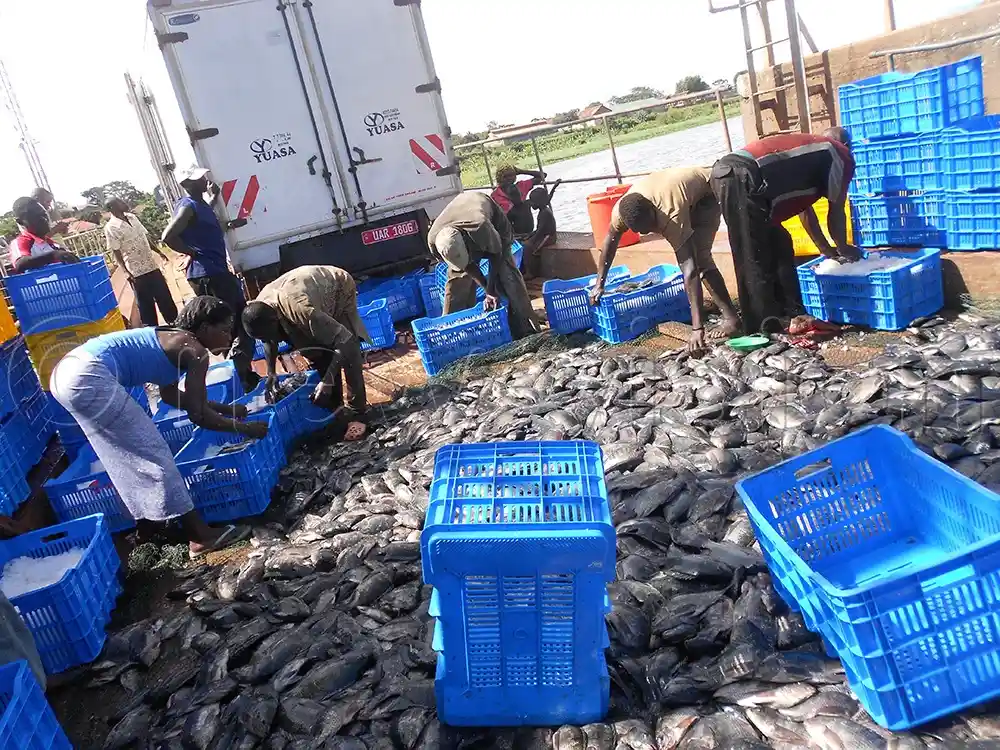
- Infrastructure Support: This included fish quality assurance equipment and tools and, critically, refrigerated transport vehicles to maintain the cold chain and drastically reduce post-harvest losses.
- Technical Training: Training covered essential areas such as fish value chain and post-harvest utilisation, ensuring that fish products meet both regional and international sanitary and phytosanitary (SPS) requirements.
- Business Development: Support focused on business development and SME incubation, particularly for women and youth-led enterprises, which are key drivers of job creation and poverty reduction in rural areas.
Furthermore, a significant portion of the initiative was dedicated to science and governance. The programme provided support for fish stock assessments on transboundary lakes, which is vital for setting sustainable catch limits and managing shared resources. It also included training on vessel inspection and fish catch statistics, alongside the deployment of vessel monitoring systems to deter illegal fishing, a rampant issue that undermines conservation efforts and food security across the continent. The enhancement of inspection services through technical assistance and quality assurance programs helps ensure mutual recognition of services across borders, reducing friction in trade.
One decision can change your entire career. Take that step with our Online courses in ACCA, HESI A2, ATI TEAS 7, HESI EXIT, NCLEX-RN, NCLEX-PN, and Financial Literacy. Join Serrari Ed and start building your brighter future today.
Focusing on Climate Resilience and Inclusive Growth
The PROFISHBLUE project has demonstrated that fishery resources can be managed sustainably, equitably, and resiliently in the face of climate change and external shocks. The importance of this resilience cannot be overstated, as climate-driven impacts—such as rising temperatures, increasing rainfall variability, and the occurrence of extreme weather events—pose substantial challenges to both the aquaculture and capture fisheries sectors in Sub-Saharan Africa.
Key climate resilience and economic transformation components include:
1. Genetic Improvement Programs: The initiative supported genetic improvement programs for endemic tilapia species, such as the three-spotted tilapia (Oreochromis andersonii) in Zambia, locally known as Kafue bream. This program aims to develop a disease-free foundation broodstock through selective breeding, improving growth traits while monitoring survival. Improved fish growth from these programs allows farmers to grow fish to a larger size in a shorter period with fewer inputs, contributing to the efficient utilization of resources and increasing farm profitability—a key climate-smart aquaculture strategy.
2. Inclusive Livelihoods: The celebration of the project’s achievements in Gaborone on World Fisheries Day, November 21, 2025, highlighted the programme’s focus on inclusive development. World Fisheries Day 2025 aligned with the theme “Blue Transformation: Strengthening Small-Scale and Sustainable Fisheries,” reinforcing the importance of PROFISHBLUE’s community-centered approach. Testimonials were featured from project participants, including women in fisheries who shared how the project has enhanced their livelihoods. One participant, Hifadhi Hai from Tanzania, mentioned an investment journey that few smallholder entrepreneurs would consider piloting technology in seaweed farming, indicating a push towards diversifying blue economy activities. Similarly, Tamala Mtambo of the Twiyule Fish Cooperative in Malawi commended the support that helped them “turn fish processing into progress.” These micro-level interventions underscore the programme’s success in creating jobs and livelihoods while eradicating extreme poverty in rural areas.
A Global Model for the Blue Economy
The success of PROFISHBLUE offers a compelling case study for how strategic investment in fisheries governance can catalyze economic growth. Neeraj Vij, African Development Bank’s Regional Sector Manager for Feed Africa Operations for Southern Africa, highlighted the global context, noting that about 3 billion people rely on global supply chains for aquatic-sourced food, contributing $300 billion annually to the global economy. He reaffirmed the AfDB Group’s commitment to expanding support for blue economy initiatives across SADC Member States, aligning with the bank’s strategy to leverage Africa’s vast aquatic resources.
The project is a collaboration between the SADC, the African Development Bank Group, and key implementing partners, including the Food and Agriculture Organization (FAO), the United Nations Industrial Development Organization (UNIDO), the Worldwide Fund for Nature (WWF), WorldFish, and the African Organization for Standardization (ARSO). This multi-stakeholder model ensures a holistic approach, covering scientific research, technical capacity, policy harmonization, and market access. For instance, WorldFish has provided technical project support and capacity building for staff in various Genetic Improvement Program activities, working closely with the Ministry of Fisheries and Livestock in Zambia.
By enhancing governance, promoting sustainable practices like Climate-Smart Aquaculture (CSAq), and opening trade corridors, PROFISHBLUE is ensuring that Africa’s burgeoning blue economy lives up to its immense potential for improving health, equality, environment, and community well-being for future generations. The African Continental Free Trade Area (AfCFTA) presents a transformative opportunity to further accelerate this progress by reducing trade barriers and harmonizing standards, significantly expanding access to affordable, nutritious aquatic foods across the continent. The programme’s achievements, celebrated in Gaborone, provide a crucial platform for regional stakeholders to discuss the replication and scalability of these best practices through national investment programs, securing the future of aquatic food systems in Southern Africa.
Ready to take your career to the next level? Join our Online courses: ACCA, HESI A2, ATI TEAS 7 , HESI EXIT , NCLEX – RN and NCLEX – PN, Financial Literacy!🌟 Dive into a world of opportunities and empower yourself for success. Explore more at Serrari Ed and start your exciting journey today! ✨
Track GDP, Inflation and Central Bank rates for top African markets with Serrari’s comparator tool.
See today’s Treasury bonds and Money market funds movement across financial service providers in Kenya, using Serrari’s comparator tools.
Photo source: Google
By: Montel Kamau
Serrari Financial Analyst
8th December, 2025
Article, Financial and News Disclaimer
The Value of a Financial Advisor
While this article offers valuable insights, it is essential to recognize that personal finance can be highly complex and unique to each individual. A financial advisor provides professional expertise and personalized guidance to help you make well-informed decisions tailored to your specific circumstances and goals.
Beyond offering knowledge, a financial advisor serves as a trusted partner to help you stay disciplined, avoid common pitfalls, and remain focused on your long-term objectives. Their perspective and experience can complement your own efforts, enhancing your financial well-being and ensuring a more confident approach to managing your finances.
Disclaimer: This article is for informational purposes only and does not constitute financial advice. Readers are encouraged to consult a licensed financial advisor to obtain guidance specific to their financial situation.
Article and News Disclaimer
The information provided on www.serrarigroup.com is for general informational purposes only. While we strive to keep the information up to date and accurate, we make no representations or warranties of any kind, express or implied, about the completeness, accuracy, reliability, suitability, or availability with respect to the website or the information, products, services, or related graphics contained on the website for any purpose. Any reliance you place on such information is therefore strictly at your own risk.
www.serrarigroup.com is not responsible for any errors or omissions, or for the results obtained from the use of this information. All information on the website is provided on an as-is basis, with no guarantee of completeness, accuracy, timeliness, or of the results obtained from the use of this information, and without warranty of any kind, express or implied, including but not limited to warranties of performance, merchantability, and fitness for a particular purpose.
In no event will www.serrarigroup.com be liable to you or anyone else for any decision made or action taken in reliance on the information provided on the website or for any consequential, special, or similar damages, even if advised of the possibility of such damages.
The articles, news, and information presented on www.serrarigroup.com reflect the opinions of the respective authors and contributors and do not necessarily represent the views of the website or its management. Any views or opinions expressed are solely those of the individual authors and do not represent the website's views or opinions as a whole.
The content on www.serrarigroup.com may include links to external websites, which are provided for convenience and informational purposes only. We have no control over the nature, content, and availability of those sites. The inclusion of any links does not necessarily imply a recommendation or endorsement of the views expressed within them.
Every effort is made to keep the website up and running smoothly. However, www.serrarigroup.com takes no responsibility for, and will not be liable for, the website being temporarily unavailable due to technical issues beyond our control.
Please note that laws, regulations, and information can change rapidly, and we advise you to conduct further research and seek professional advice when necessary.
By using www.serrarigroup.com, you agree to this disclaimer and its terms. If you do not agree with this disclaimer, please do not use the website.
www.serrarigroup.com, reserves the right to update, modify, or remove any part of this disclaimer without prior notice. It is your responsibility to review this disclaimer periodically for changes.
Serrari Group 2025