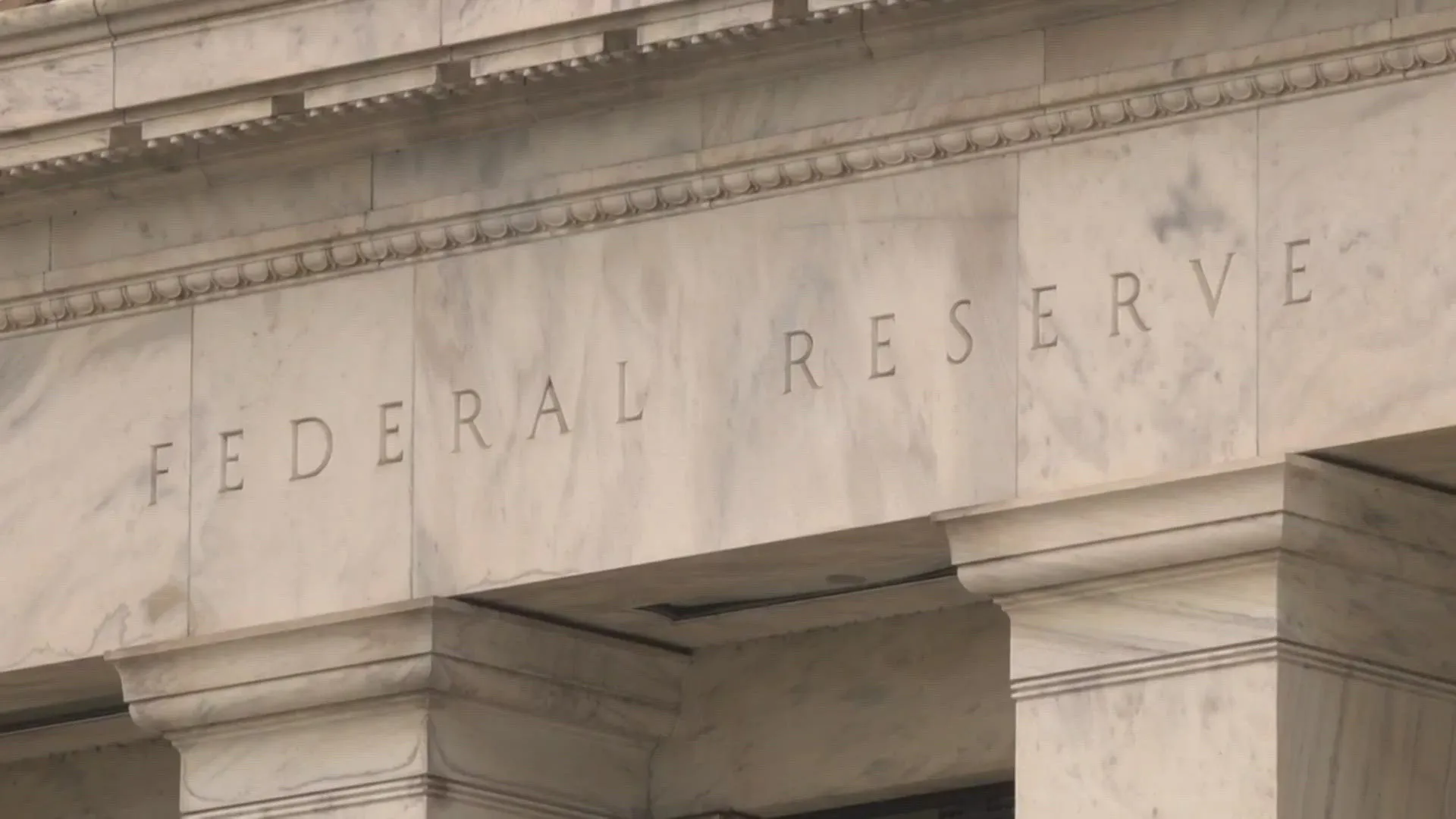











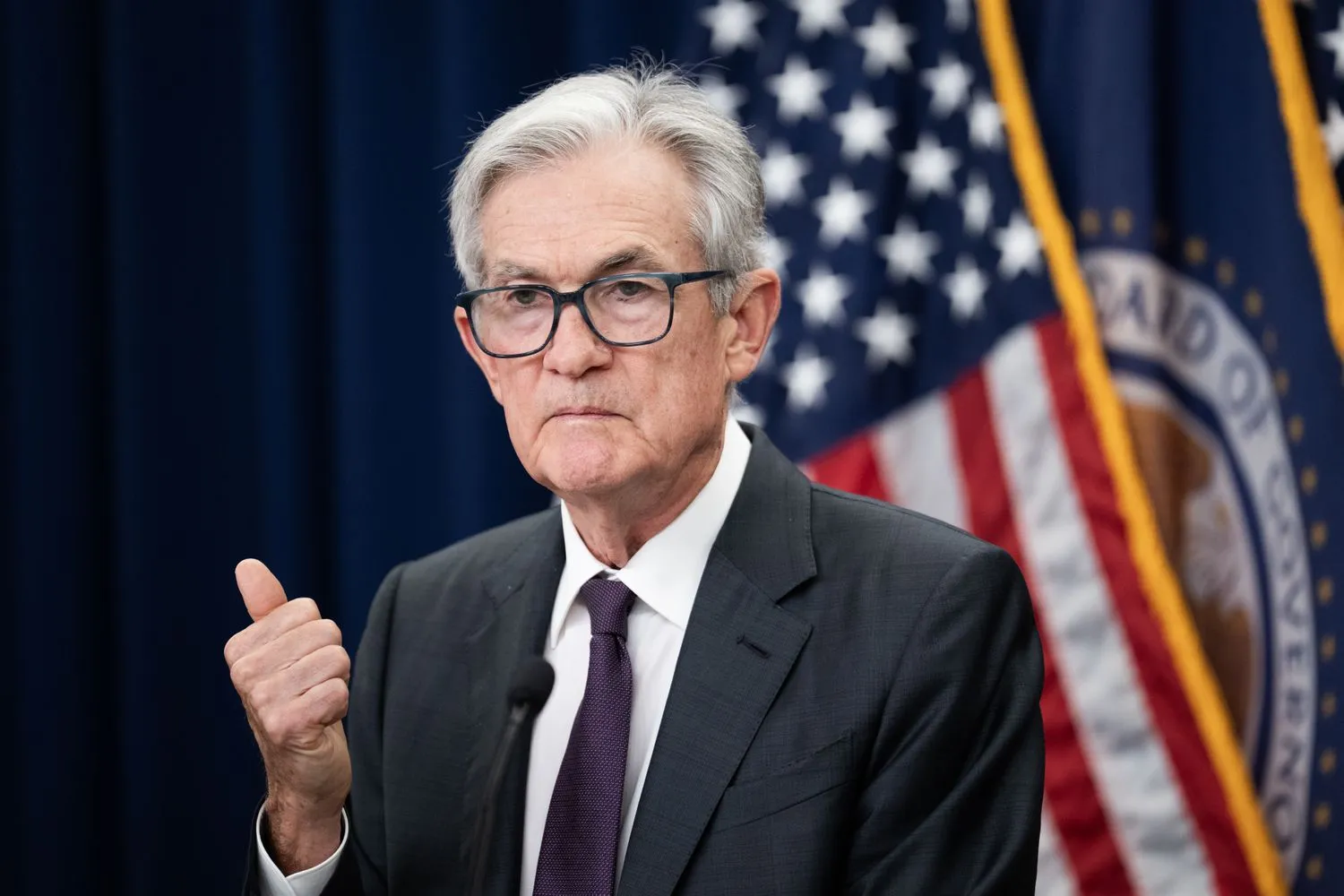
The United States Federal Reserve reduced its benchmark interest rate by 0.25 percentage points on Wednesday, marking the third consecutive cut of 2025, but the decision revealed deep divisions within the central bank about the appropriate path forward—internal discord that threatens to complicate monetary policy as the institution prepares for a historic leadership transition in May 2026.
The Federal Open Market Committee voted 9-3 to lower the federal funds rate to a range of 3.50% to 3.75%, bringing the key lending rate to its lowest level in three years. However, the unusually narrow margin underscores mounting tensions among policymakers grappling with conflicting economic signals—a weakening labor market on one hand and persistent inflation pressures on the other.
Build the future you deserve. Get started with our top-tier Online courses: ACCA, HESI A2, ATI TEAS 7, HESI EXIT, NCLEX-RN, NCLEX-PN, and Financial Literacy. Let Serrari Ed guide your path to success. Enroll today.
Unprecedented Dissents Reveal Fracturing Consensus
The vote marked the most dissents in six years and represented a stark departure from the Federal Reserve’s traditional consensus-driven approach to monetary policy. Fed Governor Stephen Miran, on unpaid leave from his position leading President Donald Trump’s Council of Economic Advisers, voted in favor of a larger 0.5 percentage point cut—his third consecutive dissent advocating for more aggressive easing.
Meanwhile, Kansas City Fed President Jeffrey Schmid and Chicago Fed President Austan Goolsbee voted to hold rates steady, reflecting concerns that inflation remains uncomfortably above the Fed’s 2% target and that further rate cuts could undermine price stability. Schmid’s dissent marked his second consecutive vote against rate reductions, having also opposed easing at the Fed’s October meeting.
The last time three FOMC members voted against a Fed move was in September 2019, when the central bank cut interest rates to unwind a series of previous increases meant to stave off inflation that never materialized. The current disagreement carries particular weight given the fog of uncertainty surrounding the economic outlook and the impending change in Fed leadership.
“Collegiality on the FOMC is breaking down,” wrote Samuel Tombs, chief US economist at Pantheon Macroeconomics, characterizing the unusual three-way split as symptomatic of deeper divisions about monetary policy direction.
Powell Acknowledges “Very Challenging Situation”
Fed Chair Jerome Powell acknowledged at a news conference following the decision that Wednesday’s rate cut was “a closer call” than previous reductions. “I would say today was a closer call, but we decided it was the right call,” Powell stated, while emphasizing that the central bank is “well-positioned to wait to see how the economy evolves” before making further adjustments.
Powell characterized the economic environment as presenting “a very challenging situation” for policymakers attempting to balance competing priorities. “The situation is that our two goals are a bit in tension,” he explained. “You’ve got one tool, it can’t do two things at once… you can’t do two things at once.”
Despite the internal divisions, Powell maintained that the discussions within the FOMC have been constructive. “The discussions we’ve had are as good as any I’ve had in my 14 years at the Fed,” he asserted, describing committee conversations as thoughtful and respectful even amid disagreement about how to weigh opposing risks to the Fed’s dual mandate of maximum employment and price stability.
The Fed chair emphasized that policymakers need time to assess how three rate cuts totaling a full percentage point since September are working through the economy. “We are well-positioned to wait to see how the economy evolves,” Powell said. “We’re going to get a great deal of data between now and the January meeting—the data we get will factor into our thinking.”
Slower Pace of Easing Projected for 2026
Beyond the divisive vote on Wednesday’s rate cut, the Federal Reserve’s quarterly economic projections revealed a markedly more cautious outlook for future monetary policy adjustments. The central bank’s closely watched “dot plot” of individual officials’ rate forecasts indicated just one additional 0.25 percentage point cut in 2026—a sharp downgrade from the four cuts projected in September when the Fed last issued economic projections.
“The slower pace of cuts for next year reflects the higher inflation readings we’ve had this year,” Powell explained during his press conference. The updated projections suggest the Fed anticipates bringing its benchmark rate down to approximately 3.4% by the end of 2026, then to 3.10% by the end of 2027, implying a methodical pace of one cut annually for the next two years.
The dot plot also revealed significant internal disagreement about the appropriate policy path. Seven FOMC officials indicated they want no cuts next year, representing nearly a third of the 19 policymakers who participate in Fed meetings. These “soft dissents”—while not reflected in the formal vote—signal a substantial hawkish bloc within the committee that believes rates should remain unchanged to combat inflation.
“Hard dissents from voting members as well as the soft dissents seen in the dot plot highlight the Fed’s hawkish bloc,” wrote Kay Haigh, global co-head of fixed income and liquidity solutions at Goldman Sachs Asset Management, suggesting that “the next Fed Chair will have a hard time corralling the Committee’s participants to agree to further reductions in the funds rate next year.”
Economic Data Clouded by Government Shutdown
The Federal Reserve’s deliberations have been complicated by a data blackout during the longest-ever US government shutdown, which ended in November, leaving policymakers partially in the dark about the true state of the economy. The prolonged fiscal impasse delayed the release of crucial economic indicators, including employment and inflation data that typically inform monetary policy decisions.
Despite these information gaps, labor market concerns continue to weigh on policymakers’ minds. The unemployment rate ticked up from 4.3% to 4.4% in September, according to Labor Department figures released in a delayed report last month. While the job market remains relatively healthy by historical standards, the trajectory has worried some Fed officials who fear waiting too long to reduce rates could allow labor market weakness to accelerate.
“If you wait until you see cracks from a labor market perspective and then you start to adjust policy down, it’s too late,” explained RBC Capital Markets economist Michael Porcelli, articulating the dovish perspective that favors preemptive easing to support employment even if inflation remains above target.
However, inflation data presents a more complicated picture. Consumer prices rose 2.7% on a yearly basis in November, fueled by elevated housing and food costs. Powell acknowledged that progress toward the Fed’s 2% inflation target “has been slower than expected” and characterized the sluggish disinflation as “a bit frustrating.”
The inflation overshoot has been largely attributed to President Trump’s tariff policies. “It’s really tariffs that’s causing most of the inflation overshoot,” Powell stated at his press conference, though he emphasized the Fed is taking a wait-and-see approach regarding the inflationary impact of trade policy, noting it will be “quite some time” until concrete policies are implemented that the central bank can assess.
One decision can change your entire career. Take that step with our Online courses in ACCA, HESI A2, ATI TEAS 7, HESI EXIT, NCLEX-RN, NCLEX-PN, and Financial Literacy. Join Serrari Ed and start building your brighter future today.
Trump’s Criticism and the Search for Powell’s Successor
President Donald Trump, who has repeatedly criticized the Federal Reserve for being “too late” to cut borrowing costs, responded swiftly to Wednesday’s rate decision. Trump said the Fed’s 0.25 percentage point cut “could have been at least doubled” and insisted that “our rates should be much lower” and that the United States “should have the lowest rates in the world.”
The president’s ongoing criticism of Powell and his stated preference for much more aggressive rate cuts have elevated the importance of Trump’s impending nomination of Powell’s successor. Powell’s term as Fed chair expires in May 2026, though he could theoretically remain on the Board of Governors until January 2028. Powell has not publicly indicated whether he intends to step down from the board when his chairmanship ends.
Kevin Hassett, director of the White House National Economic Council, has emerged as the overwhelming frontrunner to succeed Powell as Fed chair. Prediction market Kalshi put the odds of Hassett being nominated at 86% as of Wednesday, vastly ahead of other candidates including former Fed Governor Kevin Warsh (6% odds) and sitting Fed Governor Michelle Bowman (4% odds).
A Bloomberg News report last week identified Hassett as the “frontrunner” among advisers and allies of President Trump, noting that the president would have “a close ally whom the president knows well and trusts” installed at the independent central bank. Hassett is seen as someone who would bring Trump’s approach to interest-rate cutting to the Fed, which Trump has long wanted to influence more directly.
Trump himself has teased that he knows his choice for Fed chair, telling reporters aboard Air Force One: “I know who I am going to pick, yeah. We’ll be announcing it.” When asked specifically about Hassett, Trump smirked and added “I’m not telling you, we’ll be announcing it,” though he has said the announcement will come “probably early next year.”
Concerns About Fed Independence Under Hassett
Hassett’s potential nomination has generated significant concern among economists, market participants, and Fed observers about the central bank’s independence and credibility. A CNBC Fed Survey released this week showed that while 84% of respondents believe Trump will tap Hassett to head the central bank, only 11% think that’s what the president should do.
Fed Governor Christopher Waller emerged as the favored pick of 47% of survey respondents, followed by Kevin Warsh at 23%, though only 5% of respondents think Trump will actually select either candidate. Concern about Hassett appears centered on questions about his commitment to the Fed’s dual mandates and whether he would maintain the central bank’s political independence from White House pressure.
A majority—76%—of survey respondents believe the next Fed chair will be more dovish than Powell, meaning quicker to cut rates if labor markets weaken and slower to raise them in the face of above-target inflation. Critically, 51% believe the next chair is likely to fulfill Trump’s desires for lower rates rather than acting independently based on economic data.
Hassett has publicly advocated for more aggressive rate cuts, telling Fox News last month that he would be “cutting rates right now” if he were in Powell’s shoes. He has also defended Trump’s attempts to terminate Fed Governor Lisa Cook and endorsed the president’s criticism of Powell’s leadership, raising questions about whether he would maintain appropriate independence from presidential pressure.
“It’s not just about Kevin Hassett being closer to President Trump than prior Fed chairs were to their nominating presidents,” Joseph Gagnon, a senior fellow at the Peterson Institute for International Economics, told Al Jazeera. “There is also the contextual background: the firing of Lisa Cook, the attempts to end Jerome Powell’s term early, and Kevin Hassett’s own stated approval for those attempts.”
Bond investors told the Treasury Department last month that they feared Hassett would push to lower borrowing costs aggressively to appease Trump, according to the Financial Times. That sentiment was reflected in one-on-one conversations with executives at major Wall Street banks, asset management giants, and other significant players in the US debt market. Treasury yields rose by 11 basis points after Bloomberg reported on November 25 that Hassett was the frontrunner for the position, suggesting market nervousness about the potential appointment.
Hassett Signals Federal Reserve Overhaul Plans
In recent interviews, Hassett has openly telegraphed his intentions to fundamentally reshape the Federal Reserve if nominated and confirmed as chair. In an interview with Fox Business on Tuesday, Hassett hinted he would overhaul key parts of the Fed and scrutinize everything from the research divisions to regional presidents.
“The point is the Fed should be focused on monetary policy and try to stay out of politics,” Hassett stated, criticizing Fed officials for discussing tariffs and making what he characterized as political statements. He suggested he would evaluate or cut economists and research divisions, as well as replace Fed members as necessary to refocus the institution on core monetary policy functions.
Hassett’s reform agenda has garnered support from some quarters. Treasury Secretary Scott Bessent, who is leading the Fed chair search, has signaled he favors a rethink of the Fed’s mission. “We’ve gotten to this point where monetary policy has gotten very complicated, and it’s more than just cutting rates,” Bessent said in a CNBC interview. “I think we’ve got to kind of simplify things.”
Mohamed El-Erian, chief economic advisor at Allianz, applauded this perspective: “We don’t need a play-by-play Fed. We need the Fed to cool it. We need the Fed to step back and take a bigger, sort of visionary view. And we need reforms. We desperately need reforms.”
However, critics worry that Hassett’s planned reforms could undermine the Fed’s analytical capabilities and institutional expertise at a time when monetary policy faces particularly complex challenges. The regional Fed banks employ thousands of economists who conduct research on everything from local labor market conditions to financial stability risks, providing critical inputs for monetary policy deliberations.
The Hawkish Turn in Regional Fed Presidents
Adding another layer of complexity to the Fed’s outlook, the composition of voting members on the FOMC will shift in 2026 toward a more hawkish tilt, meaning more policymakers inclined to fight inflation by keeping rates elevated rather than supporting the labor market through lower borrowing costs.
The Federal Reserve’s structure includes seven governors appointed by the president and confirmed by the Senate, plus twelve regional Fed presidents who serve on a rotating basis. While governors hold permanent voting rights, only five regional presidents vote at any given meeting, with the president of the New York Fed holding a permanent vote and the other regional presidents rotating through voting positions.
Bessent has singled out the role of regional presidents as an area for potential reform, noting that several presidents are not from the districts they represent. The regional presidents come up for reappointment in 2026, and while local boards hire the presidents, appointments are subject to Board of Governors approval—giving the new Fed chair significant influence over the leadership of the regional banks.
This institutional leverage could allow a new chair to reshape the Fed’s culture and policy orientation through strategic personnel decisions, though any such moves would likely face resistance from regional boards and could generate controversy about political interference in the central bank’s operations.
Powell’s Legacy and Closing Reflections
Asked about his goals during the remaining months of his term as chair, Powell emphasized his focus on the economy: “I want to turn over this job to whoever replaces me with the economy in really good shape. I want inflation to be under control, coming back down to 2%, and I want the labor market to be strong.”
Despite the challenges and internal divisions, Powell struck an optimistic note about the overall economic picture. “It’s pretty clear we’ve avoided a recession—growth this year has been solid. Again, the U.S. economy has just been remarkable,” he said, noting that American economic performance has far outpaced other developed nations that have contended with slow growth and persistent inflation struggles.
Powell repeatedly emphasized that consumer spending remains resilient while companies continue investing in artificial intelligence infrastructure. He also suggested growing worker efficiency driven by technological advancement could contribute to faster economic growth without generating additional inflation—a scenario that would ease the tension between the Fed’s dual mandates.
However, Powell acknowledged the political dimension of inflation’s impact on American households: “We understand very well that prices went up by a great deal, and people really feel that, and it’s prices of food and transportation and heating your home and things like that. So there’s tremendous pain in that burst of inflation.” He noted that while inflation itself has declined substantially, the cumulative effect of higher price levels continues to weigh on consumer sentiment and purchasing power.
When asked whether Trump’s search for a new Fed chair is hindering his work or changing his thinking, Powell responded with a resounding “no”, maintaining that he remains focused on executing monetary policy based on economic data and the Fed’s statutory mandates regardless of the political environment.
Market Reactions and Forward Outlook
Financial markets initially tumbled on news of the Fed’s more cautious outlook for 2026 rate cuts, with equity indexes dropping nearly 3% immediately after the decision as interest rates across the yield curve rose by approximately 10 basis points. However, by Thursday morning, markets were trending upward again as investors digested the decision and adjusted their expectations.
Analysts at Goldman Sachs Asset Management characterized the Fed’s New Year’s resolution as “a more gradual pace of easing”, with the central bank potentially skipping a rate cut at its January meeting while resuming reductions at the March gathering. The slower pace of monetary easing reflects both the persistence of above-target inflation and policymakers’ desire to see clearer evidence that previous rate cuts are having their intended effects on the economy.
Looking ahead, the Federal Reserve faces an extraordinarily complex environment shaped by competing economic forces, deep internal divisions, uncertain leadership succession, and external political pressures. The central bank’s ability to maintain its credibility and independence while navigating these challenges will have profound implications not just for American monetary policy, but for global financial stability given the Federal Reserve’s role as the world’s most influential central bank.
As Powell prepares to hand over the reins to his successor in May 2026, the question looming over the Federal Reserve is whether the institution can preserve the consensus-driven approach and political independence that have defined its operations for decades—or whether a new era of more overtly political monetary policy lies ahead under leadership more aligned with presidential priorities than with the technocratic traditions that have historically guided the central bank’s decisions.
Ready to take your career to the next level? Join our Online courses: ACCA, HESI A2, ATI TEAS 7 , HESI EXIT , NCLEX – RN and NCLEX – PN, Financial Literacy!🌟 Dive into a world of opportunities and empower yourself for success. Explore more at Serrari Ed and start your exciting journey today! ✨
Track GDP, Inflation and Central Bank rates for top African markets with Serrari’s comparator tool.
See today’s Treasury bonds and Money market funds movement across financial service providers in Kenya, using Serrari’s comparator tools.
Photo source: Google
By: Montel Kamau
Serrari Financial Analyst
11th December, 2025
Article, Financial and News Disclaimer
The Value of a Financial Advisor
While this article offers valuable insights, it is essential to recognize that personal finance can be highly complex and unique to each individual. A financial advisor provides professional expertise and personalized guidance to help you make well-informed decisions tailored to your specific circumstances and goals.
Beyond offering knowledge, a financial advisor serves as a trusted partner to help you stay disciplined, avoid common pitfalls, and remain focused on your long-term objectives. Their perspective and experience can complement your own efforts, enhancing your financial well-being and ensuring a more confident approach to managing your finances.
Disclaimer: This article is for informational purposes only and does not constitute financial advice. Readers are encouraged to consult a licensed financial advisor to obtain guidance specific to their financial situation.
Article and News Disclaimer
The information provided on www.serrarigroup.com is for general informational purposes only. While we strive to keep the information up to date and accurate, we make no representations or warranties of any kind, express or implied, about the completeness, accuracy, reliability, suitability, or availability with respect to the website or the information, products, services, or related graphics contained on the website for any purpose. Any reliance you place on such information is therefore strictly at your own risk.
www.serrarigroup.com is not responsible for any errors or omissions, or for the results obtained from the use of this information. All information on the website is provided on an as-is basis, with no guarantee of completeness, accuracy, timeliness, or of the results obtained from the use of this information, and without warranty of any kind, express or implied, including but not limited to warranties of performance, merchantability, and fitness for a particular purpose.
In no event will www.serrarigroup.com be liable to you or anyone else for any decision made or action taken in reliance on the information provided on the website or for any consequential, special, or similar damages, even if advised of the possibility of such damages.
The articles, news, and information presented on www.serrarigroup.com reflect the opinions of the respective authors and contributors and do not necessarily represent the views of the website or its management. Any views or opinions expressed are solely those of the individual authors and do not represent the website's views or opinions as a whole.
The content on www.serrarigroup.com may include links to external websites, which are provided for convenience and informational purposes only. We have no control over the nature, content, and availability of those sites. The inclusion of any links does not necessarily imply a recommendation or endorsement of the views expressed within them.
Every effort is made to keep the website up and running smoothly. However, www.serrarigroup.com takes no responsibility for, and will not be liable for, the website being temporarily unavailable due to technical issues beyond our control.
Please note that laws, regulations, and information can change rapidly, and we advise you to conduct further research and seek professional advice when necessary.
By using www.serrarigroup.com, you agree to this disclaimer and its terms. If you do not agree with this disclaimer, please do not use the website.
www.serrarigroup.com, reserves the right to update, modify, or remove any part of this disclaimer without prior notice. It is your responsibility to review this disclaimer periodically for changes.
Serrari Group 2025