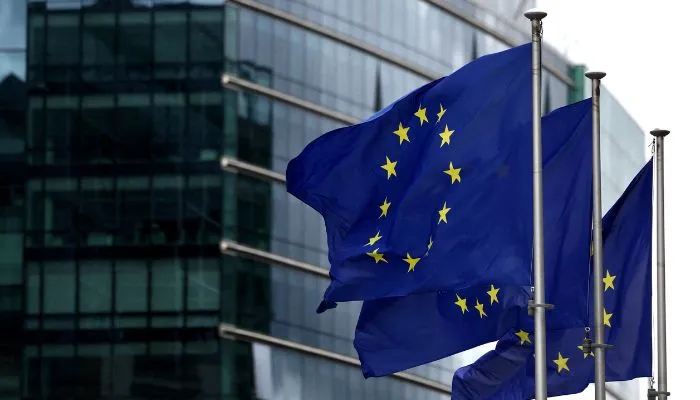
The European Union has positioned Nigeria and other African countries as major beneficiaries of its 2026 humanitarian response, allocating €557 million from an initial €1.9 billion aid budget announced by the European Commission, even as global humanitarian funding contracts and an estimated 239 million people worldwide require emergency assistance. The announcement, unveiled on Wednesday, places particular emphasis on West and Central Africa, the Sahel region, the Lake Chad Basin, and North-West Nigeria, reflecting what EU officials described as the scale and urgency of overlapping crises across the continent including armed conflict, climate disasters, food insecurity, and mass displacement that have pushed millions to the brink of survival.
The funding commitment comes at a critical juncture when major humanitarian donors are reducing their contributions, creating a widening gap between needs and available resources that threatens to leave tens of millions of crisis-affected people without life-saving assistance. Against this backdrop, European Commissioner for Equality, Preparedness and Crisis Management Hadja Lahbib emphasized the European Union’s determination to maintain principled, needs-based humanitarian action despite unprecedented strain on the global aid system.
Build the future you deserve. Get started with our top-tier Online courses: ACCA, HESI A2, ATI TEAS 7, HESI EXIT, NCLEX-RN, NCLEX-PN, and Financial Literacy. Let Serrari Ed guide your path to success. Enroll today.
Strategic Allocation and Regional Priorities
The €557 million allocation for Sub-Saharan Africa excludes a separate €14.6 million earmarked specifically for North Africa, underscoring the European Commission’s recognition that the humanitarian challenges facing different regions of the continent require distinct responses. According to the Commission, EU humanitarian support will continue focusing on emergency food assistance and shelter provision, critical healthcare services, protection for the most vulnerable populations including women and children, and education for young people affected by conflict and displacement.
The explicit identification of North-West Nigeria as a priority zone reflects the severity of the security and humanitarian crisis gripping that region, where armed banditry, kidnapping for ransom, intercommunal violence, and widespread insecurity have displaced hundreds of thousands of people, disrupted agricultural production, closed schools, and created conditions of acute vulnerability for millions of civilians. The inclusion of the Lake Chad Basin similarly acknowledges the protracted humanitarian emergency affecting Nigeria’s North-East along with neighboring Chad, Cameroon, and Niger, where more than a decade of insurgent violence and military operations have displaced over 2.9 million people and left millions more dependent on humanitarian assistance for survival.
The Sahel region, stretching across the southern edge of the Sahara Desert through countries including Mali, Burkina Faso, and Niger, faces a convergence of security threats, climate shocks, governance challenges, and economic pressures that have created one of the world’s fastest-growing humanitarian crises. Central and Southern Africa, the Great Lakes region encompassing the Democratic Republic of Congo, Rwanda, Burundi, and Uganda, and the Greater Horn of Africa including Somalia, Ethiopia, and South Sudan all represent zones of persistent humanitarian need where conflict, displacement, food insecurity, and climate-related disasters require sustained international support.
Global Funding Landscape and Donor Retrenchment
The European Union’s €1.9 billion initial humanitarian budget for 2026 stands in stark contrast to the retrenchment of other major donors, whose funding cuts have forced humanitarian organizations to scale back life-saving assistance at precisely the moment when needs are escalating. The 2026 Global Humanitarian Overview estimates that 239 million people were in need of humanitarian assistance at the end of 2025, yet current response plans target only 135 million of them, with an even smaller group of 87 million identified as those facing the most immediate life-threatening needs.
This dramatic gap between need and response capacity reflects not a decline in humanitarian crises but rather a forced prioritization driven by funding shortfalls. Major donors including the United States, which historically provided the largest single country contribution to humanitarian appeals, have announced significant budget reductions for foreign assistance. Germany has radically cut its humanitarian emergency aid budget by 53% to approximately €1 billion, while Swiss, Swedish, and Belgian governments have also announced substantial reductions in their aid budgets, creating a funding environment that UN humanitarian chief Tom Fletcher has described as requiring “laser-focused” prioritization of only the most urgent situations.
The consequences of these funding cuts are already visible on the ground. In Yemen, one of the world’s most severe nutrition emergencies, funding shortfalls forced the closure of 377 outpatient therapeutic program sites treating severely malnourished children. In the Democratic Republic of Congo, the humanitarian appeal is only 22% funded, meaning resources exist to support just one of every five people in need. Somalia and Yemen face similar funding gaps at 24%, leaving the vast majority of crisis-affected populations without access to emergency services.
Beyond the immediate humanitarian impact, the funding crisis threatens to undermine longer-term development gains and exacerbate future vulnerabilities. When schools close due to lack of funding, children lose not only education but also the protective environment that schools provide, exposing them to increased risks of recruitment by armed groups, child marriage, and child labor. When nutrition programs are suspended, children suffer irreversible developmental harm that will affect their health, cognitive abilities, and productivity throughout their lives. When health clinics shut their doors, preventable diseases spread unchecked, potentially triggering epidemics that affect entire communities.
European Leadership and Strategic Positioning
Against this troubling backdrop, the European Union and its member states have reinforced their position as the world’s largest humanitarian aid donors, a role they have maintained consistently since the European Commission began providing humanitarian assistance in 1992. Over more than three decades, EU humanitarian aid has reached over 110 countries, delivered through partnerships with non-governmental organizations, United Nations agencies including the World Food Programme, UNICEF, and UNHCR, and specialized agencies in EU member states.
Commissioner Lahbib’s statement accompanying the budget announcement emphasized both the unprecedented strain on the humanitarian system and Europe’s determination to maintain its leadership role. “The humanitarian system is under unprecedented strain, and public funding alone will not meet the scale of the crisis,” Lahbib declared. “Europe is taking action, committing an initial €1.9 billion for 2026. As the largest humanitarian donor, we are taking our political responsibility and leading the global response.”
This assertion of leadership carries both moral and strategic dimensions. Morally, it reflects a commitment to humanitarian principles including humanity, neutrality, impartiality, and independence that require assistance to reach people based solely on need, regardless of their location, political affiliation, or other considerations. Strategically, it positions the European Union as a stabilizing force in regions where humanitarian crises, if left unaddressed, can generate secondary effects including refugee flows, regional instability, terrorism, and conflict that ultimately threaten European interests.
The European Emergency Response Coordination Centre (ERCC), which operates around the clock to coordinate rapid emergency support for countries affected by major disasters, represents the operational backbone of EU humanitarian response. Working in collaboration with EU member states, partner countries, and humanitarian experts, the ERCC can mobilize resources, expertise, and logistical support within hours of a disaster striking, whether the emergency is a sudden-onset natural disaster like an earthquake or flood, or a rapidly deteriorating humanitarian situation in a conflict zone.
Regional Breakdown and Comparative Allocations
Beyond the €557 million for Sub-Saharan Africa, the EU’s 2026 humanitarian budget reflects a global approach to addressing humanitarian needs across multiple crisis zones. The €448 million allocated for the Middle East gives particular attention to Gaza following last year’s fragile ceasefire, recognizing the massive destruction of infrastructure, displacement of populations, and humanitarian needs created by the conflict. Iraq, Yemen, Syria, and Lebanon also feature prominently in Middle East allocations, reflecting the protracted nature of conflicts and humanitarian emergencies across the region.
Ukraine will receive €145 million as Russia’s invasion enters its fourth year, alongside an additional €8 million for humanitarian projects in neighboring Moldova, which has absorbed substantial numbers of Ukrainian refugees while managing its own economic and political challenges. This continued support for Ukraine reflects the European Union’s strategic commitment to supporting a country facing existential threats on Europe’s eastern frontier, where humanitarian needs remain acute despite the crisis receding from international headlines as attention has shifted to other global emergencies.
Afghanistan, Pakistan, and Iran will receive €126 million combined, addressing humanitarian needs ranging from Afghanistan’s acute crisis driven by economic collapse, food insecurity, and restrictions on women’s rights and education, to Pakistan’s challenges hosting millions of Afghan refugees while managing its own internal displacement and disaster response needs, to Iran’s requirements supporting refugee populations and addressing natural disasters and economic pressures affecting vulnerable communities.
Central and South America and the Caribbean have been allocated €95 million to support humanitarian responses to armed conflict, violence, political instability, and environmental challenges across the region. This includes addressing the domestic and regional impact of Venezuela’s crisis, the needs of vulnerable populations affected by armed conflict in Colombia, the complex emergency in Haiti where gang violence has created widespread insecurity and displacement, and violence affecting Central American countries, Mexico, and Ecuador that has displaced millions and created humanitarian needs rivaling conflict zones in other parts of the world.
Southeast Asia and the Pacific will receive €73 million, with particular focus on countries impacted by the crisis in Myanmar, where military violence and displacement have created one of the region’s most severe humanitarian emergencies, and its spillover effects into Bangladesh, which hosts nearly one million Rohingya refugees in overcrowded camps where conditions remain dire and long-term solutions remain elusive despite years of international engagement and humanitarian assistance.
In addition to these geographic allocations, the Commission has reserved more than €415 million to respond to sudden-onset emergencies around the world and to maintain a strategic humanitarian supply chain. This reserve fund provides critical flexibility to respond rapidly when disasters strike, whether they are earthquakes, tsunamis, cyclones, floods, or sudden conflict escalations that create immediate humanitarian needs requiring swift international response.
Private Sector Engagement and Innovative Financing
Recognizing that public funding alone cannot close the widening gap between humanitarian needs and available resources, Commissioner Lahbib is taking the EU’s funding commitment to the World Economic Forum in Davos this week, where she is engaging business leaders and investors on how private sector financing and innovation can help bridge the resource gap. She is scheduled to co-host an event with the World Economic Forum on “New Alliances in Aid and Development,” exploring partnerships between public donors, private companies, philanthropic organizations, and innovative financing mechanisms that could unlock additional resources for humanitarian response.
This push to mobilize private sector support reflects a growing recognition within the humanitarian community that traditional donor government funding, while remaining essential, will not expand sufficiently to meet escalating needs driven by increasing conflict, climate change impacts, and persistent poverty. Private sector engagement could take multiple forms, from direct corporate contributions to humanitarian appeals, to in-kind donations of goods and services, to innovative financing instruments including humanitarian impact bonds, catastrophe bonds, and blended finance mechanisms that combine public, private, and philanthropic capital.
Technology companies can contribute not only funding but also expertise and platforms that enhance humanitarian response effectiveness. Digital payment systems enable more efficient and dignified cash assistance to crisis-affected populations. Satellite imagery and data analytics improve needs assessments and targeting. Communications technologies help maintain connections between displaced populations and their families. Logistics expertise from global supply chain companies can enhance the speed and efficiency of aid delivery to remote or insecure locations.
However, private sector engagement in humanitarian response also raises important questions about maintaining humanitarian principles, ensuring accountability, avoiding commercialization of suffering, and preventing the diversion of attention and resources toward crises that attract corporate interest at the expense of less visible emergencies. The humanitarian community continues working to develop frameworks and partnerships that harness private sector capabilities while safeguarding the independence, neutrality, and impartiality that define principled humanitarian action.
One decision can change your entire career. Take that step with our Online courses in ACCA, HESI A2, ATI TEAS 7, HESI EXIT, NCLEX-RN, NCLEX-PN, and Financial Literacy. Join Serrari Ed and start building your brighter future today.
Lake Chad Basin Crisis Context
The specific identification of the Lake Chad Basin as a priority area reflects the severity and complexity of what has become one of Africa’s most protracted and multifaceted humanitarian emergencies. Since 2009, when the Boko Haram insurgency began in northeastern Nigeria, violence has spread across the Lake Chad region affecting Nigeria, Chad, Cameroon, and Niger, creating a crisis that has displaced over 2.9 million people and left millions more dependent on humanitarian assistance.
The humanitarian dimensions of the Lake Chad crisis extend far beyond the immediate effects of armed violence. Climate change and environmental degradation have shrunk Lake Chad to a fraction of its former size, eliminating traditional livelihoods for fishing and farming communities and intensifying competition for dwindling natural resources. Recurrent flooding paradoxically accompanies the lake’s long-term shrinkage, devastating communities, destroying agricultural production, displacing populations, and creating conditions for disease outbreaks including cholera and malaria.
Food insecurity affects millions across the region, with disrupted agricultural production, displacement of farming communities, and insecurity preventing people from accessing their fields or markets. An estimated 220,000 children suffer from severe acute malnutrition, with more than 87 percent of them in Nigeria, reflecting both the scale of the crisis and the inadequacy of humanitarian response given funding constraints and access challenges created by ongoing insecurity.
Protection concerns remain acute, particularly for women and girls who face heightened risks of sexual violence, forced marriage, and exploitation. In Nigeria alone, 601 incidents of sexual violence were recorded in 2021, though this figure likely represents only a fraction of actual cases given underreporting driven by stigma, fear, and limited access to services. Women and girls returning to their communities after escaping captivity by armed groups face additional stigma and exclusion that compounds their trauma and limits their reintegration.
Education disruption has affected millions of children across the Lake Chad Basin, with schools destroyed, closed due to insecurity, or occupied by armed forces. The interruption of education not only deprives children of learning but also removes the protective environment that schools provide, exposing them to risks of recruitment by armed groups, child labor, early marriage, and other forms of exploitation. The long-term consequences of this lost education will affect individual development and economic prospects as well as broader social cohesion and development trajectories across the region.
North-West Nigeria’s Humanitarian Emergency
While the Lake Chad Basin crisis in Nigeria’s North-East has received substantial international attention and humanitarian response, North-West Nigeria’s escalating security and humanitarian crisis has been comparatively overlooked despite affecting millions of people across states including Zamfara, Katsina, Sokoto, and Kaduna. Armed banditry, kidnapping for ransom, cattle rustling, and intercommunal conflicts have created conditions of widespread insecurity that have displaced hundreds of thousands of people, disrupted agricultural production in what was traditionally one of Nigeria’s most productive farming regions, and created acute humanitarian needs.
The drivers of North-West Nigeria’s crisis are complex and interconnected, including competition over land and resources between farming and herding communities, proliferation of small arms, weak governance and limited state presence in rural areas, economic marginalization and youth unemployment, and the activities of criminal networks that have evolved from cattle rustling into more organized forms of banditry and kidnapping. Climate change and environmental pressures that have pushed herding communities southward in search of pasture and water have intensified competition with farming communities, sparking violent conflicts that have claimed thousands of lives.
Mass school kidnappings have become a particularly disturbing feature of the North-West crisis, with armed groups seizing hundreds of students from boarding schools in remote areas, holding them for ransom while traumatizing both the captives and their communities. These incidents have led to widespread school closures as parents fear sending their children to educational institutions, creating an education crisis that compounds the security and humanitarian emergency.
Food insecurity has escalated dramatically as insecurity prevents farmers from accessing their fields, markets from functioning normally, and humanitarian organizations from reaching affected populations. What was once a food-surplus region contributing substantially to Nigeria’s food security has become a zone of acute hunger where millions struggle to meet basic nutritional needs, creating conditions for malnutrition, disease, and mortality particularly among children, pregnant women, and other vulnerable groups.
Humanitarian Principles and Access Challenges
The European Union’s commitment to “principled aid that reaches people in need, wherever they are” reflects a determination to maintain humanitarian principles even in the face of access challenges, political pressures, and security constraints that increasingly characterize the operating environment for humanitarian organizations. The four core humanitarian principles—humanity, neutrality, impartiality, and independence—require that assistance be provided based solely on need, without discrimination and without advancing political, religious, or other agendas.
However, maintaining these principles in practice has become increasingly difficult as humanitarian space contracts, armed parties restrict access to populations under their control or influence, and political pressures mount on humanitarian organizations to align their activities with donor foreign policy objectives. In numerous contexts, humanitarian workers face attacks, detention, and bureaucratic impediments that prevent them from reaching populations in need. The erosion of respect for international humanitarian law and the targeting of civilians, including humanitarian workers, represents a fundamental threat to the humanitarian system’s ability to function.
In the Lake Chad Basin, access constraints created by insecurity, bureaucratic impediments, and the designation of areas as too dangerous for humanitarian operations have left millions of people in government-controlled garrison towns and outlying areas with little or no access to assistance. In North-West Nigeria, the fluid security situation and the presence of numerous armed groups controlling different territories at different times creates an environment where humanitarian access negotiations are complex, risky, and often unsuccessful.
The European Union’s emphasis on maintaining humanitarian assistance “wherever needs are greatest” represents a pushback against the trend toward abandoning difficult operating environments in favor of easier contexts where access is less complicated and security risks lower. However, this commitment requires not only adequate funding but also political support for humanitarian organizations taking the access and security risks necessary to reach the most vulnerable populations in the most challenging environments.
Implementation Mechanisms and Partnerships
The European Union’s humanitarian assistance reaches affected populations through a network of implementing partners including international non-governmental organizations, United Nations agencies, Red Cross and Red Crescent movement components, and specialized agencies in EU member states. This partnership model enables the EU to leverage the expertise, local knowledge, and operational capabilities of organizations with established presence and relationships in crisis-affected areas, while maintaining oversight and accountability for the use of EU funds.
Non-governmental organizations bring diverse capabilities to humanitarian response, from specialized medical expertise through organizations like Médecins Sans Frontières to shelter and water-sanitation expertise through groups like Oxfam and CARE, to protection and education programming through organizations including Save the Children and Plan International. These NGOs often have long-standing presence in crisis-affected countries, enabling them to maintain operations even when security situations deteriorate and to build relationships with local communities that facilitate access and ensure programming responds to actual needs.
United Nations agencies provide both coordination platforms and implementation capacity. The UN Office for the Coordination of Humanitarian Affairs (OCHA) leads coordination efforts, bringing together all humanitarian actors to develop common assessments of needs, prioritize responses, and avoid duplication. Operational agencies including the World Food Programme, UNICEF, UNHCR, and the World Health Organization implement large-scale programming in food assistance, child protection and education, refugee assistance, and health services respectively.
Local and national organizations increasingly play central roles in humanitarian response, bringing contextual knowledge, community relationships, and often the ability to access populations that international organizations cannot reach due to security constraints or political sensitivities. However, these local organizations frequently face challenges accessing direct funding from major donors, instead receiving resources as sub-partners to international organizations, limiting their capacity to scale operations and develop organizational capabilities.
Monitoring, Evaluation, and Accountability
Ensuring that humanitarian assistance achieves its intended impact and reaches the most vulnerable populations requires robust monitoring, evaluation, and accountability mechanisms. The European Union maintains oversight of its humanitarian programming through regular reporting requirements for implementing partners, field monitoring visits where security conditions permit, third-party monitoring in areas where EU staff cannot access directly, and impact evaluations that assess whether assistance is achieving intended outcomes.
Accountability to affected populations represents a fundamental principle of quality humanitarian programming, requiring that aid recipients have voice in how assistance is designed and delivered, information about what assistance they should receive, and mechanisms to provide feedback and lodge complaints when assistance fails to meet standards or when misconduct occurs. Community feedback mechanisms, hotlines for reporting concerns, and participatory programming design all contribute to ensuring that humanitarian assistance responds to actual needs and preferences rather than external assumptions about what crisis-affected populations require.
However, accountability mechanisms face challenges in contexts of insecurity, displacement, and vulnerability where power imbalances between aid providers and recipients may prevent people from providing honest feedback for fear of losing assistance, and where limited literacy, language barriers, and lack of access to communication technologies may prevent marginalized groups from accessing feedback mechanisms.
Future Outlook and Challenges
Looking ahead, the humanitarian landscape for 2026 and beyond appears increasingly challenging, with multiple factors suggesting that needs will continue to escalate while resources remain constrained. Climate change is intensifying the frequency and severity of disasters, creating more frequent emergencies that strain response capacity. Conflicts show little sign of resolution in major crisis zones including Sudan, Myanmar, Ukraine, and the Occupied Palestinian Territories, while new conflicts continue to emerge.
The global economy’s uneven recovery from pandemic impacts, coupled with inflation, debt burdens, and competing domestic priorities in donor countries, suggests that humanitarian funding will remain under pressure even as needs grow. This creates an imperative for humanitarian reform, including shifting more resources and decision-making to local actors, improving efficiency through better coordination and reduced duplication, investing in prevention and early action to reduce the severity of crises, and strengthening the humanitarian-development-peace nexus to address the root causes of vulnerability rather than only responding to acute emergencies.
For Nigeria and other African countries prioritized in the EU’s 2026 humanitarian budget, the challenge will be not only securing adequate resources but ensuring that assistance reaches the most vulnerable populations, supports their resilience and recovery, and contributes to addressing the underlying drivers of crisis including conflict, governance failures, climate adaptation, and economic marginalization. Success will require not only humanitarian funding but also political solutions to conflicts, climate finance and adaptation support, development investments that create opportunities and reduce vulnerability, and governance improvements that deliver services and build state-society relationships based on accountability and inclusion.
Conclusion
The European Union’s allocation of €557 million for Nigeria and other African countries from its €1.9 billion 2026 humanitarian budget represents a significant commitment to maintaining life-saving assistance in the face of unprecedented challenges. However, the scale of need—with 239 million people requiring humanitarian assistance globally while major donors retreat—makes clear that public funding alone cannot meet the magnitude of crisis facing vulnerable populations across Africa and beyond.
Commissioner Lahbib’s engagement with the private sector at Davos reflects recognition that innovative financing, partnerships, and approaches are essential to closing the gap between needs and resources. Yet the fundamental challenge remains political: humanitarian crises are overwhelmingly driven by conflict, and no amount of humanitarian assistance can substitute for political solutions that address the causes of violence, displacement, and suffering.
For the millions of people in Nigeria’s North-West and North-East, across the Lake Chad Basin, throughout the Sahel, and in crisis zones across Africa who depend on humanitarian assistance for survival, the European Union’s funding commitment offers a lifeline. Whether that lifeline proves sufficient, and whether the international community will rally to prevent millions from being left behind, will become clear as 2026 unfolds. The stakes could not be higher, and the moral imperative to act could not be clearer.
Ready to take your career to the next level? Join our Online courses: ACCA, HESI A2, ATI TEAS 7 , HESI EXIT , NCLEX – RN and NCLEX – PN, Financial Literacy!🌟 Dive into a world of opportunities and empower yourself for success. Explore more at Serrari Ed and start your exciting journey today! ✨
Track GDP, Inflation and Central Bank rates for top African markets with Serrari’s comparator tool.
See today’s Treasury bonds and Money market funds movement across financial service providers in Kenya, using Serrari’s comparator tools.
photo source: Google
By: Montel Kamau
Serrari Financial Analyst
23rd January, 2026