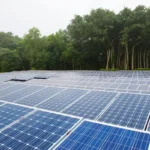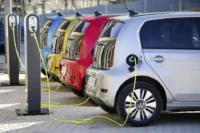
The European Commission is preparing comprehensive legal proposals that would mandate minimum “Made in Europe” content requirements for government procurement of key green technologies across the bloc, marking a decisive shift toward climate-industrial policy that intertwines decarbonization objectives with strategic economic competition. The draft legislation, expected to be published as the Industrial Accelerator Act on January 28, 2026, would establish new sourcing rules for public purchases of batteries, solar and wind energy components, electric vehicles, power cables and charging infrastructure, fundamentally reshaping how European governments deploy public resources to support both climate transition and domestic industrial capabilities.
The objective is to reinforce local supply chains for critical clean technologies while reducing exposure to Chinese imports and protecting Europe’s industrial base amid rising energy costs, intensifying global competition, and new tariff policies from Washington. According to the draft text viewed by Reuters, the proposal describes a strategic need to ensure that Europe’s climate transition acts as a driver of competitiveness rather than a catalyst for deindustrialization, with the Commission stating that “the EU must act strategically to secure and further strengthen its industrial base, long-term competitiveness and ensure that the climate transition becomes an engine of industrial prosperity rather than a source of de-industrialisation.”
Build the future you deserve. Get started with our top-tier Online courses: ACCA, HESI A2, ATI TEAS 7, HESI EXIT, NCLEX-RN, NCLEX-PN, and Financial Literacy. Let Serrari Ed guide your path to success. Enroll today.
Phased Implementation for Battery Systems and Components
Battery energy storage systems represent the most detailed component of the proposed procurement framework, with a carefully structured timeline designed to balance industrial capacity constraints with strategic autonomy objectives. Under the draft timetable, battery systems purchased through public procurement would need to be assembled within the European Union twelve months after the legislation enters into force, with this first phase applying to assembly plus selected components including the critical battery management system.
Two years after entry into force, criteria would tighten significantly by extending Europe-made conditions to more core components, including battery cells themselves. This phased approach reflects both realistic assessments of current European industrial capacity and recognition of the sensitivity of global battery value chains, where China currently dominates production across multiple technology platforms including lithium-ion, sodium-ion, and emerging solid-state configurations.
The Commission’s sourcing rules would extend beyond batteries to encompass electric vehicles and associated charging infrastructure, with governments procuring EV charging networks required to favor Europe-made components and EU labor from the outset. Brussels aims to protect Europe’s competitive edge in wind turbine technology and to avoid repeating earlier experiences in the solar sector, where Chinese manufacturing captured the bulk of global value despite Europe’s early technological leadership and substantial public investment in renewable energy development.
Strategic Warning on Declining Industrial Share
The draft proposal contains a stark assessment of Europe’s deteriorating industrial position, warning that Europe’s share of global industry gross value fell from 20.8 percent in 2000 to 14.3 percent in 2020. This decline, described as a “strategic warning signal” in Commission documents, sharpens concerns that Europe’s industrial competitiveness has deteriorated under the combined strain of high energy prices, increasing Chinese competition, and evolving tariff policy from the United States under the Trump administration.
Research analyzing European competitiveness trends confirms this troubling trajectory. Analysis by Bruegel demonstrates that while most of the diminishing global role of the EU in manufacturing value chains is a consequence of weaker EU domestic demand growth compared to the rest of the world, almost 25 percent is explained by other factors including loss of competitive position at different production stages. In employment terms, the decline of EU participation in manufacturing value chains accounted for the loss of around 1 million EU jobs between 2000 and 2014, with the United States and Japan experiencing similar changes that contrast sharply with significant participation gains by China in all manufacturing value chains.
The situation proves particularly concerning in electronics and advanced technology sectors. According to European Central Bank analysis, the share of sectors in which China is directly competing with euro area exporters is now close to 40 percent, up dramatically from 25 percent in 2002. The EU’s share in world trade is declining, with a notable fall since the onset of the pandemic, while Europe’s position in advanced technologies that will drive future growth continues deteriorating.
Linking Industrial Policy to Investment Screening
In addition to procurement rules, the proposal would introduce stringent new investment screening criteria directly linking industrial policy to national security and supply chain resilience considerations. Foreign direct investments above €100 million in designated strategic sectors would not be approved unless they met localization requirements tied to Europe-made components and EU labor utilization, fundamentally changing the approval process for major cross-border capital deployments in clean technology sectors.
This investment screening provision comes as the EU is already tightening its foreign direct investment architecture. In December 2025, the Council and European Parliament reached provisional agreement on revised FDI screening rules, including a requirement for all 27 member states to operate screening mechanisms in specified sensitive sectors. The new Industrial Accelerator Act would layer additional localization conditions on top of this enhanced screening framework, creating a comprehensive policy structure addressing both inward investment flows and procurement decisions.
The proposal also contemplates minimum shares in public contracts for low-carbon industrial goods produced inside the EU, establishing quantitative targets that echo elements of the US Inflation Reduction Act while relying more heavily on public procurement and investment screening rather than direct tax credits or production subsidies that might violate World Trade Organization subsidy disciplines or EU state aid rules.
Deep Divisions Among Member States
The plan has already generated significant divisions among EU capitals, revealing fundamental disagreements about the appropriate balance between strategic autonomy, industrial protection, and market efficiency. France has championed the strategy, arguing forcefully that Europe must defend its industrial capabilities as climate and energy transitions accelerate. Paris views local content rules as essential to preserving strategic autonomy across batteries, renewable energy systems, and electric mobility platforms that will define economic competitiveness and energy security for decades.
However, Sweden and the Czech Republic have warned that buy-local rules risk inflating tender prices and undermining competitiveness across the bloc through inefficient procurement decisions that prioritize origin over value. Their governments argue that Europe should pursue global efficiency and free trade where possible, maintaining that protectionist measures ultimately harm European consumers and businesses by increasing costs without necessarily delivering sustainable industrial development.
In December 2025, nine member states—the Czech Republic, Estonia, Finland, Ireland, Latvia, Malta, Portugal, Sweden and Slovakia—urged “extreme caution” over Buy Europe provisions, reflecting widespread concern about potential economic costs and trade retaliation risks. Others fear retaliatory trade measures if the EU imposes overly restrictive sourcing criteria, particularly given that both the United States and China have shown willingness to respond to perceived protectionism with their own barriers affecting European exports.
China’s Overwhelming Dominance in Clean Technology Supply Chains
The urgency driving these proposals stems directly from China’s commanding position across virtually all clean technology value chains. According to European Commission assessments, 94 percent of the inverters and solar cells used in the EU come from China, along with 79 percent of solar wafers. This supply chain dependence leaves the EU acutely vulnerable to geopolitical tensions, trade disruptions, and political leverage that could be exercised through export controls or preferential allocation during supply shortages.
China’s competitive advantage extends beyond labor costs to encompass massive state subsidies and industrial policy support. Research documents that total direct government subsidies to Chinese listed companies increased more than sevenfold between 2007 and 2018, from $4 billion to $29 billion, with estimates suggesting that since introduction of Government Guidance Funds in 2012, public support for state-owned enterprises increased from $7.9 billion to around $418 billion in 2016, reaching $850 billion in 2022.
Chinese export dominance is no longer confined to low-tech, low-wage sectors as was the case in the 1990s and early 2000s. Chinese firms have become direct competitors to firms in advanced economies and have entered into active competition with European manufacturers in their domestic markets. Analysis of EU firm-level productivity growth demonstrates that Chinese import competition is now negatively affecting European innovation and productivity, particularly as Chinese companies combine technological catching-up with intensive industrial policy subsidies that distort competitive dynamics.
One decision can change your entire career. Take that step with our Online courses in ACCA, HESI A2, ATI TEAS 7, HESI EXIT, NCLEX-RN, NCLEX-PN, and Financial Literacy. Join Serrari Ed and start building your brighter future today.
Building on Net-Zero Industry Act Framework
The planned measures would build substantially on, and extend beyond, recent EU legislation that already encourages public buyers to use non-price criteria in relevant tenders. The Commission’s Net-Zero Industry Act framework makes sustainability a minimum mandatory requirement in covered procurement and introduces a resilience criterion intended to diversify supply sources where the EU is highly dependent on specific components from concentrated supplier bases.
The Net-Zero Industry Act implementing regulation, adopted in June 2025, established that resilience criteria are triggered automatically if one country supplies more than 50 percent of Europe’s demand for a specific technology or 40 percent with a 10-point increase over two consecutive years. The Commission also mandates that non-price criteria must apply in renewable energy auctions, covering at least 30 percent of volume auctioned annually in each member state or 6 gigawatts, whichever threshold applies.
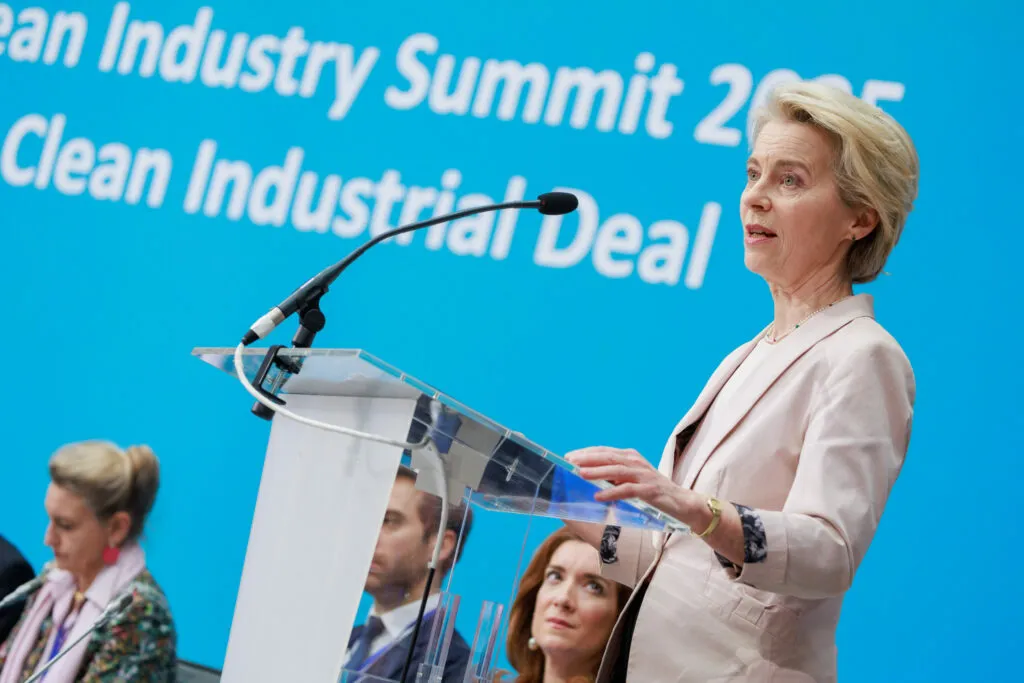
The broader policy backdrop is the Commission’s Clean Industrial Deal, launched on February 26, 2025, which set out actions focused on energy-intensive industries and clean-tech manufacturing, including explicit objectives for reducing over-dependence on third-country suppliers for key inputs. The Commission has linked this agenda directly to competitiveness concerns and supply-chain security in sectors where EU demand is rising rapidly, including electricity networks, energy storage systems, and electric vehicle charging infrastructure.
Implications for Corporate Strategy and Investment Flows
For corporate executives and institutional investors, the proposal reflects an accelerating shift toward climate-industrial policy with state procurement acting as market maker for decarbonization technologies. Compliance documentation, origin tracing systems, and eligibility criteria for public tenders could become significant commercial differentiators for manufacturers and project developers operating across European markets, fundamentally altering competitive dynamics in sectors previously governed primarily by cost and technical performance considerations.
Battery manufacturers, EV suppliers and renewable component producers may benefit from greater policy visibility and demand certainty that facilitates long-term capital investment decisions and capacity expansion planning. The European Commission estimates that public buyers in the EU spend close to €2 trillion annually, roughly 13.6-15 percent of GDP, with EU procurement rules directly governing approximately €616 billion in annual spending. This represents enormous market scale that local content requirements could redirect toward European manufacturers.
Companies positioned to benefit directly from integrated local content requirements include wind technology providers such as Nordex, battery manufacturers like Verkor, and solar producers including Meyer Burger. For small and medium enterprises and mid-sized industrial firms, the new regulation potentially opens doors to move up value chains and participate more substantially in the continent’s energy transition through secured access to public procurement opportunities that prioritize European sourcing.
However, governments will simultaneously need to assess fiscal and inflationary implications of more restrictive procurement rules that may increase project costs compared to unrestricted global sourcing. The investment screening provisions could reshape deal flows substantially, particularly for Asian investors with ambitions in European clean energy markets who may face additional hurdles or conditions that complicate transaction structures and financing arrangements.
Technology Transfer and Learning Effects
The strategic rationale for local content requirements extends beyond immediate employment and industrial activity to encompass technology transfer and industrial learning effects that can generate sustained competitive advantages. Research on industrial policy effectiveness demonstrates that subsidized and protected industries can experience substantially higher growth rates that persist even after support is removed, underscoring learning effects that justify temporary protection during technology absorption and capability development phases.
Germany’s experience with Chinese competition illustrates these dynamics. While Germany avoided a “China shock” similar to America’s painful deindustrialization in the 2000s, recent analysis shows that Germany now faces threats of losing two core sectors—automobiles and machinery tools—to Chinese competition as the technology frontier shifts toward electric vehicles and advanced manufacturing systems where Chinese firms have achieved rapid capability development through sustained industrial policy support.
Within three years from 2019 to 2022, China’s share in German imports increased by 30 percent from 10 percent to 13 percent, while Germany’s export position to China deteriorated as Chinese consumers shifted from German to domestic models in automobiles and industrial equipment. Car exports to China dramatically declined by almost 70 percent between 2022 and 2024, demonstrating how quickly established competitive positions can erode when rival nations combine technological catching-up with comprehensive industrial support systems.
Broader Geopolitical Context and Trade Policy Evolution
The Commission’s move contributes to broader rearrangement of global clean technology supply chains as governments compete to secure production capacity essential for energy transitions while managing economic security considerations that have grown more prominent since the COVID-19 pandemic revealed supply chain vulnerabilities. With China still dominant in batteries and solar panels, and the United States leaning into tariffs and fiscal incentives through mechanisms like the Inflation Reduction Act, Europe is seeking its own industrial footing that balances trade openness with strategic capability preservation.
According to the September 2024 Draghi Report on European competitiveness, only four of the world’s top 50 technology companies are European, and the EU’s global position in technology sectors is deteriorating with its share of global tech revenues dropping from 22 percent to 18 percent between 2013 and 2023, while the US share rose from 30 percent to 38 percent. There is no EU company with market capitalization over €100 billion that has been established from scratch in the last fifty years, contrasting sharply with six US companies valued above €1 trillion.
The report emphasizes that decarbonization must happen for planetary sustainability, but for it to become a source of growth for Europe rather than source of deindustrialization, the continent needs a joint industrial plan spanning energy production and decarbonization enabling technologies. The proposed local content requirements represent one component of this broader strategic response to competitive challenges that threaten to marginalize European industry in technologies critical for both climate goals and economic prosperity.
Implementation Timeline and Legislative Process
Negotiations with member states and the European Parliament will define the final scope and specific provisions, but the direction appears unambiguous: climate policy and industrial strategy are increasingly intertwined, with public procurement emerging as a core instrument of geopolitical competition alongside trade policy, investment screening, and research funding allocation. The European Parliament’s Legislative Train lists the Industrial Accelerator Act as currently expected on January 28, 2026, after earlier delays that reflected both technical complexity and political sensitivity of proposals that fundamentally restructure relationships between European markets and global supply chains.
The legislative process will likely involve substantial debate over specific thresholds, timelines, and sectoral coverage, with industrial lobbies, environmental organizations, consumer groups, and trading partners all seeking to influence final provisions. The Commission must balance competing objectives including climate urgency, industrial competitiveness, fiscal sustainability, consumer affordability, trade compliance, and geopolitical positioning, while maintaining sufficient consensus among member states with divergent economic structures and strategic perspectives.
Conclusion: Redefining Clean Technology Competition
The European Commission’s proposed local content requirements for green technology procurement represent more than technical adjustments to government purchasing rules. They signal fundamental recalibration of European industrial and trade policy that treats climate transition not as isolated environmental initiative but as integrated economic and security strategy requiring active state intervention to shape market outcomes and preserve industrial capabilities essential for long-term competitiveness and strategic autonomy.
Whether these measures ultimately strengthen European industry or impose costly inefficiencies that undermine both climate goals and economic performance will depend critically on implementation details, complementary policies supporting innovation and cost reduction, and broader geopolitical developments affecting global trade relationships. What remains clear is that the era of purely market-driven clean technology deployment in Europe has ended, replaced by strategic approach where public procurement serves dual mandate of accelerating decarbonization while building domestic industrial capacity to compete in technologies that will define economic prosperity and geopolitical influence for generations to come.
Ready to take your career to the next level? Join our Online courses: ACCA, HESI A2, ATI TEAS 7 , HESI EXIT , NCLEX – RN and NCLEX – PN, Financial Literacy!🌟 Dive into a world of opportunities and empower yourself for success. Explore more at Serrari Ed and start your exciting journey today! ✨
Track GDP, Inflation and Central Bank rates for top African markets with Serrari’s comparator tool.
See today’s Treasury bonds and Money market funds movement across financial service providers in Kenya, using Serrari’s comparator tools.
photo source: Google
By: Montel Kamau
Serrari Financial Analyst
20th January, 2026