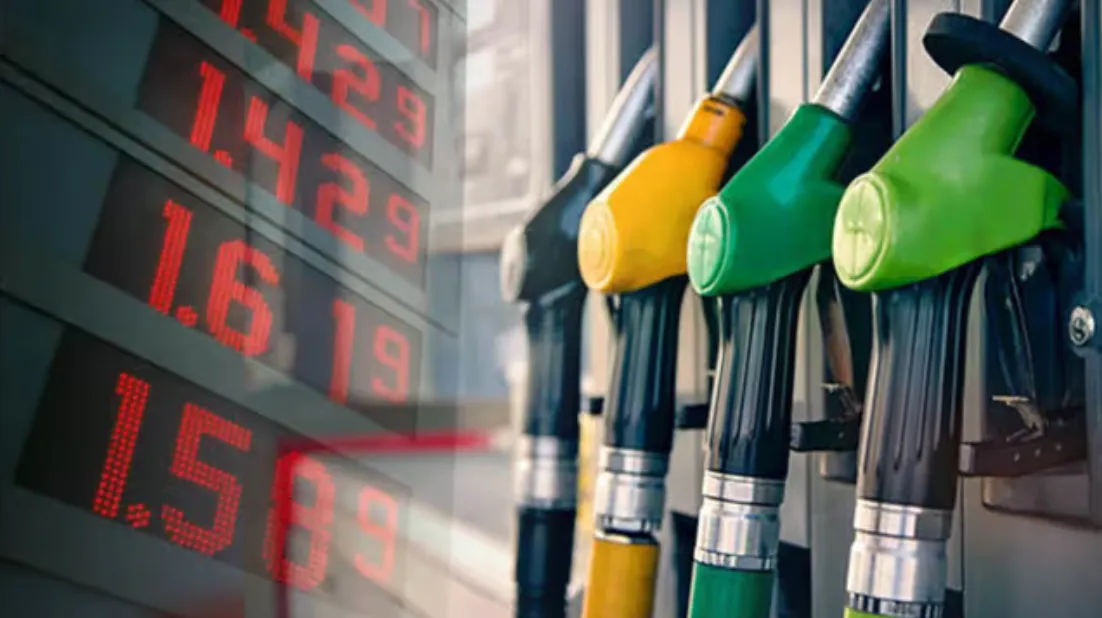
The Energy and Petroleum Regulatory Authority (EPRA) delivered a measure of predictability to Kenyan consumers and the transport industry by announcing that fuel prices are to remain unchanged for the critical festive period. The new price regime, which came into effect on December 15, 2025, will hold steady through January 14, 2026.
This marks the third month in a row that the national regulator has maintained price stability, offering a significant relief wave to a population typically bracing for inflationary shocks during the holiday season. In the capital, Nairobi, the retail pump prices for the next 30 days are set as follows: Super Petrol remains at Ksh184.52 per litre, Diesel holds at Ksh171.47 per litre, and Kerosene retains its price of Ksh154.78 per litre.
The announcement was formalized via a public notice, stating that the prices were calculated “In accordance with Section 101(y) of the Petroleum Act 2019 and Legal Notice No.192 of 2022,” confirming adherence to the established regulatory framework. EPRA Director General Daniel Kiptoo has been at the forefront of implementing these regulations, which aim to balance global market volatility with consumer protection and national energy security.
Build the future you deserve. Get started with our top-tier Online courses: ACCA, HESI A2, ATI TEAS 7, HESI EXIT, NCLEX-RN, NCLEX-PN, and Financial Literacy. Let Serrari Ed guide your path to success. Enroll today.
The Hidden Hand of Taxation: VAT and Excise Duty
The stability in retail prices does not reflect stagnation in the global market but rather the rigorous application of the pricing formula, which incorporates several key tax components. Notably, the current pump prices are inclusive of the contentious 16 per cent Value Added Tax (VAT), a rate mandated by the provisions of the Finance Act 2023 and subsequently reaffirmed by the Tax Laws (Amendment) Act 2024. This VAT increase, which was doubled from 8% to 16% in mid-2023, remains a central component driving the baseline cost of fuel in Kenya.
Furthermore, the prices incorporate revised excise duty rates, adjusted for inflation as stipulated per Legal Notice No. 194 of 2020. The complex web of local taxation ensures that even when global oil prices dip, the government maintains a steady revenue stream, often limiting the extent to which savings can be passed directly to the consumer.
Regional Price Variations and Commuter Impact
Fuel prices exhibit marginal, yet economically significant, variations across different regions of Kenya due primarily to transportation and logistics costs incurred from the ports of entry.
- In Mombasa, the pump prices are slightly lower for the next month: Super Petrol is set to retail at Ksh181.24, Diesel at Ksh161.19, and Kerosene at Ksh151.49.
- In Nakuru, reflecting the costs of inland transportation from the port city, the prices are marginally higher than Mombasa but still lower than Nairobi: Super Petrol will retail at Ksh183.56, Diesel at Ksh170.87, and Kerosene at Ksh154.21.
The decision to maintain price stability is particularly vital for the transport sector during the December holiday peak season. The period is characterized by intense travel activity, with millions of Kenyans commuting between cities, rural areas, and coastal destinations for the Christmas and New Year celebrations. The transport industry, spanning logistics, freight haulage, and public service vehicles (matatus), is heavily reliant on diesel and petrol. Stable prices provide the predictability needed for transporters to manage their operational costs and pricing structures, potentially mitigating immediate inflationary pressure on bus fares and food commodity prices during the busiest travel month of the year.
One decision can change your entire career. Take that step with our Online courses in ACCA, HESI A2, ATI TEAS 7, HESI EXIT, NCLEX-RN, NCLEX-PN, and Financial Literacy. Join Serrari Ed and start building your brighter future today.
Dissecting the Global Cost Swings
While retail prices remained flat, the underlying cost of imported petroleum saw considerable turbulence between October and November 2025, according to EPRA’s own data on the average landed cost of refined products. This data highlights the constant global market pressure EPRA must absorb through its price stabilization mechanism.
- Super Petrol (Gasoline): The landed cost of imported Super Petrol showed a clear decrease of 4.25 per cent, dropping from Ksh79,712.54 per cubic metre in October to Ksh76,326.49 per cubic metre in November. This decline in international gasoline benchmarks was the primary factor enabling the regulator to absorb upward pressure from other products and maintain the price stability for the third consecutive month.
- Diesel: Conversely, Diesel, which is crucial for industry and agriculture, saw its landed cost increase from Ksh81,760.91 per cubic metre in October to Ksh84,231 in November. This increase was driven by shifts in global demand and crude oil refining margins.
- Kerosene: The landed cost of Kerosene, predominantly used by low-income households for cooking and lighting, also experienced an increase, rising by a sharp 5.62 per cent during the same period, moving from **Ksh81,388.83 per cubic metre to Ksh85,880.82 per cubic metre.
The combined volatility, particularly the rising costs for diesel and kerosene, means that EPRA’s decision to maintain prices stable represents an intervention that prevents the full impact of increased landing costs from being passed on to the consumer. This mechanism, often supported by the Petroleum Development Levy Fund (PDLF), is designed to smooth out sudden international price spikes and provide buffer zones for domestic economic activity.
The Shadow of July 2025: A Benchmark for Volatility
The current period of stability is particularly appreciated against the backdrop of the sharp price shock experienced earlier in 2025. July 2025 experienced the largest spike in pump prices in more than a year, triggered by the implementation of the higher 16% VAT rate on petroleum products.
During that seventh month price review, the pump prices for Super Petrol, Diesel, and Kerosene soared by Ksh8.99, Ksh8.67, and Ksh9.65 per litre, respectively. That significant jump immediately translated into inflationary pressures across the supply chain, increasing the cost of transportation, agriculture, and manufacturing. The memory of this spike acts as a critical benchmark, making the current three-month stability an enormous relief for Kenyan households still recovering from that inflationary shock.
Since the peak in July, prices have generally maintained a stable or declining trajectory, a trend officials have attributed to a combination of disciplined regulatory management and slight easing in some segments of the international petroleum market.
Kenya’s Energy Security Vulnerability and Future Ambitions
The continued reliance on global markets for price stability highlights Kenya’s significant energy security vulnerability. Despite its potential to be an oil producer, with past discoveries in the Turkana basin, Kenya continues to import 100 per cent of its petroleum requirements in refined form.
This import dependency means that Kenya remains acutely vulnerable to geopolitical tensions, supply chain disruptions, and price shifts dictated by global oil market dynamics. The nation’s decision to rely entirely on refined imports stems from the closure and planned conversion of the Mombasa refinery, a strategic shift that made the supply chain more susceptible to currency fluctuation and global refining margins.
The price of crude oil, which is traded internationally in US dollars, has a direct impact on the cost of refined products landing in Mombasa. When the Kenyan shilling weakens against the dollar, the cost of procurement automatically increases, placing upward pressure on local pump prices, even if crude oil prices remain stable globally. EPRA’s formula must constantly manage this foreign exchange risk alongside crude price volatility.
In the long term, Kenya aims to enhance its energy resilience by diversifying its energy mix. The government continues to invest heavily in geothermal power, where it is already a world leader, as well as wind and solar resources. This transition towards cleaner, domestically sourced energy aims to reduce the economic reliance on imported fossil fuels and stabilize the national energy grid against external shocks. However, this transition does not yet solve the immediate reliance of the transport and manufacturing sectors on petrol and diesel.
The Regulatory Framework and Market Oversight
The regulatory stability provided by EPRA under Director General Daniel Kiptoo is grounded in a strong, transparent legal framework. The Petroleum Act 2019 grants EPRA comprehensive powers to monitor and regulate the entire petroleum supply chain, from importation and storage to distribution and retail pricing. The pricing mechanism itself is meticulously detailed, using average FOB (Free on Board) prices for refined products in the previous month, along with global freight rates, insurance, government taxes (VAT and Excise Duty), and marketing and distribution margins.
EPRA plays a crucial oversight role in ensuring that all petroleum marketing companies adhere to the set maximum retail prices. Violations of the pricing structure can lead to severe penalties, including fines and the revocation of operating licenses. This strict adherence to price controls ensures uniform market access and prevents unscrupulous traders from profiteering, especially during high-demand periods like the festive season.
For the December 2025 to January 2026 pricing cycle, the continuation of stable prices demonstrates the regulator’s commitment to prioritizing macroeconomic stability and consumer welfare over passing on marginal cost increases. This policy is particularly critical for the millions of small-scale businesses and informal workers whose livelihoods depend directly on predictable transport costs.
The stability provides a much-needed foundation for economic planning over the next month, allowing the busy transport sector to fully capitalize on the holiday travel rush without facing the uncertainty of fuel price fluctuations, a key factor in ensuring that Kenyans enjoy an affordable end to the year and a predictable start to the next.
Ready to take your career to the next level? Join our Online courses: ACCA, HESI A2, ATI TEAS 7 , HESI EXIT , NCLEX – RN and NCLEX – PN, Financial Literacy!🌟 Dive into a world of opportunities and empower yourself for success. Explore more at Serrari Ed and start your exciting journey today! ✨
Track GDP, Inflation and Central Bank rates for top African markets with Serrari’s comparator tool.
See today’s Treasury bonds and Money market funds movement across financial service providers in Kenya, using Serrari’s comparator tools.
Photo source: Google
By: Montel Kamau
Serrari Financial Analyst
15th December, 2025