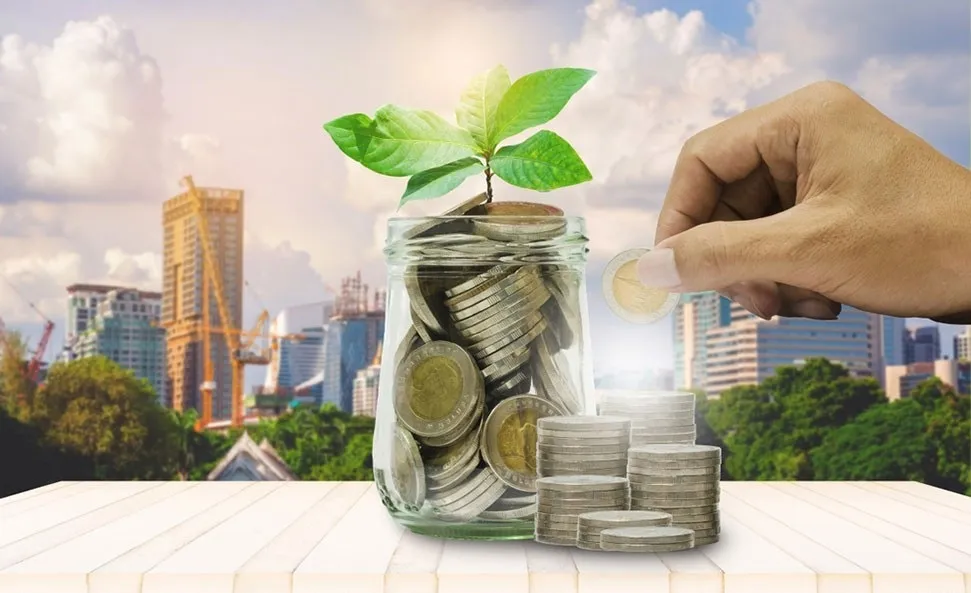
Private climate finance flowing to emerging markets and developing economies totaled $332 billion in 2023, yet this figure represents a mere 14% of the $2.4 trillion required annually by 2030 to meet global climate targets, according to a comprehensive report released by KPMG and the World Economic Forum. The stark shortfall exposes a critical vulnerability in global climate action efforts, as the countries most vulnerable to climate impacts remain least equipped financially to respond.
The report, titled “From Risk to Reward: Unlocking Private Capital for Climate and Growth,” reveals that while international private climate finance doubled from $17 billion in 2021 to $36 billion in 2023, this growth trajectory falls dramatically short of what’s needed. The analysis estimates that private capital flows would need to increase approximately 28 times by the end of this decade to bridge the financing gap—a daunting challenge that will require systemic changes across the global financial architecture.
Build the future you deserve. Get started with our top-tier Online courses: ACCA, HESI A2, ATI TEAS 7, HESI EXIT, NCLEX-RN, NCLEX-PN, and Financial Literacy. Let Serrari Ed guide your path to success. Enroll today.
The $1 Trillion External Funding Gap
Emerging markets and developing economies are projected to mobilize approximately $1.4 trillion domestically for climate action, but structural barriers continue to deter the private investment needed to fill the remaining $1 trillion external funding gap. This external finance, which must come predominantly from private international sources, represents the critical missing piece in the global climate finance puzzle.
“Climate finance in developing economies is no longer just an environmental issue; it’s a systemic financial challenge that affects credit ratings, investor behaviour and long-term growth,” said Laia Barbara, Head of Climate Strategy at the World Economic Forum, in announcing the report findings.
The scale of the challenge becomes clearer when considering that global climate finance across all sources reached $1.9 trillion in 2023, a significant milestone for climate-aligned investments. However, this total amount must grow to an average of $7.4 trillion per year through 2030 to align with the 1.5°C climate target, requiring a fivefold increase from current levels.
Structural Barriers Deterring Private Investment
The report identifies several interconnected barriers that systematically deter private investors from deploying capital to climate projects in emerging economies. These obstacles span the entire investment value chain, from project conception through financing and operation.
Fragmented project pipelines represent perhaps the most fundamental challenge. There exists a chronic lack of scaled, investable products ready to absorb private capital. Projects often remain too small, too risky, or insufficiently developed to attract institutional investors who require specific minimum investment sizes and risk-return profiles. This pipeline problem reflects inadequate matchmaking between project supply and investor demand, with projects failing to meet the standardized requirements that would make them accessible to a broad range of financial institutions.
Regulatory uncertainty compounds these difficulties significantly. Inconsistent regulations and data gaps on risks, flows, and returns create an environment where investors struggle to assess opportunities accurately. Financial markets are progressively internalizing climate-related risks, but regulatory uncertainty continues to influence firms’ cost of capital, making long-term commitments particularly challenging in jurisdictions where policy frameworks remain in flux.
Weak financial markets in many emerging economies limit the availability of sophisticated financial instruments and the depth of capital pools accessible for climate investment. In almost 60% of banks in emerging market and developing economies, lending for climate-related investment accounts for less than 5% of their overall portfolios according to World Bank analysis, and more than one-quarter offer no climate financing at all. This is particularly significant because in developing economies, banks dominate the financial sector, unlike in advanced economies where the financial sector is more diversified.
Limited access to comparable data prevents investors from conducting the due diligence they require to commit capital. Lack of standardization in methodologies for measuring and reporting climate-related data makes it difficult to compare opportunities across projects, regions, and sectors. Several sources of friction contribute to this data scarcity, including weak coordination between data collecting and producing organizations, insufficient reporting and disclosure by firms, technical barriers, and a fragmented regulatory environment.
Together, these factors raise perceived risks and transaction costs to levels that price many viable projects out of the market, even when their fundamental economics would justify investment.
The Perception Gap Inflating Capital Costs
A particularly pernicious problem emerges from the disconnect between perceived and actual risk in emerging markets. EMDEs are often viewed as high-risk markets due to factors such as macroeconomic and regulatory uncertainty, currency volatility, and limited financial infrastructure. While some of these risks are genuine, many are significantly overstated.
New data from the Global Emerging Markets Risk Database, the largest credit risk dataset for developing countries, shows that across more than 10,000 private-sector loans in 169 countries, average default rates were just 3.54%—comparable to firms in advanced economies, with recovery rates exceeding global benchmarks. Even during periods of global stress, many emerging market companies defaulted less than expected. Yet despite this performance, the perception gap persists and continues to inflate the cost of capital.
According to one estimate, at the end of 2023, yields on emerging-market hard-currency debt were around 9%, roughly double the yield paid by the U.S. government (4.8%). This premium reflects not just actual risk but also perceived political instability, regulatory uncertainty, and concerns about currency fluctuations that may exceed the statistical reality of investment performance in these markets.
Breaking through this perception trap is essential for scaling climate finance. Tools designed specifically to address these concerns—such as first-loss guarantees, political risk insurance, and partial credit guarantees—can help mitigate risks, but their deployment remains limited relative to the scale of the challenge.
One decision can change your entire career. Take that step with our Online courses in ACCA, HESI A2, ATI TEAS 7, HESI EXIT, NCLEX-RN, NCLEX-PN, and Financial Literacy. Join Serrari Ed and start building your brighter future today.
The Critical Role of Blended Finance
Given the constraints on public finance and the hesitancy of private capital, blended finance has emerged as a potentially transformative mechanism for bridging the funding gap. Blended finance entails the strategic use of public resources at concessionary terms to catalyze private financial flows, de-risking investments sufficiently to make them attractive to commercial investors while preserving the discipline of market-based allocation.
The approach leverages various instruments, including first-loss guarantees, project insurance, and technical assistance, offering versatile solutions for different funding scenarios. These instruments can help with project risk mitigation, provision of concessional capital, or funding for technical project preparation.
The potential of guarantees, in particular, appears significantly underutilized. Studies suggest that larger and more effective credit guarantee facilities have the potential to mobilize 6-25 times more financing than loans. Research by the Blended Finance Taskforce indicates that guarantees can mobilize at least 5 times the average mobilization ratio, yet guarantees represent less than 5% of climate finance instruments currently deployed.
In 2024, guarantees accounted for 46% of the concessional instruments used in blended finance vehicles, with $1 billion in concessional guarantees recorded, representing a 42% increase from 2023. The International Finance Corporation’s use of guarantees for long-term financing rose by more than 160% from fiscal year 2023 to fiscal year 2024, demonstrating growing recognition of their effectiveness.
However, the landscape of guarantee instruments remains fragmented, with 52 different cross-border guarantee instruments identified from 34 key entities. Most guarantees focus on commercial risks rather than the political and currency risks that often prove most challenging in emerging markets. Political and currency risk products tend to be limited in scope, expensive, and complex—precisely the characteristics that limit their utility for scaling climate finance.
Six Priority Actions for Mobilizing Private Capital
The KPMG and World Economic Forum report outlines six priority actions and sixteen specific strategies designed to reduce risk, improve project bankability, and enhance data transparency while aligning incentives for both public and private stakeholders.
Improving access to bankable project pipelines stands as the first critical action. This requires investment in early-stage project development, technical assistance to bring projects to bankable standards, and aggregation mechanisms that can bundle smaller projects into investable vehicles of sufficient scale. National blended climate facilities could play a transformative role by helping to raise “multiplier” capital for the energy transition and co-investing concessional capital in key projects to help them achieve financial viability.
Strengthening policy and regulatory certainty addresses one of the most fundamental barriers to long-term investment. Investors require stable, predictable frameworks that provide confidence in the durability of climate policies and the protection of investments over multi-decade time horizons. This includes not just climate-specific regulations but also broader macroeconomic stability, transparent governance, and enforceable legal frameworks.
Expanding risk-sharing mechanisms through scaled deployment of blended finance and guarantee programs can dramatically improve the risk-return profile of climate investments. The World Bank Group’s unified guarantee platform aims to triple annual guarantees to $20 billion by 2030, recognizing that strategic guarantee deployment can unlock multiples of that amount in private capital.
Enhancing data transparency and quality will enable more informed decision-making and more accurate risk assessment. This requires developing standardized methodologies, improving reporting and disclosure by project developers and financial institutions, establishing reliable benchmarks for climate project performance, and creating accessible platforms for sharing climate finance data across the ecosystem.
Building local partnerships and capacity ensures that climate finance solutions are tailored to local contexts and that domestic stakeholders can participate effectively in project development and implementation. Local financial institutions, when properly supported, can serve as vital intermediaries that understand local markets, navigate regulatory environments, and provide financing in local currency—all critical elements for project success.
Aligning public and private incentives remains central to scaling climate finance. Public and private stakeholders must work collaboratively, recognizing their complementary roles and aligning around shared objectives for climate action and sustainable development.
The Urgency of Action
The consequences of insufficient climate finance extend well beyond environmental concerns. EMDEs continue to struggle with weather-related disasters, poor air quality, food insecurity, and limited access to clean water and energy. These challenges contribute to weak rural development, poverty, poor health, inequality, and declining productivity—creating a vicious cycle that further constrains economic growth and climate resilience.
The cost of delay is rising rapidly. Without decisive action, lower- and lower-middle income countries are expected to bear the brunt of climate impacts while having the least capacity to adapt. Meanwhile, the window to limit global warming to 1.5°C is quickly closing, with emissions in 2023 consuming 10.67% of the remaining carbon budget consistent with this target.
Recent global discussions have acknowledged the scale of the challenge. At COP30 in Belém, Brazil, the Mutirão decision outlined a two-year plan to mobilize public and private finance for EMDEs, with commitments to secure $1.3 trillion per year by 2035. There was also a notable shift demonstrating willingness to finance adaptation, including a resolution to at least triple adaptation finance by 2035.
Moving from Billions to Trillions
The transition from current levels of climate finance to the trillions needed annually represents what many in the sector describe as moving “from billions to trillions”—a fundamental scaling challenge that requires rethinking how climate finance is structured, deployed, and measured.
“The capital exists,” notes KPMG analysis, with the world’s 100 largest asset owners managing over $26.3 trillion. The challenge lies not in the absolute availability of capital but in creating the conditions, instruments, and incentives that channel this capital toward climate solutions in emerging economies.
This requires evolution on multiple fronts simultaneously. Multilateral development banks and development finance institutions must genuinely leverage risk-bearing private finance rather than simply co-financing projects. Public finance must be exposed to appropriate levels of risk—taking first-loss positions or providing guarantees that enable private capital to participate at scale. Moral hazard and perverse incentives that continue to skew significant investment toward fossil fuels must be addressed through policy reforms and pricing mechanisms.
The blended finance market showed signs of resilience in 2024, rebounding significantly from the previous year’s downturn despite global macroeconomic challenges. The market saw an increase in large-scale transactions, with six deals exceeding $1 billion, reflecting growing private sector interest in climate mitigation and adaptation efforts.
The Path Forward
Mobilizing private climate finance at scale in EMDEs requires a holistic, systemic approach as well as clear policy signals, scalable risk-sharing tools, and strong local partnerships. Building investor confidence hinges on a multistakeholder approach rooted in aligned incentives, trusted data, enabling policies, and patient capital.
The theme for the 2026 World Economic Forum Annual Meeting in Davos—”A Spirit of Dialogue”—underscores the necessity of collaboration across governments, businesses, and civil society. Only through shared frameworks, unified solutions, and inclusive partnerships can the significant climate finance gap be bridged and ambition translated into tangible progress.
As global business leaders converge to discuss these challenges, the role of every stakeholder across the capital stack is crucial. This includes providing expertise, analysis, and strategic guidance needed to unlock investment opportunities; fostering collaboration to shape effective policy; creating demand signals for emerging technologies; and investing in disruptive climate solutions.
The successful mobilization of climate finance to emerging markets will determine not only the trajectory of global emissions and climate stability but also the economic development prospects for billions of people living in the countries most affected by climate change. The $332 billion flowing to these economies in 2023, while representing growth, must be understood as a starting point rather than a destination—14% of what’s needed rather than a sustainable level of support.
The path from here to the $2.4 trillion annual target by 2030 is steep, requiring sustained commitment, innovative solutions, and unprecedented cooperation across the global financial system. The tools and frameworks exist; what remains is the political will and institutional capacity to deploy them at the scale and speed required.
Ready to take your career to the next level? Join our Online courses: ACCA, HESI A2, ATI TEAS 7 , HESI EXIT , NCLEX – RN and NCLEX – PN, Financial Literacy!🌟 Dive into a world of opportunities and empower yourself for success. Explore more at Serrari Ed and start your exciting journey today! ✨
Track GDP, Inflation and Central Bank rates for top African markets with Serrari’s comparator tool.
See today’s Treasury bonds and Money market funds movement across financial service providers in Kenya, using Serrari’s comparator tools.
Photo source: Google
By: Montel Kamau
Serrari Financial Analyst
5th February, 2026