The Common Market for Eastern and Southern Africa has emerged as a beacon of investment opportunity in 2024, bucking a global downturn in foreign direct investment with a record-breaking 154% surge to $65 billion. This remarkable performance stands in stark contrast to the 11% global decline in FDI flows during the same period, positioning COMESA as one of the world’s most dynamic emerging investment destinations.
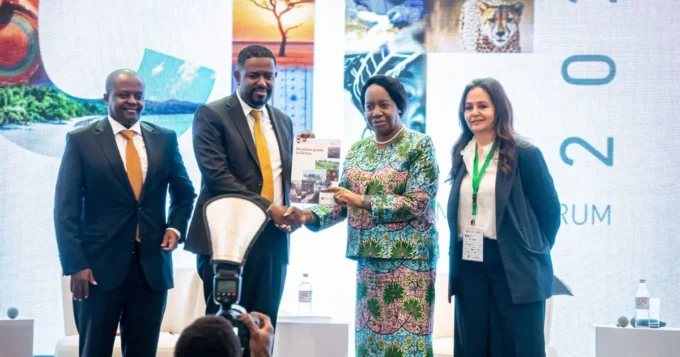
A comprehensive new report from UN Trade and Development (UNCTAD), prepared in collaboration with the COMESA Secretariat and Regional Investment Agency, reveals that the 21-member regional bloc has doubled its share of global FDI from 2% to 4%, while its portion of inflows to all developing economies jumped from 3% to 7%. The findings were launched on December 4 in Lusaka, Zambia, highlighting a transformative moment for regional economic integration.
Build the future you deserve. Get started with our top-tier Online courses: ACCA, HESI A2, ATI TEAS 7, HESI EXIT, NCLEX-RN, NCLEX-PN, and Financial Literacy. Let Serrari Ed guide your path to success. Enroll today.
The surge was significantly influenced by Egypt’s Ras El-Hekma urban development project, where an ADQ-led consortium from Abu Dhabi acquired development rights for $24 billion, with an additional $11 billion in Emirati deposits converted for investment across Egyptian projects. Egyptian Prime Minister Mostafa Madbouly described the agreement as “the biggest foreign direct investment deal in Egypt’s history”, a project expected to contribute approximately $25 billion annually to Egypt’s GDP by 2045 and create around 750,000 jobs.
However, the investment momentum extends far beyond this single mega-project. UNCTAD analysis found that even excluding Egypt’s Ras El-Hekma development, FDI inflows to COMESA would still have expanded by 16%, confirming region-wide improvement in investor sentiment and underlying economic resilience across Eastern and Southern Africa.
International Project Finance Surges as Infrastructure Demand Accelerates
One of the most significant developments in 2024 was the dramatic surge in international project finance flows to COMESA, which nearly doubled to $79 billion, representing 80% of the total project finance value across the entire African continent. This substantial increase underscores the region’s emerging status as an attractive destination for long-term capital-intensive investments.
The strongest international project finance performance came from sectors critical to economic transformation: grid expansion, renewable energy, and major construction projects. Countries that particularly benefited from these infrastructure investments included Egypt, Tunisia, Rwanda, and Malawi, signaling growing confidence in the region’s capacity to execute large-scale development projects.
The renewable energy sector posted impressive gains, with investment soaring 67% in 2024, reinforcing COMESA’s role as a growing hub for energy transition projects. This aligns with broader regional initiatives such as the Accelerating Sustainable and Clean Energy Access Transformation (ASCENT) program, a partnership between COMESA and the World Bank that aims to connect 100 million people to sustainable energy by 2030, with initial funding of $5 billion.
Greenfield investment also remained robust, with announced project values reaching $77 billion in 2024, the second-highest amount ever recorded for the region. This figure represents two-thirds of Africa’s total greenfield value, reinforcing COMESA’s position as a leading engine for the continent’s economic growth and demonstrating that foreign firms are actively establishing new operations throughout the region.
Construction and Energy Sectors Drive Sectoral Transformation
Foreign investments into COMESA’s construction sector experienced explosive growth in 2024, increasing almost five-fold to $24 billion, fueled largely by Egypt’s urban development initiatives. The basic metals sector also performed strongly, rising 75%, reflecting robust demand from manufacturing and infrastructure development across the region.
Energy and gas supply sectors saw a 22% increase and retained their position as the top FDI recipient within COMESA, underscoring the critical importance of power generation and distribution infrastructure to the region’s economic ambitions. This growth comes despite significant energy access challenges, with only 48% of COMESA’s overall population and just 26% in rural areas having access to electricity.
The human capital sectors of health and education recorded the highest growth rate at 130%, albeit from a modest baseline, suggesting increasing recognition of the importance of social infrastructure investments. This development is particularly significant given that less than half of all hospitals in the region have reliable electricity access, hampering healthcare delivery.
However, the investment landscape showed considerable volatility in some sectors. FDI into extractive industries fell 61% after two strong years, while information and communication technology saw a 55% decline following an exceptional peak in 2023. These swings highlight the cyclical nature of investment in resource-dependent and technology sectors.
Investment in agrifood systems dropped 34%, and water and sanitation infrastructure experienced a steep 76% decline, signaling persistent financing constraints in essential development sectors. Most concerning, infrastructure investment contracted by 54% despite the overall rise in project finance, indicating that transport-related infrastructure continues to face significant funding challenges.
Geographic Concentration Raises Equity Concerns
Despite the impressive aggregate growth figures, the distribution of investment within COMESA reveals significant concentration challenges. Just five member countries—Egypt, Ethiopia, Uganda, the Democratic Republic of the Congo, and Kenya—absorbed 90% of total FDI inflows in 2024. This stark concentration raises concerns about the inclusiveness and sustainability of current growth patterns.
The lack of broader participation extends to intra-regional investment, which remained particularly weak. Only 3% of greenfield projects by volume and 6% by value originated from within the COMESA bloc itself, highlighting missed opportunities for regional economic integration and South-South cooperation.
The UNCTAD report cautions that without wider country participation, COMESA’s investment expansion may not translate into broad-based development gains across the region. This geographic imbalance risks deepening inequalities between member states and potentially undermining the bloc’s long-term cohesion.
Origins of Investment Capital Point to Traditional Partners
European and North American investors hold the largest share of FDI stock in COMESA, with the Netherlands and the United States leading as the primary source countries. This pattern reflects established economic relationships and confidence in the region’s investment climate among Western investors.
However, emerging markets are also playing an increasingly important role. The United Arab Emirates’ massive commitment to Egypt’s Ras El-Hekma project demonstrates how Gulf capital is reshaping African development finance. The $35 billion UAE investment is expected to attract over $150 billion in total investments throughout the project’s implementation, according to officials involved in the deal.
US foreign direct investment stock in COMESA reached $20.2 billion in 2022, representing a 6.6% increase from the previous year, while COMESA’s FDI in the United States stood at $5.2 billion, according to the United States Trade Representative. The bilateral trade relationship also strengthened, with the US recording a goods trade surplus of $842 million with COMESA in 2022, reversing a deficit of $221 million from 2021.
One decision can change your entire career. Take that step with our Online courses in ACCA, HESI A2, ATI TEAS 7, HESI EXIT, NCLEX-RN, NCLEX-PN, and Financial Literacy. Join Serrari Ed and start building your brighter future today.
Regional Performance in Broader African Context
Within the African continent, COMESA stood out dramatically in 2024. The bloc’s FDI inflows more than doubled, far exceeding the 34% growth recorded by the Southern African Development Community (SADC) and the 12% increase seen in the East African Community (EAC). Among all regional economic groupings on the continent, COMESA recorded the most pronounced increase in foreign investment.
This performance is particularly notable given the challenging global context. According to broader African investment trends, FDI flows to the entire continent fell by 3% in 2023 to $53 billion, driven by declines in major economies such as Egypt and South Africa. The 2024 rebound in COMESA therefore represents a significant reversal of regional fortunes.
The success comes despite persistent structural challenges across Africa, including political instability, regulatory burdens, and infrastructure deficits that have historically deterred investment. The fact that COMESA achieved such dramatic growth suggests that targeted policy reforms and strategic project development can overcome these obstacles.
Policy Priorities for Sustained Investment Growth
The UNCTAD report outlines five critical priorities to help COMESA economies continue attracting investment for sustainable inclusive development. First, broadening the investment base beyond the handful of countries that currently dominate FDI inflows is essential for regional equity and resilience.
Second, accelerating industrialization through value-added manufacturing and local supplier development will help COMESA move up the value chain and create higher-quality employment opportunities. This transition is crucial for converting raw material wealth into sustainable prosperity.
Third, scaling up digital infrastructure to bridge the growing ICT investment gap will be vital for enabling 21st-century economic activities. The 55% decline in ICT investment in 2024 signals that this sector requires renewed policy attention and targeted incentives.
Fourth, greater focus on human capital sectors, supported by innovative and blended finance mechanisms, is needed to enhance investment in sustainable development goals. The dramatic 130% growth in health and education investment provides a positive foundation, but absolute levels remain insufficient.
Fifth, improving data reporting to support evidence-based policymaking will help governments make more informed decisions about investment promotion and economic planning. Better data will also enable more effective monitoring of the distribution of investment benefits across member states.
Energy Infrastructure Development as Strategic Imperative
Addressing the energy deficit has emerged as COMESA’s most urgent development priority. The Regional Association of Energy Regulators for Eastern and Southern Africa notes that thermal power still dominates generation in the COMESA region at 76%, though the overall share of renewable energy has increased from 1% to 6% over the past eight years due to policy and regulatory reforms.
Without significant intervention, the region’s energy supply will not keep pace with rising demand driven by urbanization, economic growth, and population expansion. According to World Bank estimates referenced by regional officials, the pace of electrification in COMESA needs to triple to achieve universal electricity access by 2030. Otherwise, more than 300 million people will still lack electricity in the region by that target date.
COMESA is collaborating with the World Bank through the $50 million regional platform supporting the wider $5 billion ASCENT program to accelerate sustainable energy access. The initiative will provide reliable energy to increase productivity and job opportunities, expand access to information and technologies, improve health outcomes, reduce time spent on cooking chores, and boost resilience of electrified schools and health clinics.
“This is an African-owned and led platform to enhance project implementation and accelerate access to clean energy through the facilitation of knowledge exchange, project preparation, provision of advisory services and support for policy development in a timely manner,” said Chileshe Kapwepwe, Secretary General of COMESA, emphasizing regional ownership of the energy transformation agenda.
Market Integration and Trade Facilitation Advances
Beyond investment attraction, COMESA continues advancing its core mission of market integration. The bloc operates a free trade area among 16 of its member states, with the Democratic Republic of Congo having joined in December 2015. Kenya recently joined Eswatini, Malawi, Zambia, and Zimbabwe in operationalizing the Electronic Certificate of Origin (eCOO) system, which simplifies the application, issuance, exchange, and verification of certificates.
The e-certificates are vital in accessing preferential trade benefits under regional trade agreements including COMESA, the East African Community, and the African Continental Free Trade Area program. COMESA Director of Trade and Customs Dr. Christopher Onyang lauded the initiative as “a significant advancement in the bloc’s push for trade integration.”
These trade facilitation measures complement investment promotion efforts by reducing transaction costs and making it easier for businesses to operate across borders. However, intra-COMESA trade still faces significant challenges, growing at an average of only 7% annually since the establishment of the Free Trade Area.
Outlook and Investment Sustainability Questions
While COMESA’s 2024 investment performance marks an undeniable success, questions remain about sustainability and the quality of growth being achieved. Industry analysts have expressed caution about whether such extraordinary growth rates can be maintained, particularly given the outsized role of Egypt’s mega-project in driving headline figures.
The concentration of investment in extractive industries and construction also raises concerns about economic diversification. While these sectors generate significant short-term capital inflows, they may not create the type of sustained, employment-intensive growth needed to address the region’s development challenges.
Furthermore, the decline in investment in critical sectors such as water and sanitation, agrifood systems, and transport infrastructure suggests that capital is not flowing efficiently to where it is most needed for long-term human development. Correcting these imbalances will require coordinated policy interventions and innovative financing mechanisms.
Strategic Importance in Global Investment Landscape
COMESA’s investment surge occurs against a backdrop of shifting global capital flows and intensifying competition for foreign investment among developing regions. Latin America and the Caribbean, for comparison, saw FDI increase by only 7.1% to $189 billion in 2024, according to the Economic Commission for Latin America and the Caribbean. This suggests that Africa, and COMESA in particular, is capturing an increasing share of global development finance.
The region’s success in attracting investment while global FDI declined reflects several factors: abundant natural resources, improving political stability in key countries, young and growing populations, and increasing infrastructure connectivity. These structural advantages position COMESA to potentially sustain above-average investment growth if current momentum can be maintained.
However, maintaining this momentum will require addressing persistent challenges including corruption, bureaucratic inefficiency, skills gaps, and inadequate infrastructure that continue to constrain business operations across much of the region. The next phase of COMESA’s development will depend on converting investment inflows into tangible improvements in living standards and economic opportunities for the region’s 600 million people.
As COMESA enters 2025, the bloc faces a pivotal test: Can it leverage record investment levels to catalyze broad-based transformation, or will growth remain concentrated in a handful of countries and sectors? The answer will determine whether 2024’s investment surge marks a turning point or simply an outlier in the region’s development trajectory. For now, the record $65 billion in FDI represents both an achievement to celebrate and a responsibility to steward wisely for the benefit of all member states.
Ready to take your career to the next level? Join our Online courses: ACCA, HESI A2, ATI TEAS 7 , HESI EXIT , NCLEX – RN and NCLEX – PN, Financial Literacy!🌟 Dive into a world of opportunities and empower yourself for success. Explore more at Serrari Ed and start your exciting journey today! ✨
Track GDP, Inflation and Central Bank rates for top African markets with Serrari’s comparator tool.
See today’s Treasury bonds and Money market funds movement across financial service providers in Kenya, using Serrari’s comparator tools.
photo source: Google
By: Montel Kamau
Serrari Financial Analyst
5th December, 2025