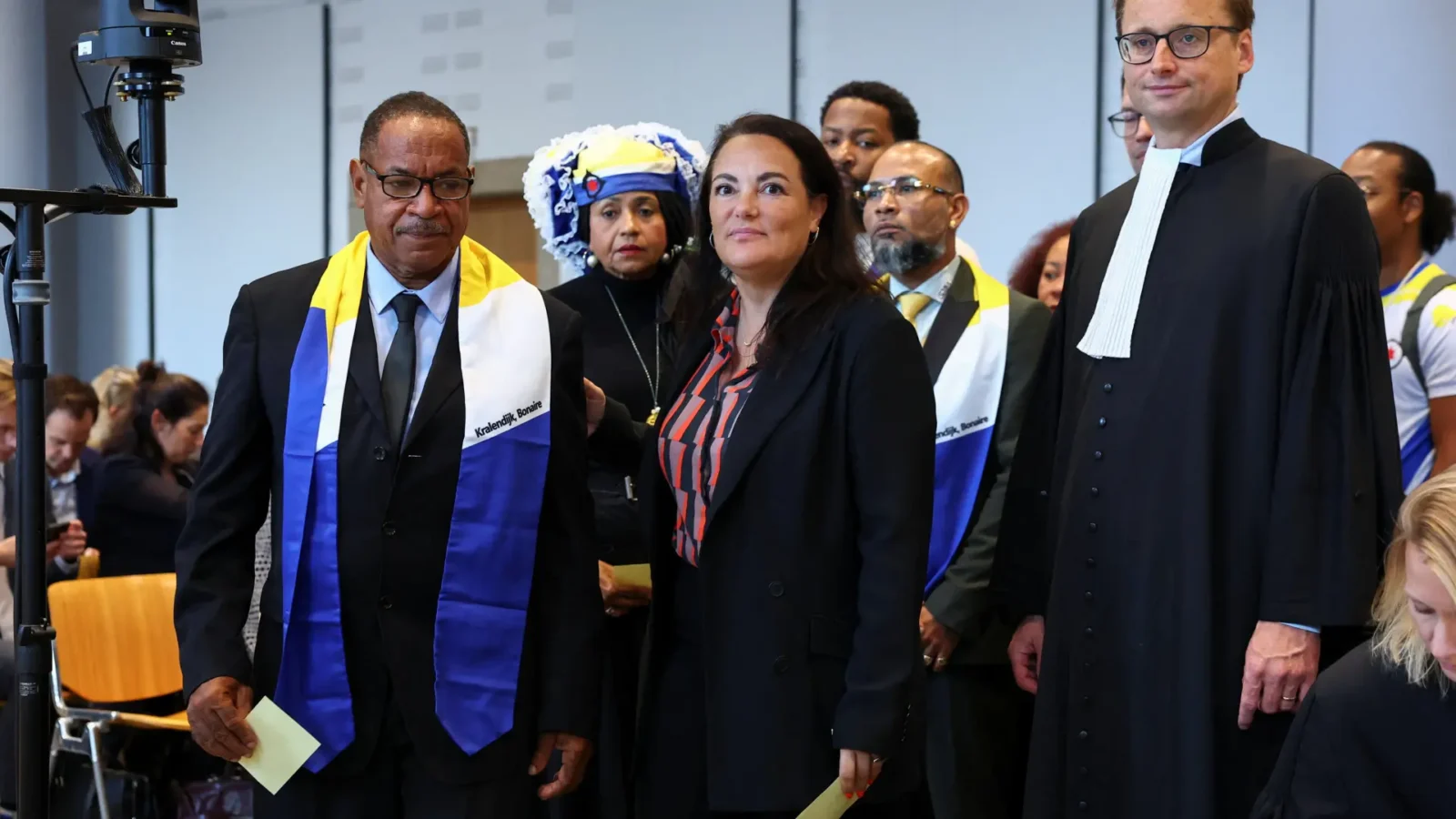
The Netherlands “insufficiently” protects the tiny Caribbean territory of Bonaire from climate change, The Hague District Court ruled Wednesday in a potentially landmark environmental justice ruling that could reverberate across global climate litigation. Residents of the Dutch territory off the coast of Venezuela teamed up with Greenpeace to sue the Dutch government, demanding “concrete measures” to shield the island from rising waters and intensifying climate impacts.
The sweeping decision by Judge Jerzy Luiten warned that Bonaire residents “are being treated differently from the inhabitants of the European part of the Netherlands without good reason,” calling it a violation of their human rights under the European Convention on Human Rights. The court ordered the Netherlands to set binding interim targets within 18 months “for the reduction of greenhouse gas emissions across the entire economy.”
Build the future you deserve. Get started with our top-tier Online courses: ACCA, HESI A2, ATI TEAS 7, HESI EXIT, NCLEX-RN, NCLEX-PN, and Financial Literacy. Let Serrari Ed guide your path to success. Enroll today.
A Test Case Following ICJ Climate Opinion
The ruling comes on the heels of an advisory opinion from the International Court of Justice delivered in July 2025, which found that states violating their climate obligations were committing an “unlawful” act. The ICJ’s unprecedented opinion, which was delivered unanimously after hearings in December 2024, set the goal of keeping global warming below 1.5°C above pre-industrial levels as the standard for all climate policies.
“The Bonaire case is the first major test case on a state’s mitigation and adaptation ambition following the ICJ’s groundbreaking ruling and could set a precedent with global relevance,” said Greenpeace in a statement. The case represents the first European adaptation ruling on overseas territories that could have groundbreaking legal consequences worldwide.
The ICJ opinion, which drew on reports by the Intergovernmental Panel on Climate Change as “the best available science,” affirmed that every person has a human right to a “clean, healthy and sustainable” environment. It marked the first time the ICJ, the United Nations’ principal judicial organ, examined the international legal framework applicable to climate change.
Colonial History and Constitutional Obligations
The low-lying Netherlands is famous for its protective measures against rising waters, mainly based on an extensive system of barriers and dykes developed over centuries to reclaim land from the sea and protect against flooding. But campaigners argue that it does not provide the same protection for its overseas territories such as Bonaire, despite their greater vulnerability to climate impacts.
Bonaire is a former Dutch colony in the Caribbean. In 2010, it became one of three special municipalities of the Netherlands along with Saba and St Eustatius. The island’s approximately 20,000 residents are Dutch citizens based on their colonial history, entitled to the same constitutional protections as residents of the European Netherlands.
The case was heard in The Hague because of Bonaire’s unique legal status as a special municipality rather than an autonomous country within the Kingdom of the Netherlands. This status makes Bonaire residents full Dutch citizens, subject to Dutch national law and entitled to the full protection of the Dutch Constitution and the European Convention on Human Rights.
Environmental protection in the Netherlands is not merely a policy preference but a constitutional obligation. The court emphasized that failing to provide equal protection constitutes a violation of Article 14 of the European Convention on Human Rights and Article 1 of Protocol No. 12, which prohibit discrimination.
Discriminatory Treatment and Human Rights Violations
During court hearings last year, some of the island’s residents shared their experiences battling rising seas and temperatures in testimony that proved central to the court’s findings. “Climate change is not a distant threat for us,” Bonaire farmer Onnie Emerenciana told judges. “Where we used to work, play, walk, or fish during the day, the heat is now often unbearable.”
The climates in Europe and the Caribbean are not the same, the court acknowledged in its ruling. “There is no good reason why measures for the inhabitants of Bonaire, who will be affected by climate change sooner and more severely, should be taken later and less systematically than for the European part of the Netherlands,” Judge Luiten stated.
Conservative forecasts predict that parts of the island will be underwater by 2050 – in just 25 years. “The island already suffers from flooding due to tropical storms and extreme rainfall, and according to several researchers, this will worsen in the coming years,” the judge told a packed courtroom.
Campaigners had pointed to a survey by Amsterdam’s Vrije Universiteit showing the sea could swallow as much as a fifth of Bonaire by the end of the century if current trends continue. The court found that climate adaptation measures for Bonaire were developed and implemented significantly later and less systematically than comparable measures for the European Netherlands, despite long-standing scientific knowledge that Bonaire is particularly vulnerable to climate change and that local authorities lack sufficient capacity to address these risks.
The court also noted the lack of a climate adaptation plan, sufficient scientific research, and financial resources allocated specifically for Bonaire. These shortcomings persist despite the government’s acknowledgment that Bonaire is particularly vulnerable to climate change. The ruling found that the government did not provide sufficient procedural safeguards to Bonaire residents, including access to information and public participation in climate planning.
Emission Reduction Requirements and Government Response
The government had argued it was an “autonomous task” of local authorities to develop a plan to counter the ravages of climate change. Lawyers for the government argued that the Netherlands already is making strides to combat climate change, citing greenhouse gas reductions and mitigation efforts. Government lawyer Edward Brans said the issue should be handled by national administrations and not judges.
However, the court ruled that government efforts weren’t enough. The court found that a target to reduce emissions by 55% by 2030 compared to 1990 levels wasn’t binding and didn’t fully include emissions from air and sea transport. The court also said that the Netherlands was “highly unlikely” to meet its 2030 target based on current policies.
Taking into account the Netherlands’ capacity and historical emissions, the court found that the State has not shown that its current and planned measures are capable of delivering the required emission reductions. The ruling pointed particularly to the absence of legally embedded economy-wide targets beyond 2030 and the assessment that the 2030 target is unlikely to be met under existing policy.
The court ordered the State, within eighteen months, to embed absolute economy-wide greenhouse gas emission reduction targets in national legislation, including interim targets and reduction pathways up to 2050. The government must also provide insight into the remaining national emissions budget and ensure that a national adaptation plan is drafted and implemented by 2030 in line with international targets.
They had called for a plan in place for Bonaire by April 2027 and for the Netherlands to reduce CO2 emissions to zero by 2040 rather than 2050 as agreed at an EU level. While the court rejected the more ambitious timeline, requiring instead compliance with the internationally agreed 2050 target, it emphasized that measures must be taken immediately and systematically.
Political Implications and Incoming Government
The ruling comes as weeks of talks to form a new Dutch government following a national election in late October look like producing a new minority coalition headed up by centrist D66 leader Rob Jetten. Jetten earned the nickname “climate pusher” when he was a minister responsible for shepherding through a raft of legislation intended to reduce the Netherlands’ reliance on fossil fuels and significantly cut its carbon emissions.
Now, the new government that Jetten is expected to lead will have to tighten measures in line with the court’s ruling. Greenpeace Netherlands director Marieke Vellekoop said that incoming prime minister Rob Jetten must now allocate funding for the climate measures lacking on Bonaire. “It should not matter where you were born: everyone has the right to protection against floods, storms, and extreme heat,” said Vellekoop.
Jackie Bernabela, one of the eight Bonaire residents who brought the case, wiped tears from her eyes in the courtroom as she told reporters: “The judges heard us. We are no longer second-class citizens. Equality. I am very happy.” The emotional scene underscored the profound personal significance of the ruling for islanders who have long felt their concerns were marginalized by the Dutch government.
There was no immediate reaction from the government to the 90-page written ruling. The government can appeal the decision, and both parties have three months to decide whether to pursue an appeal before the Hague Court of Appeal, which has previously ruled in major climate cases.
One decision can change your entire career. Take that step with our Online courses in ACCA, HESI A2, ATI TEAS 7, HESI EXIT, NCLEX-RN, NCLEX-PN, and Financial Literacy. Join Serrari Ed and start building your brighter future today.
Building on the Urgenda Legacy
It’s not the first time that The Hague District Court has issued a groundbreaking climate ruling. The same court heard the first stage of the landmark Urgenda case more than a decade ago. That case wrapped up in 2019 when the Dutch Supreme Court ruled in favor of climate activists and ordered the government to cut greenhouse gas emissions, a legal battle that paved the way for similar challenges around the world.
The Urgenda case was the first in the world in which citizens established that their government has a legal duty to prevent dangerous climate change. The 2019 Supreme Court decision held that the government had to reduce greenhouse gas emissions by at least 25% below 1990 levels by the end of 2020, finding that the Netherlands was responsible for managing carbon dioxide emissions and was bound to protect human rights under Articles 2 and 8 of the European Convention on Human Rights.
The Urgenda decision featured prominently in recent climate change decisions from the European Court of Human Rights and the United Nations’ highest court, the International Court of Justice. Both courts found that failing to combat climate change violated international law. The Supreme Court’s ruling affirmed that the duty to prevent significant harm applies to climate change, rejected arguments that small countries don’t have responsibility because their emissions are relatively minor, and confirmed that positive obligations under human rights law apply to risks which may materialize in the long term, including to future generations.
A key part of the Urgenda judgment rejected the argument that because other countries would cause global warming whatever the Netherlands did, the state did not have responsibility. The court ruled that “every country is responsible for its share” of emissions, establishing a principle now being applied in the Bonaire case.
Expanding Climate Litigation Landscape
The use of courts and other legal avenues to pursue climate litigation has grown rapidly over the past decade, with most lawsuits targeting governments. Claimants argue a relatively small number of major polluters bear a historic liability for losses caused by droughts, storms and other climate-fuelled extremes.
The judgment is expected to influence pending and future climate cases against states as it focuses on the role of courts in assessing both mitigation and adaptation measures, particularly in the context of vulnerable regions within a state’s territory. This marks an important development in European climate litigation, where judicial review has traditionally focused primarily on mitigation, rather than on the adequacy of adaptation measures.
The ICJ advisory opinion, requested by the United Nations General Assembly at the initiative of the Pacific Island nation of Vanuatu, aimed to clarify international law as it relates to climate change. In what was largely seen as a win for environmental campaigners, the judges said polluters could be liable for reparations to countries suffering from climate damage.
The ICJ recognized the interdependence between human rights and the protection of the environment. It affirmed that states cannot meet their existing human-rights obligations unless they also protect the environment, treating the right to a clean, healthy and sustainable environment as firmly grounded in international, regional and national law.
Procedural Innovations in Climate Adaptation Litigation
The Bonaire case brought by Greenpeace Netherlands, together with eight residents of Bonaire, was initiated in 2024 under the Dutch collective action regime. The court found that the violations of Articles 8 and 14 of the European Convention on Human Rights and Article 1 of Protocol No. 12 are unlawful under Dutch tort law vis-à-vis the inhabitants of Bonaire.
The court examined whether the State complied with its procedural obligations under Article 8 of the ECHR, which protects the right to private and family life. The ruling found that the government had violated these obligations by failing to conduct adequate scientific research on Bonaire’s specific vulnerabilities, failing to develop a comprehensive adaptation plan, and failing to provide sufficient opportunities for public participation in climate decision-making.
This procedural dimension of the ruling is significant because it establishes concrete requirements for how governments must engage with vulnerable populations when developing climate policies. The court’s emphasis on transparency, access to information, and meaningful participation creates a template that could be applied in other jurisdictions where marginalized communities face disproportionate climate impacts.
Global Implications and Precedent-Setting Potential
Wednesday’s case “is the first European adaptation ruling on overseas territories that could have groundbreaking legal consequences worldwide,” said Greenpeace. The ruling creates a framework that could be applied to other situations where colonial or post-colonial relationships have left territories vulnerable to climate impacts while lacking the resources or political power to protect themselves adequately.
The case has particular resonance for small island developing states and other climate-vulnerable regions that historically contributed minimally to global greenhouse gas emissions but face existential threats from climate change. The court’s finding that differential treatment based on geography violates fundamental equality principles could strengthen arguments in international climate negotiations about differentiated responsibilities and climate justice.
The decision also has implications for how European nations with overseas territories approach climate planning. France, the United Kingdom, and other European powers maintain territories in the Caribbean, Pacific, and Indian Oceans that face severe climate vulnerabilities. The Bonaire ruling suggests these governments cannot simply apply European climate strategies to geographically and climatically distinct territories without addressing their specific needs.
Challenges of Implementation and Compliance
The ruling’s practical implementation presents significant challenges for the Dutch government. Within the 18-month timeframe specified by the court, the government must develop legally binding emission reduction targets that cover the entire economy, including sectors like aviation and shipping that are often excluded from national climate accounting. This requires not just setting targets but embedding them in legislation that survives political changes and provides clear accountability mechanisms.
For Bonaire specifically, the government must develop a comprehensive climate adaptation plan by 2030. This plan must address the island’s unique vulnerabilities, including coastal erosion, coral reef degradation that reduces natural storm protection, water scarcity, and impacts on agriculture and fisheries that sustain local livelihoods. The court’s emphasis on systematic and timely action means the government cannot simply commission studies and reports – it must implement tangible protective measures.
The financial implications are substantial. Adaptation measures for small island territories are typically expensive relative to population size, requiring significant per capita investment in coastal protection infrastructure, water security systems, climate-resilient housing, and ecosystem restoration. The Dutch government will need to allocate dedicated resources for Bonaire’s climate adaptation, moving beyond vague commitments to specific budget allocations and implementation timelines.
Broader Context of Sea Level Rise and Island Nations
The decade up to 2023 saw sea levels rise by a global average of around 4.3 centimeters (1.7 inches), with parts of the Pacific rising higher still. The world has also warmed 1.3 degrees Celsius (2.3 Fahrenheit) since preindustrial times because of the burning of fossil fuels. These seemingly small numbers translate into profound impacts for low-lying islands like Bonaire.
The court’s recognition of these scientific realities and their human rights implications reflects a growing judicial willingness to ground climate rulings in climate science. By accepting the IPCC reports and other peer-reviewed research as authoritative sources, courts are moving beyond treating climate change as a political question and instead treating it as a scientific reality with legal consequences.
The Bonaire ruling also engages with questions of permanence and statehood that are becoming increasingly urgent for island nations facing complete or partial submersion. While the ICJ’s recent advisory opinion suggested that complete submergence of territory does not necessarily negate a state’s legal status, confirming a presumption of continuity of statehood, the Bonaire case focuses on the more immediate question of protecting current residents from escalating climate impacts.
Looking Forward: Appeals and Lasting Impact
Both the State and Greenpeace have three months to appeal the judgment. Any appeal would be brought before the Hague Court of Appeal, which has previously ruled in major climate cases such as Urgenda. The appellate court’s treatment of this case will be closely watched, particularly its handling of the discrimination findings and the balance between judicial authority and political decision-making in climate policy.
Regardless of potential appeals, the Bonaire decision has already achieved several significant outcomes. It has elevated climate adaptation to a central concern in climate litigation, moving beyond the mitigation focus that has dominated most cases. It has established that discrimination based on geography can violate fundamental rights when it results in differential exposure to climate risks. And it has demonstrated that courts can require governments to develop specific adaptation plans with binding timelines, not just aspirational goals.
The ruling sends a clear message to governments worldwide: territories under their jurisdiction are entitled to equal protection from climate impacts, regardless of geographic distance or political marginalization. Colonial history cannot justify differential treatment when it comes to fundamental rights and climate protection. As one plaintiff stated, the significance lies in being recognized not as second-class citizens but as equals entitled to the same protections and government responsiveness.
The convergence of the ICJ’s advisory opinion, the legacy of Urgenda, and now the Bonaire decision signals that climate litigation is entering a new phase. Courts are increasingly willing to find that governments have binding, enforceable obligations to protect vulnerable populations from climate change through both emissions reduction and adaptation measures. Whether these judicial interventions will translate into meaningful climate action depends on political will, adequate financing, and sustained pressure from civil society – but the legal foundations for accountability have been firmly established.
For Bonaire’s 20,000 residents, the ruling represents both vindication and hope. Their voices have been heard, their rights have been affirmed, and their government has been ordered to act. Whether that action comes quickly enough to prevent the predicted inundation remains to be seen, but the court has made clear that delay and discrimination are no longer legally acceptable responses to the climate crisis.
Ready to take your career to the next level? Join our Online courses: ACCA, HESI A2, ATI TEAS 7 , HESI EXIT , NCLEX – RN and NCLEX – PN, Financial Literacy!🌟 Dive into a world of opportunities and empower yourself for success. Explore more at Serrari Ed and start your exciting journey today! ✨
Track GDP, Inflation and Central Bank rates for top African markets with Serrari’s comparator tool.
See today’s Treasury bonds and Money market funds movement across financial service providers in Kenya, using Serrari’s comparator tools.
Photo source: Google
By: Montel Kamau
Serrari Financial Analyst
4th February, 2026