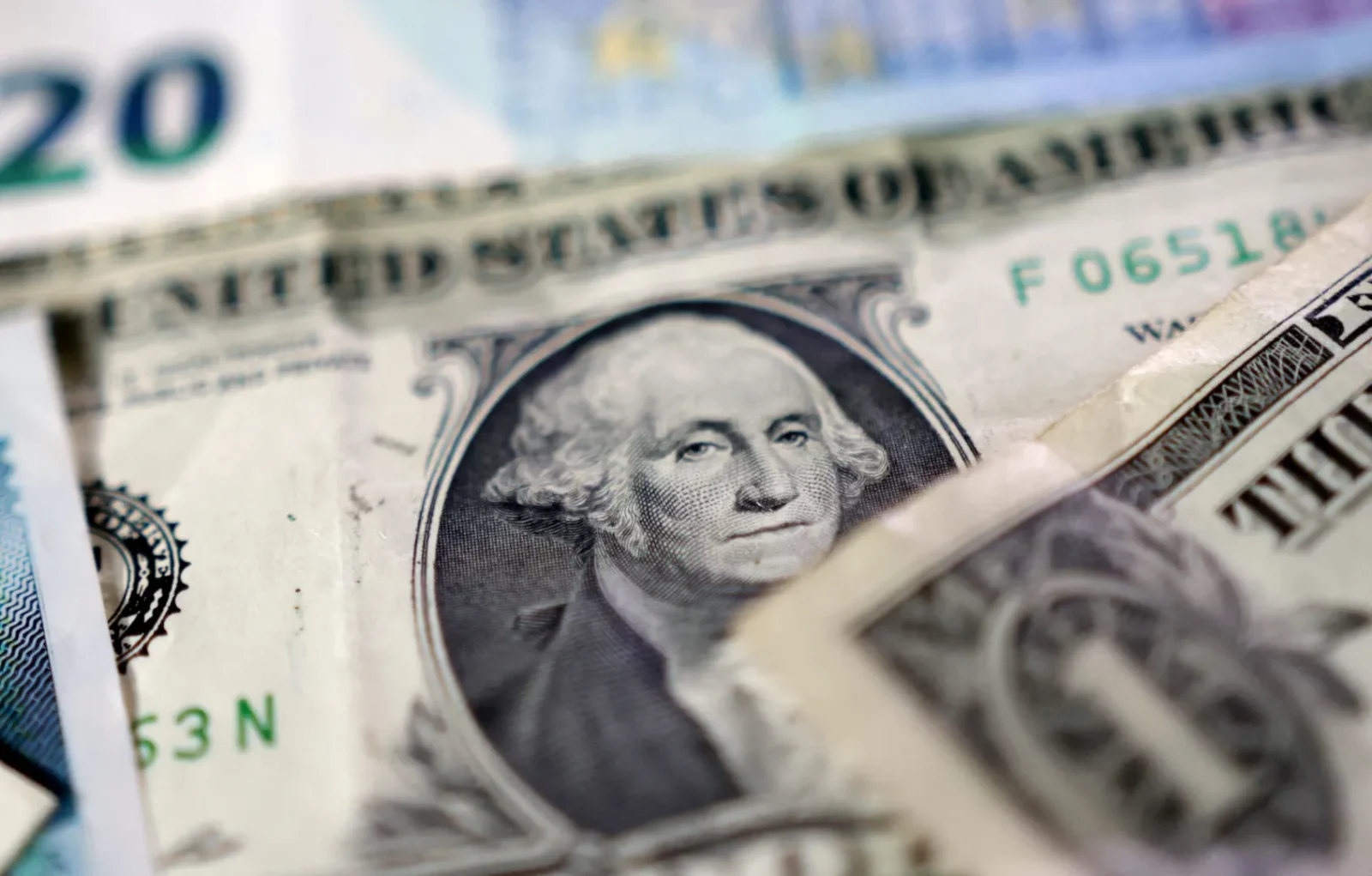
The US dollar staged one of its most decisive geopolitical rallies in years this week, climbing broadly against the euro, yen, Swiss franc, Australian dollar, and Chinese yuan as investors scrambled for safe-haven cover following joint US and Israeli military strikes on Iran. The attack, which killed Supreme Leader Ali Khamenei and triggered sustained Iranian retaliation across the Gulf region, sent oil prices surging and forced a fundamental reassessment of global inflation, central bank policy timelines, and energy supply security. For currency markets, the message was clear: in times of existential geopolitical shock, the dollar remains the world’s most sought-after refuge.
The US dollar index — a measure of the greenback’s value against a basket of major trading partners — rose 0.74% to 98.37, after touching 98.566, its highest level since January 23. That single-day gain of nearly 1% was, according to Reuters, the dollar’s best daily performance in seven months. By Tuesday, the currency was staging its biggest two-day rally in nearly a year, according to Bloomberg, as the US-Iranian war intensified and traditional havens such as gold and Treasuries began moving in unexpected directions.
Build the future you deserve. Get started with our top-tier Online courses: ACCA, HESI A2, ATI TEAS 7, HESI EXIT, NCLEX-RN, NCLEX-PN, and Financial Literacy. Let Serrari Ed guide your path to success. Enroll today.
The Oil Market at the Centre of Everything
Before examining the currency dynamics, it is essential to understand what is driving them: an oil shock of a scale not seen since Russia’s invasion of Ukraine in 2022, and by some measures larger. Brent crude surged more than 14% from Friday’s close within the first days of the conflict — a “stunning” move, in the words of analyst Robin Brooks, that dwarfed the roughly 2% rise recorded on the day Russia invaded Ukraine. Brent, the international benchmark, briefly surpassed $82 per barrel before settling around $77-$79, up from roughly $73 before the weekend strikes. US crude jumped more than 7% in a single session.
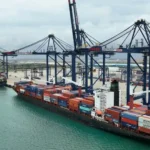
The cause was not merely the strikes on Iran themselves, but what came next: the effective paralysis of the Strait of Hormuz, the narrow waterway off Iran’s southern coast through which roughly one-fifth of globally traded oil flows every day. Iran’s Revolutionary Guard Corps declared the strait closed and warned that any vessel attempting passage would be targeted. In the first 36 hours, at least five tankers were struck, two crew members were killed, and over 150 vessels dropped anchor in open Gulf waters rather than risk the crossing. Major container shipping companies — Maersk, Hapag-Lloyd, MSC, and CMA CGM — all suspended transits and began rerouting ships around Africa’s Cape of Good Hope, adding weeks to delivery times.
Thu Lan Nguyen, head of forex and commodity research at Commerzbank, summarised the market’s central preoccupation: “The reaction at the center of everything is that of the oil market. Even the news that some OPEC+ countries will expand production more strongly next month than previously planned does little to change this, given the fact that most of these countries have only very limited options to export their crude oil via alternative routes.” OPEC+ had pledged to raise daily output by 206,000 barrels starting the following month — a move intended to calm markets — but analysts noted that a significant portion of Gulf spare capacity physically cannot reach global markets if the strait remains blocked.
Commodity intelligence firm Kpler, which tracked vessel movements in real time, described the situation as a “de facto closure” for most of the global shipping community — comparable in character to the Red Sea disruption of 2024 but with far larger volumes at stake. JPMorgan and Barclays analysts warned that oil prices could spike to between $100 and $130 per barrel if the conflict results in prolonged supply disruption. Evercore ISI’s Krishna Guha told CNN that a scenario where oil trades around $80 a barrel and the conflict remains short-lived would limit broader economic damage, but that prices above $100 would be “qualitatively different” — delivering much larger shocks to the global economy.
Why the Dollar Benefits from an Oil Shock
The dollar’s role as the primary beneficiary of higher oil prices is rooted in structural economic reality. The United States has been a net crude exporter for nearly a decade, meaning that a rise in oil prices does not impose the same energy import burden on the US economy that it does on Europe, Japan, or China. When energy costs rise globally, countries that import most of their oil — particularly Japan and the euro area — face deteriorating terms of trade, current account pressure, and inflationary headwinds that weaken their currencies relative to the greenback.
Barclays analysts estimated that the greenback could strengthen by between 0.5% and 1% for every 10% increase in oil prices, arguing the Iran escalation adds to recent dollar tailwinds via higher energy prices and risk aversion. Beyond the trade balance dynamic, higher oil also raises inflation expectations in energy-importing economies — which in turn complicates the monetary policy paths of the European Central Bank and the Bank of Japan, creating further divergence from the Federal Reserve’s outlook.
Marc Chandler, chief market strategist at Bannockburn Global Forex, captured the mood precisely: “The key thing is just the uncertainty. The endgame is unclear.” In moments of that kind of deep uncertainty, investors historically reduce exposure to risk assets and park funds in the most liquid, widely accepted financial instruments available — which means US dollar assets.
The safe-haven bid was also reinforced by Federal Reserve expectations. A rate cut is no longer fully priced in until September, compared to previous market expectations of July, based on pricing in the Fed funds futures market. The logic: if oil prices remain elevated, inflation will stay stickier for longer, reducing the Fed’s ability to cut rates. Higher-for-longer US rates, relative to global peers, continue to attract capital flows into dollar-denominated assets.
Euro Under Pressure, Swiss Franc Faces Its Own Tensions
The euro fell 0.80% to $1.1721 on Monday, after touching $1.1698 — its weakest level since January 22. Holger Schmieding, chief economist at Berenberg, noted that “a sustained rise in the oil price by $15 per barrel could raise the level of euro zone consumer prices by almost 0.5%” and curtail real disposable incomes accordingly. For an economy where the European Central Bank has been navigating a delicate balance between supporting sluggish growth and containing residual inflation, an external energy shock of this magnitude poses a serious threat to the policy trajectory.
The Swiss franc provided an interesting contrast. The currency, traditionally a safe haven in its own right, hit an 11-year high against the euro at 0.9028 — reflecting intense flight from the euro within European markets. But against the dollar, it dropped 0.43%, underscoring the dollar’s superior pull in truly global risk-off episodes. The Swiss National Bank responded swiftly, saying it was more willing to intervene in foreign currency markets following the conflict’s impact on the franc’s exchange rate. The SNB’s intervention posture was last similarly activated during the 2015 European debt crisis and the early months of the COVID-19 pandemic.
The euro’s exposure to the oil shock is multi-layered. Europe imports most of its crude from the Middle East and is also a significant consumer of liquefied natural gas that transits the Strait of Hormuz. Approximately 30% of Europe’s jet fuel supply originates from or transits via the strait, making the aviation sector particularly vulnerable. The broader macroeconomic concern — higher energy costs compressing corporate margins, reducing household purchasing power, and reigniting inflation — was immediately priced into European equity markets, with the Stoxx 600 falling 1.61% on Monday.
One decision can change your entire career. Take that step with our Online courses in ACCA, HESI A2, ATI TEAS 7, HESI EXIT, NCLEX-RN, NCLEX-PN, and Financial Literacy. Join Serrari Ed and start building your brighter future today.
Yen Weakens as BOJ Faces a Policy Paradox
The Japanese yen’s trajectory following the attacks exposed one of the more complex monetary policy dilemmas currently unfolding in global markets. After an initial knee-jerk appreciation — the typical first reaction to geopolitical risk — the yen reversed sharply and weakened 0.61% to 157.005 yen per dollar, dropping to 157.25, its lowest level since February 9. Safe-haven flows into the dollar ultimately overwhelmed the yen’s own haven status, partly because Japan’s near-total dependence on imported oil means higher energy costs actually represent a net economic headwind for the country.
BOJ Deputy Governor Ryozo Himino moved quickly to address market speculation about policy implications, stating that growing market volatility would not prevent the central bank from raising rates — arguing it was inappropriate to automatically tie policy decisions to short-term market turbulence. However, sources cited by Reuters indicated the Middle East conflict had materially raised the threshold for a rate increase at the BOJ’s March 18-19 meeting, with market bets on a March hike falling to around 5% — down from 10% before Himino’s remarks. Roughly 60% of market participants now see the chance of a rate increase at the April 27-28 meeting, according to Reuters, while a majority of economists in a Reuters poll expect the BOJ to raise rates to 1% by end of June.
BOJ Governor Kazuo Ueda, speaking in parliament, acknowledged directly that the Middle East developments “could have a huge impact on the global economy, including that of Japan, through rising energy costs and market moves.” He outlined the specific policy dilemma facing the bank: “Rising crude oil prices would worsen Japan’s terms of trade and hurt the economy, which in turn could put downward pressure on underlying inflation” — but if the price rise persists, it could simultaneously push up underlying inflation by raising medium- and long-term inflation expectations among households and businesses.
The BOJ had raised interest rates to a 30-year high of 0.75% in December, in a landmark step toward ending decades of ultra-loose monetary policy. The central bank’s broader trajectory — guided by sustained above-2% inflation for nearly four years and spring wage negotiations pointing to salary increases exceeding 4%, the highest in three decades — had been firmly towards normalisation. The Iran conflict now clouds that path considerably, introducing a scenario where imported energy inflation could push the BOJ’s forecasted inflation rate above 4%, according to Bloomberg economist Taro Kimura, complicating a central bank that was already navigating political pressure from Prime Minister Sanae Takaichi, who had signalled a preference for a more dovish BOJ stance.
Mari Iwashita, executive rates strategist at Nomura Securities, assessed: “While the BOJ’s policy to keep raising rates likely remains unchanged, the fresh uncertainty caused by the Iran conflict makes its decision on the next rate-hike timing difficult.”
Yuan and Antipodean Currencies Under Pressure
China’s yuan weakened 0.25% in offshore trade to 6.8819 per dollar, with the People’s Bank of China nudging its daily onshore fixing lower to limit appreciation pressure. China’s exposure to the Strait of Hormuz crisis is acute and direct: China, India, Japan, and South Korea together account for nearly 70% of shipments through the waterway, according to the US Energy Information Administration, with China being by far the largest recipient of Iranian crude under long-standing trade arrangements. A sustained disruption to those flows would impose significant costs on China’s energy-intensive manufacturing sector and further complicate an economy still managing a fragile post-pandemic recovery and ongoing structural pressures in property and domestic consumption.
Commodity-linked currencies bore additional weight. The Australian dollar tumbled as much as 1.2% before paring declines to 0.60%, trading around $0.7025. The Aussie dollar’s sensitivity to global risk appetite — and its role as a proxy for Asian economic conditions — made it particularly exposed to a scenario combining oil shock, potential Chinese demand disruption, and broad risk aversion. Macro Hive’s analyst Ford summarised the near-term outlook for the dollar: “If we continue in this oil up, risk appetite down world, then USD will continue to find a bid.” A reversal, he noted, would most likely require oil prices to fall and geopolitical tensions to ease — at which point traditional safe havens like the Swiss franc and yen might reclaim ground.
A Broader Market Dislocation
Currency market moves did not occur in isolation. Across asset classes, the Iran conflict triggered sharp dislocations from the expected safe-haven playbook. Gold briefly reclaimed $5,400 per troy ounce, gaining around 2% and reflecting demand for stability, before paring gains as the dollar’s surge exerted downward pressure on gold expressed in greenbacks. US Treasury yields rose — contrary to typical crisis behaviour in which investors buy bonds and push yields lower — as traders began pricing in sustained oil-driven inflation that would deter Fed cuts. The 10-year yield saw its biggest single-day advance since October, according to Bloomberg.
Equity markets reflected the sector-specific winners and losers. Energy stocks and defence contractors surged: Exxon, Chevron, Northrop Grumman, and Lockheed Martin all rose pre-market as investors priced in extended conflict and elevated oil revenues. Airlines fell sharply — American Airlines shed 4.2%, Delta 2.2%, and United 2.9% — while European carriers saw steeper falls, with Air France dropping 9.4% and Lufthansa falling 5.2%, according to CNN Business. The Nikkei 225 dropped 1.35%, and Europe’s Stoxx 600 fell 1.61%.
Shipping costs soared. The benchmark freight rate for Very Large Crude Carriers — the supertankers used to carry 2 million barrels of crude from the Middle East to China — hit an all-time high of $423,736 per day, up more than 94% from Friday’s close, according to LSEG data. Leading maritime insurers, including Norway’s Gard and Skuld, Britain’s NorthStandard, and the London P&I Club, began scrapping war risk cover for vessels operating in the Persian Gulf — a withdrawal of insurance that makes it economically unviable for most commercial operators to transit the region regardless of military warnings.
Reasserting the Dollar’s Crisis Role
The dollar’s performance in this episode carries significance beyond the immediate event. For several months prior to the Iran conflict, the greenback had come under unusual pressure — failing to rally during last year’s tariff-induced global market selloff in a departure from historical patterns. That failure had prompted genuine debate among currency analysts about whether the dollar’s reflexive safe-haven status had been durably impaired. As Eric Theoret, FX strategist at Scotiabank, put it: “‘Liberation Day’ was obviously a bit of a break with the historical analogs.”
The Iran conflict has, at least temporarily, settled that debate. When a genuine supply-disruption geopolitical shock struck — one touching the world’s most critical energy chokepoint and raising the prospect of sustained global inflation — investors reverted to the dollar with the speed and unanimity of historical precedent. The greenback strengthened against every major currency. Even gold, which had been acting as a rival safe haven, was dragged lower against the dollar at points during the turmoil.
The question now confronting global currency markets is how sustained this dynamic will be. As Citigroup’s global head of emerging markets strategy, Luis Costa, wrote in a note on Sunday: “Historically, geopolitical oil shocks fade quickly, but if this episode lasts longer, markets may see extended volatility.” The trajectory of oil prices — and with it, the dollar’s bid — will ultimately depend on how long the Strait of Hormuz remains functionally closed, whether Iran’s retaliation broadens further into Gulf states, and whether diplomatic channels can establish a framework for de-escalation. Until those questions are answered, the dollar’s position as the world’s indispensable crisis currency appears firmly restored.
Ready to take your career to the next level? Join our Online courses: ACCA, HESI A2, ATI TEAS 7 , HESI EXIT , NCLEX – RN and NCLEX – PN, Financial Literacy!🌟 Dive into a world of opportunities and empower yourself for success. Explore more at Serrari Ed and start your exciting journey today! ✨
Track GDP, Inflation and Central Bank rates for top African markets with Serrari’s comparator tool.
See today’s Treasury bonds and Money market funds movement across financial service providers in Kenya, using Serrari’s comparator tools.
photo source: Google
By: Montel Kamau
Serrari Financial Analyst
5th March, 2026