










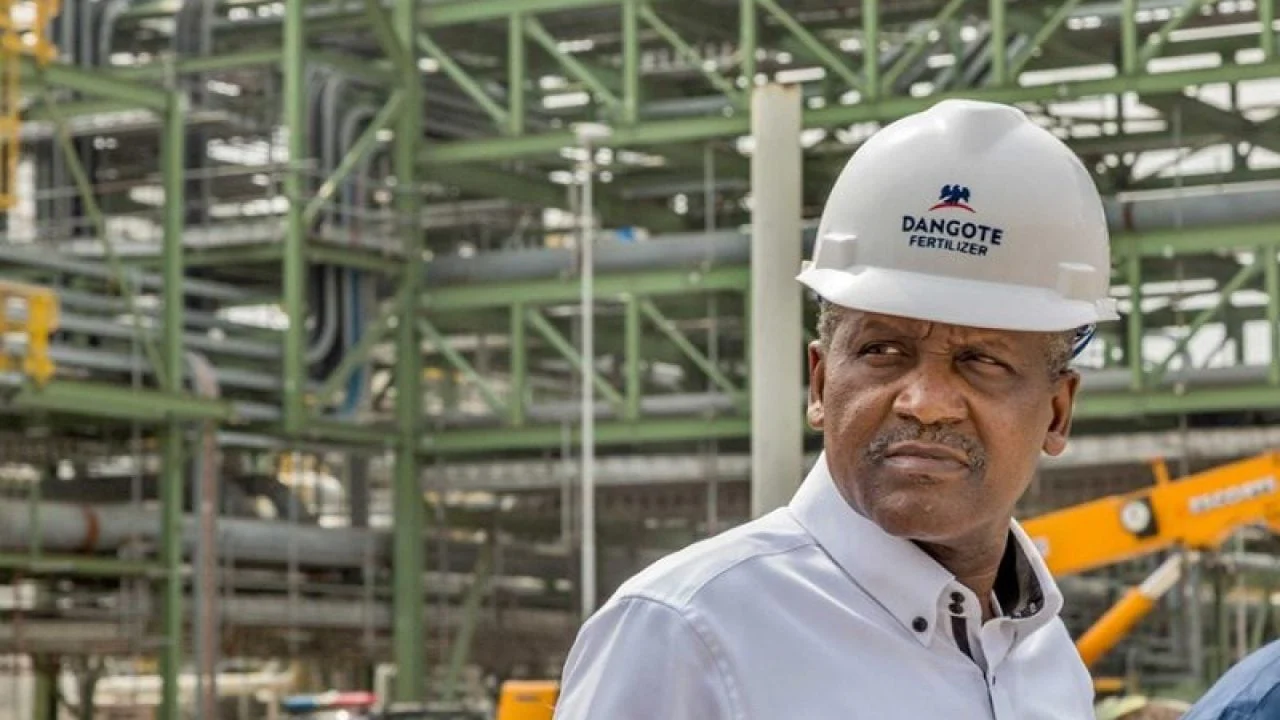
The Dangote Petroleum Refinery has made a significant commitment to Nigeria’s energy security by reaffirming its capacity to supply petroleum products far beyond the nation’s current domestic consumption levels. In a public notice issued on January 29, 2026, the refinery announced it can deliver 75 million litres of Premium Motor Spirit (PMS), commonly known as petrol, daily—a volume that substantially exceeds Nigeria’s estimated national consumption of 50 million litres per day.
This announcement represents a watershed moment for Africa’s largest economy, which has historically struggled with fuel scarcity despite being one of the continent’s leading crude oil producers. The commitment by Africa’s largest refinery signals a fundamental shift in Nigeria’s petroleum supply dynamics and reinforces the country’s transition from fuel import dependence to domestic refining self-sufficiency.
Build the future you deserve. Get started with our top-tier Online courses: ACCA, HESI A2, ATI TEAS 7, HESI EXIT, NCLEX-RN, NCLEX-PN, and Financial Literacy. Let Serrari Ed guide your path to success. Enroll today.
Comprehensive Product Portfolio Beyond Petrol
While the petrol supply commitment has garnered significant attention, the Dangote Refinery’s capabilities extend across multiple critical petroleum products. The facility announced it can supply 25 million litres of Automotive Gas Oil (AGO), commonly known as diesel, compared with an estimated daily demand of 14 million litres. Additionally, the refinery has the capacity to provide 20 million litres of aviation fuel daily, far exceeding the estimated maximum domestic consumption of four million litres.
“The management of Dangote Petroleum Refinery would like to reiterate our capability to supply the underlisted petroleum products of the highest international quality standard to marketers and stakeholders,” the company stated in its public notice. This comprehensive approach to petroleum product supply positions the refinery as a cornerstone of Nigeria’s energy infrastructure, capable of meeting diverse fuel needs across transportation, aviation, and industrial sectors.
The surplus capacity across all product categories provides Nigeria with critical strategic advantages. Industry analysts note that supplying above estimated consumption reduces the need for emergency imports, strengthens inventory cover, and enhances the resilience of the domestic supply chain. This buffer capacity becomes particularly valuable during periods of peak demand, such as holiday seasons, or during logistical disruptions that have historically plagued Nigeria’s fuel distribution network.
Strategic Importance for Energy Security
The availability of volumes above prevailing demand addresses one of Nigeria’s most persistent economic vulnerabilities. For decades, the paradox of being a major crude oil producer while depending heavily on imported refined products has drained foreign exchange reserves, exposed the economy to global price volatility, and created recurring fuel scarcity crises that disrupted economic activity.
According to the Nigerian Midstream and Downstream Petroleum Regulatory Authority (NMDPRA), Nigeria’s daily petrol consumption currently ranges between 45 million and 50 million litres, though actual consumption has been documented at higher levels during peak periods. Data from October 2025 showed that Nigeria consumed 56.74 million litres of petrol daily—the highest level within a one-year period—highlighting the variability in national demand.
The Dangote Refinery’s capacity to supply 75 million litres daily provides a substantial cushion above even peak consumption levels. This surplus capacity enhances market stability by ensuring continuous supply during demand spikes, reducing the vulnerability to supply chain disruptions, and minimizing the need for emergency imports that have historically placed pressure on Nigeria’s foreign exchange reserves.
“The availability of volumes above prevailing demand provides critical supply buffers, enhances market stability and reduces reliance on imports, particularly during periods of peak demand or logistical disruption,” the refinery stated in its announcement. This strategic positioning aligns with Nigeria’s broader economic goals of reducing import dependency and conserving foreign currency for productive investments rather than recurring expenditure on refined petroleum products.
Transforming Nigeria’s Petroleum Landscape
The Dangote Petroleum Refinery, located in the Lekki Free Zone on the outskirts of Lagos, represents the culmination of a $20 billion investment and years of development. The facility is the largest single-train refinery in the world, with an initial processing capacity of 650,000 barrels of crude oil per day. In October 2025, Aliko Dangote, the refinery’s founder and Africa’s richest individual, announced plans to expand capacity to 1.4 million barrels per day by 2028, which would make it the world’s largest refinery by any measure.
The refinery’s impact on Nigeria’s fuel supply has been gradually increasing. According to NMDPRA data released in January 2026, domestic petrol supply surged by approximately 64% to an average of 32 million litres per day in December 2025, compared with about 19.5 million litres per day in November 2025. This represented one of the strongest monthly improvements in local petrol supply since the refinery commenced phased operations.
The refinery has implemented 24-hour loading operations to sustain daily distribution of petroleum products nationwide. Managing Director David Bird explained that the shift to round-the-clock operations was driven by the need to meet growing market demand while improving turnaround time for tanker trucks. The facility now evacuates over 1,000 trucks daily, with production and evacuation volumes consistently exceeding 50 million litres of petrol per day.
Regulatory Compliance and Industry Collaboration
The Dangote Petroleum Refinery has emphasized its commitment to full regulatory compliance and ongoing cooperation with the Nigerian Midstream and Downstream Petroleum Regulatory Authority. The refinery stated that its supply approach is aligned with ongoing efforts to ensure market stability and orderly downstream operations—critical objectives as Nigeria transitions from a subsidized to a fully deregulated petroleum market.
“The refinery said it remains fully engaged with regulators and industry stakeholders in support of Nigeria’s national energy security objectives, as the country deepens its transition from fuel import dependence to domestic refining,” according to the company’s statement. This collaborative approach reflects recognition that achieving sustainable energy security requires coordination across government regulatory bodies, petroleum marketers, logistics providers, and other stakeholders in Nigeria’s complex downstream petroleum sector.
In a letter dated November 30, 2025, to the NMDPRA, the refinery invited regulatory officials to independently verify its daily production capacity. This transparency initiative, proposed by CEO David Bird, offered to host NMDPRA officials onsite from December 1, 2025, to validate and publicly publish daily supply volumes. “In the spirit of full transparency, we are willing to publish our daily production and stock volumes,” Bird stated in the letter.
This openness to third-party verification addresses previous discrepancies in reported production figures. Earlier NMDPRA data indicated that the refinery had supplied an average of 18.03 million litres per day between October 2024 and October 2025—below its planned full capacity of 35 million litres per day at that time. The invitation for independent verification reflects the refinery’s commitment to building public confidence in domestic refining capacity.
Economic Impact and Foreign Exchange Savings
The economic implications of the Dangote Refinery’s operations extend far beyond fuel availability. By meeting domestic petroleum demand through local production, Nigeria stands to realize substantial foreign exchange savings. Before the refinery commenced significant operations, Nigeria’s refined fuel imports were as high as 500,000 barrels per day in 2023. By the first quarter of 2025, these imports had collapsed to approximately 88,000 barrels per day—a dramatic reduction that reflects the refinery’s growing contribution to domestic supply.
Industry projections suggest that Nigeria could save up to $10 billion annually in foreign exchange that would otherwise be spent on petroleum product imports. These savings provide crucial fiscal space for the government to invest in infrastructure, education, healthcare, and other productive sectors. Additionally, reduced import dependency strengthens the naira by decreasing pressure on foreign exchange reserves and reducing Nigeria’s vulnerability to international fuel price volatility and shipping cost fluctuations.
With domestic refining capacity expanding, stakeholders believe Nigeria is increasingly positioned to reduce foreign exchange exposure, improve supply security, and strengthen downstream efficiency through locally refined petroleum products. This transformation addresses a longstanding economic inefficiency that has constrained Nigeria’s development for decades.
The refinery also contributes significantly to job creation and economic multiplier effects. The facility is expected to provide 135,000 permanent jobs when fully operational, including direct employment at the refinery and indirect opportunities in transportation, logistics, security, catering, and other service sectors. The economic ripple effects extend to supporting industries and local businesses in the Lagos region and beyond.
One decision can change your entire career. Take that step with our Online courses in ACCA, HESI A2, ATI TEAS 7, HESI EXIT, NCLEX-RN, NCLEX-PN, and Financial Literacy. Join Serrari Ed and start building your brighter future today.
Regional Impact Beyond Nigeria
The Dangote Refinery’s influence extends beyond Nigeria’s borders, transforming energy dynamics across West and Central Africa. The facility has already begun exporting petroleum products to regional neighbors including Senegal, Togo, Benin, and Gabon. These countries, historically dependent on imports from Europe and Asia, now benefit from geographically proximate supply sources with reduced shipping costs and delivery times.
According to Gary Clark of S&P Global Commodity Insights, “prior to the ramping up of supply at the Dangote refinery, West Africa was very much reliant on imports from Europe. But now, with Dangote coming online, we see a lot of diesel and jet fuel exported directly from the refinery, meeting West and Central African demands.” This shift strengthens regional energy security by reducing dependence on distant international suppliers and creating a more resilient regional petroleum supply chain.
The refinery has also made significant inroads into global markets. In early 2025, the United States imported 1.7 million barrels of jet fuel from Dangote in a single month—an unprecedented milestone for an African producer. Subsequently, Saudi Aramco purchased three cargoes totaling 130 million liters, demonstrating that the refinery’s products meet the quality standards of the world’s most sophisticated fuel markets.
These international sales provide hard currency revenues and validate the refinery’s technical capabilities. More importantly, they position Nigeria and Africa more broadly as participants in the global refined products value chain, rather than merely suppliers of crude oil for processing elsewhere.
Ongoing Operational Enhancements
Despite its impressive capacity, the Dangote Refinery continues to work on optimizing operations and addressing technical challenges. In December 2025, the refinery began a planned turnaround that paused its main gasoline unit, the residue fluid catalytic cracker (RFCC), for maintenance scheduled to end in late January 2026. Vice President Devakumar Edwin confirmed plans to briefly suspend the crude distillation unit for a few days in January to expand capacity from 650,000 barrels per day to 700,000 barrels per day.
Stabilizing the RFCC has been a key objective since the refinery began operations, as this unit provides the primary means of producing gasoline and serves Nigeria’s largest fuel deficit. The maintenance work aims to ensure consistent, reliable operation of this critical equipment. Looking ahead, the company plans to commission a second crude distillation unit by 2028, which will minimize downtime risks and mirror the configuration of other refineries operating at comparable scale.
The refinery has also selected Honeywell to supply advanced technology, services, proprietary catalysts, and equipment to support its planned expansion to 1.4 million barrels per day by 2028. “Through the use of Honeywell’s proven, advanced technologies, we can set new production standards for the industry while contributing to Nigeria’s energy independence and economic growth,” stated Aliko Dangote.
Market Dynamics and Pricing Considerations
The entry of significant domestic refining capacity has introduced new dynamics to Nigeria’s petroleum market. In October 2024, the Nigerian National Petroleum Company Limited (NNPC) ended its exclusive purchase agreement with Dangote Refinery, allowing other marketers to buy petrol directly from the facility. This change eliminated the de facto subsidy that existed when NNPC purchased petrol from Dangote at ₦898.78 per litre but sold to marketers at ₦765.99 per litre.
Following this shift to a fully deregulated market, petrol prices rose significantly. Recent price adjustments saw MRS filling stations selling petrol at ₦839 per litre, with several other stations pricing between ₦930 and ₦1,400 per litre depending on location. The price increases reflect the removal of implicit subsidies and alignment with actual market costs, though this has created affordability challenges for many Nigerians.
The refinery has emphasized that its priority is ensuring Nigeria receives needed products rather than profit maximization. “Our priority is to ensure Nigeria receives the products it needs. This is not driven by profit motives; it is about guaranteeing the availability of essential energy products,” Aliko Dangote stated. “It is similar to the transformation we delivered in the cement sector,” he added, referencing his company’s previous success in transforming Nigeria’s cement industry from import-dependent to self-sufficient with export capacity.
Industry experts believe that as the refinery achieves full operational efficiency and domestic competition increases with additional modular refineries coming online, market forces should help moderate prices over time. The key challenge remains balancing cost-reflective pricing necessary for sustainable operations with affordability for consumers in an economy where fuel costs significantly impact transportation, food prices, and overall inflation.
Future Expansion and Long-Term Vision
The Dangote Group’s ambitions for the refinery extend well beyond current capacity. The planned expansion to 1.4 million barrels per day would transform the facility from Africa’s largest to the world’s largest refinery, surpassing the current record held by Reliance Industries’ Jamnagar complex in Gujarat, India. This expansion reflects confidence in Nigeria’s long-term petroleum demand growth and the potential for increased exports to regional and international markets.
“This expansion reflects our confidence in Nigeria’s future, our belief in Africa’s potential, and our commitment to building energy independence for our continent and the world,” Aliko Dangote stated during an October 2025 briefing announcing the expansion plans. The project includes potential addition of a vacuum distillation unit that could add vacuum gas oil, base oils, and bitumen to the refinery’s product portfolio, further diversifying its offerings and supporting operational flexibility.
Beyond petroleum products, the Dangote complex includes integrated petrochemical facilities. The site produces polypropylene, sulfur, and carbon black feedstock, with expansion plans targeting 2.4 million tonnes per year of polypropylene by 2028. This includes converting propane to propylene through catalytic dehydrogenation—demonstrating the facility’s ambitions to capture value across the petroleum and petrochemical value chains.
Challenges and Opportunities Ahead
Despite its transformative potential, the Dangote Refinery faces several challenges. Crude oil supply has been a persistent issue, with the Nigerian National Petroleum Company struggling to fulfill supply commitments due to existing financial obligations. This has forced the refinery to import crude from countries including the United States and Middle Eastern producers—an ironic situation for a facility located in one of Africa’s major oil-producing nations.
Environmental and social concerns have also emerged in areas surrounding the refinery. The rapid industrialization of the Lekki Free Zone has created infrastructure demands and environmental impacts that require careful management. Ensuring that local communities benefit from the refinery’s presence through employment, infrastructure development, and environmental protection remains an ongoing challenge.
Looking ahead, global trends toward reduced fossil fuel consumption pose long-term questions about the refinery’s future beyond the next two decades. However, for the foreseeable future, Nigeria and the broader African continent face growing petroleum demand as populations expand and economies develop. The International Energy Agency projects that African petroleum demand will continue rising through at least 2040, providing a substantial market for the refinery’s output.
Broader Implications for Nigeria’s Energy Transition
The success of the Dangote Refinery occurs within the context of Nigeria’s broader energy transition efforts. The federal government has prioritized increasing domestic gas utilization, with the NNPC unveiling a Gas Master Plan 2026 targeting 10 billion cubic feet of daily gas production. This complements petroleum refining by diversifying Nigeria’s energy mix and leveraging the country’s substantial natural gas reserves.
Additionally, Nigeria is pursuing compressed natural gas (CNG) as an alternative to petrol for transportation. CNG prices ranging from ₦230 to ₦235 per kilogram make it far more affordable than petrol, driving increased adoption especially in urban areas. The Nigerian government has established CNG conversion centers and offered incentives for vehicle conversions as part of efforts to reduce petroleum consumption and provide affordable energy alternatives.
The development of modular refineries also continues alongside the Dangote facility. In November 2025, six operational private refineries were contributing to domestic supply, with additional projects under development. While individually smaller than Dangote, these facilities collectively add to Nigeria’s refining capacity and provide geographic distribution of production that enhances supply resilience.
Conclusion: A New Era for Nigerian Energy
The Dangote Petroleum Refinery’s commitment to supplying 75 million litres of petrol daily, along with substantial volumes of diesel and aviation fuel, represents more than just increased productive capacity. It symbolizes Nigeria’s transition from decades of import dependency to potential self-sufficiency and export capability in refined petroleum products.
The refinery continues to work closely with market participants to ensure that the benefits of local refining, including reliable supply, competitive pricing, and improved market discipline, are delivered consistently to consumers nationwide. As the facility optimizes operations, expands capacity, and establishes itself as a reliable supplier to domestic and international markets, it provides a foundation for Nigeria’s energy security that has eluded the country for generations.
For Nigeria’s 220 million citizens, the promise of abundant, locally-produced fuel offers hope for reduced prices through competition, elimination of recurring scarcity crises, and conservation of foreign exchange for productive investments rather than recurring import expenditure. For Africa more broadly, the Dangote Refinery demonstrates that the continent can develop world-class industrial infrastructure and participate in global value chains beyond raw material export.
The refinery’s success or failure in achieving its ambitious targets will significantly influence Nigeria’s economic trajectory, regional energy security, and Africa’s industrial development model. As the facility ramps up toward its full capacity and continues expanding, it serves as a test case for private sector-led industrialization on a continent that has long struggled to convert natural resource endowments into broadly shared prosperity.
With the refinery’s stated commitment to supply volumes exceeding 150% of estimated national consumption across key petroleum products, Nigeria enters 2026 with renewed optimism about achieving energy security—a goal that has remained elusive despite the country’s status as one of Africa’s largest crude oil producers. Whether this optimism proves warranted will depend on sustained operational performance, effective regulatory oversight, competitive market development, and the refinery’s ability to navigate the complex political economy of Nigeria’s petroleum sector.
A2, ATI TEAS 7 , HESI EXIT , NCLEX – RN and NCLEX – PN, Financial Literacy!🌟 Dive into a world of opportunities and empower yourself for success. Explore more at Serrari Ed and start your exciting journey today! ✨
Track GDP, Inflation and Central Bank rates for top African markets with Serrari’s comparator tool.
See today’s Treasury bonds and Money market funds movement across financial service providers in Kenya, using Serrari’s comparator tools.
photo source: Google
By: Montel Kamau
Serrari Financial Analyst
2nd February, 2026
Article, Financial and News Disclaimer
The Value of a Financial Advisor
While this article offers valuable insights, it is essential to recognize that personal finance can be highly complex and unique to each individual. A financial advisor provides professional expertise and personalized guidance to help you make well-informed decisions tailored to your specific circumstances and goals.
Beyond offering knowledge, a financial advisor serves as a trusted partner to help you stay disciplined, avoid common pitfalls, and remain focused on your long-term objectives. Their perspective and experience can complement your own efforts, enhancing your financial well-being and ensuring a more confident approach to managing your finances.
Disclaimer: This article is for informational purposes only and does not constitute financial advice. Readers are encouraged to consult a licensed financial advisor to obtain guidance specific to their financial situation.
Article and News Disclaimer
The information provided on www.serrarigroup.com is for general informational purposes only. While we strive to keep the information up to date and accurate, we make no representations or warranties of any kind, express or implied, about the completeness, accuracy, reliability, suitability, or availability with respect to the website or the information, products, services, or related graphics contained on the website for any purpose. Any reliance you place on such information is therefore strictly at your own risk.
www.serrarigroup.com is not responsible for any errors or omissions, or for the results obtained from the use of this information. All information on the website is provided on an as-is basis, with no guarantee of completeness, accuracy, timeliness, or of the results obtained from the use of this information, and without warranty of any kind, express or implied, including but not limited to warranties of performance, merchantability, and fitness for a particular purpose.
In no event will www.serrarigroup.com be liable to you or anyone else for any decision made or action taken in reliance on the information provided on the website or for any consequential, special, or similar damages, even if advised of the possibility of such damages.
The articles, news, and information presented on www.serrarigroup.com reflect the opinions of the respective authors and contributors and do not necessarily represent the views of the website or its management. Any views or opinions expressed are solely those of the individual authors and do not represent the website's views or opinions as a whole.
The content on www.serrarigroup.com may include links to external websites, which are provided for convenience and informational purposes only. We have no control over the nature, content, and availability of those sites. The inclusion of any links does not necessarily imply a recommendation or endorsement of the views expressed within them.
Every effort is made to keep the website up and running smoothly. However, www.serrarigroup.com takes no responsibility for, and will not be liable for, the website being temporarily unavailable due to technical issues beyond our control.
Please note that laws, regulations, and information can change rapidly, and we advise you to conduct further research and seek professional advice when necessary.
By using www.serrarigroup.com, you agree to this disclaimer and its terms. If you do not agree with this disclaimer, please do not use the website.
www.serrarigroup.com, reserves the right to update, modify, or remove any part of this disclaimer without prior notice. It is your responsibility to review this disclaimer periodically for changes.
Serrari Group 2025