The Mexican state of Colima is emerging as a frontrunner in subnational climate policy implementation, projecting revenue of MX$51.9 million (US$2.94 million) in 2026 from its pioneering ecological tax system. The revenue projection, outlined in the state’s environmental contributions category for the upcoming fiscal year, reflects the maturation of Colima’s comprehensive approach to carbon pricing that extends beyond simple taxation to encompass voluntary certification programs, carbon offset mechanisms, and strategic financial incentives for emissions reduction.
The Tax on the Emission of Greenhouse Gases and Compounds to the Atmosphere, approved by Colima’s state congress in late 2024 and entering into force on January 1, 2025, represents a significant step forward in Mexico’s decentralized approach to climate policy. The tax applies to greenhouse gases and compounds released into the atmosphere from fixed sources located within Colima’s territory, marking the state as the ninth in Mexico to adopt such carbon pricing mechanisms—a remarkable expansion from the single state that pioneered this approach in 2017.
Build the future you deserve. Get started with our top-tier Online courses: ACCA, HESI A2, ATI TEAS 7, HESI EXIT, NCLEX-RN, NCLEX-PN, and Financial Literacy. Let Serrari Ed guide your path to success. Enroll today.
Expanding Landscape of Subnational Carbon Pricing in Mexico
Colima joins a rapidly growing coalition of Mexican states implementing carbon taxes at the subnational level. According to recent data from the International Carbon Action Partnership, eleven Mexican states now enforce carbon taxes, including Colima, Durango, Guanajuato, Mexico City, Querétaro, San Luis Potosí, State of Mexico, Tamaulipas, Yucatán, and Morelos. This represents a dramatic acceleration from 2017, when Zacatecas became the first state in Latin America to implement a carbon tax.
The average carbon price across Mexican states stands at MX$262 per metric ton of CO₂ equivalent (approximately US$14.62), though individual states have adopted varying price points reflecting their distinct economic circumstances and environmental priorities. Querétaro maintains the highest carbon price in the country at MX$580 per ton of CO₂ equivalents (US$33.5), positioning it as one of the most aggressive carbon pricing jurisdictions in Latin America.
The proliferation of state-level carbon taxes comes as Mexico seeks to balance national climate commitments with economic competitiveness concerns. Mexico has pledged to reduce greenhouse gas emissions by 35% and black carbon emissions by 51% by 2030 under its unconditional climate commitments, with conditional targets reaching up to 40% for greenhouse gases and 70% for black carbon by the same year. However, the country’s overall climate policies have received criticism from international observers, with the Climate Action Tracker rating Mexico’s climate action as “Highly insufficient” and warning that emissions continue to rise rather than fall.
Structure and Scope of Colima’s Ecological Tax
Colima’s ecological tax framework targets a comprehensive range of greenhouse gases released from fixed sources within the state. The taxable emissions include carbon dioxide (CO₂), methane (CH₄), nitrous oxide (N₂O), hydrofluorocarbons (HFCs), perfluorocarbons (PFCs), and sulfur hexafluoride (SF₆)—covering the full spectrum of greenhouse gases identified by the Intergovernmental Panel on Climate Change as primary drivers of anthropogenic climate change.
Under the legislation, emissions are defined as the direct release of these gases that affect air quality and contribute to environmental degradation and global warming. This definition emphasizes the dual environmental impacts of greenhouse gas emissions: their immediate effects on local air quality and their broader contribution to long-term climate change—a framing that strengthens the legal and policy rationale for taxation.
To determine the taxable base, companies must quantify their emissions in metric tons and convert them into carbon dioxide equivalent (CO₂e) using equivalence factors established in the legislation. This standardized approach allows for consistent comparison and regulation across different types of greenhouse gases, accounting for their varying global warming potentials. For gases not explicitly listed in the tax law, taxpayers are required to apply conversion factors referenced in the supplementary materials of the Intergovernmental Panel on Climate Change’s Sixth Assessment Report, ensuring the framework remains current with evolving scientific understanding.
The law includes carefully crafted exemptions designed to prevent double regulation and recognize existing compliance efforts. Companies participating in Mexico’s federal cap-and-trade system that are already in the operational phase are exempt from the state-level tax—a provision that acknowledges the Mexican Emissions Trading System currently in its pilot phase and expected to transition to full operational status. The ETS, which began pilot operations in 2020, covers direct CO₂ emissions from fixed sources in the energy and industry sectors emitting at least 100,000 metric tons of CO₂ per year, representing approximately 40% of national greenhouse gas emissions.
Additionally, an exemption applies to taxpayers that can demonstrate carbon neutrality—a provision that incentivizes companies to achieve net-zero emissions through a combination of emissions reductions and credible offset purchases. This exemption reflects international best practices in carbon pricing by rewarding companies that take comprehensive action on climate change rather than simply paying for the right to pollute.
Innovative Low-Carbon Certification Program
Building on its ecological tax foundation, Colima introduced a groundbreaking regulatory framework on December 26, 2025, to further incentivize private-sector greenhouse gas mitigation. The Low-Carbon Seal of the State of Colima (SBC-COL) and the State Emissions Compensation System represent an integrated approach that combines financial incentives, voluntary certification, and robust carbon offset mechanisms.
The Low-Carbon Seal is a voluntary certification available to companies, facilities, and organizations operating in Colima that can demonstrate verified emissions reductions or compensation. The program offers two tiers of certification, each providing distinct tax benefits under the ecological tax regime. The SBC-COL1 certification allows companies to apply a 15% reduction to their taxable emissions base, while the more stringent SBC-COL2 offers deductions of up to 50%—providing substantial financial incentives for companies to pursue aggressive emissions reduction strategies.
To qualify for certification, organizations must meet rigorous verification requirements that vary based on emissions levels. Facilities emitting more than 100,000 metric tons of CO₂ equivalent annually must submit a verified emissions inventory each year, ensuring transparency and accuracy in reported emissions data. This threshold aligns with international standards for large emitters and ensures that the most significant sources of greenhouse gas emissions face the strongest oversight.
The seal is issued for one year and specifies the volume of emissions reduced or compensated, expressed in metric tons of CO₂ equivalent. This time-limited approach creates ongoing incentives for continuous improvement rather than allowing companies to rest on past achievements. Authorities may revoke the seal if verification requirements are not met, false information is provided, or compliance obligations are breached—provisions that maintain the program’s integrity and prevent gaming of the system.
Applications for the Low-Carbon Seal must be submitted by the end of February each year, providing companies with a clear annual cycle for planning and implementation. The Institute for the Environment and Sustainable Development of Colima (IMADES) has up to 30 business days to evaluate submissions and may conduct technical inspections to confirm reported data, ensuring robust oversight while maintaining administrative efficiency.
State Emissions Compensation System and Carbon Offset Registry
The State Emissions Compensation System establishes comprehensive rules for generating, registering, and using emissions offsets to compensate for greenhouse gas emissions produced within Colima. Administered by IMADES, the system maintains a public registry of approved emissions reduction and removal projects eligible to generate compensation certificates—creating transparency and preventing double-counting of emissions reductions.
Eligible project types span multiple sectors, reflecting the diverse opportunities for emissions mitigation across Colima’s economy. In agriculture and land use, projects may include reforestation, afforestation, soil carbon management, and sustainable livestock practices. The energy sector can generate offsets through renewable energy installations, energy efficiency improvements, and fuel switching initiatives. Industrial projects encompassing process optimization, waste heat recovery, and clean technology adoption are also eligible, as are transportation projects involving fleet electrification and modal shifts to lower-emission alternatives.
Projects must be certified under recognized national or international standards to qualify for inclusion in Colima’s registry. Acceptable standards include the Clean Development Mechanism (CDM), Verified Carbon Standard (VCS), Gold Standard, and Climate Action Reserve—all of which maintain rigorous requirements for additionality, permanence, and monitoring, reporting, and verification procedures. IMADES may also approve other registries that meet comparable quality standards, providing flexibility while maintaining environmental integrity.
The system incorporates progressive sourcing requirements designed to strengthen domestic carbon markets and expand local mitigation capacity. For emissions generated in 2025, organizations may use offsets from projects located in Mexico or elsewhere in Latin America and the Caribbean, providing initial flexibility as the market develops. Beginning in 2026, however, at least 50% of offsets used must originate in Mexico—a requirement that increases to 70% by 2030. This graduated approach balances the need for sufficient offset supply with the strategic objective of building robust domestic carbon market infrastructure.
Project developers seeking inclusion in the state registry must submit applications during defined registration windows, typically between January 1 and January 31 each year, though additional calls may be issued depending on offset demand. IMADES assesses projects for technical eligibility and compliance with state criteria before approving them for use in the compensation system. Once an offset is purchased, it must be cancelled in the registry to prevent reuse or double counting—a critical safeguard that maintains the environmental integrity of the offset system.
National Context and Federal Emissions Trading System Coordination
Colima’s subnational carbon pricing initiatives exist within a complex national landscape that includes both federal carbon taxation and an evolving federal emissions trading system. Mexico was the first country in Latin America to establish a carbon market in 2020, with the Mexican Emission Trading System beginning pilot operations designed to test system design, contribute to national climate commitments, and build capacity in emissions trading.
The federal ETS covers direct CO₂ emissions from fixed sources in the energy and industry sectors emitting at least 100,000 metric tons of CO₂ per year. Under the system, covered entities must surrender allowances for all their covered emissions, with allowances initially allocated through grandfathering based on historical emissions. The level of free allocation is expected to be reduced from the first year of the operational phase, which was anticipated to begin in 2025 but has faced delays as the new federal administration reviews program design.
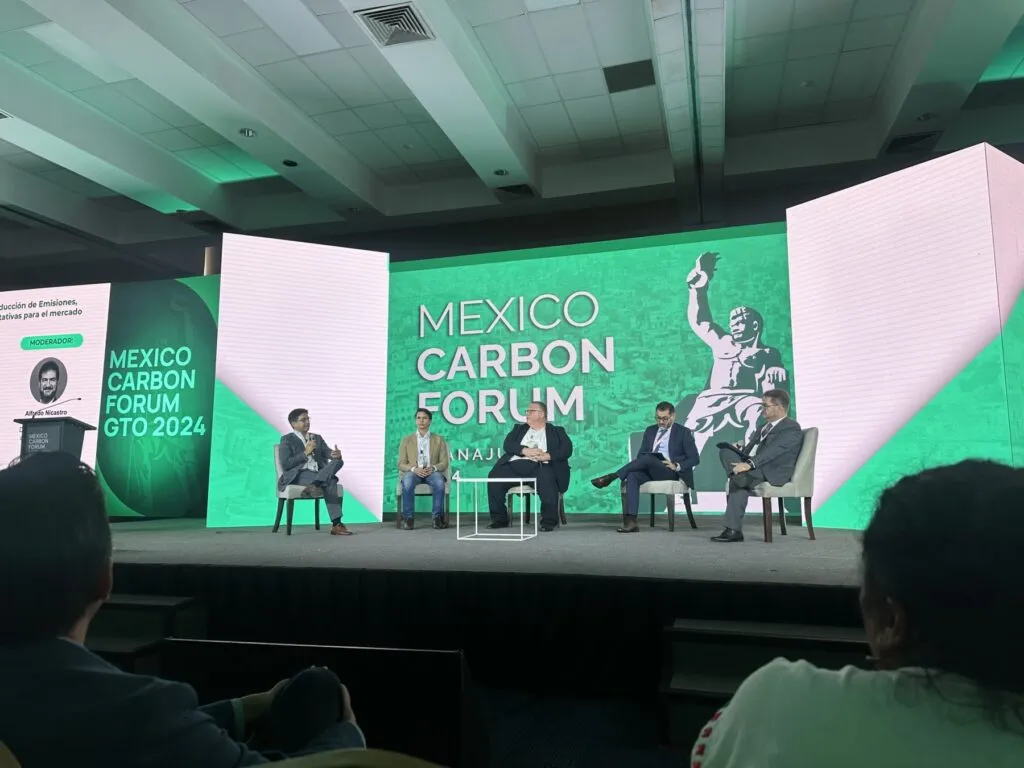
Coordination between state-level carbon taxes and the federal ETS represents an ongoing challenge for Mexico’s multi-layered climate policy architecture. At the 2024 Mexico Carbon Forum in Leon, Guanajuato, officials emphasized the need to “ensure that carbon policies are complementary, not duplicative,” according to Ricardo Torres, Querétaro’s deputy environment ministry. The exemption provisions in Colima’s ecological tax law—which exclude entities already participating in the federal ETS operational phase—represent one mechanism for preventing regulatory overlap and double taxation.
Federal authorities have signaled commitment to clarifying these relationships. In August 2025, the Consultative Committee of the Emissions Trading System (COCOSCE) held its first ordinary session at SEMARNAT, reviewing the 2024 activity report, the 2025 work program, and regulatory updates for Phase 1 of the ETS. Members agreed to coordinate publication of regulations for the next phase and reaffirmed joint commitment between federal environmental authorities and the private sector to advance Mexico’s transition to a low-carbon economy.
One decision can change your entire career. Take that step with our Online courses in ACCA, HESI A2, ATI TEAS 7, HESI EXIT, NCLEX-RN, NCLEX-PN, and Financial Literacy. Join Serrari Ed and start building your brighter future today.
Environmental and Economic Rationale for Carbon Pricing
According to Colima authorities, the ecological tax and associated programs are intended to internalize the environmental costs associated with greenhouse gas emissions, encourage more sustainable practices among regulated entities, and strengthen public policy on environmental impact mitigation. This approach aligns with economic principles articulated by economists including Arthur Cecil Pigou, who proposed taxes on activities with negative externalities—costs imposed on society that are not reflected in market prices.
By assigning a price to emissions, the government aims to influence corporate behavior while creating a dedicated funding stream for environmental initiatives. Marco Antonio del Prete, Minister of Sustainable Development of Querétaro, explained the competitiveness dimension of this approach: “With this economic incentive we also seek to increase the competitiveness of local companies by reducing their emissions.” This framing positions carbon pricing not as a burden on business but as a mechanism to drive innovation, reduce operating costs through efficiency improvements, and align Mexican companies with global sustainability standards increasingly demanded by international markets.
The three primary sectors responsible for the highest emissions in Mexico underscore the importance of comprehensive carbon pricing mechanisms. The energy sector contributes approximately 55% of total greenhouse gas emissions, including oil and gas production, electricity generation, and fuel combustion. Transportation accounts for 25% of emissions, driven by reliance on fossil fuels for vehicles. The industrial sector represents 15% of emissions, with significant contributions from cement, steel, and chemical production. These sectors collectively highlight the urgency of adopting cleaner energy sources and more efficient practices to reduce environmental footprints.
Based on current estimates, revenue from Colima’s ecological tax may be allocated to programs related to environmental protection, sustainability, and compensation for environmental damage. The precise use of funds will be determined through applicable budgetary provisions during the fiscal year, though transparency advocates have emphasized the importance of ensuring carbon tax revenues directly support climate mitigation and adaptation initiatives rather than being diverted to general state budgets.
Challenges and Opportunities in Subnational Carbon Pricing
The expansion of state-level carbon taxes in Mexico faces both opportunities and challenges as the policy approach matures. On the positive side, subnational carbon pricing allows states to tailor approaches to their specific economic structures, political contexts, and environmental priorities. States can serve as laboratories for policy innovation, testing different price points, exemption structures, and offset mechanisms that can inform both federal policy and approaches in other jurisdictions.
Eduardo Piquero, chief executive of Mexico2 (a subsidiary of Mexico’s stock exchange focused on green markets and carbon markets), emphasized the importance of state leadership: “State government leadership is crucial for reducing emissions and sending a clear message to major greenhouse gas emitters.” The diversity of approaches across states—from Querétaro’s high carbon price of MX$580 per ton to lower prices in other jurisdictions—reflects different judgments about the appropriate balance between environmental ambition and economic impacts.
However, this diversity also creates challenges. Varying implementation rules and prices across states can create compliance complexity for companies operating in multiple jurisdictions and potentially incentivize emissions leakage, where high-emitting activities relocate from states with stringent carbon pricing to those with weaker or nonexistent policies. Legal challenges have also emerged, with Mexico’s Supreme Court finding certain environmental tax provisions unconstitutional when they violated exclusive federal powers or failed to properly account for actual environmental impacts in determining tax liability.
The coordination challenge extends beyond state-to-state relationships to encompass federal-state interactions. As the federal ETS moves toward operational status, questions about the relationship between federal cap-and-trade obligations and state tax liabilities will require clear answers. The current approach—exempting ETS participants from state taxes—provides one solution, but implementation details and verification procedures remain under development.
Furthermore, ensuring environmental integrity in offset systems requires robust oversight and standardized methodologies. While Colima’s requirement that projects be certified under recognized national or international standards provides important safeguards, monitoring compliance, preventing double-counting, and ensuring genuine additionality (that emissions reductions would not have occurred anyway) demand sustained administrative capacity and technical expertise.
Climate Policy in the Context of National Challenges
Colima’s progressive carbon pricing initiatives emerge against a backdrop of concerning trends in Mexico’s national climate policy. Under the government of President Andrés Manuel López Obrador (2018-2024), environmental and climate policies faced significant setbacks, with authorities prioritizing fossil fuel use and deprioritizing climate change mitigation under the discourse of energy security and republican austerity. Several energy and climate-related policies were rolled back and governance institutions dismantled during this period.
The Climate Action Tracker rates Mexico’s policies and actions as “Highly insufficient,” indicating that Mexico’s policies and action in 2030 lead to rising, rather than falling, emissions and are not at all consistent with limiting global temperature increase to 1.5°C. If all countries were to follow Mexico’s approach, warming could reach over 3°C and up to 4°C by end of the century—a sobering assessment that underscores the gap between Mexico’s climate commitments and actual policy implementation.
Mexican greenhouse gas emissions from the energy sector increased by 34% between 1990 and 2019, according to national inventory data. This sector alone was responsible for nearly two-thirds of all greenhouse gas emissions in Mexico in 2019, excluding the forestry sector. Total greenhouse gas emissions (excluding land use, land-use change, and forestry) increased by 51% between 1990 and 2019, reaching 685 million metric tons of CO₂ equivalent per year.
Against this challenging national context, state-level initiatives like Colima’s ecological tax and low-carbon certification program take on heightened significance. While subnational actions alone cannot compensate for backsliding at the federal level, they demonstrate continued commitment to climate action, maintain institutional capacity for emissions monitoring and regulation, and position forward-looking states to accelerate mitigation efforts when federal policy becomes more supportive.
International Context and Regional Leadership
Mexico’s approach to subnational carbon pricing fits within broader regional trends in Latin America toward market-based climate policies. Chile has established a national carbon tax covering 33.2% of greenhouse gas emissions, with the International Monetary Fund proposing increases from the current equivalent of $5 per ton of CO₂ to $15 per ton by 2025 and $50 by 2035. Colombia has implemented carbon taxes alongside offset mechanisms, while Argentina and Brazil have explored various carbon pricing instruments at both national and subnational levels.
The proliferation of voluntary carbon offset standards in Latin America provides infrastructure supporting systems like Colima’s State Emissions Compensation System. The Climate Action Reserve, the largest and most respected carbon offset registry in North America, has expanded its programs to support protocols and voluntary carbon market development in Mexico over more than a decade. The Reserve offers five protocols applicable for use in Mexico, with carbon credits registered under these protocols issued as Climate Reserve Tonnes that may be transacted for voluntary purposes in Mexico, the United States, and globally.
International technical assistance has supported Mexico’s carbon market development. The UK PACT Program funded research on carbon taxes in Mexico, while organizations including the World Bank, Inter-American Development Bank, and various bilateral aid agencies have provided capacity-building support for emissions monitoring, verification, and trading system design.
Future Outlook and Policy Evolution
As Colima’s ecological tax system matures and revenue projections for 2026 materialize, the state will provide important evidence about the effectiveness of comprehensive subnational carbon pricing approaches. The integration of taxation, voluntary certification, and offset mechanisms represents a sophisticated policy architecture that addresses multiple dimensions of the climate challenge—creating financial incentives for emissions reduction, recognizing and rewarding leadership, and channeling resources toward additional mitigation projects.
The progressive tightening of offset sourcing requirements—from allowing all Latin American and Caribbean offsets in 2025 to requiring 70% Mexican offsets by 2030—will test the development of domestic carbon project infrastructure. Success in meeting these targets will require expanding the pipeline of certified reduction and removal projects, building verification capacity, and ensuring offset prices remain competitive with compliance alternatives.
Coordination with the federal Emissions Trading System as it transitions to operational status represents another critical juncture. Clear rules preventing double regulation while ensuring comprehensive coverage of emissions sources will determine whether Mexico’s multi-layered carbon pricing architecture functions as a coherent system or creates costly complexity and potential loopholes.
The MX$51.9 million in projected 2026 revenue, while modest in absolute terms, represents significant resources for environmental programs in a state of Colima’s size (population approximately 711,000). The allocation of these funds—whether toward renewable energy deployment, energy efficiency programs, forest conservation, climate adaptation infrastructure, or other environmental priorities—will influence both the environmental effectiveness of the tax and its political sustainability.
More broadly, Colima’s experience will inform ongoing debates about the appropriate level of government for carbon pricing implementation. Federal carbon pricing offers uniformity and prevents emissions leakage within national borders but may struggle to accommodate regional variations in economic structure, political preferences, and administrative capacity. Subnational approaches provide flexibility and opportunities for innovation but risk fragmentation and inconsistency. The optimal approach likely involves coordinated multi-level governance, with clear rules defining the relationship between federal and state policies—a model that Mexico continues to develop through experience and experimentation.
Conclusion
Colima’s comprehensive carbon pricing framework—encompassing the ecological tax projecting MX$51.9 million in 2026 revenue, the innovative Low-Carbon Seal certification program, and the State Emissions Compensation System—positions the state as a leader in subnational climate policy within Mexico and Latin America more broadly. By combining financial incentives, voluntary recognition, and robust offset mechanisms, Colima has created a sophisticated policy architecture that addresses multiple barriers to emissions reduction while generating resources for environmental protection.
The state’s approach reflects growing recognition across Mexico that climate action cannot wait for federal leadership and that subnational governments have both the authority and responsibility to implement meaningful carbon pricing policies. With eleven Mexican states now enforcing carbon taxes and additional jurisdictions considering adoption, Mexico is building a substantial foundation of subnational climate policy that could accelerate national emissions reductions even as federal policy remains inconsistent.
The success of Colima’s initiatives will depend on effective implementation, robust monitoring and verification, thoughtful revenue allocation, and coordination with federal policies as they evolve. Early indicators—including the establishment of clear rules, development of administrative infrastructure, and engagement with the private sector—suggest that Colima is approaching these challenges seriously. As the state moves through 2026 and beyond, its experience will provide valuable lessons for other Mexican states, national policymakers, and jurisdictions worldwide seeking to design effective subnational carbon pricing systems that drive real emissions reductions while supporting economic development and environmental justice.
In a global context where achieving climate goals requires action at all levels of government, Colima’s pioneering efforts demonstrate that subnational leadership can fill gaps left by national policy, catalyze innovation in climate finance and carbon markets, and create models that may eventually scale to broader implementation. For a state of approximately 711,000 people projecting nearly $3 million in carbon tax revenue, Colima is making an outsized contribution to demonstrating what ambitious, well-designed subnational climate policy can achieve.
Ready to take your career to the next level? Join our Online courses: ACCA, HESI A2, ATI TEAS 7 , HESI EXIT , NCLEX – RN and NCLEX – PN, Financial Literacy!🌟 Dive into a world of opportunities and empower yourself for success. Explore more at Serrari Ed and start your exciting journey today! ✨
Track GDP, Inflation and Central Bank rates for top African markets with Serrari’s comparator tool.
See today’s Treasury bonds and Money market funds movement across financial service providers in Kenya, using Serrari’s comparator tools.
photo source: Google
By: Montel Kamau
Serrari Financial Analyst
27th January, 2026