










When the United States and Israel launched coordinated strikes on Iran on February 28, 2026, the immediate global conversation centred on crude oil prices and energy security. But for farmers in Kenya, Tanzania, Somalia, and across East Africa, the more consequential and less reported casualty of the conflict may be fertiliser — and the food security that depends on it.
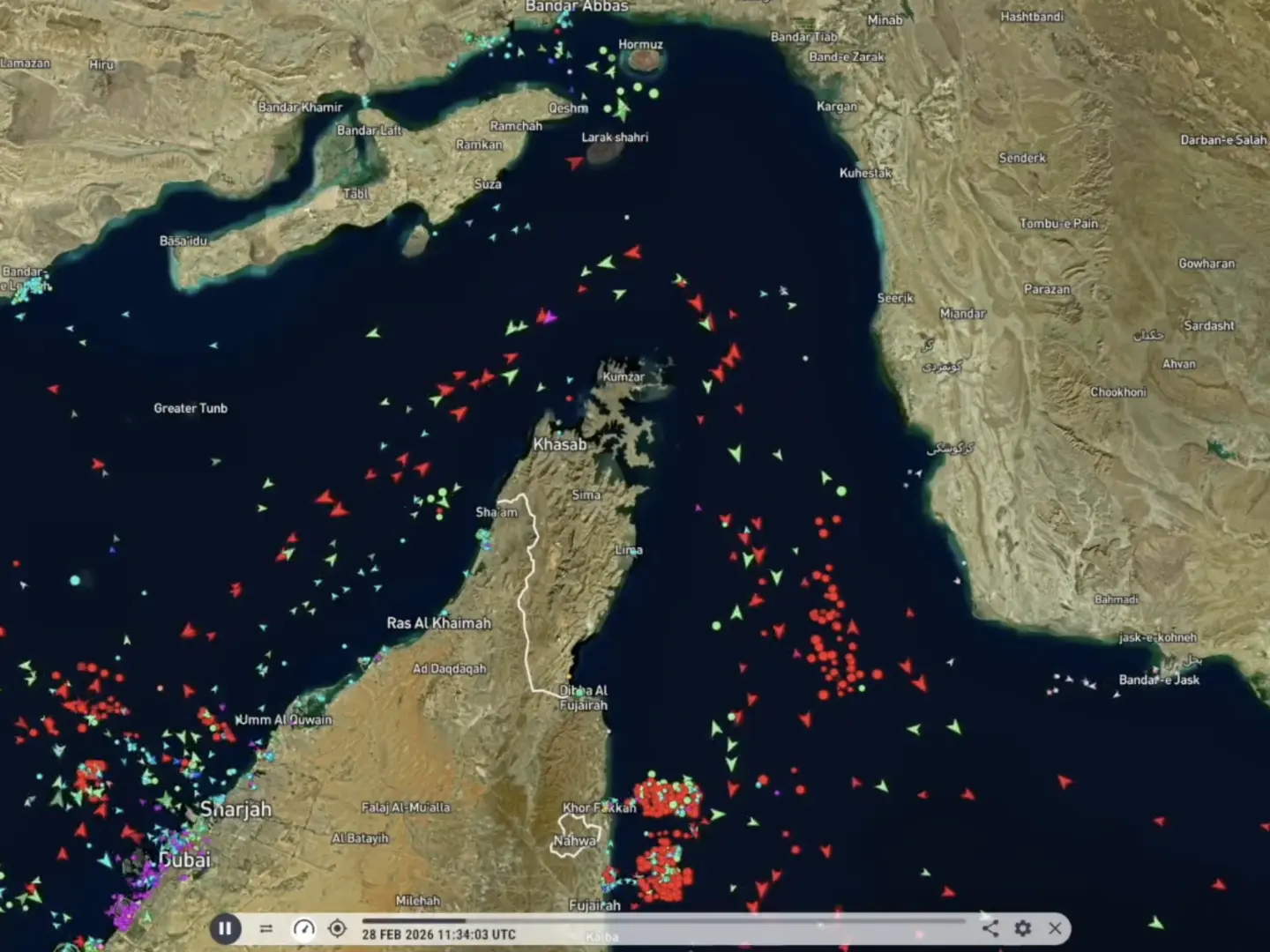
The closure of the Strait of Hormuz, triggered by Iran’s retaliatory actions after the strikes that killed Supreme Leader Ali Khamenei, has effectively severed one of the world’s most important maritime chokepoints. For East Africa, a region already grappling with fragile food systems, high debt, and limited fiscal buffers, the implications are severe — and the planting season will not wait for a ceasefire.
Markets move fast; don’t get left behind. We’ve paired the Serrari Group Market Index with a curated Marketplace and a comprehensive Financial Literacy Course to ensure you have the data—and the skills—to act on it.
The Chokepoint Nobody Talks About
The Strait of Hormuz — a 34-kilometre-wide passage between Iran and Oman — is universally understood as an oil artery. What is less appreciated is its role as the world’s most important fertiliser corridor. According to commodity trading platform Kpler, roughly one-third of global seaborne fertiliser trade passes through the strait, originating from Qatar, Saudi Arabia, Oman, and Iran. These nations together supply a substantial share of the world’s traded urea and phosphates.
In 2024 alone, an estimated 16 million tonnes of fertilisers — including urea, diammonium phosphate (DAP), and monoammonium phosphate (MAP) — were shipped by sea from the Persian Gulf region through this chokepoint. It is not hyperbole to say that the strait sits at the intersection of energy and food security.
As the Conversation’s analysis of the conflict put it, the crisis is not only an energy shock but a fertiliser shock — “and, by extension, a direct risk to global food security.” Modern nitrogen fertiliser production runs on natural gas. The Gulf is a primary source of both. When gas flows stop, so does the feedstock that makes synthetic nitrogen possible.
Ship Traffic Collapses, Then Disappears
The numbers describing the maritime shutdown are stark. Just before the conflict began on February 27, daily ship transits through the Strait of Hormuz stood at 141. By March 7, that figure had fallen to just four. Shipping companies including Maersk, CMA CGM, and Hapag-Lloyd suspended all transits, while war-risk insurance premiums surged — and were eventually withdrawn entirely for certain routes, making commercial transit economically impossible regardless of military risk.
On March 2, the IRGC officially confirmed the strait was closed, threatening any vessel that attempted passage. By March 7, the Baltic Exchange’s dirty tanker index had surged approximately 54% and the clean tanker index had climbed roughly 72%, reflecting the dramatic repricing of maritime risk.
The IRGC doubled down on March 11 through its Khatam al-Anbiya Headquarters, declaring that any vessel linked to the United States, Israel, or their allies “will be considered a legitimate target,” and warning global markets to “expect oil at $200 per barrel.” The International Energy Agency responded by announcing that its 32 member countries had unanimously agreed to release 400 million barrels of oil from emergency reserves — an unprecedented coordinated intervention that IEA Executive Director Fatih Birol acknowledged would only partially address the problem.
Oil at $100 — and Climbing
Oil prices have already crossed the $100 per barrel threshold. In the days immediately after the February 28 strikes, Brent crude surged from around $70 per barrel to above $80, then to near $119 per barrel — before settling somewhat, with Brent trading at approximately $99 per barrel and WTI at around $95 by early this week. Multiple analysts had warned that $100 was a floor, not a ceiling.
Global energy research firm Wood Mackenzie was among the most sobering voices, warning in analysis published March 10 that with 15 million barrels per day of Gulf supply suddenly offline — in a market that consumes 105 million barrels daily — demand destruction is the only available rebalancing mechanism. “Global oil demand of 105 million barrels per day will still have to fall to balance the market and, in our view, that will require Brent to push up at least to $150 per barrel in the coming weeks,” said Simon Flowers, Wood Mackenzie’s Chairman and Chief Analyst.
The firm further noted that $200 per barrel is not outside the realms of possibility in 2026 if the conflict persists, pointing out that even when hostilities end, cranking supply chains back to full output could take weeks or longer. Deutsche Bank echoed this assessment, while Goldman Sachs projected that even five additional weeks of disruption could push Brent to $100 per barrel and raise global inflation by an estimated 0.5 to 1 percentage point.
Context is everything. While you follow today’s updates, use the Serrari Market Index and Marketplace to spot emerging shifts. Need to sharpen your edge? Our Financial Literacy Course turns these insights into a professional-grade strategy.
East Africa’s Specific Vulnerability
The connection between Strait of Hormuz disruption and East African food security is not theoretical. UNCTAD data, highlighted in an analysis of the strait’s impact on shipping, shows that Tanzania sources approximately 31% of its fertiliser imports from the Gulf region, while Kenya imports roughly 26% from the same area. Somalia sits at 30%, and Mozambique at 22%. Sudan is even more exposed, with 54% of its fertiliser imports originating from the Persian Gulf.
This exposure is compounded by the double chokepoint problem. According to African Sustainability Matters, citing UNCTAD data, over 10% of Kenya’s and Tanzania’s trade flows transit the Suez route — which is itself under renewed Houthi attack pressure following the resumption of Red Sea strikes on February 28. The potential for a simultaneous Hormuz and Suez closure would impose layered energy and logistical strains that East African economies are poorly positioned to absorb.
An UNCTAD assessment of the Hormuz disruption warns directly that “access to fertilisers may worsen for some of the poorest countries,” explicitly naming Sudan, Kenya, Tanzania, Somalia and Mozambique among those most at risk. Bloomberg’s reporting, cited by the Soufan Center, confirms that these countries are among those globally likely to be hardest hit by fertiliser shortages.
The Fertiliser-Food-Price Chain
The mechanism by which a Gulf conflict translates into hunger in Nairobi or Dar es Salaam is not direct — it runs through fertiliser prices, then crop yields, then food prices. And that chain is already moving.
Urea prices — the most critical nitrogen fertiliser for East African smallholders — have already climbed sharply. According to Euronews, urea reached more than $600 per tonne early in the crisis, up from around $450 the week before — a jump of roughly 33%. The National, citing Fitch Ratings Senior Director Guillaume Daguerre, reports that Oxford Economics has raised its fertiliser price forecast by approximately 20% for the second quarter of 2026, with risks skewed to the upside.
“We believe that a protracted or prolonged closure of the Strait of Hormuz will have a significant impact on the fertiliser market, especially the nitrogen fertiliser market, which is a lot more reliant on the region,” Daguerre told The National. Ammonia prices are also rising, with analysts flagging that these increases could follow urea’s trajectory at a later stage.
The timing is particularly damaging. As The Conversation noted, the crisis coincides with the peak spring planting season in the Northern Hemisphere, when fertiliser demand is at its highest and strategic stockpiles are at their thinnest. For East African farmers, the longer-term impact unfolds over months: if fertiliser application is delayed or reduced ahead of the next growing season, crop yields decline, food supply tightens, and prices rise — a cascade that historically falls hardest on the lowest-income households.
Raj Patel, a research professor at the University of Texas, explained to CNBC: “A farmer in Thailand who is 90% import-dependent, buying urea that’s made from gas, shipped through Hormuz, and priced in dollars that are strengthening because of geopolitical risk, faces a cost shock on every dimension simultaneously.” The same logic applies directly to smallholder farmers across Kenya and Tanzania.
A Knock-On Shock to Sulphur and Ammonia
The fertiliser disruption is not limited to urea. Sulphur — an essential plant nutrient — is largely a byproduct of oil and gas processing. If energy shipments through Hormuz are curtailed, sulphur output falls alongside fuel exports. Gulf countries accounted for approximately 45% of global sulphur supply, according to reporting on the crisis’s economic impact. That loss simultaneously reduces fertiliser shipments and constrains the ability to manufacture them elsewhere.
QatarEnergy, which provides roughly 20% of the world’s LNG supply, declared force majeure last week after Iranian drones attacked Qatari gas facilities — an additional shock to both global gas markets and to the LNG that feeds fertiliser plants beyond the Gulf. The cascading nature of this supply shock distinguishes it from most previous energy crises: it is simultaneously an energy crisis, a fertiliser crisis, and a food security crisis unfolding on the same timeline.
Egypt, which is one of Africa’s largest fertiliser exporters, is positioning itself to fill some supply gaps — its Red Sea and Mediterranean access gives it routes that bypass the Hormuz blockade. However, Egypt itself faces natural gas constraints that limit how much additional production it can rapidly bring online.
What This Means for East African Governments
For governments in Nairobi and Dodoma, the challenge is layered. Rising fuel import costs drain foreign exchange reserves. Rising fertiliser prices strain agricultural input subsidy programs and threaten the food security of smallholder farming communities. And rising global food prices — driven by simultaneous supply disruptions in energy and fertiliser — put pressure on central banks already navigating post-pandemic inflation.
The UNCTAD assessment makes clear that these pressures are not distant risks but near-term realities. The agency has called for de-escalation and the safeguarding of maritime transport as preconditions for reducing risks to global trade and development, warning that rising energy, transport, and food costs “could heighten economic and social pressures and complicate progress toward sustainable development, particularly in economies heavily dependent on imported energy, fertiliser and food.”
The UN’s aid chief, Tom Fletcher, sounded a specific alarm about humanitarian supply chains, appealing to all parties to secure routes including the Strait of Hormuz for humanitarian traffic so that “we can reach anyone, anywhere, on the basis of greatest need” — an acknowledgment that sub-Saharan Africa’s humanitarian supply chains are already feeling the pressure.
A Crisis With No Easy Exit
The Soufan Center’s analysis underscores that this is the largest oil disruption in history, surpassing the 1973 Suez Crisis, which disrupted less than 10% of global oil supply. The Hormuz shutdown affects approximately 20-25%. Strategic petroleum reserve releases by IEA member countries can blunt but not resolve the shock: IEA members account for less than half of global oil demand, and the supply gap from the Gulf is simply too large for reserves to fill.
For East Africa, the lesson of this crisis is an old one, delivered with new urgency: agricultural systems built around imported fertilisers sourced from a single vulnerable maritime corridor are structurally exposed to geopolitical shocks they cannot control. Regional solutions — local fertiliser production, investment in soil health, and diversified import relationships — have long been discussed and chronically underfunded. Until they are scaled, any closure of the Strait of Hormuz will be felt not just at the petrol pump, but in the field.
As Wood Mackenzie’s Simon Flowers put it: “The industry has never faced a loss of supply volumes of this magnitude.” For East African farmers preparing their next planting, those words carry a weight that oil markets alone cannot capture.
Don’t just read the news—navigate it. Track trends with the Serrari Group Market Index, discover your next move in the Serrari Marketplace, and master the “how” with our Financial Literacy Course.
Photo Source: Google
By: Montel Kamau
Serrari Financial Analyst
13th March, 2026
Article, Financial and News Disclaimer
The Value of a Financial Advisor
While this article offers valuable insights, it is essential to recognize that personal finance can be highly complex and unique to each individual. A financial advisor provides professional expertise and personalized guidance to help you make well-informed decisions tailored to your specific circumstances and goals.
Beyond offering knowledge, a financial advisor serves as a trusted partner to help you stay disciplined, avoid common pitfalls, and remain focused on your long-term objectives. Their perspective and experience can complement your own efforts, enhancing your financial well-being and ensuring a more confident approach to managing your finances.
Disclaimer: This article is for informational purposes only and does not constitute financial advice. Readers are encouraged to consult a licensed financial advisor to obtain guidance specific to their financial situation.
Article and News Disclaimer
The information provided on www.serrarigroup.com is for general informational purposes only. While we strive to keep the information up to date and accurate, we make no representations or warranties of any kind, express or implied, about the completeness, accuracy, reliability, suitability, or availability with respect to the website or the information, products, services, or related graphics contained on the website for any purpose. Any reliance you place on such information is therefore strictly at your own risk.
www.serrarigroup.com is not responsible for any errors or omissions, or for the results obtained from the use of this information. All information on the website is provided on an as-is basis, with no guarantee of completeness, accuracy, timeliness, or of the results obtained from the use of this information, and without warranty of any kind, express or implied, including but not limited to warranties of performance, merchantability, and fitness for a particular purpose.
In no event will www.serrarigroup.com be liable to you or anyone else for any decision made or action taken in reliance on the information provided on the website or for any consequential, special, or similar damages, even if advised of the possibility of such damages.
The articles, news, and information presented on www.serrarigroup.com reflect the opinions of the respective authors and contributors and do not necessarily represent the views of the website or its management. Any views or opinions expressed are solely those of the individual authors and do not represent the website's views or opinions as a whole.
The content on www.serrarigroup.com may include links to external websites, which are provided for convenience and informational purposes only. We have no control over the nature, content, and availability of those sites. The inclusion of any links does not necessarily imply a recommendation or endorsement of the views expressed within them.
Every effort is made to keep the website up and running smoothly. However, www.serrarigroup.com takes no responsibility for, and will not be liable for, the website being temporarily unavailable due to technical issues beyond our control.
Please note that laws, regulations, and information can change rapidly, and we advise you to conduct further research and seek professional advice when necessary.
By using www.serrarigroup.com, you agree to this disclaimer and its terms. If you do not agree with this disclaimer, please do not use the website.
www.serrarigroup.com, reserves the right to update, modify, or remove any part of this disclaimer without prior notice. It is your responsibility to review this disclaimer periodically for changes.
Serrari Group 2025