










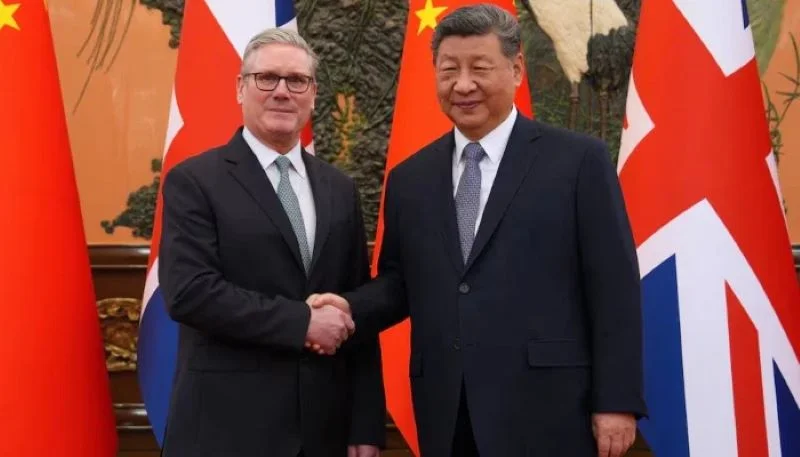
British Prime Minister Keir Starmer and Chinese President Xi Jinping signaled a comprehensive reset in UK-China relations during an 80-minute summit at Beijing’s Great Hall of the People on Thursday, marking the first visit by a British leader to China in eight years and representing a dramatic shift after years of strained ties over espionage concerns, Hong Kong freedoms, and human rights issues.
The meeting, which lasted double its scheduled time, culminated in both leaders calling for a “long-term, consistent and comprehensive strategic partnership” designed to deliver economic growth, enhance security cooperation, and manage disagreements through sustained diplomatic engagement. The summit produced tangible outcomes including China’s agreement to halve tariffs on Scotch whisky from 10% to 5% and Beijing’s commitment to consider implementing visa-free travel for British nationals visiting China for up to 30 days.
Build the future you deserve. Get started with our top-tier Online courses: ACCA, HESI A2, ATI TEAS 7, HESI EXIT, NCLEX-RN, NCLEX-PN, and Financial Literacy. Let Serrari Ed guide your path to success. Enroll today.
Starmer’s Strategic Pivot Toward Beijing
Starmer, whose centre-left Labour Party government has struggled to deliver the robust economic growth it promised voters, has made improving relations with the world’s second-largest economy a strategic priority despite lingering domestic misgivings about Chinese espionage activities and Beijing’s human rights record. The Prime Minister told Xi at the outset of their discussions that “China is a vital player on the global stage, and it’s vital that we build a more sophisticated relationship where we can identify opportunities to collaborate, but of course, also allow a meaningful dialogue on areas where we disagree.”
This pragmatic approach represents a significant departure from the posture adopted by previous Conservative governments, which curbed Chinese investment in sensitive sectors over national security worries and expressed vocal concern over Beijing’s crackdown on political freedoms in Hong Kong following the 2019 pro-democracy protests. The shift reflects Starmer’s calculation that Britain’s economic interests require constructive engagement with China, regardless of political differences and security concerns.
Xi reciprocated the conciliatory tone, acknowledging that bilateral ties had experienced “twists and turns” that did not serve the interests of either country. The Chinese leader emphasized Beijing’s readiness to develop a long-term partnership with Britain, telling Starmer that “we can deliver a result that can withstand the test of history” if both sides rise above their differences and focus on mutual benefits.
Trump Factor Looms Over UK-China Rapprochement
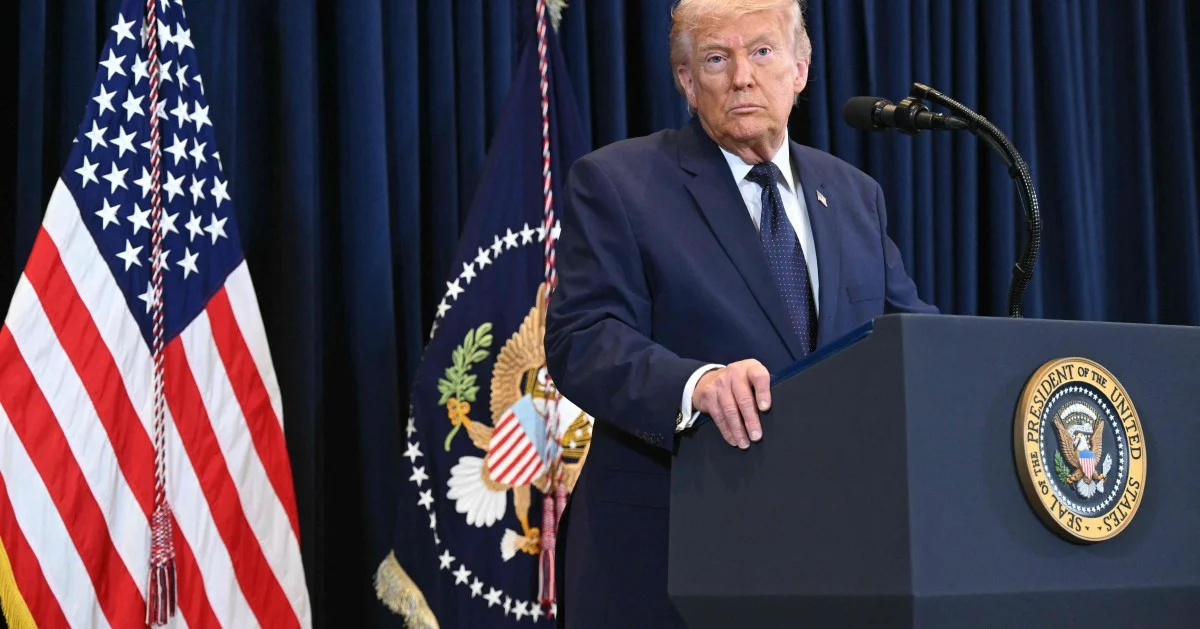
Starmer’s visit to Beijing occurs against a backdrop of growing unpredictability in US-UK relations under President Donald Trump, whose on-off threats of trade tariffs and recent pledges to seize control of Greenland—an autonomous territory of Denmark—have rattled long-standing American allies including Britain. Trump’s erratic foreign policy has prompted European leaders and other Western allies to hedge their geopolitical and economic bets by cultivating stronger ties with Beijing.
The British leader immediately followed Canadian Prime Minister Mark Carney’s visit to China, during which Carney signed an economic deal with Beijing to tear down trade barriers—a move that drew Trump’s public ire. Starmer is the fourth leader of a US ally to visit Beijing this month, following those of South Korea, Canada, and Finland, with Germany’s chancellor expected to make a similar trip next month.
While neither Starmer nor Xi publicly mentioned Trump during their formal remarks, the US president’s challenge to the post-Cold War international order was clearly on their minds. Xi pointedly observed that “unilateralism, protectionism and power politics have been rampant” and that the international order faces great strain, warning that international law loses effectiveness when major powers fail to set proper examples—remarks widely interpreted as indirect criticism of Trump’s America First approach.
Concrete Economic Gains and Business Delegation
Starmer characterized the relationship as being “in a good place, a strong place” following his discussions with Xi, pointing to tangible progress on reducing whisky tariffs and advancing visa-free travel arrangements. The reduction in Chinese tariffs on Scotch whisky from 10% to 5% represents a significant commercial win for Scotland’s whisky industry, which has lobbied for improved access to the Chinese market for years.
Asked by reporters whether Xi was someone he could do business with, Starmer replied affirmatively with a simple “yes,” signaling his confidence in the potential for productive bilateral engagement despite substantive disagreements on other issues. The Prime Minister emphasized that the tariff reduction exemplified his desire for “a much wider opening” for British businesses in China, central to his strategy for injecting growth into the UK’s sluggish economy.
To underscore the commercial focus of his visit, Starmer brought more than 50 business leaders representing major British corporations and financial institutions. The delegation included senior executives from HSBC, Airbus, British Airways, AstraZeneca, and GSK—a clear signal that Starmer views economic engagement with China as essential for British prosperity regardless of political complications.
During the visit, UK pharmaceutical giant AstraZeneca announced a $15 billion investment into China, demonstrating the scale of commercial opportunities that British companies see in the Chinese market. Such major investment commitments provide tangible justification for Starmer’s engagement strategy and help counter domestic criticism about prioritizing economic gains over human rights concerns.
Navigating Sensitive Human Rights Issues
Despite the emphasis on economic cooperation, Starmer did not entirely sidestep controversial political and human rights issues during his meetings in Beijing. The Prime Minister told reporters he had a “respectful discussion” with Xi about the case of Jimmy Lai, the former Hong Kong media tycoon and British citizen who was convicted in December 2025 of national security crimes under Beijing’s controversial national security law.
Lai’s prosecution and conviction have been widely condemned by human rights organizations and Western governments as politically motivated persecution of a pro-democracy figure. His status as a British citizen adds diplomatic complexity to the case, creating pressure on UK leaders to advocate for his release while trying to improve overall bilateral relations with China. Starmer’s willingness to raise the issue publicly demonstrates an attempt to balance commercial pragmatism with acknowledgment of human rights concerns.
The Prime Minister also confirmed that he discussed China’s treatment of Uyghurs during his talks with Chinese leadership. Beijing has faced international criticism and accusations of genocide over its policies in Xinjiang, where more than a million Uyghurs and other Muslim minorities have reportedly been detained in what China describes as vocational training centers but critics characterize as concentration camps.
Starmer framed these difficult conversations as integral to his vision of “sophisticated” engagement with China: “We did have a respectful discussion about that, raised those issues as you would expect. It gives us great opportunities, but it also gives us the opportunity to have those discussions about areas where we disagree.” This formulation seeks to present human rights advocacy and economic cooperation as complementary rather than contradictory elements of bilateral relations.
One decision can change your entire career. Take that step with our Online courses in ACCA, HESI A2, ATI TEAS 7, HESI EXIT, NCLEX-RN, NCLEX-PN, and Financial Literacy. Join Serrari Ed and start building your brighter future today.
Security Cooperation on Migrant Smuggling
In a practical demonstration of how the countries can work together on shared challenges, Starmer announced that Britain and China would jointly tackle criminal gangs involved in trafficking illegal migrants across the English Channel. The deal focuses specifically on reducing the use of Chinese-made engines for small boats that transport people from France to Britain—a politically sensitive issue that has fueled support for far-right parties in the UK.
British government statistics indicate that more than half of the engines used in smuggling incidents across the English Channel originate from China, making cooperation with Beijing essential for disrupting supply chains that enable organized crime. Under the new agreement, British and Chinese officials will share intelligence to identify smugglers’ procurement routes and work with Chinese manufacturers to prevent legitimate businesses from being exploited by criminal organizations.
Downing Street characterized the initiative as part of Starmer’s broader pledge to “smash the gangs” responsible for irregular migration—a central promise of his election campaign that resonates with voters concerned about immigration levels. The collaboration demonstrates that security cooperation with China can proceed even while political tensions persist on other fronts, providing a template for compartmentalized engagement.
Domestic Political Challenges and Opposition Criticism
Starmer’s outreach to Beijing has not proceeded without domestic controversy and political opposition. Kemi Badenoch, the leader of Britain’s opposition Conservative Party, said on Wednesday she would not have gone to China because of the security risks the country poses to the United Kingdom. Her criticism reflects continuing concerns within Conservative ranks about Chinese espionage, intellectual property theft, and interference in British institutions.
British security services have publicly stated that China routinely spies on the UK government, engaging in sustained campaigns of cyber espionage, human intelligence collection, and influence operations targeting politicians, civil servants, and critical infrastructure. China has consistently denied these allegations, characterizing them as politically motivated distortions designed to justify anti-China policies.
The security concerns gained prominence in October 2025 when the head of the UK’s domestic intelligence agency MI5 publicly warned that “Chinese state actors pose” a security threat “every day” following high-profile espionage cases that saw British citizens charged with spying for China. These revelations created an uncomfortable backdrop for Starmer’s diplomatic overtures toward Beijing.
Additionally, the UK government recently approved controversial plans for a massive Chinese Embassy in London after the proposal had stalled for years over political and security concerns. Critics warned that the “mega-embassy” would make it easier for China to conduct espionage operations and intimidate Chinese dissidents living in Britain. Xi appeared to acknowledge this criticism during his meeting with Starmer, remarking that “good things often come with difficulties” and that leaders should not shy away from doing what is right despite obstacles.
Cultural Diplomacy and Personal Rapport
Beyond formal diplomatic exchanges, Starmer and Xi engaged in cultural diplomacy designed to humanize their relationship and identify common ground. During their extended meeting, which included a working lunch, the pair chatted about soccer and Shakespeare alongside business matters—a deliberate attempt to build personal rapport that could facilitate future cooperation.
Starmer reportedly gave Xi a gift of a football that had been used in a match between Arsenal and Manchester United, knowing that Xi is a passionate football fan and supporter of Manchester United. Starmer himself is a devoted Arsenal supporter, making the gift a personal touch that connected their shared interest in English football. Such gestures, while symbolic, help establish informal connections between leaders that can smooth formal negotiations.
After arriving in Beijing late Wednesday evening, Starmer dined at a restaurant known for its mushroom-laden dishes—the same establishment that hosted former US Treasury Secretary Janet Yellen during her 2023 visit to China. These carefully orchestrated informal moments serve diplomatic purposes by creating opportunities for leaders to interact outside rigid protocol settings.
Broader Context of Western Engagement with China
Starmer’s China visit forms part of a broader pattern of Western leaders seeking rapprochement with Beijing amid uncertainty about American leadership under Trump and recognition of China’s indispensable role in the global economy. Ireland’s Prime Minister Michael Martin visited Beijing in early January—the first visit by an Irish leader in 14 years—followed by South Korea’s President and Finland’s Prime Minister, with Germany’s chancellor expected to make a similar trip in February.
This diplomatic traffic to Beijing reflects several converging factors: economic necessity given China’s status as the world’s second-largest economy and largest trading nation; hedging against American unpredictability under Trump; and recognition that global challenges from climate change to pandemic preparedness require Chinese cooperation regardless of political differences.
For Britain specifically, economic projections showing GDP growth of just 1.4% in 2026 according to Goldman Sachs create urgency around identifying new sources of growth and investment. China represents both a massive consumer market for British goods and services and a potential source of investment in British infrastructure, technology, and industry.
The UK’s relationship with Washington has been tested by Trump’s tariff war and his recent threats regarding Greenland and NATO burden-sharing, creating incentives for London to diversify its economic and diplomatic relationships rather than relying exclusively on the “special relationship” with America that has anchored British foreign policy for decades.
Balancing Act: Economics Versus Security
Starmer has framed his engagement with China as a pragmatic acknowledgment of economic reality rather than naiveté about Beijing’s intentions or character. “Like it or not, China matters for the UK,” Starmer said in advance of his trip to Beijing. “As one of the world’s biggest economic players, a strategic and consistent relationship with them is firmly in our national interest. That does not mean turning a blind eye to the challenges they pose—but engaging even where we disagree.”
This formulation attempts to square the circle between those who view China primarily as an economic opportunity and those who emphasize the security and human rights challenges Beijing poses. The approach parallels strategies adopted by other European leaders who maintain that engagement and vigilance are compatible rather than contradictory positions.
During his meeting with Zhao Leji, chairman of China’s National People’s Congress, before the Xi summit, Starmer was told that bilateral relations were on “the correct track to improvement and development” and that “positive progress has been made.” Zhao characterized it as “significant” to develop UK-China relations amid the “changing and turbulent international landscape,” explicitly linking bilateral cooperation to broader global instability.
The British government has adopted a “strategic and consistent relationship” framework that seeks to compartmentalize different aspects of the China relationship—pursuing trade and investment opportunities while maintaining vigilance about security threats, advocating for human rights while avoiding lecturing that would poison overall relations, and cooperating on shared challenges like climate change while competing in strategic domains.
Future Trajectory and Implementation Challenges
The success of Starmer’s reset with China will ultimately depend on implementation of the agreements reached and continued management of tensions that periodically flare around sensitive issues. The reduction in whisky tariffs and introduction of visa-free travel for British nationals, while symbolically important, represent relatively modest achievements that must be followed by more substantial economic cooperation to justify the political risks Starmer has assumed.
British businesses will be watching closely to see whether the improved political atmosphere translates into tangible commercial opportunities, reduced regulatory barriers, and fair treatment for UK companies operating in China. Past periods of UK-China cooperation have sometimes foundered when British firms concluded that the playing field remained tilted in favor of Chinese competitors despite rhetorical commitments to reciprocity.
Security services in both countries will continue their cat-and-mouse games regardless of what political leaders say, with British counterintelligence agencies maintaining vigilance against Chinese espionage even as diplomats and trade officials pursue cooperation. Managing this duality—cooperative at the political level while adversarial at the intelligence level—requires sophisticated statecraft and clear communication between different government agencies.
Human rights issues will continue generating friction, with British parliamentarians, human rights organizations, and media certain to highlight Chinese repression in Hong Kong, Xinjiang, and Tibet. Starmer’s ability to sustain his engagement strategy will partly depend on maintaining credibility that he is raising these concerns privately with Chinese leadership rather than sacrificing human rights for commercial advantage.
The reaction from Washington will also shape the sustainability of Britain’s China policy. Trump has already demonstrated anger at Canada’s embrace of Beijing, and similar displeasure toward Britain could create political complications for Starmer’s government. Managing the triangular relationship between London, Washington, and Beijing represents perhaps the central challenge for British foreign policy in the coming years.
Conclusion
The Starmer-Xi summit represents a calculated bet by British leadership that economic engagement with China serves the national interest despite legitimate security concerns and human rights disagreements. The visit produced concrete if modest achievements including tariff reductions and visa facilitation, while also demonstrating that Britain and China can cooperate on shared challenges like disrupting migrant smuggling networks.
Whether this reset proves durable will depend on multiple factors largely beyond either leader’s control: the trajectory of US-China relations and America’s engagement with allies; China’s actions on Hong Kong, Taiwan, and human rights issues that can inflame British public opinion; and the actual economic benefits that flow to British businesses and workers from improved political relations.
For now, Starmer has established a framework for “sophisticated” engagement with China—acknowledging disagreements while pursuing cooperation where interests align. In a world of growing geopolitical turbulence and economic uncertainty, this pragmatic approach may represent the most realistic path available for middle powers like Britain seeking to navigate between great power competition and economic interdependence.
Original Variation
Ready to take your career to the next level? Join our Online courses: ACCA, HESI A2, ATI TEAS 7 , HESI EXIT , NCLEX – RN and NCLEX – PN, Financial Literacy!🌟 Dive into a world of opportunities and empower yourself for success. Explore more at Serrari Ed and start your exciting journey today! ✨
Track GDP, Inflation and Central Bank rates for top African markets with Serrari’s comparator tool.
See today’s Treasury bonds and Money market funds movement across financial service providers in Kenya, using Serrari’s comparator tools.
photo source: Google
By: Montel Kamau
Serrari Financial Analyst
30th January, 2026
Article, Financial and News Disclaimer
The Value of a Financial Advisor
While this article offers valuable insights, it is essential to recognize that personal finance can be highly complex and unique to each individual. A financial advisor provides professional expertise and personalized guidance to help you make well-informed decisions tailored to your specific circumstances and goals.
Beyond offering knowledge, a financial advisor serves as a trusted partner to help you stay disciplined, avoid common pitfalls, and remain focused on your long-term objectives. Their perspective and experience can complement your own efforts, enhancing your financial well-being and ensuring a more confident approach to managing your finances.
Disclaimer: This article is for informational purposes only and does not constitute financial advice. Readers are encouraged to consult a licensed financial advisor to obtain guidance specific to their financial situation.
Article and News Disclaimer
The information provided on www.serrarigroup.com is for general informational purposes only. While we strive to keep the information up to date and accurate, we make no representations or warranties of any kind, express or implied, about the completeness, accuracy, reliability, suitability, or availability with respect to the website or the information, products, services, or related graphics contained on the website for any purpose. Any reliance you place on such information is therefore strictly at your own risk.
www.serrarigroup.com is not responsible for any errors or omissions, or for the results obtained from the use of this information. All information on the website is provided on an as-is basis, with no guarantee of completeness, accuracy, timeliness, or of the results obtained from the use of this information, and without warranty of any kind, express or implied, including but not limited to warranties of performance, merchantability, and fitness for a particular purpose.
In no event will www.serrarigroup.com be liable to you or anyone else for any decision made or action taken in reliance on the information provided on the website or for any consequential, special, or similar damages, even if advised of the possibility of such damages.
The articles, news, and information presented on www.serrarigroup.com reflect the opinions of the respective authors and contributors and do not necessarily represent the views of the website or its management. Any views or opinions expressed are solely those of the individual authors and do not represent the website's views or opinions as a whole.
The content on www.serrarigroup.com may include links to external websites, which are provided for convenience and informational purposes only. We have no control over the nature, content, and availability of those sites. The inclusion of any links does not necessarily imply a recommendation or endorsement of the views expressed within them.
Every effort is made to keep the website up and running smoothly. However, www.serrarigroup.com takes no responsibility for, and will not be liable for, the website being temporarily unavailable due to technical issues beyond our control.
Please note that laws, regulations, and information can change rapidly, and we advise you to conduct further research and seek professional advice when necessary.
By using www.serrarigroup.com, you agree to this disclaimer and its terms. If you do not agree with this disclaimer, please do not use the website.
www.serrarigroup.com, reserves the right to update, modify, or remove any part of this disclaimer without prior notice. It is your responsibility to review this disclaimer periodically for changes.
Serrari Group 2025