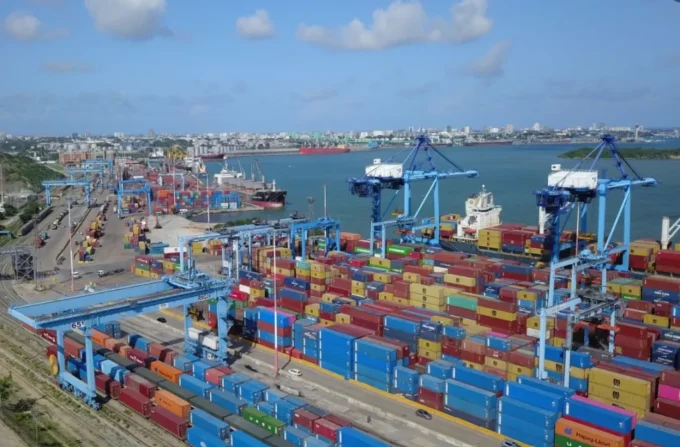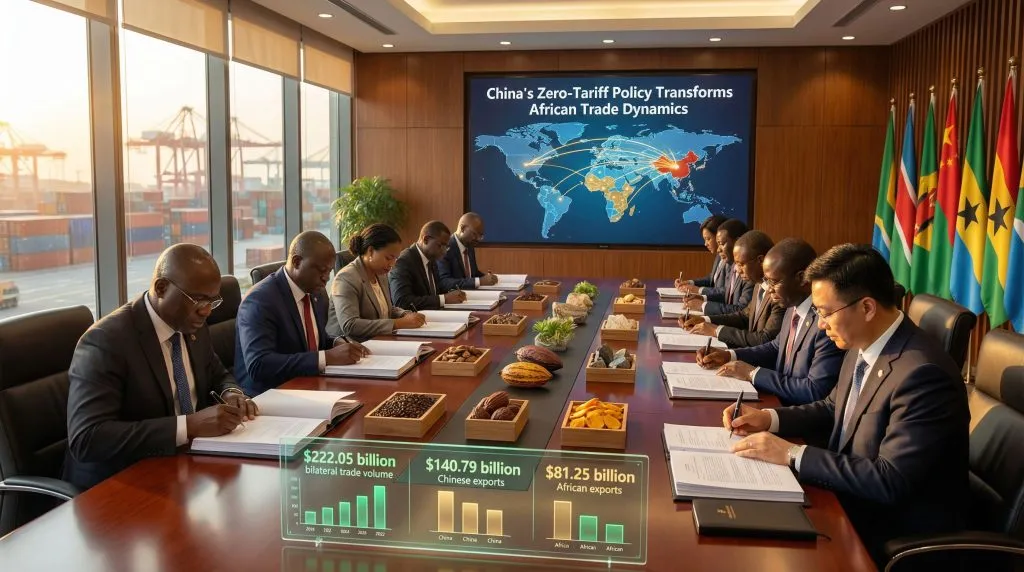
China will implement zero-tariff treatment for imports from the 53 African countries with which it maintains diplomatic relations, starting May 1, 2026, according to Chinese state media reports released February 14. The move marks Beijing’s most expansive preferential trade concession to date, extending duty-free market access to nearly the entire African continent—with only Eswatini excluded due to its continued diplomatic recognition of Taiwan.
The announcement arrives at a critical juncture for African trade strategy, as the continent navigates shifting Western trade frameworks including the controversial expiration and subsequent limited extension of the United States’ African Growth and Opportunity Act (AGOA), and ongoing tensions with the European Union over Economic Partnership Agreements (EPAs). China’s comprehensive approach contrasts sharply with the EU’s “Everything But Arms” scheme, which restricts duty-free access exclusively to least developed countries.
Build the future you deserve. Get started with our top-tier Online courses: ACCA, HESI A2, ATI TEAS 7, HESI EXIT, NCLEX-RN, NCLEX-PN, and Financial Literacy. Let Serrari Ed guide your path to success. Enroll today.
From Targeted Benefits to Continental Coverage
Until now, China’s preferential market access applied selectively across Africa. Beijing had previously granted zero-tariff treatment on 97-98% of tariff lines for 33 African least developed countries (LDCs), before expanding in December 2024 to cover all products originating from African LDCs. The latest decision broadens this arrangement to encompass nearly all African economies that recognize Beijing diplomatically, representing a fundamental shift in China’s trade policy toward the continent.
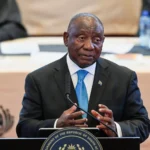
The expansion follows sustained diplomatic engagement by African leaders. South African President Cyril Ramaphosa recently traveled to China to advance bilateral trade negotiations. Subsequently, South Africa’s Minister of Trade, Industry and Competition, Parks Tau, and China’s Minister of Commerce, Wang Wentao, signed a framework agreement at a Joint Economic and Trade Commission meeting, making South Africa the 33rd African country to conclude such an arrangement.
The non-binding Framework Agreement on Economic Partnership for Shared Prosperity (CAEPA) establishes the foundation for deeper cooperation. Negotiations on an Early Harvest Agreement are expected to conclude by the end of March 2026. Once finalized, this agreement will provide immediate zero-tariff access for selected South African exports entering the Chinese market, with the Department of Trade, Industry and Competition emphasizing that implementation will align with World Trade Organization principles.
Separately, Ugandan President Yoweri Museveni has repeatedly urged action to address structural trade imbalances between China and African economies. Speaking at State House Entebbe in November 2023, Museveni appealed directly to Chinese officials: “I would like to encourage China to open their market more for processed coffee and other products, not only raw materials.” His comments underscore a broader continental concern that Africa’s export profile remains concentrated in primary commodities rather than value-added manufactured goods.
The Widening Trade Deficit Challenge
Trade between China and Africa has expanded rapidly, but the relationship remains structurally imbalanced. According to data from China’s General Administration of Customs, bilateral trade reached $348.05 billion in 2025, representing a 17.7% increase over 2024. However, this growth masks a troubling asymmetry: Chinese exports to Africa rose 25.8% to $225.03 billion, while Chinese imports from the continent totaled only $123.02 billion, up a modest 5.4%.
The result is a trade deficit that has ballooned to unprecedented levels. Africa’s deficit with China widened by 64.5% in 2025 to reach $102.01 billion, nearly two-thirds of the continent’s overall trade deficit. This imbalance reflects Africa’s persistent dependence on exporting primary commodities—crude oil, copper, cobalt, iron ore—while importing higher value-added manufactured goods from China.
In 2023, mineral resources constituted roughly 40% of China’s imports from African LDCs, followed by non-edible raw materials and semi-processed goods at 29.2% and 29.7% respectively. On the export side, China ships products including machinery, electronics, and increasingly, renewable energy equipment. Africa imported 15,032 megawatts of Chinese solar panels between July 2024 and June 2025, representing a 60% surge from the previous 12-month period.
The concentration of trade flows is equally striking. According to analysis from the Institute for Security Studies, about one-third of Africa’s imports from China flow to just three countries: South Africa, Nigeria, and Egypt. South Africa alone accounts for over 12% of the continent’s trade deficit with China. Exports to China are even more concentrated, with over half originating from Angola, South Africa, and the Democratic Republic of the Congo, consisting primarily of oil, cobalt, copper, ore, slag, and ashes.
Strategic Diplomacy Meets Economic Reality
Beijing characterizes the expanded zero-tariff regime as a mechanism to boost African exports and rebalance trade flows. Economists estimate China will forgo approximately $1.4 billion in tariff revenue annually under the new scheme—a modest fiscal trade-off relative to overall bilateral trade volumes, but significant as a signal of strategic positioning.
China has pledged to continue negotiating and signing joint economic partnership agreements while expanding market access for African exports through upgraded mechanisms such as a “green channel.” These electronic trade platforms are designed to facilitate faster customs clearance and reduce regulatory barriers for African agricultural products entering the Chinese market.
However, analysts caution that eliminating tariffs alone may prove insufficient to narrow the trade gap. “As long as Africa remains a consumer of over-priced finished goods like electronics and machinery from China and a supplier of under-priced raw materials, this deficit will continue to widen,” Peter Kagwanja, president and chief executive of the Africa Policy Institute, told African Business.
Non-tariff barriers—including regulatory standards, logistics constraints, and financing gaps—present formidable challenges. African exporters still face strict quality standards, complex certification requirements, and entrenched competition within China’s domestic market. Infrastructure deficiencies, unreliable energy supply, and limited access to trade finance further constrain Africa’s ability to scale competitive manufacturing capacity.
AGOA’s Uncertain Future and Shifting Alliances
The zero-tariff announcement coincides with turbulence in Africa’s trade relationship with the United States. AGOA, which provided duty-free access to U.S. markets for over 30 African nations for a quarter-century, expired on September 30, 2025, amid congressional gridlock. The program’s lapse placed approximately 1.3 million jobs at risk across AGOA-dependent industries, particularly in textile manufacturing and agricultural exports.
Following sustained lobbying from African governments and American businesses, the U.S. House of Representatives voted 340-54 on January 12, 2026, to extend AGOA by three years through December 31, 2028, with the renewal applying retroactively to the September 2025 expiration date. President Trump signed the legislation on February 3, 2026, though the short-term extension provides limited certainty compared to previous ten-year renewals.
The contrast with China’s approach is stark. While Washington debates conditional access tied to governance criteria and human rights benchmarks, Beijing offers comprehensive tariff elimination with minimal policy conditionality. “China’s decision to remove tariffs on imports from 53 African countries is a significant step towards balancing trade in the long term,” according to analysis published in African Business.
European Partnership Agreements and Continental Integration
Africa’s engagement with the European Union presents additional complexity. The EU has negotiated Economic Partnership Agreements with 15 countries across sub-Saharan Africa, organized into six regional configurations. These EPAs require African signatories to liberalize approximately 80% of their markets to European goods and services over transitional periods, raising concerns about premature exposure to competition from subsidized European agricultural products and established manufacturing sectors.
Critics argue that EPAs potentially undermine regional integration efforts by fragmenting the continent into multiple overlapping trade frameworks. The EU maintains separate EPAs with the Southern African Development Community, Economic Community of West African States (with interim agreements for Ghana and Côte d’Ivoire), Eastern and Southern Africa groupings, and individual arrangements with countries including Kenya.
The EU-SADC EPA, for instance, entered provisional application in October 2016 with Botswana, Lesotho, Namibia, South Africa, and Eswatini. The agreement includes flexible rules of origin designed to facilitate intra-regional trade and safeguard mechanisms for sensitive agricultural products. However, implementation has proceeded unevenly, with ongoing negotiations over services liberalization and trade-related rules.
In November 2025, the EU and South Africa signed their first Clean Trade and Investment Partnership (CTIP), focusing on renewable energy, low-carbon technologies, electricity infrastructure, clean fuels, and raw materials value chains. The CTIP complements the existing SADC EPA framework by targeting strategic sectors essential for both regions’ decarbonization objectives.
One decision can change your entire career. Take that step with our Online courses in ACCA, HESI A2, ATI TEAS 7, HESI EXIT, NCLEX-RN, NCLEX-PN, and Financial Literacy. Join Serrari Ed and start building your brighter future today.
Structural Barriers Beyond Tariffs
The fundamental challenge facing African economies extends beyond tariff elimination. According to research from the Brookings Institution, Africa’s exports to China remain concentrated in low-value primary products despite decades of Chinese infrastructure investment ostensibly aimed at supporting industrialization. China has consistently run a trade surplus with Africa since 2015, contradicting conventional assumptions that a major consumer of natural resources should maintain a trade deficit with supplier regions.
The composition of trade reflects deeper structural imbalances. While African nations have leveraged Chinese financing to build roads, railways, ports, and power plants, these infrastructure improvements have not translated into diversified export portfolios. Value addition remains limited, with most mineral resources and agricultural commodities exported in raw or minimally processed forms.
“Heavy reliance on Chinese imports and weak global value chain linkages are stalling Africa’s industrialization,” according to analysis from ISS Africa. The continent’s manufacturing share of GDP has stagnated or declined in many countries over the past two decades, even as overall trade volumes have surged.
Non-tariff barriers compound these challenges. African exporters face complex certification requirements, sanitary and phytosanitary standards, technical regulations, and customs procedures that can be more restrictive than formal tariffs. Port efficiency varies dramatically across the continent, with container dwell times in some African ports exceeding two weeks compared to 24-48 hours in efficient Asian facilities. Energy reliability remains problematic, with frequent power outages disrupting production schedules and undermining competitiveness.
Access to trade finance presents another constraint. Many African small and medium-sized enterprises struggle to obtain letters of credit or export insurance at commercially viable rates. Currency volatility and exchange rate risk further complicate cross-border transactions, particularly for smaller exporters lacking sophisticated hedging capabilities.
Regional Dynamics and Differential Impacts
The impact of China’s zero-tariff policy will vary considerably across Africa’s diverse regional economies. The Southern African Development Community remains the highest-value corridor in Africa-China trade due to its concentration of mineral exporters. South Africa, Angola, Zambia, and the Democratic Republic of the Congo account for the majority of shipments to China, primarily in iron ore, copper, cobalt, and hydrocarbons.
Chinese exports to SADC include vehicles, steel products, machinery, and chemicals, reflecting strong industrial demand across mining and manufacturing hubs. Despite the scale of two-way trade, SADC maintains a persistent deficit given the high import content embedded in its energy and mining supply chains.
The Economic Community of West African States faces different challenges. WAEMU’s exports to China remain concentrated in cocoa, cashew, cotton, and manganese, leaving the region structurally dependent on manufactured imports. Ghana and Côte d’Ivoire have signed interim EPAs with the EU while seeking improved access to Chinese markets, navigating between multiple preferential trade frameworks with varying requirements.
The East African Community has benefited from Chinese-built railways and highways in recent decades, particularly in Kenya, Tanzania, and Uganda. Chinese goods entering the bloc consist mainly of transport equipment, industrial machinery, and manufactured products for construction and housing. However, export diversification has lagged infrastructure development, with traditional agricultural commodities and minerals continuing to dominate shipments to China.
Industrial Policy and Developmental Pathways
For the zero-tariff regime to generate meaningful developmental outcomes, African governments must implement complementary industrial policies. Several pathways merit consideration:
Special Economic Zones and Export Processing: Special Economic Zones can provide controlled environments for building export-oriented manufacturing capacity. Successful zones combine infrastructure provision, streamlined regulatory procedures, fiscal incentives, and targeted support for sectors with demonstrated competitive potential. Examples include Ethiopia’s industrial parks focused on textile and garment manufacturing, and Rwanda’s efforts to develop ICT services and light manufacturing clusters.
Agro-Processing and Value Addition: Many African countries possess comparative advantages in agricultural production but capture minimal value from processing and branding. Investments in cold chain logistics, food safety certification, packaging facilities, and quality control systems could enable exports of processed coffee, cocoa products, specialty teas, processed fruits, and other value-added agricultural goods. Uganda’s push for processed coffee exports exemplifies this approach.
Mineral Beneficiation: African mineral exporters increasingly seek to capture downstream value through local processing. The Democratic Republic of the Congo has implemented export restrictions on unprocessed copper and cobalt concentrates to encourage domestic refining. Zimbabwe requires partial local beneficiation of platinum group metals. These policies face pushback from foreign mining companies citing energy costs, technical challenges, and infrastructure constraints, but represent efforts to move beyond raw commodity exports.
Regional Value Chains: The African Continental Free Trade Area (AfCFTA), which commenced trading in January 2021, creates opportunities for multi-country value chains. A garment assembled in Kenya might use cotton from Burkina Faso and buttons from South Africa, with the finished product qualifying for preferential access to Chinese or European markets. Realizing this potential requires harmonizing rules of origin, simplifying customs procedures, and improving regional transportation corridors.
Critical Perspectives and Alternative Views
Not all observers view China’s zero-tariff expansion positively. Some economists warn that premature trade liberalization could undermine nascent African industries unable to compete with Chinese manufacturing efficiency and scale economies. Cheap imports may displace local production in sectors like textiles, footwear, plastics, and consumer electronics, limiting industrialization prospects.
Oxford Economics warned in a December 2024 report that another sharp increase in Chinese exports to Africa in 2026 could trigger trade tensions between China and the continent. Potential responses could include anti-dumping measures against “Made in China” products, tariffs on goods competing with local production, import quotas, and industrial policies aimed at encouraging domestic manufacturing and consumption.
World Trade Organization rules generally prohibit blanket import bans or tariffs above bound rates, yet Africa’s nascent industries struggle to compete against a flood of cheap finished goods. Some analysts argue the WTO should allow greater flexibility for developing countries to apply safeguard measures, temporary tariffs, or quotas to address persistent imbalances and provide space for industrial upgrading.
There are also concerns about Chinese ownership of African export production. A significant portion of Africa’s exports to China originates from Chinese-owned firms operating within the continent, particularly in mining and large-scale agriculture. The majority of earnings ultimately flow back to these foreign investors through profit repatriation, with African governments confined to collecting resource rents through royalties, taxes, and duties. The actual value retained in Africa falls far below headline export figures.
Long-Term Strategic Implications
China’s zero-tariff decision signals a deeper shift in global trade architecture toward regional and geopolitical blocs. As U.S. trade policy becomes increasingly unpredictable under the Trump administration’s “reciprocal tariff” agenda, and as EU-Africa relations navigate complex conditionality requirements, China positions itself as a development partner emphasizing pragmatic economic engagement over political preconditions.
For China, the policy supports access to critical minerals essential for electric vehicles, batteries, and renewable energy technologies—sectors central to its industrial strategy. As U.S.-China tensions drive Chinese firms to diversify supply chains away from American markets, Africa becomes an increasingly important destination for Chinese exports and a source of strategic raw materials.
For African economies, the zero-tariff regime presents both opportunity and risk. Countries with established manufacturing capacity, functioning logistics networks, and supportive policy environments could leverage duty-free access to expand processed exports and integrate into Chinese value chains. Agricultural exporters might find new markets for specialty products, processed foods, and organic commodities demanded by China’s growing middle class.
However, countries lacking industrial capacity, infrastructure, or effective trade facilitation systems may simply experience increased import penetration without corresponding export gains. The trade deficit could widen further, foreign exchange reserves could come under pressure, and domestic industries could face intensified competition.
The ultimate impact hinges on whether African governments can translate open access into concrete industrial upgrading. This requires investments in education and skills development, support for technology transfer and innovation, improvements in business regulatory environments, strategic use of public procurement to build local capacity, and careful sequencing of trade liberalization to protect infant industries while maintaining competitive pressure.
Conclusion: Access Without Transformation?
China’s expansion of zero-tariff treatment to 53 African countries represents the most comprehensive unilateral trade concession framework currently available to the continent. By eliminating tariff barriers across all product categories for nearly every African nation, Beijing has addressed a long-standing demand from African leaders seeking improved market access.
Yet tariff elimination alone cannot resolve the fundamental asymmetries in China-Africa economic relations. Structural imbalances—manifested in persistent trade deficits, concentration on primary commodity exports, limited value addition, and weak industrial linkages—require more than preferential market access to address.
The critical question is not whether African products can enter China duty-free, but whether African economies can produce competitive manufactured goods, processed agricultural products, and higher value-added exports at the scale and quality standards required for Chinese market penetration. This depends ultimately on domestic policy choices, institutional capacity, infrastructure quality, and human capital development within African countries themselves.
China’s zero-tariff policy creates an enabling environment. Whether this translates into transformative economic outcomes or merely facilitates continued export of raw materials in exchange for manufactured imports will be determined by how effectively African governments leverage this opportunity to pursue strategic industrial development. The coming years will reveal whether expanded market access serves as a catalyst for African industrialization or simply reinforces existing patterns of unequal exchange.
Ready to take your career to the next level? Join our Online courses: ACCA, HESI A2, ATI TEAS 7 , HESI EXIT , NCLEX – RN and NCLEX – PN, Financial Literacy!🌟 Dive into a world of opportunities and empower yourself for success. Explore more at Serrari Ed and start your exciting journey today! ✨
Track GDP, Inflation and Central Bank rates for top African markets with Serrari’s comparator tool.
See today’s Treasury bonds and Money market funds movement across financial service providers in Kenya, using Serrari’s comparator tools.
photo source: Google
By: Montel Kamau
Serrari Financial Analyst
17th February, 2026