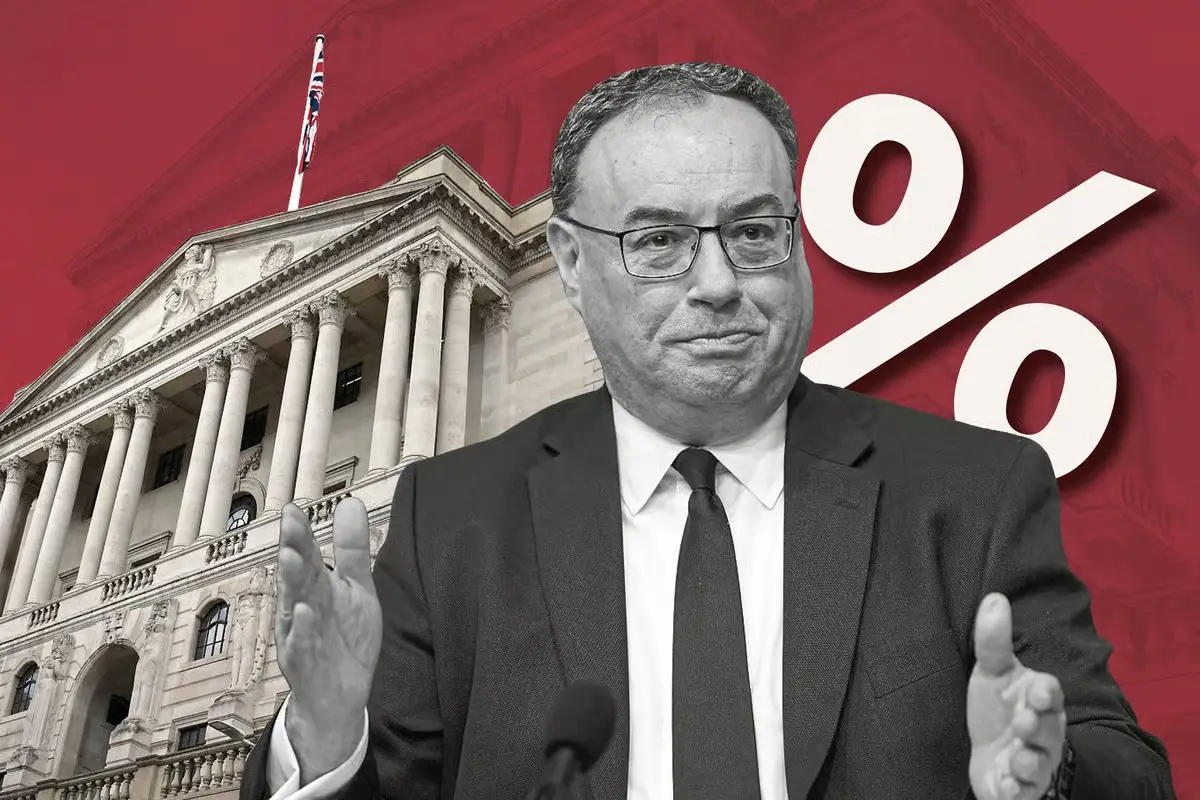
The Bank of England has delivered a pre-Christmas boost to the struggling UK economy by cutting interest rates to 3.75%, but a deeply divided vote among its nine-member monetary policy committee (MPC) signals lingering concerns about persistent inflation and the uncertain path ahead for monetary policy. The quarter-point reduction from 4% to 3.75%, approved by just a 5-4 margin on Thursday, marks the lowest level since February 2023 and represents the sixth interest rate cut since Labour came to power last year.
Bank of England Governor Andrew Bailey, who cast the deciding vote in favor of the reduction, struck a cautious tone about future policy moves, stating: “We’ve passed the recent peak in inflation and it has continued to fall, so we have cut interest rates for the sixth time, to 3.75% today. We still think rates are on a gradual path downward. But with every cut we make, how much further we go becomes a closer call.”
The decision comes amid a confluence of economic data showing both encouraging signs of cooling inflation and worrying indicators of economic stagnation. Official statistics published on Wednesday revealed that inflation fell to 3.2% in November from 3.6% in October, helped primarily by weaker food prices. While this remains well above the Bank’s government-set 2% target, it suggested to policymakers that the worst of the inflation “hump” had passed, providing room to ease monetary policy in support of economic growth.
Build the future you deserve. Get started with our top-tier Online courses: ACCA, HESI A2, ATI TEAS 7, HESI EXIT, NCLEX-RN, NCLEX-PN, and Financial Literacy. Let Serrari Ed guide your path to success. Enroll today.
A Deeply Divided Monetary Policy Committee
The narrow 5-4 split vote represents one of the most contentious decisions the MPC has faced in recent months, revealing fundamental disagreements among policymakers about the appropriate stance of monetary policy. The four committee members voting to maintain rates at 4% – Chief Economist Clare Lombardelli, external members Megan Greene and Catherine Mann, and Deputy Governor Huw Pill – highlighted persistent strength in services sector inflation and survey data suggesting wage growth would remain elevated in coming months.
These “hawkish” members expressed concern that inflation had become entrenched through “lasting changes in wage and price-setting behaviour,” pointing to evidence that businesses were adjusting their pricing strategies and wage-setting practices in ways that could sustain higher inflation even as headline figures moderated. Lombardelli specifically highlighted “elevated wage growth” that she suggested could “require slowing the pace of future policy easing,” noting that the Bank’s regional agents reported employers were expecting pay growth of 3.5% in 2026.
The three MPC members supporting the reduction alongside Bailey – Sarah Breeden and Dave Ramsden – judged that upside risks to inflation had continued to recede but emphasized they would continue monitoring incoming evidence, especially on wage growth. Meanwhile, the two external members backing the cut, Swati Dhingra and Alan Taylor, expressed greater concern about risks of an economic downturn, suggesting that weak consumer spending and the slowdown in the labour market would naturally restrain inflation pressures.
This marks a shift from November’s meeting, when the MPC also voted 5-4 but Bailey cast the deciding vote against a cut, opting to keep rates on hold. The governor’s switch to supporting easing this month proved decisive and was widely anticipated by economists who had noted accumulating evidence of economic weakness.
Inflation Falls More Sharply Than Expected
The Consumer Prices Index (CPI) fell to 3.2% in the 12 months to November 2025, down from 3.6% in October, marking the lowest rate since March 2025 and a bigger drop than the 3.5% that most economists had been expecting. This figure was also below the Bank of England’s own forecast of 3.4%, providing policymakers with greater confidence that inflationary pressures were genuinely abating rather than simply pausing temporarily.
Food and non-alcoholic beverages were the biggest driver of the deceleration, with price growth slowing to 4.2% year-on-year from 4.9% in October. ONS Chief Economist Grant Fitzner noted that “inflation fell notably in November to its lowest annual rate since March,” highlighting particularly significant declines in prices for bread and cereals, including products such as cakes, biscuits, and breakfast cereals.
Alcohol and tobacco inflation also contributed to the slowdown, easing to 4.0% year-on-year from 5.9%, with prices falling by 0.4% during November itself. The ONS explained that this largely reflected tobacco prices falling slightly in the month compared with a sizeable increase a year earlier, when a rise may have been influenced by a tobacco duty increase that took effect in late October 2024.
Core CPI, which excludes energy, food, alcohol and tobacco, rose by 3.2% in the 12 months to November, down from 3.4% in October, while the CPI services annual rate eased from 4.5% to 4.4%. These underlying measures of inflation matter greatly to the Bank of England because they are more closely tied to domestic wage and cost pressures and are therefore better indicators of whether inflation has become structurally embedded in the economy.
Despite the welcome decline, Karen Betts, chief executive of The Food and Drink Federation, cautioned that “food prices remain higher this Christmas than last and many consumers are having to make tough choices about what they buy this year,” emphasizing that even as the rate of increase has moderated, the absolute level of prices continues to strain household budgets.
Labour Market Weakness Bolsters Case for Easing
The case for cutting interest rates was significantly strengthened by recent labour market data showing signs of a marked cooldown in employment conditions. Statistics released earlier this week showed the unemployment rate rising to 5.1% in the three months to October 2025, the highest level since January 2021 during the height of the COVID-19 pandemic.
The number of unemployed people increased by 158,000 from the previous quarter to 1.832 million, driven mainly by increases among those unemployed for up to six months, 6-12 months, and over twelve months. Meanwhile, total employment fell by 16,000 to 34.226 million, marking the second consecutive quarterly decline, largely due to a drop in full-time positions.
The Office for National Statistics described the labour market as “subdued,” with Director of Economic Statistics Liz McKeown noting that “the number of employees on payroll has fallen again, reflecting subdued hiring activity”. Estimates of payrolled employees fell by 149,000 (0.5%) between October 2024 and October 2025, with the early estimate for November 2025 showing a further decrease of 38,000 on the month.
Job vacancies also declined, falling by 2,000 to 729,000 in the September to November period, a level below pre-pandemic norms that suggests businesses are becoming increasingly cautious about expanding their workforce amid economic uncertainty.
The labour market weakness was particularly pronounced among younger workers, a development that has raised concerns about long-term scarring effects on youth employment prospects. The unemployment rate among 16-24-year-olds reached 16% in the three months to October, the highest level since January 2015, with the number of unemployed 18-24 year olds increasing by 85,000 in the quarter, the largest rise since November 2022.
Average wage growth excluding bonuses moderated to 4.6% year-on-year between August and October 2025, showing signs of cooling from earlier elevated levels. However, there remained a significant divergence between public and private sector pay dynamics, with annual average earnings growth at 3.9% for the private sector compared to 7.6% for the public sector, though the latter figure was affected by base effects as some public sector pay rises were paid earlier in 2025 than in 2024.
Economic Stagnation Compounds Policy Challenges
The labour market weakness coincides with broader evidence of economic stagnation that has raised alarm bells about the UK’s growth trajectory. An early estimate published last week suggested GDP unexpectedly shrank by 0.1% in October, marking four successive months without growth since June. The MPC acknowledged this deterioration, with Bank forecasters now expecting GDP to be flat in the final three months of 2025, after a modest 0.1% expansion in the third quarter.
Independent forecasters, including the International Monetary Fund, have previously suggested UK consumers are likely to suffer the highest inflation rates among the G7 major economies this year and next, a particularly concerning distinction given the UK’s already sluggish growth performance compared to international peers.
Business groups have been increasingly vocal in attributing the economic slowdown to policy decisions made in Chancellor Rachel Reeves’s November budget, particularly the £25 billion increase in employer national insurance contributions (NICs). The budget raised the employer NIC rate from 13.8% to 15% and lowered the threshold at which employers begin paying NICs from £9,100 to £5,000, substantially expanding the tax burden on businesses.
The Bank of England acknowledged in its statement that the NICs rise was among the “one-off shocks” that had “restrained” the downward trend in inflation in recent months, while also dampening growth prospects. Nearly three-quarters of businesses surveyed by the Chambers of British Commerce indicated that labour costs remain their biggest financial pressure, with many firms indicating limited scope to absorb further costs without affecting recruitment, investment, or expansion plans.
The extended period of uncertainty before this year’s budget announcement also contributed to the economic malaise, with businesses postponing investment and hiring decisions while awaiting clarity on the fiscal landscape. This pre-budget paralysis compounded existing headwinds from elevated interest rates, weakened consumer confidence, and sluggish external demand.
One decision can change your entire career. Take that step with our Online courses in ACCA, HESI A2, ATI TEAS 7, HESI EXIT, NCLEX-RN, NCLEX-PN, and Financial Literacy. Join Serrari Ed and start building your brighter future today.
Chancellor Reeves Welcomes Rate Cut Despite Budget Fallout
Chancellor Rachel Reeves welcomed the interest rate reduction, stating: “This is the sixth interest rate cut since the election – that’s the fastest pace of cuts in 17 years, good news for families with mortgages and businesses with loans. But I know there’s more to do to help families with the cost of living”.
Reeves has positioned the rate cut as validation of the government’s economic stewardship and evidence that her budget policies are helping to create conditions for sustainable growth. She highlighted that the package of measures announced in November, which included interventions to cut household energy bills, was expected by the MPC to reduce inflation in the first quarter of 2026 by about half a percentage point.
Labour hopes that lower borrowing costs will help underpin confidence and rekindle economic growth by making it cheaper for consumers and companies to borrow, though the extent to which rate cuts will translate into improved economic performance remains uncertain given the structural challenges facing the UK economy.
The political stakes are high for Reeves and the Labour government more broadly. After sweeping to power in July 2024 with promises to fix the country’s damaged public services and deliver sustained economic growth, the party has faced disappointing polling numbers and criticism over its handling of various policy issues. The combination of tax increases, spending commitments, and economic underperformance has created a challenging environment for maintaining public support.
Trade Unions and Business Groups Call for More Aggressive Easing
The decision to cut rates, while welcome, has been met with calls from various quarters for more aggressive monetary easing in 2026. Paul Nowak, the general secretary of the TUC, urged the Bank to continue reducing borrowing costs, stating: “This rate cut is welcome – but one cut every now and again isn’t enough for a fragile economy struggling with stagnant demand and failing confidence. It’s vital this marks the start of a sequence of quickfire and substantial rate cuts”.
Business organizations have similarly pressed for more accommodative monetary policy to offset the impact of higher labour costs from the NICs increase and other regulatory changes on the horizon. The planned increases in the minimum wage and the expansion of workers’ rights are set to be additional headwinds to labour demand in 2026, particularly in lower-paid sectors where job postings are already down significantly year-on-year.
However, economists remain divided on how much further the Bank can realistically cut rates without risking a resurgence of inflation. Jack Meaning, UK chief economist at Barclays, told CNBC: “We will see cuts but perhaps not many more from here. After the downgrade in growth, the downgrade in inflation, they have to acknowledge that there are probably more cuts coming, but they’re keeping their options open”.
Allan Monks, chief UK economist at JPMorgan, suggested further easing “clearly looks likely beyond the December meeting,” with JPMorgan’s current base case calling for two more cuts in March and June, bringing the base rate down to 3.25%. However, he noted “one fly in the ointment, however, is the high-side wage expectations for 2026,” acknowledging the tension between growth concerns and inflation risks from persistently elevated wage pressures.
Implications for Mortgages, Savings, and Consumer Finances
For British households, the rate cut brings mixed financial consequences depending on their particular circumstances. Mortgage borrowers stand to benefit from lower rates, with the average two-year 75% loan-to-value fixed mortgage rate having already fallen to 4.06% in November from 4.2% in October in anticipation of the Bank’s decision.
Financial experts noted that mortgage rates had already edged lower ahead of the Bank’s decision and that housing affordability was expected to improve in 2026, providing relief for families struggling with elevated housing costs. Existing variable-rate mortgage holders will see some immediate reduction in their monthly payments, while those coming off fixed-rate deals will find replacement products more affordable than they would have been had rates remained at 4%.
However, savers face the prospect of lower returns on their deposits, with variable savings rates expected to be cut following the base rate move. Experts warned that savers should be prepared to shop around, noting that smaller banks, building societies, and fintech providers are often quicker than major high street lenders to offer more competitive savings rates, including on cash ISAs.
Money Saving Expert noted that fixed-rate savings would have already factored in some of the rate cut, but could come down further, advising those with money they can lock away who want rate certainty to act immediately. For those earning anything less than 4% on their savings, there remain opportunities to boost returns by switching to more competitive accounts.
Credit card interest rates are expected to remain largely unaffected by the base rate move, as they are already set significantly above the policy rate. Personal loan rates may edge down marginally, though new loan pricing is typically based more on interest rate forecasts than immediate base rate movements, meaning any benefits will likely be gradual rather than immediate.
The Road Ahead: Increasingly Finely Balanced Decisions
Looking forward, the Bank of England has signaled that future policy decisions will become “increasingly finely balanced” as rates decline toward more neutral territory. In its statement, the central bank indicated: “The extent of further easing in monetary policy will depend on the evolution of the outlook for inflation. The restrictiveness of policy has fallen as Bank Rate has been reduced by 150 basis points since August 2024. On the basis of the current evidence, Bank Rate is likely to continue on a gradual downward path. But judgements around further policy easing will become a closer call.”
This cautious framing reflects several competing considerations that will shape monetary policy in 2026 and beyond. On one hand, weak economic growth, rising unemployment, and moderating wage pressures argue for continued easing to support activity and prevent a deeper downturn. The possibility that economic weakness could itself become a source of deflationary pressure adds urgency to the case for maintaining accommodative policy.
On the other hand, inflation remains well above target at 3.2%, and the services component of inflation – more closely tied to domestic wage dynamics – has been sticky at 4.4%. The Bank’s own regional intelligence suggests businesses continue to expect wage growth of 3.5% in 2026, which combined with weak productivity growth could sustain inflationary pressures even as headline figures moderate. The fiscal stimulus from increased government spending in the budget may also support demand and inflation in the medium term.
External factors add further complexity to the outlook. Global commodity price movements, exchange rate fluctuations, and geopolitical developments could all influence the UK inflation trajectory in ways difficult to forecast. The evolution of inflation in major trading partners, particularly in the United States and Europe, will also matter for the UK through trade linkages and financial market channels.
Perhaps most critically, the effectiveness of monetary policy transmission in current conditions remains uncertain. After an extended period of elevated rates, how quickly will rate cuts translate into increased borrowing and spending by households and businesses? Will lower rates be sufficient to offset the drag from higher employer NICs and other cost pressures facing businesses? These questions will only be answered as data accumulates in coming months.
A Watershed Moment for UK Monetary Policy
Thursday’s interest rate decision represents a watershed moment for UK monetary policy, marking the sixth cut since August 2024 when rates stood at 5.25%. The cumulative 150 basis point reduction in borrowing costs over this period reflects the Bank’s judgment that the acute inflation crisis that dominated 2022 and 2023 has sufficiently abated to allow for a measured normalization of policy.
However, the narrow vote split and cautious forward guidance underscore that the MPC remains deeply divided about the appropriate pace of further easing. The tension between supporting growth and guarding against inflation resurgence will only intensify as rates move closer to neutral levels where the stance of policy becomes less obviously restrictive.
For the UK economy, much will depend on whether the combination of lower interest rates, government spending increases, and hoped-for improvements in business confidence can generate a sustainable pickup in growth without reigniting inflation. The alternative – a scenario of persistent stagnation combined with above-target inflation – would present policymakers with extremely difficult choices and could test the credibility of the UK’s monetary policy framework.
As Britain moves into 2026, the effectiveness of the Bank’s gradualist approach to rate cuts will face its sternest test. With unemployment rising, growth stagnant, and inflation still elevated, the institution finds itself navigating treacherous waters with limited room for error. The coming months will reveal whether the carefully calibrated path of “gradual” easing proves sufficient to support recovery, or whether more decisive action becomes necessary to prevent the UK economy from sliding into deeper malaise.
Ready to take your career to the next level? Join our Online courses: ACCA, HESI A2, ATI TEAS 7 , HESI EXIT , NCLEX – RN and NCLEX – PN, Financial Literacy!🌟 Dive into a world of opportunities and empower yourself for success. Explore more at Serrari Ed and start your exciting journey today! ✨
Track GDP, Inflation and Central Bank rates for top African markets with Serrari’s comparator tool.
See today’s Treasury bonds and Money market funds movement across financial service providers in Kenya, using Serrari’s comparator tools.
Photo source: Google
By: Montel Kamau
Serrari Financial Analyst
19th December, 2025