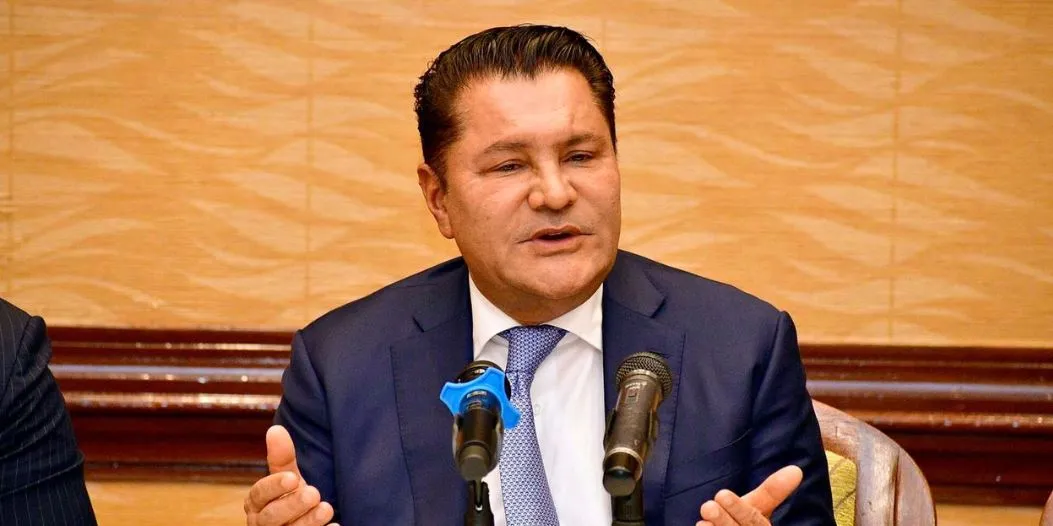












Kenya’s leading cement and concrete products manufacturer, Bamburi Cement, has signed a $250 million (KSh 32 billion) Engineering, Procurement, and Construction deal with Sinoma CBMI Construction Co., Ltd for the construction of a turnkey clinkerisation factory in Matuga, Kwale County, marking one of the most significant industrial investments in Kenya’s construction materials sector in recent years. The contract signing ceremony, witnessed by President William Ruto, Amsons Group Managing Director Edha Nahdi, and Bamburi Cement Chairman John Simba, among other dignitaries, represents a transformative milestone for the cement manufacturer that recently transitioned from Swiss multinational Holcim to Tanzanian conglomerate Amsons Group ownership.
The construction of the state-of-the-art 1.6 million tonnes-a-year clinkerisation plant, incorporating advanced carbon-neutral technologies to reduce environmental impact, forms the cornerstone of Bamburi Cement’s corporate strategy to double its production capacity for quality cement and concrete products, positioning the company to power Kenya’s infrastructure development and economic transformation over the coming decade. Through the turnkey facility, Bamburi Cement Plc aims to more than double its clinker production from 1 million tonnes to 2.6 million tonnes annually, and ultimately increase cement production capacity from 1.8 million tonnes to 4 million tonnes for quality cement, addressing the growing demand driven by national infrastructure programs and private sector development.
Build the future you deserve. Get started with our top-tier Online courses: ACCA, HESI A2, ATI TEAS 7, HESI EXIT, NCLEX-RN, NCLEX-PN, and Financial Literacy. Let Serrari Ed guide your path to success. Enroll today.
Strategic Partnership with Global Cement Engineering Leader
Bamburi Cement, now a member of the Amsons Group following the $183 million acquisition completed in late 2024, has reinforced its strategic ambition to secure long-term clinker self-sufficiency, enhance production capacity, and support national infrastructure demands by signing the EPC contract with Sinoma CBMI, a globally recognized engineering and construction firm in the cement industry. Sinoma CBMI Construction Co., Ltd., part of the world-leading China National Building Material Group, brings extensive expertise in cement plant engineering, procurement, and construction, with their involvement guaranteeing world-class standards in technology, project execution, and operational reliability for the new Matuga clinker line.
Speaking at the EPC signing ceremony, Bamburi Cement CEO Mohit Kapoor said the construction of the new Matuga clinker plant with best-in-class features, including a six-stage precalciner system, represents one of the most significant industrial investments by Bamburi Cement in recent years. The advanced precalciner technology represents the cutting edge of modern cement manufacturing, enabling more efficient fuel combustion, reduced emissions, and improved clinker quality through optimized thermal processing.
Contribution to National Development Roadmap
By doubling its clinker and cement production, Bamburi Cement Plc will significantly contribute to President Ruto’s recently outlined 10-year national development roadmap, with the bold and ambitious KSh 5 trillion roadmap to be financed by the National Infrastructure Fund aiming to transform Kenya into a first-world economy by developing strategic infrastructure, all of which is heavily reliant on cement and concrete products. As the company continues integrating into the Amsons Group’s regional operations, the new plant, Kapoor emphasized, will be a cornerstone in positioning Bamburi as a more competitive, efficient, and future-ready quality cement producer capable of meeting the escalating demands of both public and private sector construction projects.
The new clinker line will greatly reduce reliance on imported clinker, improving quality production consistency and securing supply for the domestic market, according to Kapoor. This strategic shift will save foreign exchange resources, stabilize pricing throughout the construction value chain, enhance production planning capabilities, and ensure Bamburi continues to meet rising cement demand driven by national infrastructure programs and private sector development initiatives across housing, commercial real estate, and industrial facilities.
Amsons Group’s Pan-African Expansion Strategy
Amsons Group Managing Director Edha Nahdi reiterated the pan-African conglomerate’s commitment to supporting Kenya in achieving the bold and ambitious KSh 5 trillion roadmap outlined by President Ruto to transform the country into a first-world economy and secure its full economic freedom. “Amsons Group stands ready to make its contribution to support President Ruto’s 10-year roadmap on road, rail, ports, airports, and oil pipeline infrastructure development and expansion,” Nahdi stated. “By signing this Clinkerisation Plant development EPC contract, Amsons Group is putting its money where its mouth is, to power Kenya’s national development and economic transformation. The delivery of such a bold and ambitious national development roadmap will be heavily reliant on the local availability of quality cement and concrete products.”
As part of the Amsons Group, which acquired more than 95 percent of Bamburi Cement’s issued equity shares in late 2024, Bamburi benefits from a growing regional footprint across East Africa that extends beyond cement manufacturing to include energy, logistics, and agricultural processing operations. The Matuga plant will strategically align Bamburi’s production capabilities with the Group’s broader regional growth strategy, enhancing cross-border synergies, supply-chain efficiencies, and market resilience that position the combined entity as a formidable competitor across multiple East African markets.
Amsons Group disclosed that it is looking to invest an additional $400 million over the next three years to power growth at Bamburi Cement, with the Matuga clinkerisation plant representing the flagship project in this ambitious investment program. This commitment demonstrates Amsons’ long-term confidence in Kenya’s economic trajectory and the cement sector’s critical role in the country’s industrialization agenda.
Economic Impact and Employment Generation
Located in Kwale County along Kenya’s coastal region, the Matuga project is expected to create employment opportunities during both construction and operational phases, boost local business participation through procurement of goods and services, and stimulate economic activity in the wider Coastal region that has historically faced economic marginalization despite its strategic location and natural resource endowments. The project complements Kenya’s objective of strengthening local manufacturing under the Bottom-Up Economic Transformation Agenda, which prioritizes interventions that create immediate employment and income opportunities for ordinary citizens while building long-term industrial capacity.
The employment multiplier effects extend beyond direct factory jobs to encompass logistics and transportation services, maintenance and engineering support, raw materials extraction and processing, utilities and energy supply, and a broad range of ancillary services that emerge around major industrial installations. These indirect and induced employment effects typically exceed direct employment by factors of three to five in the cement industry, suggesting the Matuga plant could impact livelihoods for thousands of families across the Coastal region.
Advanced Environmental Technologies
The planned plant is expected to incorporate modern, energy-efficient technologies that significantly reduce emissions and enhance operational sustainability, including Alternative Fuels & Raw Materials such as coconut husks, cashew nut shells, and municipal solid waste sourced from the Coastal region. This approach aligns with Bamburi Cement’s commitment to cleaner production, environmental stewardship, and long-term compliance with global climate standards while addressing the critical challenge of waste management in coastal communities.
The use of alternative fuels represents a significant advancement in sustainable cement manufacturing, as the cement industry globally accounts for approximately 7-8 percent of anthropogenic carbon dioxide emissions. By substituting fossil fuels with biomass waste materials and municipal solid waste, Bamburi can reduce its carbon footprint while creating economic value from materials that would otherwise pose environmental disposal challenges. Coconut husks and cashew nut shells, both abundant agricultural residues in the Coastal region, possess suitable calorific values for clinker production while avoiding the emissions intensity of coal or petroleum coke.
President Ruto acknowledged that the cement sector ranks among the most energy-intensive industries and serves as a significant source of greenhouse gas emissions, positioning the Matuga clinker investment not only as a capacity expansion project but also as an opportunity to promote cleaner and more efficient production methodologies. “We are encouraging improved energy efficiency in clinker production, adoption of cleaner fuels and modern technologies, and strict adherence to environmental, health and safety standards across operations,” Ruto stated, adding that balancing industrial growth with environmental sustainability will remain a key priority as Kenya accelerates its infrastructure and manufacturing agenda.
Amsons Group Acquisition Background
The Matuga clinker plant project emerges from Amsons Group’s successful acquisition of Bamburi Cement completed in December 2024, following regulatory approvals from the COMESA Competition Commission and Kenya’s Ministry of Mining, Blue Economy and Maritime Affairs. The acquisition, valued at approximately $183 million, represented one of the most significant foreign direct investments in Kenya’s construction sector in 2024.
Amsons Group, a Tanzanian family-owned conglomerate founded in 2006, has evolved from a bulk oil importer operating under the Camel Oil Tanzania retail brand into a diversified industrial powerhouse with interests spanning fuel, liquefied petroleum gas, transportation, cement, real estate, and agricultural processing. The firm’s manufacturing operations now include an installed cement production capacity of 6,000 tonnes per day, bolstered by the acquisition of Mbeya Cement in Tanzania from Holcim in November 2023. With Bamburi Cement’s integration, Amsons Group’s total cement manufacturing capacity has grown to approximately 13,000 tonnes per day across its operations in Tanzania and Kenya.
The acquisition followed Holcim’s strategic decision to restructure its global footprint and streamline operations to focus on more profitable markets, with the Swiss multinational exiting several African markets as part of a broader portfolio rationalization. Holcim, through subsidiaries Fincem Holding Limited and Kencem Holding Limited, held a combined 58.6 percent stake in Bamburi Cement and provided irrevocable commitment to accept Amsons’ offer, which valued Bamburi at KSh 65 per share, representing a 44 percent premium over the market closing price prior to the bid announcement.
Presidential Vision for Cement Industry Self-Sufficiency
President Ruto used the contract signing ceremony to emphasize the cement industry’s centrality to Kenya’s economic transformation agenda, noting that nearly every aspect of national development depends on a reliable, competitive, and sustainable cement value chain. The President said the cement industry underpins key sectors of the economy, observing that roads, power plants, dams, irrigation canals, and factories all rely heavily on cement, with the sector supporting major investments in housing, transport, energy, and industrialization.
Ruto challenged Kenya’s cement industry to end reliance on imports, stating that the country has ample limestone and other raw materials to sustain local production. “It is not possible for Kenya to keep importing cement. I encourage all the players that we have limestone and all the raw materials necessary for the production of cement here in Kenya,” the President declared. “Somebody needs to explain to me why we need to import stones. What is limestone? It’s just stones. All we need to do is to burn them and create cement. I am not persuaded by anything to accept that.”
The President’s strong stance on import substitution reflects growing concern about foreign exchange expenditure on materials that can be produced domestically. Kenya’s cement industry historically imported approximately 60 percent of its clinker requirements, creating vulnerability to international price fluctuations and supply disruptions while draining scarce foreign currency reserves that could be deployed for imports of capital equipment and technology that cannot be produced locally.
Ruto also ruled out repealing the 17.5 percent levy imposed by the government on the importation of clinker, contradicting earlier statements by Trade Cabinet Secretary Lee Kinyanjui that the Executive would ask Parliament to remove the export and investment promotion levy on steel and clinker. The President’s insistence on maintaining the levy underscores government determination to incentivize domestic clinker production even when this imposes short-term costs on cement manufacturers reliant on imports.
Broader Cement Industry Investment Wave
The Bamburi Matuga project forms part of a remarkable wave of investment in Kenya’s cement manufacturing capacity that has gathered momentum over the past three years. President Ruto pointed out that local cement manufacturers have invested over $700 million (KSh 91 billion) in modern facilities to produce clinker in Kenya in the past three years, transforming the country’s position from import dependence toward self-sufficiency and potential exports.
These investments include the KSh 45 billion Cemtech plant commissioned in West Pokot in April 2024, which produces 6,000 tonnes per day of clinker with a cement capacity of 2 million tonnes per year. The Cemtech facility, a subsidiary of Devki Group’s National Cement operations, required 14 years from initial feasibility studies in 2010 to eventual commissioning, demonstrating both the complexity of large-scale cement projects and the perseverance required to bring them to fruition in challenging terrain.
Additionally, President Ruto indicated he will commission a KSh 40 billion Cemtech plant in Kitui County in early 2026. Devki Group subsidiary Cemtech submitted an Environmental Impact Assessment report to the National Environment Management Authority for this new clinker plant in Kitui, with the company planning to establish the facility in Mwatsuma, Mwingi Central to leverage the region’s limestone deposits while creating employment in an area historically characterized by economic marginalization and limited industrial development.
By 2025, industry analysts project that Kenyan producers will add 4.4 million tonnes of clinker capacity, taking the domestic total to 10.7 million tonnes annually. This dramatic capacity expansion should effectively eliminate Kenya’s structural clinker deficit and potentially position the country as a regional exporter to neighboring markets in East Africa where cement demand continues growing rapidly.
One decision can change your entire career. Take that step with our Online courses in ACCA, HESI A2, ATI TEAS 7, HESI EXIT, NCLEX-RN, NCLEX-PN, and Financial Literacy. Join Serrari Ed and start building your brighter future today.
Market Dynamics and Demand Drivers
Kenya’s cement market has experienced volatility in recent years, with consumption falling 8 percent year-on-year to 8.47 million tonnes in 2024, representing the sharpest annual decline in over two decades according to Kenya National Bureau of Statistics. The contraction reflected budgetary cuts on public infrastructure projects and a broader slowdown in construction activity, which contracted by 3 percent in the third quarter of 2024 following a 2 percent drop in the second quarter.
However, more recent data suggests demand is recovering. Cement consumption rose 27 percent year-on-year in January 2025, while production grew 21 percent year-on-year following more than a year of contraction. The rebound followed release of $487 million by the Treasury to clear unpaid bills to contractors, allowing hundreds of stalled road and infrastructure projects to resume construction activities.
The government’s ambitious KSh 5 trillion infrastructure development program provides visibility for sustained cement demand growth over the coming decade. This program encompasses road construction and rehabilitation, railway expansion including standard gauge railway extensions, port modernization at Mombasa and Lamu, airport upgrades across multiple facilities, dam construction for irrigation and hydroelectric power, affordable housing under the government’s signature program, and industrial park development to attract manufacturing investments.
President Ruto linked the Matuga clinker investment to the government’s Affordable Housing Programme, describing it as one of the most ambitious social and economic interventions in the country’s history. The program aims to deliver 250,000 housing units annually, creating massive sustained demand for cement, steel, and other construction materials while addressing Kenya’s severe housing deficit estimated at approximately 2 million units and growing by 200,000 units annually due to population growth and urbanization.
Competitive Landscape and Market Structure
Bamburi Cement operates in a competitive market characterized by several major players. According to data from the Kenya National Bureau of Statistics used by the Competition Authority of Kenya, the leading companies in the country’s cement sector by market share are: Bamburi Cement at 33 percent, Mombasa Cement at 16 percent, East African Portland Cement at 15 percent, Savannah Cement at 15 percent, National Cement at 8 percent, and Athi River Mining Africa at 13 percent.
The market structure has undergone significant transformation following the entry of new capacity and changes in ownership. Bamburi, previously controlled by LaFarge and subsequently Holcim for several decades, now operates under Tanzanian ownership through Amsons Group. East African Portland Cement Company, Kenya’s oldest cement manufacturer founded in 1933, faces financial challenges but has announced plans to invest $200 million in a new clinker factory in Kajiado County with capacity of 5,000 tonnes per day.
Savannah Cement, backed by Kenyan investors, plans a new clinker factory costing $500 million to be built in Kitui County. The company currently imports all its clinker requirements as it operates only cement grinding facilities, making it vulnerable to import costs and supply disruptions. The planned investment would transform Savannah into an integrated manufacturer with improved cost competitiveness.
The addition of substantial new clinker capacity by multiple producers suggests the market will become increasingly competitive on pricing, with producers potentially competing on quality differentiation, service levels, credit terms, and technical support rather than purely on price. This competitive intensity should benefit construction companies and ultimately consumers through improved value propositions.
Historical Context of Bamburi Cement
Bamburi Cement’s history extends back to 1951 when it was founded by Dr. Felix Mandl, an Austrian working for Cementia Holding AG Zurich. Originally named British Standard Portland Cement Co. Ltd., and later Bamburi Portland Cement Ltd., construction began in 1952 with the first production and dispatch occurring two years later. The company produced 140,000 tonnes of cement in its inaugural year and soon began exporting to Tanzania and Mauritius, eventually reaching markets in the Arabian Gulf.
The company was listed on the Nairobi Securities Exchange in 1970 in the Construction and Allied category, becoming one of Kenya’s blue-chip industrial stocks. It was partially acquired by LaFarge Group in 1989 after the Swiss multinational acquired Cementia Holding, before LaFarge became majority shareholder by also acquiring Blue Circle Industries in 2001. Bamburi itself acquired Hima Cement in Uganda in 1999 and a 20 percent stake in Athi River Mining in 2000, demonstrating regional expansion ambitions that predated the current Amsons ownership.
The company subsequently divested its Ugandan operations, with Holcim selling Hima Cement to Uganda’s Sarrai Group for $120 million as part of its broader African exit strategy. This divestment eliminated drag on Bamburi’s consolidated financial performance, as losses from discontinued operations in Hima Cement amounted to KSh 1.06 billion in 2023 compared to just KSh 77 million the year before.
Regional Integration and Synergies
The Matuga clinker plant will strategically align Bamburi’s production capabilities with Amsons Group’s broader regional growth strategy, enhancing cross-border synergies, supply-chain efficiencies, and market resilience across East African operations. Amsons operates in multiple countries including Tanzania, Zambia, Malawi, Mozambique, Burundi, and the Democratic Republic of Congo, creating opportunities for bulk raw materials procurement, shared technical expertise, coordinated logistics networks, and potential cement trade flows optimized around production costs and freight economics.
The pan-African operational footprint enables Amsons to leverage Kenya’s strategic position as East Africa’s largest economy and most developed industrial base while drawing on Tanzania’s natural resource endowments and Zambia’s mining sector linkages. This regional diversification reduces exposure to any single country’s economic cycles or political risks while positioning the group to serve major infrastructure projects spanning multiple countries, such as regional railway networks, cross-border highways, and East African Community integration projects.
Technology Transfer and Capacity Building
The partnership with Sinoma CBMI represents significant technology transfer for Kenya’s cement industry. As part of China National Building Material Group, Sinoma CBMI possesses cutting-edge expertise in modern cement production technologies including vertical roller mills, high-efficiency classifiers, waste heat recovery systems, and advanced process control systems that optimize fuel efficiency and emissions performance.
The six-stage precalciner system specified for the Matuga plant represents state-of-the-art clinker burning technology, enabling more complete fuel combustion at lower kiln temperatures, reducing thermal nitrogen oxide formation, improving clinker quality through better chemical reactions, and creating flexibility to utilize alternative fuels with varying characteristics. These technical capabilities will be transferred to Kenyan engineers and operators through training programs and operational support during commissioning and early operations.
Bamburi committed to maintaining the professional services of its executive management team led by CEO Mohit Kapoor to ensure continuity and continued excellence during the ownership transition and plant construction. This management continuity provides stability and preserves institutional knowledge accumulated over decades of operations while integrating Amsons Group’s strategic direction and investment capacity.
Limestone Resources and Raw Materials Security
Kenya possesses rich limestone deposits in areas including Kilifi, Kitui, Taita Taveta, and Kajiado, providing abundant raw materials for clinker production. The Kwale County location selected for the Matuga plant leverages proven limestone reserves while situating production near the coastal port of Mombasa, facilitating potential exports and imports of auxiliary materials.
The Matuga mining license, for which Amsons Group received approval from the Ministry of Mining, Blue Economy and Maritime Affairs, secures access to limestone feedstock for decades of operations. This long-term resource security provides confidence for the substantial capital investment while supporting forward integration into quarrying operations that generate additional employment and business opportunities in the mining sector.
Beyond limestone, clinker production requires clay or shale materials to provide alumina and silica, gypsum for final cement grinding, and various trace materials. Kwale County’s geological diversity provides access to multiple auxiliary raw materials within economic transport distances, reducing logistics costs and enhancing the plant’s overall cost competitiveness.
Construction Timeline and Implementation
Under the EPC agreement, Sinoma CBMI will be responsible for the design, equipment supply, construction, installation, and commissioning of the plant. This turnkey approach places comprehensive responsibility on the contractor, reducing execution risks for Bamburi while ensuring integrated systems designed to work together optimally from the outset.
Construction timelines and commissioning schedules are expected to be announced as the project advances through detailed engineering and procurement phases. Typical clinker plant construction requires 24-36 months from groundbreaking to commercial operations, depending on project scale, site complexity, equipment delivery schedules, and workforce availability. The $250 million investment magnitude suggests a construction workforce of several hundred skilled workers at peak activity, creating significant short-term employment and economic stimulus in Kwale County.
Financial Implications and Investment Returns
The Matuga clinker plant represents Bamburi Cement’s largest single capital project in its recent history, with the $250 million EPC contract supplemented by additional investments in mining infrastructure, raw materials handling, utilities connections, environmental control systems, and working capital for initial operations. The total project cost likely approaches $300-350 million when fully capitalized, representing a substantial commitment requiring careful financial engineering and potentially drawing on Amsons Group’s balance sheet strength and banking relationships.
The investment’s financial justification rests on multiple value drivers: reducing clinker import costs by an estimated 25-30 percent through domestic production, eliminating foreign exchange exposure on clinker procurement, improving supply reliability and production planning, capturing economies of scale as production volumes increase, and positioning Bamburi for potential clinker exports to regional markets. Additionally, the plant supports the broader objective of doubling cement production capacity, enabling Bamburi to capture growing market demand and potentially expand market share.
The payback period for large-scale clinker plants typically ranges from 7-12 years depending on capacity utilization rates, local market prices, energy costs, and financing terms. Amsons Group’s long-term investment horizon, evidenced by the additional $400 million commitment beyond the Matuga plant, suggests confidence in the project’s economic fundamentals and Kenya’s growth trajectory over coming decades.
Environmental and Social Governance
Modern cement production faces intense scrutiny regarding environmental impacts, particularly greenhouse gas emissions, air quality, water consumption, and land use. The Matuga plant’s emphasis on alternative fuels and raw materials positions Bamburi as a sustainability leader in Kenya’s cement industry, potentially qualifying the company for carbon finance or green financing mechanisms that reduce capital costs for low-carbon industrial projects.
The planned use of coconut husks, cashew nut shells, and municipal solid waste as fuel substitutes serves multiple environmental objectives: reducing fossil fuel consumption and associated emissions, diverting waste from landfills and open dumping, creating markets for agricultural residues that would otherwise be burned, and demonstrating circular economy principles that valorize waste streams. These benefits position Bamburi favorably with environmental regulators, development finance institutions, and increasingly environmentally conscious customers.
Social governance considerations include fair labor practices during construction and operations, community engagement regarding environmental impacts and economic opportunities, local content in procurement and employment, and transparent consultation on land use and resource access. The project’s approval required environmental impact assessment clearances demonstrating acceptable mitigation of potential negative impacts.
Conclusion: A Defining Moment for Kenya’s Industrial Transformation
The $250 million Matuga clinker plant contract represents far more than a single company’s capacity expansion—it symbolizes Kenya’s determination to achieve industrial self-sufficiency in strategic sectors while positioning the country as a regional manufacturing hub. President Ruto’s strong rhetoric on import substitution, backed by tangible investments from private sector players like Amsons Group, demonstrates alignment between government vision and business execution that creates confidence in Kenya’s industrial trajectory.
The cement industry’s transformation over the past three years, with more than $700 million invested in new clinker capacity, provides concrete evidence that Kenya can successfully graduate from import dependence to self-sufficiency and potential exports in sectors previously dominated by foreign suppliers. This success in cement manufacturing could provide a replicable model for other industries including steel, chemicals, and machinery where Kenya currently relies heavily on imports despite possessing relevant raw materials and growing industrial capabilities.
For Bamburi Cement, the Matuga plant marks the beginning of a new chapter under Amsons Group ownership, building on seven decades of operational excellence while embracing enhanced environmental standards, modern technologies, and regional integration. The doubling of production capacity positions Bamburi to serve Kenya’s infrastructure boom while competing more effectively across East African markets where Amsons maintains complementary operations.
The success of this project, alongside similar investments by National Cement, Savannah Cement, and East African Portland Cement, will ultimately be measured not just in tonnes of clinker produced but in broader indicators of industrial transformation: foreign exchange savings, employment creation, technology transfer, environmental performance, and contribution to the built infrastructure that underpins economic development and improved living standards for Kenya’s growing population.
Ready to take your career to the next level? Join our Online courses: ACCA, HESI A2, ATI TEAS 7 , HESI EXIT , NCLEX – RN and NCLEX – PN, Financial Literacy!🌟 Dive into a world of opportunities and empower yourself for success. Explore more at Serrari Ed and start your exciting journey today! ✨
Track GDP, Inflation and Central Bank rates for top African markets with Serrari’s comparator tool.
See today’s Treasury bonds and Money market funds movement across financial service providers in Kenya, using Serrari’s comparator tools.
photo source: Google
By: Montel Kamau
Serrari Financial Analyst
17th December, 2025
Article, Financial and News Disclaimer
The Value of a Financial Advisor
While this article offers valuable insights, it is essential to recognize that personal finance can be highly complex and unique to each individual. A financial advisor provides professional expertise and personalized guidance to help you make well-informed decisions tailored to your specific circumstances and goals.
Beyond offering knowledge, a financial advisor serves as a trusted partner to help you stay disciplined, avoid common pitfalls, and remain focused on your long-term objectives. Their perspective and experience can complement your own efforts, enhancing your financial well-being and ensuring a more confident approach to managing your finances.
Disclaimer: This article is for informational purposes only and does not constitute financial advice. Readers are encouraged to consult a licensed financial advisor to obtain guidance specific to their financial situation.
Article and News Disclaimer
The information provided on www.serrarigroup.com is for general informational purposes only. While we strive to keep the information up to date and accurate, we make no representations or warranties of any kind, express or implied, about the completeness, accuracy, reliability, suitability, or availability with respect to the website or the information, products, services, or related graphics contained on the website for any purpose. Any reliance you place on such information is therefore strictly at your own risk.
www.serrarigroup.com is not responsible for any errors or omissions, or for the results obtained from the use of this information. All information on the website is provided on an as-is basis, with no guarantee of completeness, accuracy, timeliness, or of the results obtained from the use of this information, and without warranty of any kind, express or implied, including but not limited to warranties of performance, merchantability, and fitness for a particular purpose.
In no event will www.serrarigroup.com be liable to you or anyone else for any decision made or action taken in reliance on the information provided on the website or for any consequential, special, or similar damages, even if advised of the possibility of such damages.
The articles, news, and information presented on www.serrarigroup.com reflect the opinions of the respective authors and contributors and do not necessarily represent the views of the website or its management. Any views or opinions expressed are solely those of the individual authors and do not represent the website's views or opinions as a whole.
The content on www.serrarigroup.com may include links to external websites, which are provided for convenience and informational purposes only. We have no control over the nature, content, and availability of those sites. The inclusion of any links does not necessarily imply a recommendation or endorsement of the views expressed within them.
Every effort is made to keep the website up and running smoothly. However, www.serrarigroup.com takes no responsibility for, and will not be liable for, the website being temporarily unavailable due to technical issues beyond our control.
Please note that laws, regulations, and information can change rapidly, and we advise you to conduct further research and seek professional advice when necessary.
By using www.serrarigroup.com, you agree to this disclaimer and its terms. If you do not agree with this disclaimer, please do not use the website.
www.serrarigroup.com, reserves the right to update, modify, or remove any part of this disclaimer without prior notice. It is your responsibility to review this disclaimer periodically for changes.
Serrari Group 2025