Angola has pulled off one of the most significant African debt deals of the year, raising $2.5 billion in Eurobonds to more than double the investor demand — a powerful signal that global capital markets remain open for oil-producing nations even as a raging war in the Middle East reshapes the borrowing landscape across the developing world.
The southern African country’s finance ministry announced on Wednesday that the issuance attracted roughly $5.2 billion in orders, making it more than twice oversubscribed. The deal was structured in two tranches: a $1.5 billion seven-year bond yielding 9.375% and a $1 billion eleven-year bond yielding 9.875%. Both levels came in about a quarter of a percentage point tighter than initial price guidance, according to people familiar with the transaction — a clear sign that investor appetite exceeded Luanda’s expectations.
The bond sale was launched on Tuesday alongside a cash buyback of Angola’s outstanding $1.75 billion of 8.25% notes due in 2028, with the purchase price set at $1,020 per $1,000 of original principal. By coupling new issuance with debt repurchasing, Angola is effectively extending its repayment timelines, improving liquidity and reshaping its debt profile at a moment when crude revenues provide a rare window of fiscal strength. The joint lead managers on the transaction were Citi, Deutsche Bank, JPMorgan and Standard Chartered.
Markets move fast; don’t get left behind. We’ve paired the Serrari Group Market Index with a curated Marketplace and a comprehensive Wealth Builder Course to ensure you have the data—and the skills—to act on it.
Crude Prices Turn Angola’s Budget Into a Bonanza
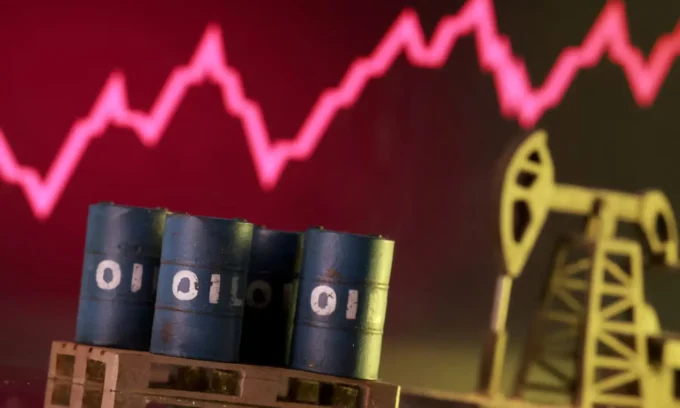
The timing of the deal is no accident. The U.S.–Israeli war on Iran, which erupted in late February and has effectively closed the Strait of Hormuz, has sent oil prices surging well above $100 a barrel — a dramatic windfall for Angola, whose 2026 budget was built on an assumption of just $61 per barrel. With Brent crude trading at more than $105 on Thursday, the country is earning roughly 70% more per barrel than it had planned for, giving it an extraordinary fiscal cushion.
“The timing makes sense as it is one of the best performing bonds post the outbreak of the conflict and they have $1.5 billion of issuance in their budget for this year,” said Leo Morawiecki of asset manager Aberdeen. “Let’s not forget that they run a primary and current account surplus.”
Angola’s dollar bonds have tightened against U.S. Treasuries since the war began — a striking divergence from the broader trend across African sovereign debt, where spreads have widened sharply. This outperformance reflects the market’s recognition that higher crude prices strengthen Angola’s ability to service its obligations, even as the same energy shock punishes net oil importers across the continent.
The country, Africa’s third-largest oil producer, still relies on hydrocarbons for over 90% of its merchandise exports and between 55% and 65% of government budget receipts. Fitch Ratings affirmed Angola’s Long-Term Foreign-Currency Issuer Default Rating at ‘B-‘ with a Stable Outlook in November, noting that government debt was expected to decline gradually to around 48% of GDP by 2026 from 54.3% at the end of 2024. Moody’s holds Angola at B3 with a stable outlook.
Post-OPEC Freedom Meets Geological Reality
Angola’s oil story is one of strategic repositioning tempered by hard geological limits. The country left OPEC in December 2023 after 16 years of membership, frustrated by production quotas it considered unfair. At the time of its withdrawal, Angola’s output had already fallen by nearly 40% over eight years, sliding from 1.7 million barrels per day to approximately 1.1 million — a decline driven more by ageing deepwater fields and insufficient investment than by OPEC constraints.
Leaving the cartel gave Luanda the operational flexibility to set production targets based on market conditions rather than external mandates. Yet output has remained stubbornly flat. Angola’s production dipped below the symbolic one-million-barrel threshold for the first time in mid-2025, prompting Oil Minister Diamantino Pedro Azevedo to describe arresting the decline as the government’s “biggest challenge.”
The government has responded with a sweeping overhaul of its fiscal regime for the oil sector. In November 2024, the National Oil, Gas and Biofuels Agency (ANPG) introduced the Incremental Production Decree, which cut royalties to 15% from 20%, capped the state’s profit-oil share at 25% and raised the cost-recovery ceiling to 70% of production. The reforms have attracted renewed interest from major operators: ExxonMobil and Azule Energy expanded their existing leases, Shell returned to Angola after a two-decade absence with a deal to explore Block 33, and London-based Afentra PLC acquired stakes in onshore blocks. Angola’s 2024 onshore licensing round generated 53 bids from 22 companies for 12 blocks — a 340% increase compared to 2019.
For now, however, the windfall comes not from increased production but from soaring prices per barrel, making the Eurobond timing strategically astute: borrow while the fiscal position looks its strongest and lock in longer maturities before conditions change.
Context is everything. While you follow today’s updates, use the Serrari Group Market Index and Marketplace to spot emerging shifts. Need to sharpen your edge? Our Wealth Builder Course turns these insights into a professional-grade strategy.
Africa’s Diverging Fortunes
Angola’s successful issuance stands in sharp contrast to the growing anxiety over borrowing conditions facing much of the rest of Africa. The war in Iran has reversed what had been an encouraging trend earlier in the year, when sub-Saharan African sovereigns had raised a record $5.95 billion in Eurobonds by early March — the strongest start to the year since 2013.
Kenya led that charge with a $2.25 billion dual-tranche issuance in February, followed by earlier deals from Côte d’Ivoire, Benin, Cameroon and the Republic of Congo. But the eruption of conflict and resulting oil shock have since widened credit spreads dramatically. The African risk premium over U.S. Treasuries jumped to 367 basis points in early March — a 17-basis-point leap that was the largest single-day increase since October, according to JPMorgan data. African spreads widened more than those of emerging markets in Latin America, Europe and Asia, which rose between just 4 and 11 basis points.
S&P Global Ratings estimates that commercial long-term borrowing by rated African sovereigns will reach $155 billion in 2026, up from $140 billion last year. But the ratings agency warned that the Iran conflict poses material risks to those plans through its impact on oil markets and global supply chains. The surge in global borrowing costs has created a sharp divide: oil exporters like Angola and Nigeria see their creditworthiness improve as crude revenues swell, while import-dependent economies like Kenya, South Africa, Egypt and Tunisia face rising current-account deficits, imported inflation and pressure on their currencies.
The broader feedback loop between energy prices, inflation and monetary policy is particularly damaging for frontier borrowers. As the ODI think tank noted in a recent analysis, the Iran war has created a tightening of financial conditions across emerging and developing economies through rising yields, weakening currencies and mounting risk premia — even if oil prices stabilise intermittently. In several African economies, energy and transport account for approximately 15–25% of consumer price baskets, meaning even temporary shocks can destabilise inflation expectations and complicate central banks’ mandates.
The Democratic Republic of Congo, which had planned to make its market debut with a $750 million Eurobond before the Iran conflict erupted, has not publicly commented on how the war has affected those plans. The silence speaks volumes about the chill that has fallen over riskier issuers.
What the Deal Means for Angola — and for Investors
For Angola, the $2.5 billion Eurobond accomplishes several things simultaneously. It provides $1.75 billion in fresh budget financing while using the remaining proceeds to retire nearer-term obligations, thereby smoothing the country’s maturity profile and reducing refinancing risk. The oversubscription signals that investors view Angola’s credit story as credible — at least as long as oil prices remain elevated.
Yet the coupons tell a sobering story of their own. At 9.375% and 9.875%, Angola is paying a steep price for capital — rates that reflect both its speculative-grade credit ratings and the broader surge in global yields since the war began. Bond yields across both European and American markets have risen sharply, with analysts describing a classic “bear-flattening” pattern as near-term rate expectations ratchet higher in response to the energy-driven inflation shock.
The key risk for Angola remains the same one it has faced for decades: the concentration of its economy in a single commodity. The Fitch rating assessment noted that roughly 79% of Angola’s government debt is denominated in foreign currency, leaving it acutely vulnerable to exchange-rate fluctuations. Should oil prices fall sharply — whether through a ceasefire, the reopening of the Strait of Hormuz, or a demand slump — the fiscal arithmetic could reverse with startling speed.
Market strategists warn that the “higher-for-longer” rate environment threatens to entrench elevated borrowing costs for African sovereigns. Before the war, the World Bank had projected that global interest rates would shift downward, offering relief to African economies. That outlook has been upended. The war on Iran has, as Reuters reported, “reversed the previously expected decline in African borrowing rates, creating a higher-for-longer interest rate environment across the continent.”
Nigeria’s Eurobond market has also felt the tremors. Financial analysts warned that escalating geopolitical tensions could trigger sell-offs in Nigerian sovereign bonds as international investors reassess exposure to emerging economies, though some noted that Nigeria’s status as an oil exporter may provide a partial buffer. Tunde Amolegbe of Arthur Stevens Asset Management cautioned that during periods of uncertainty, global investors typically rebalance by reducing exposure to emerging markets and moving into safer instruments — “a natural risk-management response” that the current Middle East crisis has amplified.
For investors, Angola’s Eurobond offers an attractive yield in a world starved of income — but one that comes with the geopolitical and structural risks inherent in an oil-dependent frontier market. As long as the war persists and crude prices remain buoyant, Angola will continue to look like one of the continent’s more compelling credit stories. The question that lingers, as it always does with commodity-dependent sovereigns, is what happens when the price cycle turns.
Your financial future isn’t something you wait for—it’s something you build.
The real question is: when do you begin?
Move beyond simply staying informed.
Navigate the markets with clarity—track trends through the Serrari Group Market Index, uncover opportunities in the Serrari Marketplace, and build practical knowledge with our Curated Wealth Builder Course.
Stay connected to what truly matters.
Get daily insights on macro trends and financial movements across Kenya, Africa, and global markets—delivered through the Serrari Newsletter.
Growth opens doors.
Advance your career through professional programs including ACCA, HESI A2, ATI TEAS 7 , HESI EXIT , NCLEX – RN and NCLEX – PN, Financial Literacy!🌟—designed to move you forward with confidence.
See where money is flowing—clearly and in real time.Track Money Market Funds, Treasury Bills, Treasury Bonds, Green Bonds, and Fixed Deposits, alongside global and African indexes, key economic indicators, and the evolving Crypto and stablecoin landscape—all within Serrari’s Market Index.