










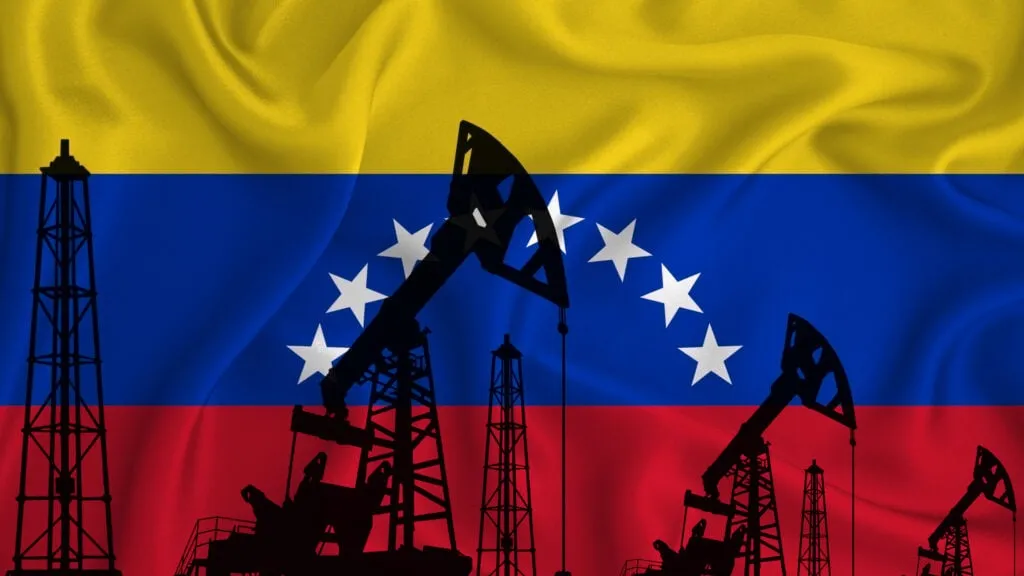
The White House has presented American oil executives with a complex proposition following the recent capture of Venezuelan President Nicolás Maduro: invest substantial capital to rebuild Venezuela’s crumbling oil sector if they want any chance of recovering billions in debts from two-decade-old expropriations. This unprecedented condition, revealed by sources familiar with recent administration discussions, transforms what many companies hoped would be straightforward debt collection into a potentially costly and risky reinvestment scenario.
According to people briefed on the outreach, White House and State Department officials have told U.S. oil executives in recent weeks that they would need to return to Venezuela quickly and invest significant capital in the country to revive the damaged oil industry if they wanted compensation for assets expropriated by Venezuela two decades ago. The discussions have intensified since President Donald Trump ordered the military operation that resulted in Maduro’s capture, signaling a dramatic shift in U.S.-Venezuela relations and opening the door to what could be one of the energy sector’s most significant—and riskiest—investment opportunities in recent history.
Build the future you deserve. Get started with our top-tier Online courses: ACCA, HESI A2, ATI TEAS 7, HESI EXIT, NCLEX-RN, NCLEX-PN, and Financial Literacy. Let Serrari Ed guide your path to success. Enroll today.
The Expropriation Legacy and Outstanding Debts
The roots of the current situation trace back to the mid-2000s, when then-Venezuelan President Hugo Chávez fundamentally restructured the country’s oil industry. Under the new deals, PDVSA would hold at least 60% stake in all projects. While some firms, such as Chevron and Total, accepted the revised conditions to maintain operations, ExxonMobil and ConocoPhillips rejected them, viewing the changes as expropriation without fair compensation. By June 2007, both companies had pulled out of their Venezuelan ventures, including ExxonMobil’s Cerro Negro project and ConocoPhillips’ stakes in Petrozuata, Hamaca, and Gulf of Paria.
The financial stakes are enormous. ConocoPhillips has been trying to recover approximately $12 billion from the Chavez-era nationalization of its Venezuelan assets. In 2019, an international arbitration tribunal under the International Centre for Settlement of Investment Disputes (ICSID) unanimously ordered Venezuela to pay the company $8.7 billion in compensation for the unlawful expropriation of its investments, plus interest. The tribunal ruled in 2013 that the expropriation of ConocoPhillips’ substantial investments in the Hamaca and Petrozuata heavy crude oil projects and the offshore Corocoro development project violated international law.
ExxonMobil has faced similar challenges in recovering its losses. An ICSID tribunal in 2014 awarded ExxonMobil $1.6 billion for the seizure of its assets, far less than the $16.6 billion initially sought but still a significant ruling against Venezuela. In 2023, a resubmission led to an additional $77 million award. As of September 2025, U.S. courts enforced the ICSID award, rejecting Venezuela’s appeals. Venezuela’s efforts to annul the ConocoPhillips award culminated in failure in January 2025, when an ICSID committee dismissed the appeal, leaving the debt at approximately $8.37 billion.
Despite these legal victories, Venezuela has paid only a fraction of what it owes. The country’s failure to compensate these companies has become a central flashpoint in U.S.-Venezuela relations, with President Trump making public references to the Venezuelan expropriations when he ordered a blockade of sanctioned oil tankers last month.
The Investment Precondition
In the recent U.S. administration discussions with oil executives, officials have made clear that recovering these debts won’t be simple. The companies would need to front the investment money themselves to rebuild Venezuela’s oil industry as one of the preconditions for eventually recovering debts from the expropriations. This would represent a costly investment for firms that have already lost billions in the country.
President Trump confirmed this approach during a public address on Saturday following the military operation. “We’re going to have our very large United States oil companies — the biggest anywhere in the world — go in, spend billions of dollars, fix the badly broken infrastructure, the oil infrastructure, and start making money for the country,” he stated. The president emphasized that oil companies would pay directly for the cost of rebuilding Venezuela’s crude infrastructure and would be reimbursed for their investments.
The scale of investment required is staggering. Francisco J. Monaldi, director of the Latin America energy program at Rice University, predicted it would take at least a decade and investments of more than $100 billion to rebuild Venezuela’s oil infrastructure and lift production to 4 million barrels per day, which is well above its historical production levels. According to analysis from Columbia University’s Center on Global Energy Policy, adding between 500,000 barrels per day and 1 million barrels per day is likely to require more than $10 billion in investment over two to three years, and returning to early 2010s output levels near 2.5 million barrels per day is estimated to require $80 to $90 billion over six or seven years.
Corporate Hesitation and Risk Assessment
Whether or not the companies return would depend on how executives, boards and shareholders evaluate the risk of renewed investment in Venezuela. ConocoPhillips has adopted a cautious stance, with a company spokesperson stating in emailed comments that “ConocoPhillips is monitoring developments in Venezuela and their potential implications for global energy supply and stability. It would be premature to speculate on any future business activities or investments.”
The hesitation is understandable given the multiple layers of risk involved. Even if companies do agree to return to the country, it could be years before there is a meaningful boost to oil output. The South American country has one of the largest estimated reserves in the world, with more than 303 billion barrels representing roughly 17% of the total global oil supply, according to OPEC data. However, production has plummeted over past decades amid mismanagement, lack of investment and U.S. sanctions.
Venezuela, a founding member of OPEC, produced as much as 3.5 million barrels per day in the 1970s, which at the time represented over 7% of global oil output. Production fell below 2 million barrels per day during the 2010s and averaged around 1.1 million barrels per day last year, or just 1% of global production. The country currently produces roughly 1 million barrels of crude oil per day, according to OPEC data.
Besides uncertainty surrounding the contract framework for any operations there, companies considering a return would need to deal with security concerns, poor infrastructure, questions about the legality of the U.S. operation to capture Maduro, and the possibility of long-term political instability. There is no precedent whereby regime change in a major oil producer has led to a rapid increase in output. In most cases, such as Iraq, Iran, Libya, and the Soviet Union, oil output fell significantly, often for years, before returning to prior peaks.
Venezuela’s Deteriorating Infrastructure
The challenges facing any companies that choose to invest are immense. Venezuela’s energy infrastructure has been deteriorating for years, and its capacity to produce oil has been greatly diminished. Venezuelan state-owned oil and natural gas company PDVSA says its pipelines haven’t been updated in 50 years, and the cost to update the infrastructure to return to peak production levels would cost $58 billion.
Venezuela’s oil infrastructure has faced chronic underinvestment since it was nationalized under Chavez, and the country has suffered significant brain drain as oil experts have left the country to work in more stable regions around the world. New leadership would also have to convince international oil operators that the country is indeed safe and stable enough for them to reestablish operations.
Most of Venezuela’s untapped oil is located in what is known as the Orinoco Belt, a roughly 21,000-square-mile area that stretches across the country’s northeastern region. However, much of this oil is heavy crude, which is more difficult and expensive to produce than lighter varieties. The heavy, sour grade of oil is useful for industrial products such as diesel and jet fuel, but not of the quality used for gasoline.
PDVSA’s Financial Collapse
The state-owned oil company PDVSA is in financial ruin, making private investment essential for any recovery. As of the end of 2023, PDVSA’s consolidated financial debt totaled $34.7 billion, with the company not publishing annual figures since 2016. The lack of updated financial data makes a comprehensive analysis of its debt structure challenging.
Venezuela’s broader debt crisis is even more severe. Analysts estimate that Venezuela owes about $60 billion in defaulted bonds, while total external debt, including obligations from PDVSA, bilateral loans and arbitration awards, ranges between $150 billion and $170 billion, depending on how accrued interest and court judgments are counted. The International Monetary Fund estimates Venezuela’s nominal GDP for 2025 at approximately $82.8 billion, leading to a debt-to-GDP ratio of 180% to 200%.
A PDVSA bond originally maturing in 2020 was secured by a majority stake in U.S.-based refiner Citgo, which is ultimately owned by Caracas-headquartered PDVSA. Citgo is now at the center of court-supervised efforts by creditors to recover value. A Delaware court registered about $19 billion in claims for the auction of PDV Holding, Citgo’s parent, which far exceeds the estimated value of Citgo’s total assets.
Caracas also has bilateral creditors, primarily China and Russia, which extended loans to both Maduro and his mentor, former president Hugo Chavez. Precise numbers are hard to verify since Venezuela has not published comprehensive debt statistics in years.
One decision can change your entire career. Take that step with our Online courses in ACCA, HESI A2, ATI TEAS 7, HESI EXIT, NCLEX-RN, NCLEX-PN, and Financial Literacy. Join Serrari Ed and start building your brighter future today.
Chevron’s Unique Position
Among U.S. oil companies, Chevron occupies a unique position. Unlike ExxonMobil and ConocoPhillips, Chevron agreed to Chavez’s demands and stayed in Venezuela, accepting the requirement to partner with PDVSA and turn over ownership of at least 60% of its projects. The Houston-based company has been operating in Venezuela for over 100 years, first beginning exploration in 1923, discovering the Boscan field in 1946.
Chevron is currently the only major U.S. oil company operating in Venezuela, accounting for about 25% of Venezuelan oil production. The company has five oil production operations in the country, which are a mix of onshore and offshore facilities. Despite growing U.S. sanctions against Venezuela, Chevron continued to operate in the country with a special license from the U.S. Treasury that allows it to produce and export Venezuelan oil, provided it operates only existing projects and its profits do not directly benefit PDVSA or the Venezuelan government.
Chevron says it has projects across 74,000 oil and gas acres and maintains a significant footprint in the country. The company has billions of dollars in assets there in the form of oil fields, facilities and infrastructure. If it were to withdraw from Venezuela, it would run a high risk of losing those assets forever, as Venezuela could seize them, similar to how the Chavez and Maduro administrations seized private assets when hundreds of companies were nationalized.
In the near term, Chevron stands to benefit the most from any stabilization in Venezuela, given its existing footprint. The company said in a prepared statement that it “remains focused on the safety and wellbeing of our employees, as well as the integrity of our assets. We continue to operate in full compliance with all relevant laws and regulations.”
Market Conditions and Alternative Opportunities
The timing of the administration’s push for renewed investment in Venezuela comes at a challenging moment for the global oil industry. The oil market in 2025 posted its biggest annual decline in five years, with the global benchmark Brent falling about 19% and U.S. crude oil losing nearly 20%. The market has been under pressure as OPEC+ ramped up production after years of output cuts, and the U.S. also produced at a record level of just over 13.8 million barrels per day.
There’s currently a worldwide glut of oil, making it less attractive to add new production capacity. Oil prices are below $60 a barrel, and long-term projections for oil demand are unclear as the world shifts to more electric vehicles. The dominant narrative in the oil market continues to be one of a coming wave of oversupply that is depressing prices globally, now expected to reach an overhang of more than 3 million barrels per day.
Moreover, companies face attractive alternatives to Venezuela. Next door to Venezuela is Guyana, a country that recently discovered over 10 billion barrels of oil and is a key emerging player in the international oil industry. Guyana’s oil is lighter than Venezuela’s, less polluting, and has lower taxes. There’s also no national oil company in Guyana, as there is in Venezuela, making it one of the most attractive oil investment destinations in the world.
Because Venezuela’s oil is particularly heavy crude and bad for the climate, that makes it less attractive for European oil companies with environmental and climate goals. This limits the pool of potential investors willing to take on Venezuelan projects, even if political and financial conditions improve.
Legal and Political Complexities
The legal landscape surrounding any return to Venezuela remains murky. Questions persist about the legality of the U.S. operation to capture Maduro and what framework would govern new contracts with international oil companies. Until there is clarity on who is in charge in Venezuela, oil companies will have concerns about the long-term viability of their contracts.
David Goldwyn, a former State Department energy official, noted that transitions are inherently difficult. “Everything we have learned about government transitions from Iraq, from Afghanistan, from other countries, is that transitions are hard,” he said. “No company is going to want to commit to invest billions of dollars for a long-term operation until they know what the terms are. And they can’t know what the terms are until you know what the government is going to be.”
A formal restructuring of Venezuela’s debt is expected to be complex and lengthy given the plethora of claims, legal proceedings and political uncertainty. A sovereign debt workout could be anchored by an IMF program setting fiscal targets and debt-sustainability assumptions. However, Venezuela has not had an IMF annual consultation in nearly two decades and remains locked out of the lender’s financing. U.S. sanctions further limit Venezuela’s ability to restructure or issue new debt without authorization from the U.S. Treasury.
Historical Precedent and Memory
Oil companies have not forgotten their previous experiences in Venezuela. The expropriations of the early 2000s left deep scars, and companies are wary of being kicked out again after making significant investments. The fact that Venezuela has still not paid most of what it owes from the previous round of nationalizations does little to inspire confidence that new investments would be protected.
Goldwyn added that companies, including Exxon Mobil, are still waiting to collect on debt owed by Venezuela’s national oil company PDVSA. The outstanding arbitration awards serve as a constant reminder of the risks of operating in Venezuela under governments that have shown willingness to unilaterally change the terms of engagement with foreign investors.
U.S. oil companies like Chevron began drilling in Venezuela about one hundred years ago and played a key role in developing the country’s oil sector. The current situation represents a dramatic reversal from that era of cooperation, when American technical expertise and capital helped establish Venezuela as one of the world’s premier oil producers.
The Path Forward
Some analysts believe that some increase in Venezuela’s oil production could happen fairly quickly with more financial support and improved management. However, others note that it took nearly two decades to revitalize Iraq’s oil industry after the U.S. invasion, and corruption and mismanagement remain pervasive there.
Trump has said that American companies are prepared to return to Venezuela and spend to reactivate the struggling oil sector. The president stated, “We’ll be selling large amounts of oil to other countries, many of whom are using it now, but I would say many more will come.” However, details and timelines for how this would work remain unclear, and the administration has not specified what guarantees or protections would be offered to companies willing to make the required investments.
The administration’s approach of linking debt recovery to new investment represents an attempt to address two problems simultaneously: compensating American companies for past losses while also rebuilding Venezuela’s oil sector. However, this strategy places the financial burden squarely on the companies themselves, asking them to essentially double down on their Venezuelan exposure at a time when the country’s political and economic future remains highly uncertain.
For companies like ConocoPhillips, which has already lost approximately $12 billion in Venezuela, the prospect of investing tens of billions more to potentially recover those original losses presents a difficult calculation. The investment would need to be profitable enough not only to cover the new capital deployed but also to eventually recoup the old debts, all while navigating the risks of operating in a country with a history of expropriating foreign assets.
Implications for Global Energy Markets
Venezuela’s potential return as a major oil producer has implications for global energy markets, though experts suggest the impact would be modest in the near term. Venezuela currently produces only about 1 million barrels of oil per day, which represents less than 1% of global crude production. Even with significant investment, it would take years to meaningfully increase output.
Bob McNally, president of Washington, D.C.-based consulting firm Rapidan Energy Group, told CNN that the impact on prices would be “modest”, noting that “the prospect is then how quickly could a Venezuela that is pro-US increase its production. That will be the parlor game. Perception may race ahead of reality. People will assume Venezuela can add oil faster than they actually can.”
Oil prices may actually decline further as the regime overthrow raises the possibility of eventually boosting oil production in Venezuela. Saul Kavonic, head of energy research at MST Financial, estimated that exports could approach 3 million barrels in the medium term if a new Venezuelan government led to the lifting of sanctions and the return of international investment. However, this timeline extends years into the future and depends on numerous factors aligning favorably.
Any significant disruption to Venezuela’s current limited crude production is likely to have muted impact on global oil prices. Prices for U.S. oil saw a steep decrease in 2025, dropping roughly 20%, and extending a decline over the previous two years. Other factors could limit any short-term impact on domestic energy prices, as U.S. production of crude has surged in recent years, helping lower gas prices, and the U.S. has beefed up its Strategic Petroleum Reserve.
Conclusion
The White House’s demand that American oil companies fund Venezuela’s oil sector rehabilitation as a precondition for debt recovery represents an unprecedented approach to resolving the long-standing dispute over expropriated assets. While Venezuela possesses the world’s largest proven oil reserves and significant long-term production potential, the path to realizing that potential is fraught with obstacles.
Companies must weigh the possibility of recovering decades-old losses against the substantial new capital requirements, political uncertainties, infrastructure challenges, and unfavorable market conditions. The fact that Chevron, which maintained its presence in Venezuela throughout the turbulent years, stands to benefit most from any stabilization suggests that continuity and existing relationships may be more valuable than a fresh start for companies that departed years ago.
As the situation continues to develop, the oil industry will be watching closely to see whether any major companies decide to take the administration up on its offer. The decision will likely hinge not just on financial calculations, but on broader assessments of political stability, legal protections, and the long-term outlook for both Venezuelan governance and global oil markets. For now, the response from companies like ConocoPhillips and ExxonMobil remains cautious, reflecting the complex risk-reward calculus involved in one of the oil industry’s most challenging potential investments.
Ready to take your career to the next level? Join our Online courses: ACCA, HESI A2, ATI TEAS 7 , HESI EXIT , NCLEX – RN and NCLEX – PN, Financial Literacy!🌟 Dive into a world of opportunities and empower yourself for success. Explore more at Serrari Ed and start your exciting journey today! ✨
Track GDP, Inflation and Central Bank rates for top African markets with Serrari’s comparator tool.
See today’s Treasury bonds and Money market funds movement across financial service providers in Kenya, using Serrari’s comparator tools.
photo source: Google
By: Montel Kamau
Serrari Financial Analyst
5th January, 2026
Article, Financial and News Disclaimer
The Value of a Financial Advisor
While this article offers valuable insights, it is essential to recognize that personal finance can be highly complex and unique to each individual. A financial advisor provides professional expertise and personalized guidance to help you make well-informed decisions tailored to your specific circumstances and goals.
Beyond offering knowledge, a financial advisor serves as a trusted partner to help you stay disciplined, avoid common pitfalls, and remain focused on your long-term objectives. Their perspective and experience can complement your own efforts, enhancing your financial well-being and ensuring a more confident approach to managing your finances.
Disclaimer: This article is for informational purposes only and does not constitute financial advice. Readers are encouraged to consult a licensed financial advisor to obtain guidance specific to their financial situation.
Article and News Disclaimer
The information provided on www.serrarigroup.com is for general informational purposes only. While we strive to keep the information up to date and accurate, we make no representations or warranties of any kind, express or implied, about the completeness, accuracy, reliability, suitability, or availability with respect to the website or the information, products, services, or related graphics contained on the website for any purpose. Any reliance you place on such information is therefore strictly at your own risk.
www.serrarigroup.com is not responsible for any errors or omissions, or for the results obtained from the use of this information. All information on the website is provided on an as-is basis, with no guarantee of completeness, accuracy, timeliness, or of the results obtained from the use of this information, and without warranty of any kind, express or implied, including but not limited to warranties of performance, merchantability, and fitness for a particular purpose.
In no event will www.serrarigroup.com be liable to you or anyone else for any decision made or action taken in reliance on the information provided on the website or for any consequential, special, or similar damages, even if advised of the possibility of such damages.
The articles, news, and information presented on www.serrarigroup.com reflect the opinions of the respective authors and contributors and do not necessarily represent the views of the website or its management. Any views or opinions expressed are solely those of the individual authors and do not represent the website's views or opinions as a whole.
The content on www.serrarigroup.com may include links to external websites, which are provided for convenience and informational purposes only. We have no control over the nature, content, and availability of those sites. The inclusion of any links does not necessarily imply a recommendation or endorsement of the views expressed within them.
Every effort is made to keep the website up and running smoothly. However, www.serrarigroup.com takes no responsibility for, and will not be liable for, the website being temporarily unavailable due to technical issues beyond our control.
Please note that laws, regulations, and information can change rapidly, and we advise you to conduct further research and seek professional advice when necessary.
By using www.serrarigroup.com, you agree to this disclaimer and its terms. If you do not agree with this disclaimer, please do not use the website.
www.serrarigroup.com, reserves the right to update, modify, or remove any part of this disclaimer without prior notice. It is your responsibility to review this disclaimer periodically for changes.
Serrari Group 2025