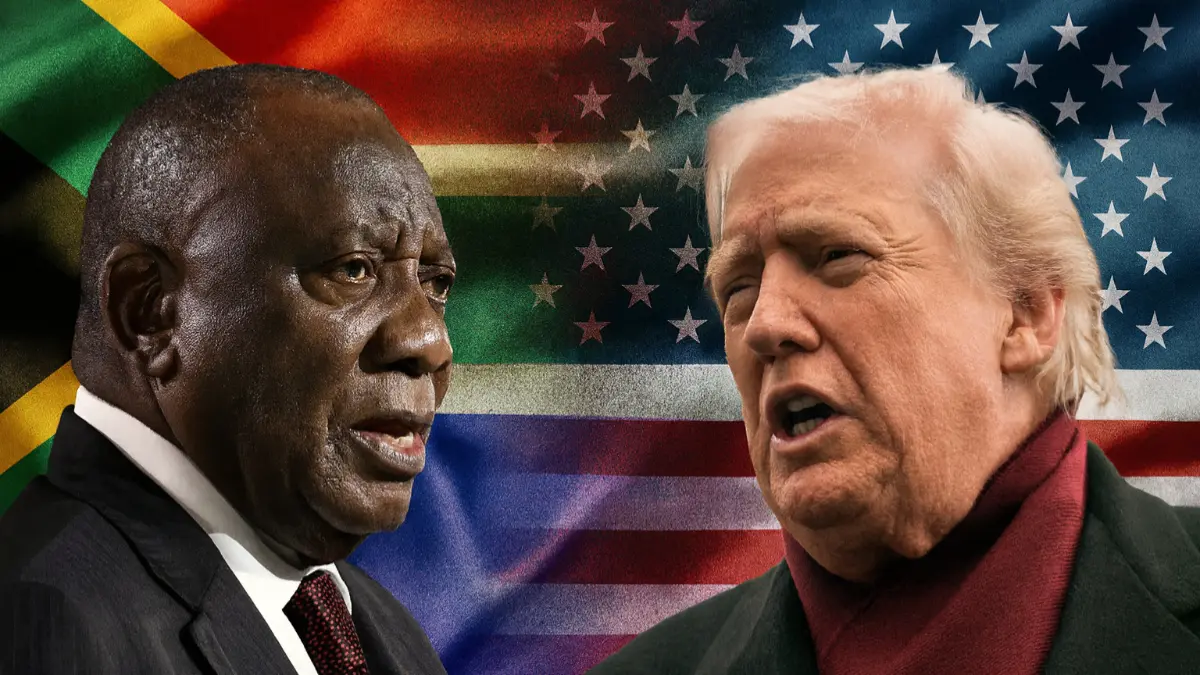
The United States officially assumed the presidency of the Group of 20 major economies on December 1, 2025, signaling a dramatic shift in priorities for the world’s premier forum for international economic cooperation. The transition comes amid unprecedented diplomatic friction with outgoing host South Africa, marking one of the most contentious presidential handovers in the G20’s history.
Under President Donald Trump’s leadership, the U.S. State Department outlined an ambitious agenda centered on three core themes: unleashing economic prosperity by limiting regulatory burdens, unlocking affordable and secure energy supply chains, and pioneering new technologies and innovations. The administration has pledged to return the G20 to what it describes as its fundamental mission of driving economic growth and prosperity to produce tangible results.
Build the future you deserve. Get started with our top-tier Online courses: ACCA, HESI A2, ATI TEAS 7, HESI EXIT, NCLEX-RN, NCLEX-PN, and Financial Literacy. Let Serrari Ed guide your path to success. Enroll today.
Understanding the G20’s Global Influence
The Group of 20 represents the world’s most powerful economic forum, bringing together leaders from 19 countries plus the European Union and the African Union. Together, these members account for approximately 85 percent of global GDP, 75 percent of international trade, and two-thirds of the world’s population. The forum was established in 1999 in response to the Asian financial crisis, but was elevated to a leaders’ summit in 2008 during the global financial crisis.
The G20 member nations include Argentina, Australia, Brazil, Canada, China, France, Germany, India, Indonesia, Italy, Japan, Republic of Korea, Mexico, Russia, Saudi Arabia, South Africa, Turkey, the United Kingdom, and the United States, along with the European Union and the African Union. This diverse composition ensures that both developed and emerging economies have a voice in shaping global economic policies and addressing pressing international challenges.
America’s Vision for Economic Revival
The Trump administration’s approach to the G20 presidency marks a significant departure from recent summits. The focus on reducing regulatory burdens reflects a broader economic philosophy that emphasizes deregulation as a catalyst for business growth and innovation. This strategy aligns with domestic policy priorities that have characterized Trump’s economic agenda since his return to the White House earlier in 2025.
The second pillar of the U.S. agenda centers on energy security and affordability. In a world still grappling with energy volatility and the complexities of transitioning to cleaner sources, the administration aims to ensure that major economies maintain access to reliable and affordable energy supplies. This objective will likely spark debates about the balance between fossil fuel development and renewable energy investments, particularly given the climate-focused approach adopted by South Africa’s recent presidency.
The third priority, pioneering new technologies and innovations, positions the United States as a champion of technological advancement within the G20 framework. This includes fostering environments conducive to artificial intelligence development, digital infrastructure, and emerging technologies that could reshape global commerce and productivity. The emphasis on innovation reflects America’s desire to maintain its competitive edge in a rapidly evolving technological landscape.
Miami Prepares for Historic Summit
The next G20 summit is scheduled for December 14-15, 2026, at Trump National Doral Miami, a resort owned by the Trump family business. The decision to host the summit at a Trump-owned property has reignited debates about potential conflicts of interest, though White House officials have stated that the venue will operate at-cost with no profit generated for the president or foreign governments.
This marks a return to a plan Trump initially proposed during his first term when he sought to host a G7 summit at the same property in 2020. That effort was abandoned following bipartisan criticism and ethical concerns, and the meeting was ultimately held virtually due to the COVID-19 pandemic. The Doral resort, purchased by Trump in 2012 for $150 million, features four golf courses, a massive spa, and extensive conference facilities that can accommodate the large delegations expected at a G20 summit.
Miami Mayor Francis Suarez, a Republican, has expressed enthusiasm about hosting the summit, stating it would deliver significant economic benefits to local small businesses and put the city on the global map as one of the world’s great cities. The summit will coincide with America’s 250th anniversary year, adding symbolic weight to the gathering.
The South Africa Controversy and Diplomatic Fallout
The transition from South Africa to the United States as G20 president has been marred by extraordinary diplomatic tensions. The friction stems from Trump’s repeated, widely discredited allegations that South Africa’s Black-majority government is perpetrating “genocide” against white Afrikaners and confiscating land from white citizens.
These claims led Washington to boycott the November 22-23 summit in Johannesburg, which marked the first time a G20 leaders’ summit was held on African soil. The boycott meant that no high-level U.S. officials attended the historic gathering, dealing a symbolic blow to multilateral cooperation and raising questions about America’s commitment to international forums.
South African President Cyril Ramaphosa forcefully rejected Trump’s allegations in a televised address to the nation, calling them “blatant misinformation” about his country. Ramaphosa emphasized that South Africa remains a “full, active and constructive” member of the G20 and affirmed Pretoria’s commitment to maintaining dignified relations with Washington as equal sovereign nations.
The diplomatic spat intensified when Trump announced that South Africa would not be invited to the 2026 Miami summit. This unprecedented exclusion of a G20 member has divided the forum, with German Chancellor Friedrich Merz reportedly planning to persuade Trump to reverse his decision. The controversy has raised fundamental questions about the G20’s future and whether personal grievances should influence participation in such critical global forums.
Human rights experts and historians have consistently debunked Trump’s claims about widespread violence against white South Africans. While South Africa has implemented land reform policies aimed at addressing historical inequities from the apartheid era, these measures operate within legal frameworks and do not constitute the systematic persecution Trump has alleged. Afrikaners, who number approximately 2.7 million in a population of 62 million, remain represented across all sectors of South African society, including business, sports, government, and academia.
One decision can change your entire career. Take that step with our Online courses in ACCA, HESI A2, ATI TEAS 7, HESI EXIT, NCLEX-RN, NCLEX-PN, and Financial Literacy. Join Serrari Ed and start building your brighter future today.
South Africa’s Historic G20 Presidency
Despite the American absence, South Africa’s G20 presidency achieved significant milestones. The Johannesburg summit produced a comprehensive 122-point leaders’ declaration that addressed climate change, economic recovery, debt sustainability, and global governance reform. The declaration emphasized the African philosophy of Ubuntu, which translates to “I am because we are,” highlighting the interconnectedness of nations and the importance of collective action.
The summit focused heavily on issues affecting developing nations, including climate adaptation financing, disaster risk reduction, and the need to scale climate finance from “billions to trillions.” South Africa used its presidency to champion reforms in global financial institutions, including the establishment of a 25th IMF board chair for Sub-Saharan Africa and the launch of a Cost of Capital Commission aimed at reducing the “African risk premium” that makes borrowing more expensive for developing countries.
President Ramaphosa’s opening remarks emphasized that South Africa sought to preserve the integrity of the G20 while ensuring that development priorities of the Global South found expression in the group’s agenda. The successful adoption of the declaration, despite U.S. objections and absence, represented a significant diplomatic victory for South Africa and demonstrated that the G20 could function without American participation.
The summit also launched Mission 300, a World Bank and African Development Bank initiative aimed at connecting 300 million people in Sub-Saharan Africa to electricity by 2030. This ambitious project reflects the summit’s focus on addressing fundamental development challenges facing the African continent and other developing regions.
Analyzing the Shift in G20 Priorities
The contrast between South Africa’s development-focused agenda and America’s growth-oriented approach highlights fundamental differences in how developed and developing nations view global economic priorities. South Africa’s presidency emphasized solidarity, equality, and sustainability, with particular attention to climate change impacts on vulnerable countries, debt relief for developing nations, and reforms to make global financial institutions more representative.
The U.S. agenda, by contrast, emphasizes regulatory reform, energy security, and technological innovation without the same explicit focus on climate action or development finance. This shift reflects broader ideological differences about the role of international cooperation and the balance between economic growth and sustainable development.
Analysts note that the U.S. approach represents a “back-to-basics” strategy that aims to streamline the summit and align the agenda with what the administration views as the G20’s founding goals. This philosophy suggests that future G20 meetings under American leadership may have smaller guest lists and more focused agendas compared to recent summits that have expanded to address a wide range of global challenges.
Global Reactions and Future Implications
The transition has prompted mixed reactions from G20 members and observers. Some countries welcome the focus on economic growth and innovation, viewing it as essential for addressing post-pandemic economic challenges and maintaining global competitiveness. Others express concern that reducing emphasis on climate action and development could undermine progress made in recent years.
Canadian Prime Minister Mark Carney, attending the Johannesburg summit, declared that “the world can move on without the United States,” arguing that the consensus reached at the G20 retained legitimacy even without American participation. French President Emmanuel Macron warned that the absence of approximately one-third of full leadership participation posed serious risks to the G20’s future relevance and effectiveness as a global governance forum.
The South Africa-U.S. tensions have exposed deeper fractures within the G20 about the forum’s purpose and priorities. While the G20 was originally established to coordinate responses to economic crises, it has evolved to address an expanding range of issues including climate change, health security, digital transformation, and sustainable development. The Trump administration’s desire to refocus the forum on its economic core may appeal to some members who view the G20’s expanding mandate as unwieldy, while others see this breadth as essential for addressing interconnected global challenges.
The Road Ahead for International Cooperation
As the United States assumes the G20 presidency, questions remain about how the administration will balance its stated priorities with the expectations of other member nations. The forum operates on consensus, meaning that Washington cannot unilaterally impose its agenda without buy-in from other members. This dynamic will likely lead to negotiations and compromises as the U.S. works to build support for its initiatives.
The controversy surrounding South Africa’s potential exclusion from the Miami summit could set problematic precedents for the G20. If personal or bilateral disputes begin determining which members can participate, it could undermine the forum’s credibility and effectiveness. Several members have signaled that they will push back against efforts to exclude South Africa, viewing such actions as contrary to the spirit of multilateral cooperation that the G20 represents.
The appointment of National Economic Council Director Kevin Hassett as the lead coordinator for the summit, with Treasury Secretary Scott Bessent organizing the agenda, signals that the administration is taking a highly structured approach to its presidency. These officials will play crucial roles in determining how the U.S. balances its domestic priorities with international expectations.
Looking forward, the success of America’s G20 presidency will likely be measured by its ability to achieve concrete results on its stated priorities while maintaining the forum’s legitimacy and inclusiveness. The administration faces the challenge of demonstrating that its focus on economic growth, regulatory reform, and innovation can deliver benefits for all G20 members, not just the United States.
Economic Growth in a Changing World
The emphasis on economic growth comes at a critical time for the global economy. Many countries continue to grapple with the economic aftershocks of the COVID-19 pandemic, including supply chain disruptions, labor market challenges, and fiscal pressures. Inflation concerns, though moderating in some regions, remain significant, and central banks worldwide are navigating complex decisions about monetary policy.
The U.S. focus on reducing regulatory burdens reflects a belief that excessive regulations stifle innovation and economic dynamism. Proponents argue that streamlining regulations can accelerate business formation, encourage investment, and create jobs. Critics counter that regulations serve important purposes in protecting consumers, workers, and the environment, and that wholesale deregulation could lead to new risks and instabilities.
Energy security remains a pressing concern for many G20 nations, particularly in light of geopolitical tensions and the ongoing transition toward cleaner energy sources. The U.S. emphasis on affordable and secure energy supply chains acknowledges these challenges while potentially signaling continued support for diverse energy sources, including fossil fuels, alongside renewables.
The focus on pioneering new technologies reflects recognition that innovation will drive future economic growth. Artificial intelligence, quantum computing, biotechnology, and other emerging fields offer tremendous potential for productivity gains and new industries. However, these technologies also raise questions about workforce displacement, privacy, cybersecurity, and the need for appropriate governance frameworks.
Conclusion: A Pivotal Moment for Global Governance
The United States’ assumption of the G20 presidency represents a pivotal moment for international economic cooperation. The administration’s agenda promises a sharp focus on economic growth, regulatory reform, and innovation, marking a clear departure from the development-focused priorities that characterized South Africa’s presidency.
The diplomatic tensions surrounding the transition, particularly the controversy over South Africa’s participation, have cast a shadow over what should be a routine handover of responsibilities. These tensions reflect deeper questions about the role of personal politics in multilateral forums and whether the G20 can maintain its effectiveness amid growing polarization among its members.
As the world watches, the success of America’s G20 presidency will depend on its ability to deliver tangible results on its economic agenda while preserving the forum’s spirit of cooperation and inclusiveness. The Miami summit in December 2026 will serve as a crucial test of whether the G20 can navigate these challenges and remain relevant in addressing the complex economic issues facing the global community.
Ultimately, the transition from South Africa to the United States highlights the diverse perspectives and priorities that exist within the G20. Whether these differences can be bridged to achieve meaningful progress on shared challenges will determine not just the success of America’s presidency, but the future trajectory of global economic governance itself.
Catch Up With Our Other Headlines
2nd December, 2025
Mastercard and AXIAN Launch Integrated Financial Ecosystem Across Five African Nations
India’s GDP Growth Hits 8.2% as Private Sector Takes the Wheel
ASX Downturn: Technology Outage and $5 Billion Takeover Collapse Fuel Market Uncertainty
Africa’s Top Economists Convene to Forge a New Path for Sustainable and Inclusive Growth
Superior Homes Launches ‘The Orchards’ as Northlands City’s Premier Residential Anchor
Kenya Ranked Africa’s Most Competitive Economy in IMD 2025 Index
Ready to take your career to the next level? Join our Online courses: ACCA, HESI A2, ATI TEAS 7 , HESI EXIT , NCLEX – RN and NCLEX – PN, Financial Literacy!🌟 Dive into a world of opportunities and empower yourself for success. Explore more at Serrari Ed and start your exciting journey today! ✨
Track GDP, Inflation and Central Bank rates for top African markets with Serrari’s comparator tool.
See today’s Treasury bonds and Money market funds movement across financial service providers in Kenya, using Serrari’s comparator tools.
photo source: Google
By: Montel Kamau
Serrari Financial Analyst
2nd December, 2025