











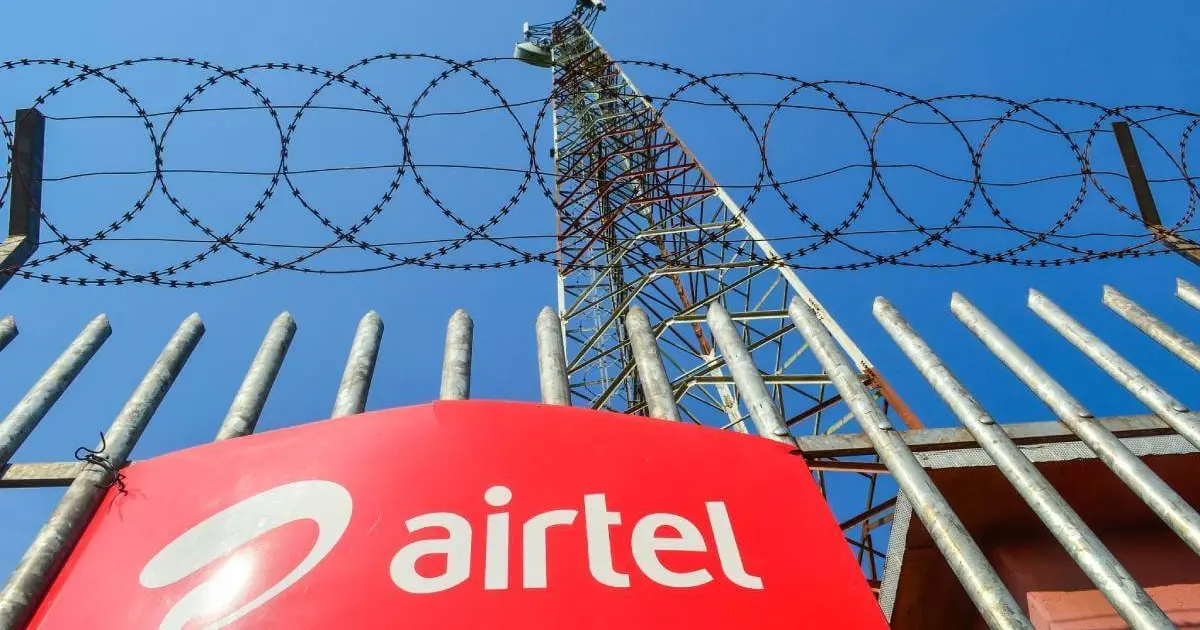
Kenya’s telecommunications sector is once again under intense political, regulatory, and economic scrutiny. This time, however, the spotlight is not solely on corporate ownership or market concentration—but on the rules of the game themselves. Appearing before the National Assembly, executives from Airtel Kenya delivered a clear message to lawmakers: changes in Safaricom’s ownership structure are largely irrelevant unless the regulatory framework governing competition is fundamentally reformed.
At the center of Airtel’s argument lies one deceptively technical concept with enormous real-world consequences—the Mobile Termination Rate (MTR). According to Airtel, this interconnection fee is one of the biggest structural barriers preventing fair competition in Kenya’s telecom market, disproportionately burdening smaller operators while entrenching the dominance of Safaricom.
The intervention comes at a politically sensitive moment. The National Treasury is seeking parliamentary approval to sell a 15 percent stake in Safaricom to Vodafone Kenya through a single-bidder transaction, a move that has drawn sharp criticism from professional bodies such as the Institute of Certified Public Accountants of Kenya (ICPAK). While Airtel focused on structural market distortions, ICPAK raised alarms about value for money, transparency, and price discovery in the proposed divestiture.
Together, these parallel debates reveal a deeper fault line in Kenya’s telecom sector: is the real problem who owns Safaricom—or how the market is regulated?
Build the future you deserve. Get started with our top-tier Online courses: ACCA, HESI A2, ATI TEAS 7, HESI EXIT, NCLEX-RN, NCLEX-PN, and Financial Literacy. Let Serrari Ed guide your path to success. Enroll today.
The Core of Airtel’s Case: Regulation Over Ownership
Airtel’s testimony before the National Assembly was notable not for what it opposed, but for what it dismissed. The company made it clear that ownership changes at Safaricom—even a reduction of government stake—will not materially alter competitive outcomes unless regulatory distortions are addressed.
In Airtel’s view, Kenya’s telecom market is already structurally imbalanced. Safaricom controls the overwhelming majority of voice traffic, mobile money transactions, and network effects. In such an environment, interconnection charges like the Mobile Termination Rate magnify existing asymmetries.
The MTR is the fee one operator pays another when a call from its network terminates on the other operator’s network. In theory, MTRs are meant to compensate for network costs. In practice, Airtel argues, they function as a transfer of value from smaller operators to the dominant player.
Understanding the Mobile Termination Rate Problem
To understand Airtel’s grievance, one must examine traffic patterns. In Kenya, most voice calls terminate on Safaricom’s network, simply because Safaricom has the largest subscriber base. This means that when an Airtel customer calls a Safaricom user, Airtel pays Safaricom an MTR fee. The reverse—Safaricom paying Airtel—happens far less frequently.
The result is a net outflow of interconnection fees from smaller operators to the market leader.
Airtel told lawmakers that lowering MTRs to near-zero levels would:
- Reduce operating costs for smaller operators
- Level the competitive playing field
- Enable cheaper voice tariffs for consumers
- Encourage innovation and new product development
In markets where competition has matured, regulators have increasingly pushed MTRs toward zero, recognizing that high termination rates distort pricing and entrench incumbents.
One decision can change your entire career. Take that step with our Online courses in ACCA, HESI A2, ATI TEAS 7, HESI EXIT, NCLEX-RN, NCLEX-PN, and Financial Literacy. Join Serrari Ed and start building your brighter future today.
Price Wars Under Constraint
Despite these constraints, Airtel has attempted to compete aggressively on price. Industry observers point out that Airtel already offers flat voice tariffs as low as Sh2 per minute to all networks, a bold move in a market long dominated by differential pricing.
Safaricom, for its part, has responded with discounted off-peak rates, bundled voice-data packages, and loyalty-based promotions, leveraging its scale and deep customer analytics to defend market share.
But Airtel argues that such pricing battles are ultimately unsustainable when regulatory costs structurally favor the dominant operator. Without MTR reform, price competition risks becoming a race to the bottom for smaller players while reinforcing Safaricom’s financial resilience.
Innovation Slowed by Structural Friction
Airtel’s concerns extend beyond voice services. The company disclosed plans to roll out Airtel Money overdraft services, positioning them as a direct alternative to Safaricom’s Fuliza.
However, Airtel warned lawmakers that regulatory complexity—particularly around mobile money oversight—could slow innovation. The company confirmed it is engaging the Central Bank of Kenya on mobile money regulations, signaling a broader push for reform across both telecom and financial services.
This underscores a critical point: in Kenya, telecom dominance and fintech dominance are intertwined. Regulatory barriers in one area reinforce concentration in the other.
ICPAK Enters the Debate: Questioning the Safaricom Stake Sale
Running parallel to Airtel’s intervention was a sharply worded critique from ICPAK regarding the National Treasury’s plan to sell its 15 percent stake in Safaricom through a direct, single-bidder process.
Appearing before the National Assembly Finance and Planning Committee, ICPAK representative Sandeep Maina questioned whether the proposed sale to Vodafone Kenya for approximately US$1.6 billion (Sh204.3 billion) truly represented the best possible outcome for taxpayers.
ICPAK’s core objection was process-related. The professional body argued that:
- The absence of an open tender limited price discovery
- Competitive bidding could have yielded a higher valuation
- The Sh34-per-share price may not reflect full strategic value
From ICPAK’s perspective, even if the transaction complies with existing law, it may fall short of best practice in public asset disposal.
Valuation vs Market Power: Two Different Questions
What makes the debate especially complex is that Airtel and ICPAK are, in effect, addressing two different problems.
ICPAK is asking:
Did the government get the best possible price for its Safaricom stake?
Airtel is asking:
Will this transaction make Kenya’s telecom market more competitive?
These questions intersect politically but diverge economically. A higher sale price does not automatically translate into better competition. Likewise, improved competition does not necessarily depend on ownership dilution.
Airtel’s testimony implicitly challenged the assumption that reducing state ownership in Safaricom would somehow unlock competition. Without regulatory reform, it argued, Safaricom’s market power remains intact regardless of who owns the shares.
The Structural Dominance Problem
Safaricom’s dominance is not accidental. It is the product of:
- Early-mover advantage
- Network effects
- Deep capital investment
- Integration of telecom and financial services
Today, Safaricom controls:
- The majority of mobile subscribers
- Most mobile money transactions
- A disproportionate share of voice traffic
In such markets, competition policy increasingly focuses on structural remedies, not just pricing behavior. MTR reform is one such lever—but not the only one.
Why MTR Reform Is Politically Sensitive
Lowering MTRs sounds simple in theory, but it carries political and economic consequences.
For Safaricom:
- Reduced interconnection revenue could impact margins
- Shareholder returns could be affected
- Network investment incentives may shift
For government:
- Safaricom is a major taxpayer and dividend payer
- Policy decisions affecting its profitability have fiscal implications
This creates an inherent tension: the state is both regulator and beneficiary, complicating efforts to impose reforms that might reduce Safaricom’s earnings.
Airtel’s appearance before Parliament brought this tension into sharp relief.
Consumer Impact: Cheaper Calls or Hidden Trade-offs?
Airtel framed MTR reform as a consumer issue, arguing that savings would be passed on through cheaper tariffs. In the short term, this is plausible. Lower interconnection costs reduce marginal pricing pressure.
However, critics caution that ultra-low MTRs can also:
- Reduce incentives for network expansion
- Encourage excessive call volumes without proportional investment
- Shift costs into other services
This makes regulatory calibration crucial. The goal is effective competition, not simply cheaper calls.
The Bigger Picture: Telecoms and Digital Finance Are Converging
Airtel’s disclosure that it is engaging the Central Bank on mobile money regulation highlights how telecom policy can no longer be siloed.
In Kenya:
- Voice services drive SIM adoption
- Mobile money drives daily usage
- Credit products drive stickiness
Regulatory decisions in one area ripple across the entire ecosystem. If mobile money regulations favor incumbents, telecom competition suffers. If telecom pricing rules entrench dominance, fintech innovation slows.
This convergence makes Parliament’s role more consequential than ever.
What Lawmakers Must Decide
Lawmakers now face several intertwined choices:
- Whether to approve the Safaricom stake sale as structured
- Whether to push for MTR reform
- Whether to revisit the regulatory architecture governing telecoms and mobile money
Each decision carries trade-offs between:
- Revenue and competition
- Stability and innovation
- Market dominance and consumer welfare
Airtel’s testimony has effectively reframed the debate: ownership is a distraction if regulation remains unchanged.
Conclusion: The Real Battle Is Structural
The hearings at the National Assembly revealed a telecom market at a crossroads. Airtel’s message was blunt but strategically coherent: Kenya cannot regulate its way to competition by adjusting shareholding alone.
Without addressing structural issues like Mobile Termination Rates, interconnection asymmetries, and cross-sector regulation, market dominance will persist—regardless of who owns Safaricom’s shares.
ICPAK’s concerns about valuation and transparency are legitimate and important. But Airtel’s intervention suggests that even a perfectly priced sale will not fix what is fundamentally a regulatory problem.
As Parliament weighs its options, the outcome will shape not just telecom competition, but the future of digital services, mobile finance, and consumer choice in Kenya’s most critical infrastructure sector.
photo source: Google
By: Elsie Njenga
20th January, 2026
Article, Financial and News Disclaimer
The Value of a Financial Advisor
While this article offers valuable insights, it is essential to recognize that personal finance can be highly complex and unique to each individual. A financial advisor provides professional expertise and personalized guidance to help you make well-informed decisions tailored to your specific circumstances and goals.
Beyond offering knowledge, a financial advisor serves as a trusted partner to help you stay disciplined, avoid common pitfalls, and remain focused on your long-term objectives. Their perspective and experience can complement your own efforts, enhancing your financial well-being and ensuring a more confident approach to managing your finances.
Disclaimer: This article is for informational purposes only and does not constitute financial advice. Readers are encouraged to consult a licensed financial advisor to obtain guidance specific to their financial situation.
Article and News Disclaimer
The information provided on www.serrarigroup.com is for general informational purposes only. While we strive to keep the information up to date and accurate, we make no representations or warranties of any kind, express or implied, about the completeness, accuracy, reliability, suitability, or availability with respect to the website or the information, products, services, or related graphics contained on the website for any purpose. Any reliance you place on such information is therefore strictly at your own risk.
www.serrarigroup.com is not responsible for any errors or omissions, or for the results obtained from the use of this information. All information on the website is provided on an as-is basis, with no guarantee of completeness, accuracy, timeliness, or of the results obtained from the use of this information, and without warranty of any kind, express or implied, including but not limited to warranties of performance, merchantability, and fitness for a particular purpose.
In no event will www.serrarigroup.com be liable to you or anyone else for any decision made or action taken in reliance on the information provided on the website or for any consequential, special, or similar damages, even if advised of the possibility of such damages.
The articles, news, and information presented on www.serrarigroup.com reflect the opinions of the respective authors and contributors and do not necessarily represent the views of the website or its management. Any views or opinions expressed are solely those of the individual authors and do not represent the website's views or opinions as a whole.
The content on www.serrarigroup.com may include links to external websites, which are provided for convenience and informational purposes only. We have no control over the nature, content, and availability of those sites. The inclusion of any links does not necessarily imply a recommendation or endorsement of the views expressed within them.
Every effort is made to keep the website up and running smoothly. However, www.serrarigroup.com takes no responsibility for, and will not be liable for, the website being temporarily unavailable due to technical issues beyond our control.
Please note that laws, regulations, and information can change rapidly, and we advise you to conduct further research and seek professional advice when necessary.
By using www.serrarigroup.com, you agree to this disclaimer and its terms. If you do not agree with this disclaimer, please do not use the website.
www.serrarigroup.com, reserves the right to update, modify, or remove any part of this disclaimer without prior notice. It is your responsibility to review this disclaimer periodically for changes.
Serrari Group 2025