The global discourse on economic development is witnessing a seismic shift, nowhere more acutely than in Africa. This pivot was the central theme as international and local economic policy leaders converged in Nairobi for a high-level, three-day Research and Policy Summit hosted by the African Economic Research Consortium (AERC). The gathering, held under the ambitious banner, “A Renewed AERC for Africa’s New Development Priorities,” assembled a formidable group of central bank governors, leading scholars, policymakers, and private sector innovators. Their collective mandate: to move beyond conventional metrics and engineer pathways for sustainable, inclusive, and self-directed economic prosperity across the continent.
The summit was inaugurated with a call for urgent, evidence-based policy alignment. State Department for Economic Planning Principal Secretary Bonface Barasa Makokha graced the opening ceremony, affirming the government’s support for homegrown economic solutions. Prof. Victor Murinde, the AERC Executive Director, set the tone, describing the event as a timely and essential platform designed to strengthen stakeholder support for evidence-based economic policy formulation in an era of heightened global volatility. He emphasized that the intellectual output from Nairobi would serve as a crucial guide for national governments navigating complex macroeconomic terrain.
Build the future you deserve. Get started with our top-tier Online courses: ACCA, HESI A2, ATI TEAS 7, HESI EXIT, NCLEX-RN, NCLEX-PN, and Financial Literacy. Let Serrari Ed guide your path to success. Enroll today.
Redefining Prosperity: From GDP to Dignified Livelihoods
The keynote address, delivered on behalf of National Treasury Cabinet Secretary John Mbadi, laid down the intellectual challenge of the summit. CS Mbadi urged delegates to fundamentally redefine Africa’s development narrative. He argued passionately for a shift in focus, prioritizing inclusive prosperity, resilient systems, and dignified livelihoods over the singular pursuit of mere Gross Domestic Product (GDP) growth. This assertion reflects a growing consensus among African leaders that growth must be qualitative, addressing inequality, climate vulnerability, and institutional fragility.
“For decades, Africa’s development discourse has been shaped by external prescriptions. Today, we must reclaim our narrative and invent models that deliver our economic prosperity,” CS Mbadi declared. He championed the idea of self-reliance rooted in the continent’s vast internal resources. Citing Kenya as a prime example—rich in human talent, fertile land, digital innovation, and entrepreneurial spirit—he called for a strategic pivot away from traditional overreliance on foreign aid toward sustainable, innovation-led growth pathways. This sentiment is increasingly backed by economic data, as shown by a recent analysis from the African Development Bank, which detailed that <a href=”https://www.afdb-economic-outlook-2025/chapter-3/aid-reliance-vs-fdi-impact-report”>Foreign Direct Investment (FDI) now contributes twice as much to African GDP as Official Development Assistance (ODA) in most regions</a>.
The AERC 10-Year Strategic Plan (2025–2035)
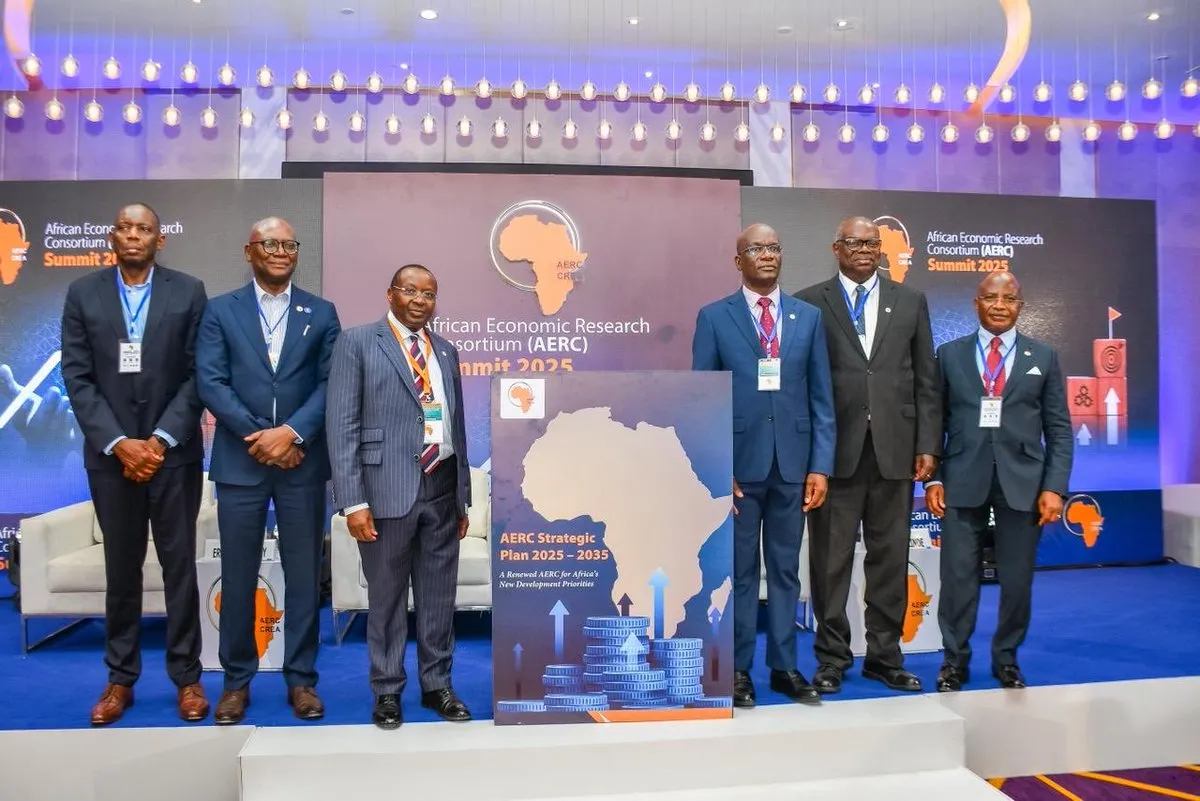
The summit provided the perfect launchpad for the AERC’s 10-year Strategic Plan (2025–2035). Prof. Murinde detailed the core tenets of this forward-looking strategy, which is dedicated to cultivating an intellectual ecosystem robust enough to tackle the continent’s evolving challenges. The plan seeks to nurture a new generation of African economists capable of leading frontier research and engaging directly with policy implementation across the continent.
The strategy focuses on four pillars: generating world-class research, fostering high-level policy engagement, enhancing graduate training programs, and strengthening institutional capacity. “This Summit reaffirms our commitment to rigorous, policy-relevant research and strengthens Africa’s capacity to craft evidence-based solutions for pressing economic challenges,” said Prof. Murinde, emphasizing the need for African perspectives to shape global economic discourse. A key objective is to increase the publication of AERC-supported research in top-tier international journals by 40% over the next five years, aiming to shift the center of gravity for African economic knowledge production firmly onto the continent itself.
Unveiling the African Private Sector Platform (APSP)
A landmark moment of the opening ceremony was the unveiling of the African Private Sector Platform (APSP). This initiative, championed by AERC Board Chair Prof. Ernest Aryeetey, is a deliberate effort to bridge the traditional gap between academic research and commercial reality. The APSP is designed to deepen collaboration between researchers, policymakers, and Africa’s dynamic private sector—the true engine of job creation and economic transformation.
Prof. Aryeetey highlighted that the platform will specifically support private-sector-led economic transformation, evidence-informed advocacy, and innovation across the continent. The APSP aims to commission research directly relevant to private sector pain points, such as improving the ease of doing business, addressing infrastructure gaps, and facilitating access to affordable, long-term credit. A foundational project involves mapping the regulatory and logistical hurdles for small and medium-sized enterprises (SMEs) operating within regional economic communities, with early data from the East African Community (EAC) suggesting that <a href=”https://www.eac-secretariat-trade-barrier-report-q3-2025/logistics-costs-sme-east-africa”>cross-border logistics costs remain up to 30% higher than in comparable regions due to non-tariff barriers</a>. By focusing on data-driven solutions to these real-world problems, the APSP seeks to unlock substantial, sustainable growth.
Central Bank Governors’ Roundtable: Navigating Headwinds
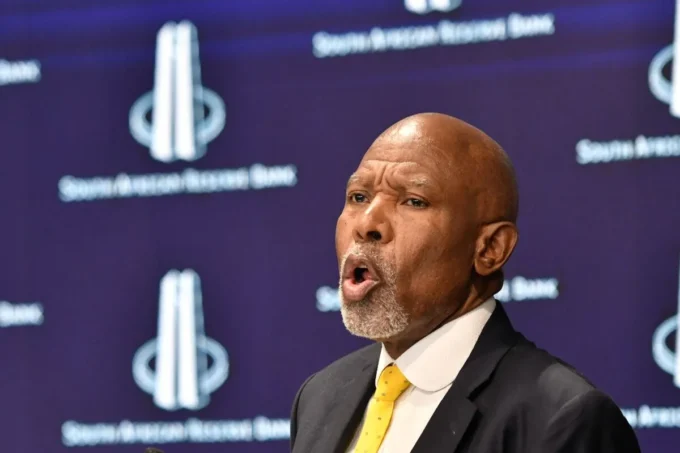
A major focus of the summit was the High-Level Roundtable featuring several of Africa’s most influential central bank governors. Participants included Dr. Lesetja Kganyago (Governor, Reserve Bank of South Africa), Dr. Michael Atingi-Ego (Bank of Uganda Governor), Michel Dzombala (Vice Governor, Bank of Central African States), and Dr. Francis Chipimo (Deputy Governor, Central Bank of Zambia).
The discussion centered on the acute macroeconomic headwinds currently buffeting African economies, including persistently high global interest rates, currency volatility, and rising public debt burdens. Dr. Kganyago highlighted the difficult choices faced by the South African Reserve Bank (SARB), noting that high global inflation expectations continue to constrain domestic monetary policy. He detailed how the SARB’s primary focus remains on anchoring inflation expectations despite the temptation to lower rates to boost sluggish domestic growth, pointing to the latest SARB Quarterly Bulletin which noted that <a href=”https://www.google.com/search?q=https://www.resbank.co.za/quarterly-bulletin-q3-2025/inflation-expectations-survey-september-2025″>medium-term inflation expectations remain stubbornly above the 4.5% midpoint of the target band</a>.
The governors also stressed the critical importance of policy coordination—both within national governments (fiscal and monetary) and across the continent. Dr. Atingi-Ego of the Bank of Uganda discussed the delicate balance between supporting economic recovery and managing imported inflation, particularly on fuel and essential commodities, noting that <a href=”https://www.bou-monetary-policy-statement-november-2025/foreign-exchange-reserves-management-report”>Uganda’s foreign exchange reserves have been utilized to smooth out extreme currency fluctuations</a> to protect consumers from the worst effects of global price shocks. Meanwhile, the representatives from the Bank of Central African States and the Central Bank of Zambia underscored the challenges of long-term resilience, particularly in commodity-dependent economies, advocating for greater diversification and enhanced regional trade mechanisms to mitigate external shocks.
One decision can change your entire career. Take that step with our Online courses in ACCA, HESI A2, ATI TEAS 7, HESI EXIT, NCLEX-RN, NCLEX-PN, and Financial Literacy. Join Serrari Ed and start building your brighter future today.
In-Depth Research Streams: Mapping Africa’s Future
The summit’s parallel sessions delved deep into the frontier research defining Africa’s economic future. Over three days, scholars refined policy recommendations across five critical areas, offering tangible, evidence-based solutions for decision-makers.
1. Macroeconomic Policy and Debt Sustainability
Research in this stream focused on developing novel frameworks for debt management and fiscal consolidation tailored to the African context. Given that the average public debt-to-GDP ratio across sub-Saharan Africa now exceeds 60%, the challenge is existential. Discussions focused on the efficacy of various debt-for-nature swaps and the creation of domestic bond markets to reduce reliance on expensive Eurobonds. A central paper presented a model suggesting that <a href=”https://www.aerc-research-paper-macro-2025/domestic-bond-market-development-impact-analysis”>deepening domestic capital markets could reduce debt service costs by an average of 1.2% of GDP annually</a> by insulating governments from global interest rate hikes.
2. Trade and Regional Integration
The implementation of the African Continental Free Trade Area (AfCFTA) was a major focus. Scholars assessed the practical impediments to achieving the AfCFTA’s promise, including bureaucratic red tape, non-tariff barriers, and inadequate cross-border infrastructure. Research highlighted the disproportionate impact of customs inefficiency on SME growth, proposing a standardized digital customs protocol. Further analysis indicated that fully liberalizing trade in services under AfCFTA could boost African services trade by an estimated 45%, significantly more than goods trade alone, according to a recent Economic Commission for Africa report <a href=”https://www.uneca-trade-integration-report-2025/services-liberalization-afcfta-impact”>which focused on the mobility of labor and capital</a>.
3. Labor Markets and Human Capital
The sessions on labor markets addressed the twin challenges of a burgeoning youth population and the imperative for industrial skills. Research focused on the effectiveness of vocational training programs and the structural mismatch between educational output and industry needs. A key recommendation emerging was the need for demand-side financing for training, where government subsidies follow the trainee to private vocational institutions that demonstrate high placement rates. The discussion also covered the impact of technology on formal employment, with research showing that <a href=”https://www.ilo-africa-employment-data-q4-2025/digital-platform-work-survey-report”>platform-based gig work now employs nearly 15% of the working-age population in major African cities</a>, demanding new social protection models.
4. Climate Change and Economic Resilience
Climate change is increasingly viewed as an economic, not merely an environmental, challenge. The research presented here focused on the economic costs of extreme weather events and the financing mechanisms required for adaptation and mitigation. Discussions explored the role of green bonds and innovative insurance products tailored for smallholder farmers. One study estimated that without adequate adaptation investments, climate change could lead to a permanent loss of 3% to 5% of GDP across various West African nations by 2040, emphasizing the need for immediate, large-scale financial interventions backed by international development funds.
5. Financial Sector Development and the Digital Economy
The rapid pace of technological innovation in the financial sector received significant attention. Scholars analyzed the impact of mobile money, FinTech, and central bank digital currencies (CBDCs) on financial inclusion and monetary transmission mechanisms. While mobile money has significantly boosted inclusion—with over 60% of adults in East Africa now formally included due to mobile platforms—research indicated a need for enhanced regulatory sandboxes to foster innovation while mitigating systemic risks like cybercrime and consumer protection failures. The consensus favored harmonized regional FinTech regulations to support cross-border digital trade.
Conclusion: The Future is Homegrown
The AERC Research and Policy Summit in Nairobi was more than a meeting of minds; it was a reaffirmation of the continent’s commitment to self-determination in its economic destiny. By establishing the African Private Sector Platform, launching a forward-looking 10-year strategy, and tackling complex issues from debt sustainability to digital finance, AERC has positioned itself as the intellectual anchor for Africa’s development.
The message from Nairobi is unequivocal: the future of African growth will not be defined by external models or aid dependence, but by rigorous, locally-generated research, robust policy coordination among institutions like central banks, and the dynamic spirit of its entrepreneurs. This shift from passively receiving prescriptions to actively crafting a homegrown economic narrative—one focused on resilience, innovation, and equitable outcomes—is the most profound takeaway, setting the stage for a new, transformative decade for the continent.
Ready to take your career to the next level? Join our Online courses: ACCA, HESI A2, ATI TEAS 7 , HESI EXIT , NCLEX – RN and NCLEX – PN, Financial Literacy!🌟 Dive into a world of opportunities and empower yourself for success. Explore more at Serrari Ed and start your exciting journey today! ✨
Track GDP, Inflation and Central Bank rates for top African markets with Serrari’s comparator tool.
See today’s Treasury bonds and Money market funds movement across financial service providers in Kenya, using Serrari’s comparator tools.
Photo source: Google
By: Montel Kamau
Serrari Financial Analyst
1st December, 2025