










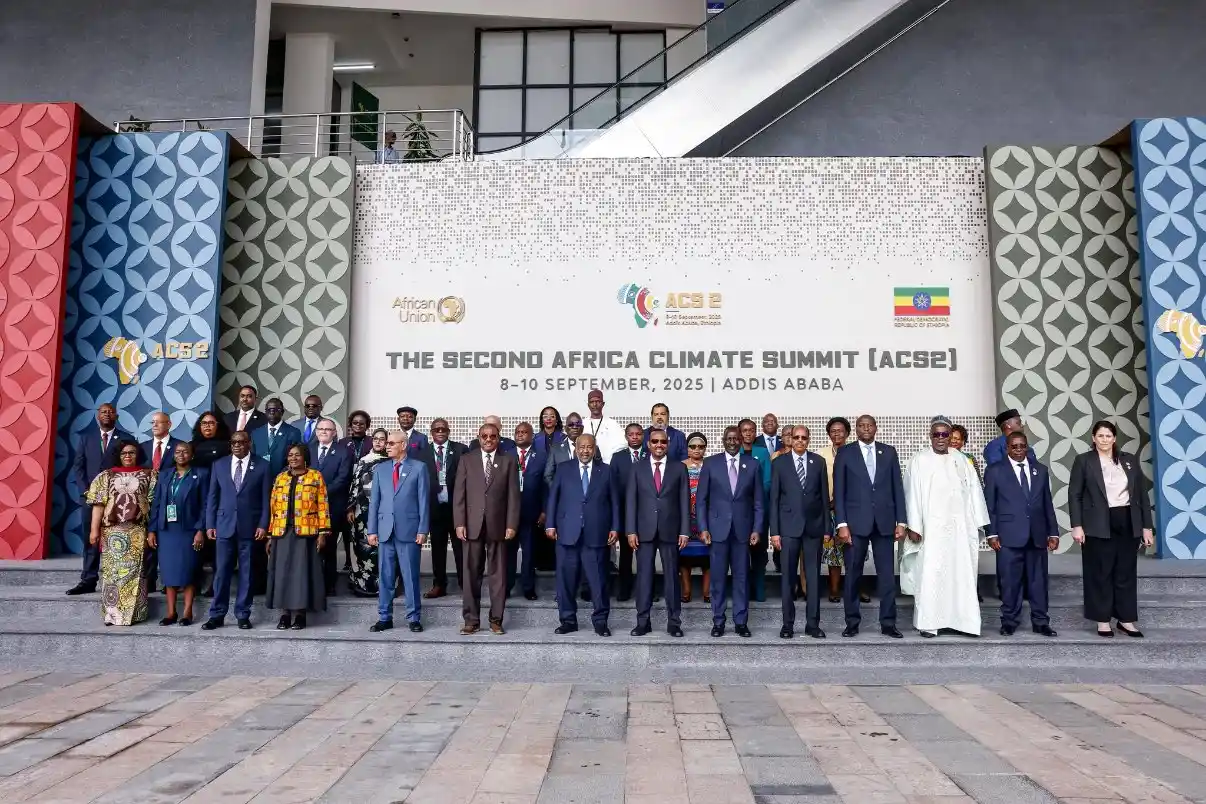
Africa’s most consequential green investment forum has opened its doors in Cape Town today, as policymakers, financiers, and project developers from across the continent converge on the Century City Conference Centre for the fourth edition of Africa’s Green Economy Summit (AGES). Running from February 24 to 27, 2026, and held under the theme “From Ambition to Action: Scaling Investment in Africa’s Green and Blue Solutions,” the summit arrives at a moment the continent can ill afford to squander. With Africa receiving only a fraction of the global climate finance it urgently needs, and with a curated pipeline of projects from more than 25 countries collectively seeking $3.09 billion in fresh capital, AGES 2026 is positioning itself not merely as a talking shop but as a deal-execution platform with measurable outcomes.
The four-day programme, hosted at a pivotal moment — immediately following President Cyril Ramaphosa’s State of the Nation Address and coinciding with South Africa’s National Budget Speech scheduled for February 25 — combines open pitch sessions, closed deal rooms, one-on-one matchmaking, and high-level roundtables designed to move capital from commitment to deployment.
Build the future you deserve. Get started with our top-tier Online courses: ACCA, HESI A2, ATI TEAS 7, HESI EXIT, NCLEX-RN, NCLEX-PN, and Financial Literacy. Let Serrari Ed guide your path to success. Enroll today.
A Summit Built for Dealmaking, Not Declarations
Now in its fourth year since launching in 2023, AGES has established itself as the continent’s premier pan-African dealmaking platform for green and blue economy investment. Over its three previous editions, the summit has showcased more than 90 initiatives with a combined value exceeding $8.7 billion. The 2026 edition will feature more than 40 projects across two dedicated pitch stages — one focused on early-stage small, medium and micro enterprises (SMMEs) and another targeting bankable expansion and infrastructure-scale opportunities.
Of the $3.09 billion sought, roughly $90 million targets SMME-stage pitches while nearly $3 billion is directed at expansion and infrastructure projects spanning energy, waste management and circular economy, e-mobility, sustainable agriculture, the blue economy, the built environment and nature-based solutions. Critically, the projects on display are beyond the concept stage: most have pilots, offtake letters of intent, or bankable feasibility studies, giving investors a technically validated, commercially tested entry point rather than aspirational blueprints.
Elodie Ashdown, Investment Project Lead at VUKA Group, said the summit’s format is deliberately engineered to move deals rather than merely announce intentions. “AGES presents curated deal flow where catalytic investors can unlock both impact and return,” she said, pointing to decentralised hydrogen manufacturing, circular industrial solutions and resilient food systems as standout opportunities where blended finance could accelerate the shift from pilot to regional industry.
The Projects: From Solar Grids to Seaweed Fuel
The breadth and technical specificity of AGES 2026’s project pipeline reflects the maturation of Africa’s green economy over the past three years. In the energy sector, specific projects include electrolyser balance-of-plant (BoP) manufacturing, battery assembly, decentralised solar mini-grids and artificial intelligence-driven energy management systems — investments that organisers say address decarbonisation, energy stability and domestic manufacturing simultaneously, while reducing the continent’s entrenched dependence on diesel generation.
Waste and circular economy pitches cover pyrolysis technology, advanced battery recycling, medical-waste sterilisation and composite manufacturing. These initiatives, according to organisers, turn waste into traded products and feedstock, reduce landfill pressure and generate measurable carbon outcomes — a combination that makes them particularly attractive to impact-focused and risk-adjusted investors operating under tightening ESG mandates.
In the sustainable agriculture and blue economy categories, proposals include vertical farming, organic-waste-to-bioproduct systems, traceable small-scale fisheries, seaweed-to-fuel pathways and insect-based feed platforms — sectors that align Africa’s existing natural asset base with growing global demand for sustainable food and fuel systems. The built environment and nature-based solutions tracks round out the pipeline, targeting the intersection of urban resilience, biodiversity and green infrastructure finance.
Climate Finance Academy: Building the Bridge Between Capital and Projects
One of the most significant structural additions to AGES 2026 is the dedicated Climate, Carbon and Nature Financing Academy, which opened proceedings on February 24 ahead of the main summit. The academy addresses a persistent structural problem in African climate finance: the disconnect between the availability of capital at the global level and the inability to deploy it at speed into project-ready opportunities on the continent.
Sessions at the academy are expected to examine how climate and nature risks can be properly priced into investment decisions, how projects can be structured to meet investor risk-return expectations, and how public and private capital can be blended to unlock financing at scale. Financial instruments under the spotlight include carbon markets, green and blue bonds, debt-for-nature swaps and performance-linked finance — tools that are gaining traction globally but remain underutilised in African markets.
Harsen Nyambe, Director for Sustainable Environment and Blue Economy at the African Union Commission, framed the case for urgency with clarity: Africa’s exposure to climate impacts makes investment in resilience a global economic concern, not merely a regional one. The continent’s natural capital — estimated to account for between 30% and 50% of total wealth in many African economies — means that climate shocks and ecosystem degradation can rapidly translate into economic losses, fiscal pressure and heightened investment risk across entire sovereign balance sheets.
Nature and biodiversity finance will be a dedicated focus throughout the summit, with sessions highlighting emerging markets for biodiversity credits and nature-based finance mechanisms. The global biodiversity finance gap could reach nearly $1 trillion annually by 2030, according to the United Nations Environment Programme, with current financing estimated at just $200 billion per year and private capital contributing less than $40 billion. For a continent that holds some of the world’s most valuable natural assets, this gap represents both a systemic risk and a frontier investment opportunity.
The Scale of Africa’s Climate Finance Deficit
The urgency driving AGES 2026 cannot be fully understood without grasping the scale of Africa’s climate finance shortfall. According to the Africa Climate Finance Tracking Report 2025, current climate finance flows meet only around 25% of Sub-Saharan Africa’s annual financing needs. The Climate Policy Initiative’s Landscape of Climate Finance in Africa is even more stark in its assessment: only 18% of annual mitigation needs and 20% of adaptation needs are being met, even as the continent crossed the $50 billion annual climate investment threshold for the first time in 2022.
The CPI estimates that Africa requires $277 billion annually to implement its Nationally Determined Contributions and meet its 2030 climate goals, yet annual flows stand at roughly $30 billion — a gap of nearly $250 billion every year. Meanwhile, the International Energy Agency has calculated that Africa will need around $133 billion annually in clean energy investment alone between 2026 and 2030, yet current renewable energy investment on the continent stands at a mere $9.4 billion per year — dwarfed by the continent’s annual fossil fuel investment of $29 billion and government fossil fuel subsidies averaging $37 billion per year.
These numbers expose a structural misallocation that AGES 2026 is specifically designed to address. The concentration problem is equally acute: the top ten African countries receive 46% of total climate finance, while the ten most vulnerable nations capture only 11% of the finance they need. Private sector participation is even more skewed, with ten countries receiving 76% of total private climate finance while the remaining nations divide just 16% among themselves.
One decision can change your entire career. Take that step with our Online courses in ACCA, HESI A2, ATI TEAS 7, HESI EXIT, NCLEX-RN, NCLEX-PN, and Financial Literacy. Join Serrari Ed and start building your brighter future today.
A Coalition of Institutional Weight
The credibility and institutional reach of AGES 2026 is underscored by the calibre of organisations convening in Cape Town. The summit is led by the African Union as host organisation — a signal of continental political commitment to the green transition — with Global Affairs Canada and the Global Green Growth Institute (GGGI) supporting the implementation of the AU–Green Recovery Action Plan (AU-GRAP). The summit will also convene the AU-GRAP Grand Finale Roundtable, marking the conclusion of Phase I of the programme and setting the direction for Phase II implementation.
Sanlam Investments returns as Title Sponsor for the third consecutive year, with Standard Bank serving as Gold Sponsor. Silver sponsors include the Financial Sector Deepening (FSD) Africa, Gautrain and the United Nations Office for Project Services (UNOPS). Government partners include the Development Bank of Southern Africa (DBSA), the Gauteng Department of Economic Development and South Africa’s Department of Trade, Industry and Competition. The African Development Bank Group is also participating, with representatives from its Climate Change and Green Growth Department engaging in investor roundtables, carbon and nature financing discussions, and YouthADAPT technical workshops.
The African Development Bank’s participation specifically spotlights the bank’s Green Investment Program for Africa, which aims to scale investable platforms and provide practical pathways for turning climate ambition into investment-ready pipelines. The YouthADAPT component, which strengthens youth-led climate enterprises through targeted technical assistance, reflects a growing recognition that Africa’s green transition must also be a generational one.
Sponsor Perspectives: Partnerships, Jobs and the Western Cape Advantage
Sanlam Investments Chief Executive Officer Carl Roothman set the tone ahead of the summit, describing the continent as leading a new era of sustainable growth defined by innovation, inclusion and long-term value creation. Meaningful change, he said, requires collective action through strategic partnerships — a philosophy that Sanlam’s three-year consecutive title sponsorship of AGES has put into institutional practice.
Amanda Ganca, Head of Investment at Wesgro — the Western Cape’s trade, investment and tourism promotion agency — offered a grounded assessment of what the summit is already producing on the ground: “African ecosystems are maturing and investor interest is translating into tangible manufacturing prospects and skilled jobs across the Western Cape and beyond.” For Cape Town and the broader Western Cape region, AGES represents a convergence of strategic interest and geographic advantage, as South Africa’s energy transition and industrial reform agenda creates an accelerating pipeline of investable green projects.
Wrenelle Stander, CEO of Wesgro, elaborated on the agency’s role in that pipeline: “At Wesgro, our strategy is to attract and facilitate investment into export-priority sectors such as green energy and green manufacturing. Through this focus, we are driving export-led growth and positioning the Western Cape as a globally competitive hub for innovation and green economy leadership.” The Atlantis Special Economic Zone, already recognised as a hub for green manufacturing in the Western Cape, exemplifies the kind of enabling infrastructure that makes the region attractive to international capital.
Alderman James Vos, the City of Cape Town’s Mayoral Committee Member for Economic Growth, captured the timing of the summit with particular force: “Africa’s Green Economy Summit coincides with a critical moment on our continent as we look to meet the fast-growing energy demands of our young population while simultaneously addressing the challenges brought about by climate change.”
The Investor Stack: Who Is Being Asked to Deploy Capital
The AGES 2026 investor engagement model is deliberately tiered to match the full spectrum of capital types to the appropriate projects. Multilateral organisations and climate funds are targeted for concessional finance and guarantees on large infrastructure and nature-capital projects — the kind of first-loss capital that de-risks deals for commercial players. Commercial banks and asset managers are invited to provide project finance and structured lending for revenue-backed ventures, while impact venture capital and growth funds are positioned to provide equity to scale SMME platforms and technology businesses.
Specialist investors and sector partners bring technical expertise that reduces execution risk, while credit enhancement providers and local-currency intermediaries serve the critical function of bridging foreign capital with on-the-ground lending — a perennial bottleneck in African climate finance where currency risk and local market access remain significant barriers. The Global Innovation Lab for Climate Finance will convene its Africa Regional Selection Meeting at AGES for the second consecutive year, bringing together Lab members to review shortlisted innovations and select four to advance to the Global Selection Meeting in London — a direct pipeline from Cape Town’s dealmaking floor to global institutional capital.
The format is deliberately outcome-oriented: project founders deliver five-minute pitches followed by five-minute Q&A sessions, with curated matchmaking and targeted one-on-one meetings structured to convert introductions into term sheets. The deal rooms operate as confidential, high-value negotiation environments where investors, developers and financiers can progress beyond the public forum into the detailed due diligence conversations that precede actual capital deployment.
The Broader Context: Africa’s Green Transition at a Crossroads
The policy backdrop to AGES 2026 has rarely been more consequential. South Africa’s SONA and the coincident National Budget Speech on February 25 have placed energy security, water infrastructure and logistics reform at the centre of the government’s economic agenda — creating direct policy alignment with the investment themes being pitched at the Century City Conference Centre. The Coega Development Corporation, DBSA, the Gauteng Economic Development Department and South Africa’s Department of Trade, Industry and Competition have all formalised their partnership with the summit, signalling a rare convergence of fiscal, industrial and climate policy in a single institutional frame.
Shameela Soobramoney, CEO of the National Business Initiative, offered perhaps the summit’s clearest philosophical foundation: “Environmental sustainability and economic progress are not mutually exclusive; they are interdependent.” That interdependence is increasingly legible in the data. Africa already holds some of the world’s most valuable green assets — vast solar potential, the Rift Valley’s geothermal reserves, the Congo Basin’s carbon sinks, extensive coastlines supporting blue economy development — yet the continent captures only around 16% of the global carbon credit market, a share wildly disproportionate to its natural endowment.
The World Economic Forum has calculated that Africa has a climate finance need upward of $2.5 trillion through 2030. Closing even a fraction of that gap through platforms like AGES — where blended capital, technical validation and structured matchmaking converge — is the challenge this week’s summit has set itself. Whether $3.09 billion changes hands by February 27 is less important than whether Cape Town in 2026 becomes the moment Africa’s green economy shifted from a compelling narrative to a functioning investment market.
Ready to take your career to the next level? Join our Online courses: ACCA, HESI A2, ATI TEAS 7 , HESI EXIT , NCLEX – RN and NCLEX – PN, Financial Literacy!🌟 Dive into a world of opportunities and empower yourself for success. Explore more at Serrari Ed and start your exciting journey today! ✨
Track GDP, Inflation and Central Bank rates for top African markets with Serrari’s comparator tool.
See today’s Treasury bonds and Money market funds movement across financial service providers in Kenya, using Serrari’s comparator tools.
photo source: Google
By: Montel Kamau
Serrari Financial Analyst
24th February, 2026
Article, Financial and News Disclaimer
The Value of a Financial Advisor
While this article offers valuable insights, it is essential to recognize that personal finance can be highly complex and unique to each individual. A financial advisor provides professional expertise and personalized guidance to help you make well-informed decisions tailored to your specific circumstances and goals.
Beyond offering knowledge, a financial advisor serves as a trusted partner to help you stay disciplined, avoid common pitfalls, and remain focused on your long-term objectives. Their perspective and experience can complement your own efforts, enhancing your financial well-being and ensuring a more confident approach to managing your finances.
Disclaimer: This article is for informational purposes only and does not constitute financial advice. Readers are encouraged to consult a licensed financial advisor to obtain guidance specific to their financial situation.
Article and News Disclaimer
The information provided on www.serrarigroup.com is for general informational purposes only. While we strive to keep the information up to date and accurate, we make no representations or warranties of any kind, express or implied, about the completeness, accuracy, reliability, suitability, or availability with respect to the website or the information, products, services, or related graphics contained on the website for any purpose. Any reliance you place on such information is therefore strictly at your own risk.
www.serrarigroup.com is not responsible for any errors or omissions, or for the results obtained from the use of this information. All information on the website is provided on an as-is basis, with no guarantee of completeness, accuracy, timeliness, or of the results obtained from the use of this information, and without warranty of any kind, express or implied, including but not limited to warranties of performance, merchantability, and fitness for a particular purpose.
In no event will www.serrarigroup.com be liable to you or anyone else for any decision made or action taken in reliance on the information provided on the website or for any consequential, special, or similar damages, even if advised of the possibility of such damages.
The articles, news, and information presented on www.serrarigroup.com reflect the opinions of the respective authors and contributors and do not necessarily represent the views of the website or its management. Any views or opinions expressed are solely those of the individual authors and do not represent the website's views or opinions as a whole.
The content on www.serrarigroup.com may include links to external websites, which are provided for convenience and informational purposes only. We have no control over the nature, content, and availability of those sites. The inclusion of any links does not necessarily imply a recommendation or endorsement of the views expressed within them.
Every effort is made to keep the website up and running smoothly. However, www.serrarigroup.com takes no responsibility for, and will not be liable for, the website being temporarily unavailable due to technical issues beyond our control.
Please note that laws, regulations, and information can change rapidly, and we advise you to conduct further research and seek professional advice when necessary.
By using www.serrarigroup.com, you agree to this disclaimer and its terms. If you do not agree with this disclaimer, please do not use the website.
www.serrarigroup.com, reserves the right to update, modify, or remove any part of this disclaimer without prior notice. It is your responsibility to review this disclaimer periodically for changes.
Serrari Group 2025