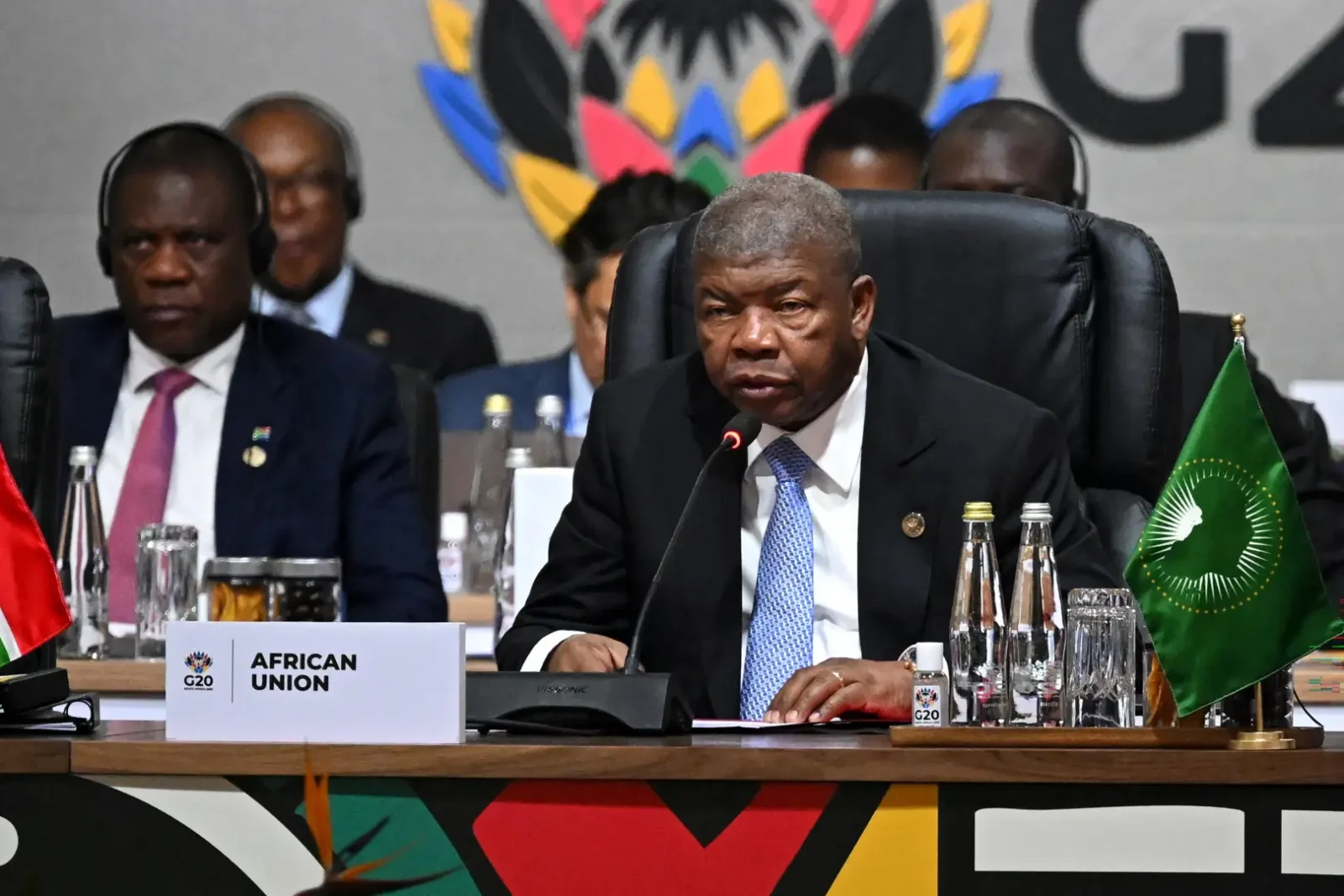
Angolan President João Lourenço delivered a forceful call for sweeping reforms to the global financial system during the seventh African Union-European Union summit in Luanda, warning that Africa’s development ambitions are being “stifled by unsustainable debt.” As current chair of the African Union, Lourenço’s remarks underscore the escalating urgency of a debt crisis that now threatens more than 20 African nations with financial distress.
The summit, marking 25 years of AU-EU partnership, assembled heads of state and government from both continents in Angola’s capital to discuss critical economic, security, and development challenges. Lourenço’s address brought into sharp relief a fundamental tension: while African countries face mounting development needs—from climate resilience to infrastructure investment—they simultaneously grapple with debt service obligations that consume an average of 27.5% of government revenues, up from 19% in 2019.
“We are in dire need of a new vision for the financial relationship between Africa and international lending institutions so that we can invest in development without being stifled by unsustainable debt,” Lourenço told the assembled leaders on the first day of the summit. His comments reflect growing frustration across the continent with existing debt relief mechanisms that have proven inadequate in addressing the scale and complexity of Africa’s financial challenges.
Build the future you deserve. Get started with our top-tier Online courses: ACCA, HESI A2, ATI TEAS 7, HESI EXIT, NCLEX-RN, NCLEX-PN, and Financial Literacy. Let Serrari Ed guide your path to success. Enroll today.
A Broken System: The Common Framework’s Failures
Lourenço’s critique centers on the G20 Common Framework for Debt Treatments, an initiative launched during the COVID-19 pandemic to coordinate debt restructuring for low-income countries. Despite its noble intentions, the framework has become synonymous with bureaucratic delays and insufficient debt relief. The cases of Ghana and Zambia—two of only four countries to apply for treatment under the mechanism—illustrate these shortcomings vividly.
Zambia’s debt restructuring journey exemplifies the framework’s inefficiencies. After defaulting in November 2020, Zambia requested debt treatment in February 2021. The country endured more than three years of protracted negotiations before finally securing a restructuring agreement in March 2024. During this period, the Zambian economy remained in standstill, unable to access international capital markets or implement comprehensive development programs.
Ghana’s experience, while slightly faster, revealed similar structural problems. The West African nation applied for Common Framework treatment in January 2023 and reached a draft agreement to restructure $5.4 billion in bilateral debt by January 2024. However, the process still required navigating complex negotiations with multiple creditor groups, including official bilateral creditors, bondholders, and commercial lenders—each with different interests and negotiating positions.
“On behalf of all of Africa, I reiterate the urgency of working towards comprehensive reform of the global financial system, including fairer debt restructuring mechanisms,” Lourenço emphasized during his address. His words echo sentiments expressed at the African Union Conference on Debt in Lomé, Togo, held in May 2025, where African leaders collectively called for systematic changes to how sovereign debt is managed and restructured.
The Human Cost of Debt
The implications of Africa’s debt burden extend far beyond balance sheets and fiscal statistics. United Nations Secretary-General António Guterres, who also addressed the Luanda summit, characterized the situation as fundamentally unjust. “We must reform it for everyone’s benefit and this means ending the crushing debt cycle, giving developing countries, many of them in Africa, greater participation and influence in the global financial institutions,” Guterres stated.
The human development costs are staggering. According to recent UN calculations, more than 40 percent of African governments now spend more on servicing external debt than on healthcare. This misallocation of resources has direct consequences for millions of Africans who lack access to basic medical services, quality education, and essential infrastructure.
Africa’s borrowing costs compound these challenges. In 2023, bond yields averaged 9.8 percent for African sovereigns, compared to just 3.2 percent for Euro Area countries in September 2025. This disparity means African nations pay approximately 500 percent more in interest when borrowing from global capital markets compared to what they would pay if G20 leaders implemented financial reforms and provided access to more concessional financing from multilateral development banks.
Structural Flaws in Current Mechanisms
The Lomé Declaration on Debt, adopted by African Union members in May 2025, provides a comprehensive critique of the Common Framework’s shortcomings. The declaration identifies several critical flaws that render the mechanism inadequate for addressing Africa’s debt crisis:
First, the framework lacks a time-bound aspect, allowing restructuring processes to drag on for years. As noted earlier, Zambia’s case took over three years, during which the country’s economy suffered significant damage. The declaration calls for introducing specific timelines and automatic debt service suspensions similar to those provided under the Debt Service Suspension Initiative during the COVID-19 pandemic.
Second, the framework fails to establish a universally accepted methodology for comparability of treatment—a principle requiring that all creditor classes receive comparable terms. This ambiguity has led to prolonged disputes between official bilateral creditors and private bondholders, with each group arguing for different debt relief calculations. In Ethiopia’s ongoing restructuring, disagreements over comparability have prevented the country from finalizing agreements with private creditors even after reaching understandings with official lenders.
Third, private creditor participation remains voluntary and unenforceable. This represents a fundamental weakness given that approximately 43 percent of Africa’s external debt is now owed to private creditors, including bondholders and commercial banks. Without mandatory participation requirements, these creditors can hold out for better terms while official creditors provide relief, creating inequitable burden-sharing.
Fourth, the framework’s eligibility criteria exclude many countries that desperately need debt relief. Currently, only low-income countries eligible for the expired Debt Service Suspension Initiative can access the Common Framework. This leaves middle-income countries experiencing severe debt distress, such as Senegal with its recently revealed 119 percent debt-to-GDP ratio, without access to coordinated restructuring mechanisms.
The Creditor Landscape Has Changed
Africa’s debt composition has undergone dramatic transformation over the past two decades, rendering traditional debt relief approaches increasingly obsolete. In 1996, Paris Club members—a group of wealthy creditor nations that coordinate debt restructuring—held 39 percent of low-income countries’ debt. Today, that figure has plummeted to just 11 percent.
China has emerged as Africa’s largest bilateral creditor, with its public lenders holding nearly $62 billion of the continent’s external debt in 2023 and private lenders holding an additional $23 billion. This shift has complicated debt restructuring negotiations, as China pursues bilateral negotiations that differ from the Paris Club’s collective approach, sometimes leading to delays in reaching consensus among official creditors.
Meanwhile, private creditors have dramatically increased their exposure to African debt. Between 2008 and 2023, bondholders’ share of Africa’s debt stocks surged from 12 percent ($25 billion) to 25 percent ($186 billion). This migration toward commercial borrowing reflected African countries’ desire to access larger volumes of financing for infrastructure and development projects, but it came at a steep cost: higher interest rates and shorter maturities compared to concessional loans from multilateral development banks.
One decision can change your entire career. Take that step with our Online courses in ACCA, HESI A2, ATI TEAS 7, HESI EXIT, NCLEX-RN, NCLEX-PN, and Financial Literacy. Join Serrari Ed and start building your brighter future today.
Recent Cases Highlight Ongoing Challenges
Even as the AU-EU summit convened in Luanda, several African nations confronted acute debt challenges that exemplify the systemic problems Lourenço identified. Senegal’s situation has become particularly concerning after the government discovered approximately $7 billion in previously undisclosed debt accumulated by the previous administration. This revelation pushed the country’s debt-to-GDP ratio to 119 percent, well above the 74 percent previously reported.
The discovery led the International Monetary Fund to freeze Senegal’s $1.8 billion credit facility, leaving the country without access to IMF funds or international bond markets. Senegal’s sovereign bonds have plunged, with the country’s risk premium widening to over 1,000 basis points—a level widely considered to indicate debt distress. Prime Minister Ousmane Sonko has firmly rejected calls for debt restructuring, creating a standoff with international creditors and the IMF.
Mozambique faces similar pressures. In October 2025, the southern African nation authorized consulting firm Alvarez & Marsal to assist with its public debt restructuring plan. The country’s sovereign risk premium has fluctuated around distressed levels throughout 2025, reflecting investor concerns about its ability to service debt obligations.
These cases underscore a broader pattern identified at the African Union Conference on Debt: twenty-three African countries are currently experiencing financial distress, with three having either defaulted or sought formal debt restructuring. The continent’s total external debt service is projected to reach nearly $89 billion in 2025, diverting resources away from critical investments in education, health, and infrastructure.
Calls for Systemic Reform Intensify
Against this backdrop, African leaders and international experts have coalesced around specific reform proposals aimed at making debt restructuring faster, fairer, and more development-oriented. The African Union’s Lomé Declaration advocates for establishing a supranational legal mechanism with enforcement powers, moving beyond the current voluntary framework that allows creditors to opt out or delay negotiations.
South Africa, which held the G20 presidency in 2025, made debt sustainability a central priority and commissioned an expert panel to examine Africa’s debt challenges. The panel’s recommendations, presented at the G20 summit in Johannesburg in November 2025, included proposals for a two-year automatic debt service standstill when countries enter restructuring processes, preventing interest from accumulating during negotiations and incentivizing all creditors to participate.
Research from the Boston University Global Development Policy Center has identified five core reforms needed to make the Common Framework fit for purpose. These include: accelerating restructuring timelines through coordinated group-based approaches during systemic crises; enhancing debt relief envelopes through more realistic debt sustainability analyses that incorporate climate vulnerability and investment needs; ensuring fair creditor participation through stronger enforcement mechanisms; linking debt relief to development priorities such as climate goals and Sustainable Development Goals; and expanding eligibility to include middle-income countries experiencing debt distress.
The United Nations has also intensified its push for comprehensive reform of the global financial architecture. Secretary-General Guterres has repeatedly described the current system as “outdated, dysfunctional and unjust”, arguing that institutions created in 1945 fail to represent today’s economic realities or adequately serve developing countries’ needs. At the G20 summit in Johannesburg, Guterres emphasized that Africa must have fair representation in every forum where decisions are made, from the boards of international financial institutions to the UN Security Council.
Proposed Solutions and Alternative Approaches
African stakeholders have advanced several innovative proposals to complement or replace existing debt relief mechanisms. One significant initiative is the proposed Pan-African Credit Rating Agency, which would offer alternative debt assessments tailored to African contexts. Currently, international credit rating agencies often assign lower ratings to African countries than their fundamentals might justify, leading to higher borrowing costs that reflect perceived rather than actual risk.
The Lomé Declaration also calls for accommodating debt-for-nature and debt-for-development swaps, where debt obligations are canceled or reduced in exchange for commitments to environmental conservation or specific development investments. Such mechanisms could help African countries simultaneously address debt burdens and climate adaptation needs, which the continent requires approximately $143 billion annually to meet under the Paris Agreement—yet received only $44 billion in climate finance in 2022.
Enhanced legislative oversight of public borrowing represents another critical reform area. Senegal’s experience with hidden debt highlights how weak governance and oversight can exacerbate debt crises. President Bassirou Diomaye Faye has called for new regulations on government bond issuance and more efficient organizational frameworks to manage and oversee public debt.
Several experts have also proposed introducing state-contingent debt instruments that automatically adjust payment obligations based on economic performance or external shocks. During Zambia’s restructuring negotiations, discussions explicitly considered making debt relief amounts contingent on the country’s future ability to service debt. Such instruments could provide automatic stabilizers during economic downturns while ensuring creditors participate in recovery when conditions improve.
Progress Amid Challenges
Despite the Common Framework’s well-documented shortcomings, some progress has emerged from the restructuring processes. According to the G20’s June 2025 documentation, each successive case has seen shorter timelines between the launch of debt treatment discussions and the conclusion of memoranda of understanding. Ethiopia completed this process within one year, compared to the multi-year delays experienced by earlier applicants.
The G20 has also taken steps to enhance transparency and clarity around the Common Framework process. In July 2025, members endorsed a comprehensive note outlining the steps of debt restructuring under the framework, providing more detailed guidance to debtor countries and other stakeholders. Fact sheets on individual Common Framework cases have been published on G20 and Paris Club websites to improve information sharing.
Furthermore, Africa’s overall debt profile has shown some positive developments. For the first time in a decade, as of mid-2025, no African country had a sovereign risk premium in distress territory above 1,000 basis points—though this situation has since deteriorated with Senegal’s recent challenges. Zambia and Ghana’s successful completion of debt restructurings with both official creditors and bondholders demonstrated that comprehensive debt relief remains achievable, albeit through prolonged and difficult negotiations.
The Road Ahead
The AU-EU summit in Luanda concluded with commitments to accelerate implementation of the African Continental Free Trade Area and calls for reforming international debt infrastructure to reduce burdens on African countries. European Council President António Costa emphasized that “there is no alternative to the multilateral and rules-based international order,” while acknowledging the need for that order to work more effectively for all parties.
However, recent assessments suggest that the G20 has failed to deliver meaningful reforms despite South Africa’s efforts during its 2025 presidency. Civil society organizations and debt justice advocates have increasingly argued that the center of global debt governance should shift to the United Nations, where developing countries have stronger representation and voice compared to the G20’s creditor-dominated structure.
The Fourth United Nations Financing for Development Conference, scheduled for 2025 in Spain, represents a crucial opportunity to advance comprehensive reforms to the international financial architecture. Preparatory meetings have already brought together finance and foreign ministers from over 100 countries to discuss radical reforms aimed at channeling trillions of dollars toward sustainable development.
As President Lourenço’s intervention at the Luanda summit makes clear, African leaders are no longer willing to accept incremental adjustments to a system they view as fundamentally broken. The continent faces a choice between servicing unsustainable debt and investing in human development, infrastructure, and climate resilience. With Africa’s total debt stocks exceeding $1.8 trillion and growing, the consequences of continued inaction extend beyond economics to encompass security, stability, and the achievement of global development goals.
The urgency of reform is underscored by the scale of Africa’s development needs and the narrowing window to achieve the Sustainable Development Goals by 2030. Without fundamental changes to how sovereign debt is managed and restructured, millions of Africans will continue to bear the costs of a global financial system that, as UN Secretary-General Guterres noted, has failed in its mission to provide an adequate safety net for developing countries.
As the eighth AU-EU summit is scheduled to take place in Brussels, the question remains whether international partners will move beyond declarations of solidarity to implement the concrete reforms African leaders have articulated with increasing clarity and urgency. The test of that commitment will be measured not in statements but in tangible actions: faster debt restructuring processes, fairer burden-sharing among creditors, adequate debt relief to restore fiscal space, and African representation in the governance of institutions that shape their economic futures.
For Angola, hosting this milestone summit under President Lourenço’s AU chairmanship represented an opportunity to amplify Africa’s voice on debt reform at a moment when multiple crises—from climate change to food insecurity to infrastructure gaps—demand substantial public investment. Whether that voice will translate into meaningful change in the global financial architecture remains the defining question for Africa’s development trajectory in the years ahead.
Catch up with our latest Headlines:
- African Development Bank Commits $15 Million to Adenia Fund Targeting SME Growth Across Africa
- Amazon’s $15 Billion Indiana Investment Signals Major AI Infrastructure Expansion in the Midwest
- NCBA Group Launches Offshore Investment Platform to Connect Kenyan Investors with Global Markets
- Ethiopia Emerges as Sub-Saharan Africa’s Fastest Growing Economy with 7.2% IMF Growth Projection for 2025
- US September Jobs Report Reveals Mixed Labor Market as Unemployment Reaches Four-Year High Despite Job Gains
- Kenya Secures Duty-Free Agricultural Export Access to Malaysia in Strategic Partnership Agreement
Ready to take your career to the next level? Join our Online courses: ACCA, HESI A2, ATI TEAS 7 , HESI EXIT , NCLEX – RN and NCLEX – PN, Financial Literacy!🌟 Dive into a world of opportunities and empower yourself for success. Explore more at Serrari Ed and start your exciting journey today! ✨
Track GDP, Inflation and Central Bank rates for top African markets with Serrari’s comparator tool.
See today’s Treasury bonds and Money market funds movement across financial service providers in Kenya, using Serrari’s comparator tools.
photo source: Google
By: Montel Kamau
Serrari Financial Analyst
26th November, 2025