A landmark regional fisheries initiative has transformed aquatic resource management across Southern Africa, improving the lives of nearly three million people while generating unprecedented levels of cross-border fish trade and strengthening food security across 16 nations. The Program for Improving Fisheries Governance and Blue Economy Trade Corridors, known as PROFISHBLUE, represents one of the most successful examples of regional integration in Africa’s blue economy sector.
Launched in 2022 with a $9.2 million grant from the African Development Bank’s African Development Fund (ADF 15), the initiative has achieved remarkable results in just over three years of implementation. PROFISHBLUE has generated cross-border trade volumes exceeding 500,000 tonnes over the past four years, creating employment opportunities, strengthening regional food security, and building climate resilience across all Southern African Development Community (SADC) member states.
Build the future you deserve. Get started with our top-tier Online courses: ACCA, HESI A2, ATI TEAS 7, HESI EXIT, NCLEX-RN, NCLEX-PN, and Financial Literacy. Let Serrari Ed guide your path to success. Enroll today.
Comprehensive Capacity Building Across Seven Nations
The program’s impact extends far beyond mere trade statistics. The initiative has built capacity for over 250,000 beneficiaries across seven African Development Fund countries: the Democratic Republic of Congo, Madagascar, Malawi, Mozambique, Tanzania, Zambia, and Zimbabwe. These ADF countries received targeted support through various trainings, knowledge transfer programs, fish quality assurance equipment and tools, and critically important refrigerated transport vehicles.
The training programs covered multiple specialized areas essential to developing robust fisheries value chains. Beneficiaries received instruction in fish value chain development and post-harvest utilization techniques, business development and SME incubation skills, genetic improvement programs for endemic tilapia species, common standards and policy harmonization in collaboration with bureaus of standards and customs officers, nutrition and fish product development, and blue economy investment planning and financing mechanisms.
Additional support focused on scientific and regulatory aspects of sustainable fisheries management. The program provided training for fish stock assessments on transboundary lakes, vessel monitoring systems designed to deter illegal fishing activities, and vessel inspection protocols along with fish catch statistics methodologies. This comprehensive approach ensures that fisheries communities possess both the technical skills and institutional frameworks necessary for long-term sustainability.
World Fisheries Day Celebration Highlights Achievements
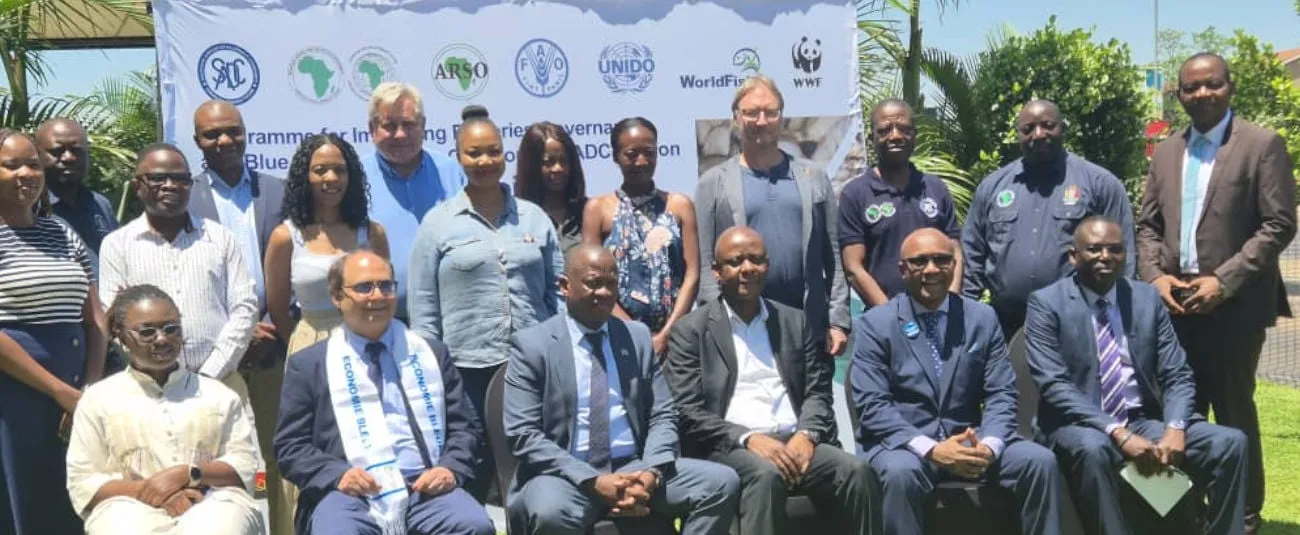
On November 21, 2025, the Southern African Development Community (SADC), the African Development Bank Group, and strategic partners gathered in Gaborone, Botswana to commemorate World Fisheries Day while celebrating the transformative achievements of the PROFISHBLUE project. The event served as a platform for learning, knowledge exchange, and forging stronger partnerships among regional stakeholders.
This year’s World Fisheries Day celebrations were particularly significant, commemorated under the theme “Blue Transformation: Strengthening Small-Scale and Sustainable Fisheries.” The theme aligned closely with PROFISHBLUE’s multi-level governance and community-centered approach, demonstrating measurable impact on fisheries communities throughout Southern Africa.
The gathering brought together government officials, development partners, private-sector representatives, and civil society stakeholders to chart a path forward for sustainable fisheries development in the region. The event offered opportunities for participants to discuss areas of replication and scalability through national investment programs, identifying priority investment areas, commodities, and species for future collaboration, capacity development, resource mobilization, and investment facilitation.
Transformative Regional Impact and Integration
Director Domingos Gove, speaking on behalf of SADC Deputy Secretary for Regional Integration Angele Makombo Ntumba, expressed profound gratitude for the program’s achievements. “We are indebted to the African Development Bank Group for providing funding to implement this project within the Blue Economy space,” Gove stated. “This support has demonstrated our capacity to improve aquatic food systems for the benefit of over 380 million people in the region.”
The project has successfully demonstrated that fishery resources can be managed sustainably, equitably, and resiliently in the face of climate change and external shocks. According to SADC’s official statement, key achievements include harnessing rich aquatic resources to boost food security, create employment, expand trade, and strengthen resilience to climate change and other external shocks.
The program has contributed to increased production and productivity of fish and fishery products, benefiting around 2 million people along various fish value chains and from local consumer markets. Additionally, the initiative has strengthened Africa’s share of market value for key processed fish commodities while enhancing product quality, market access, and management systems for value chain stakeholders.
African Development Bank’s Strategic Vision
Neeraj Vij, African Development Bank’s Regional Sector Manager for Feed Africa Operations for Southern Africa, emphasized the broader significance of the PROFISHBLUE project. “The PROFISHBLUE project has shown best practices in regional integration of blue economy trade corridors and cross-border fish trade,” Vij stated during the World Fisheries Day celebrations.
Vij placed the project within the context of global food security imperatives, noting that “about 3 billion people rely on global supply chains for aquatic-sourced food, contributing $300 billion annually to the global economy.” This project demonstrates how strategic investment in fisheries governance can create competitive value chains that provide jobs and livelihoods while eradicating extreme poverty, especially in rural areas.
Vij reaffirmed the African Development Bank Group’s commitment to expanding support for blue economy initiatives across SADC Member States. He informed partners that the AfDB, in collaboration with the United Nations Industrial Development Organization (UNIDO), is conducting a feasibility study on market clusters for fisheries products and trade facilitation to promote fisheries value chains and blue economy trade corridors in the SADC region.
Strategic Partnerships and Implementation Framework
The success of PROFISHBLUE reflects the power of multi-stakeholder collaboration. Key implementing partners include the Food and Agriculture Organization (FAO), the United Nations Industrial Development Organization (UNIDO), the Worldwide Fund for Nature (WWF), WorldFish, and the African Organization for Standardization (ARSO).
The overarching objective is to promote sustainable management and use of fisheries resources within a blue growth framework, with key aims including enhancing food security and reducing poverty through job creation, facilitating intra-regional trade and improving market access for fish and fishery products, and strengthening the adaptive capacity of fish value chains and fishing communities against climate change and other external shocks.
The PROFISHBLUE Project brings together a broad range of stakeholders, including governments, private sector actors, and technical partners, to implement a holistic set of activities across the SADC region. This collaborative approach ensures that interventions address multiple dimensions of the fisheries sector simultaneously, from production and processing to quality standards and market access.
Infrastructure Development and Equipment Provision
A crucial component of the program’s success has been the provision of tangible infrastructure and equipment support. Throughout 2025, SADC has systematically delivered refrigerated trucks for transporting fish and fishery products to beneficiary countries, with Zimbabwe receiving a refrigerated truck in July 2025 during a ceremony in Harare that represented a major step toward strengthening the country’s fisheries sector.
Zimbabwe’s milestone followed similar support provided to Malawi, Tanzania, and Zambia, with further deliveries planned for the Democratic Republic of Congo, Madagascar, and Mozambique. These refrigerated transport vehicles address a critical bottleneck in fisheries value chains—the need for proper cold chain infrastructure to reduce post-harvest losses and enable producers to access better market prices.
Beyond transport infrastructure, the program has supplied sophisticated laboratory equipment to strengthen food safety and quality control capabilities. In August 2025, the African Development Bank handed over nearly two dozen laboratory items to the Democratic Republic of Congo’s Bureau of Standards, including calibration weights, water distillers, and centrifuge tubes. This equipment enables the DRC to carry out accurate, internationally recognized tests on fish and fishery products, directly addressing critical infrastructure gaps identified in regional assessments.
Women’s Empowerment in Fisheries
The program has placed particular emphasis on inclusive development, with special attention to women’s participation in fisheries value chains. The World Fisheries Day celebration featured testimonials from women in fisheries who shared how the project has enhanced their livelihoods, underscoring PROFISHBLUE’s commitment to gender-inclusive development.
Hifadhi Hai, a project participant from Tanzania, stated: “We embarked on an investment journey that few smallholder entrepreneurs would consider piloting technology in seaweed farming. We appreciate the opportunity…” Her testimony reflects the program’s success in enabling women to access emerging opportunities in marine aquaculture.
Similarly, Tamala Mtambo of the Twiyule Fish Cooperative in Malawi echoed this sentiment: “ProFishBlue supported us to turn fish processing into progress.” These testimonials highlight how the program has created pathways for women to participate meaningfully in fisheries processing, traditionally a male-dominated sector in many communities.
Regional Aquatic Resource Endowment and Potential
The SADC region possesses extraordinary aquatic resources that provided the foundation for PROFISHBLUE’s interventions. The 16 member countries of SADC boast two large marine ecosystems abundant with rich transboundary fisheries resources comprising multiple marine commercial species including tuna, hake, squids, octopus, horse mackerel, abalone, shrimps, prawns, and lobsters.
The interior land-locked regions are home to several transboundary rivers and lakes, with particular focus on Lake Malawi/Niassa/Nyasa, Kariba, Tanganyika, Mweru, and the Zambezi Basin. These water bodies support commercial species including Nile perch, carp, tilapia, Kapenta, usipa, and catfish. However, despite this resource abundance and diverse species availability, the total production remains very low at below 3 million tonnes annually, representing an estimated 2 percent of global production.
This massive gap between potential and actual production underscores both the challenge and the opportunity that PROFISHBLUE addresses. The Indian Ocean tuna fishery alone is worth $2.3 billion per year, representing 20-24 percent of the world market supply. About 70-80 percent is caught in the South Western Indian Ocean, around 850,000 tonnes with landed value over $1.3 billion. These fisheries resources and their ecosystems are critical to the provision of nutrition-sensitive fish diets, SMEs along the fish value chain, eco-tourism and recreational fishing, export earnings and revenues, and non-consumptive ecosystem services and climate buffers.
One decision can change your entire career. Take that step with our Online courses in ACCA, HESI A2, ATI TEAS 7, HESI EXIT, NCLEX-RN, NCLEX-PN, and Financial Literacy. Join Serrari Ed and start building your brighter future today.
Program Extension and Future Outlook
In late November 2025, the African Development Bank concluded a supervision mission in Gaborone, reviewing progress on the PROFISHBLUE project. Led by Mr. Neeraj Vij, the delegation held discussions with Ms. Angele Makombo N’Tumba, SADC’s Deputy Executive Secretary for Regional Integration, during a visit that coincided with World Fisheries Day celebrations.
The delegation expressed satisfaction with the implementation status of PROFISHBLUE, which is nearing its closure, especially noting that more than 3 million consumers and value chain beneficiaries have been impacted by project activities. However, recognizing the need to complete critical activities, SADC stressed the importance of a timely extension of PROFISHBLUE, supported with over $5 million in co-financing from the Global Environmental Facility (GEF).
Ms. N’Tumba welcomed the feedback and assured the delegation of the SADC Secretariat’s commitment to expedite the extension request. She underscored the significance of the project’s continuity in consolidating achievements, promoting sustainability, and fostering regional partnerships to transform the fisheries and blue economy sectors across Southern Africa.
The African Development Bank has also outlined plans for a larger regional program covering five fisheries market clusters to boost intra-regional trade and sustainable growth. This successor program would build on PROFISHBLUE’s achievements while addressing remaining gaps and scaling successful interventions across the region.
Broader Context of African Fisheries Development
PROFISHBLUE represents one component of broader efforts to develop Africa’s blue economy potential. The fisheries sector currently contributes $24 billion to the African economy, representing 1.3 percent of total African GDP, with the sector providing employment to over 12 million people. Employment multiplier effects are remarkable: for every fisherman job, between 1.04 and 3.15 additional onshore jobs are created, illustrating the potential for further job creation through value chain development.
The SADC region’s fisheries face significant challenges from climate change, with implications for future productivity and sustainability. Average decreases in maximum catch potential in some African coastal regions could reach 8 percent under low greenhouse gas emission scenarios by the 2050s and 26 percent under high emission scenarios. These projections underscore the importance of building adaptive capacity and resilience—key objectives of the PROFISHBLUE program.
Climate resilience extends beyond adaptation to fishing practices. The program’s emphasis on strengthening fish value chains, improving post-harvest handling, and developing alternative aquaculture opportunities like seaweed farming creates diversified livelihood options that reduce vulnerability to climate-driven changes in wild fish stocks.
Dissemination and Knowledge Sharing
In September 2025, SADC hosted a dissemination event for PROFISHBLUE in Lusaka, Zambia, bringing together stakeholders to exchange knowledge, share lessons learned and best practices, and reflect on the project’s achievements as it moves toward completion. The event featured discussions on the governance of transboundary fisheries and genetic resources, policy harmonization for trade facilitation, a panel discussion on the regional fisheries network, and a presentation of the successor program for improving sustainable marine fisheries opportunities.
Delivering the keynote address, Mr. Success Mubanga, Director of Policy, Planning and Information for Zambia’s Ministry of Fisheries and Livestock, highlighted the significant efforts made by SADC Member States in improving food and nutritional security, creating employment opportunities, and promoting intra-regional trade through fisheries and aquaculture. He positioned fish and fish-related products as strategic opportunities for Member States to help close the food insecurity gap, which currently stands at 20 percent across the region.
The dissemination event was attended by representatives from the SADC Secretariat, Zambia’s Ministry of Fisheries and Livestock, National Focal Points from ADF and Benguela Current Convention countries, AWFISHNET Chapters from Malawi, Namibia, South Africa, and Zambia, project implementing partners including GIZ, and the BCC Secretariat. This broad participation demonstrated the program’s success in creating regional networks and platforms for ongoing collaboration.
Policy Harmonization and Standards Development
A critical component of PROFISHBLUE’s success has been its work on policy harmonization and standards development across the region. The program has worked in close collaboration with bureaus of standards and customs officers to develop common standards that facilitate cross-border trade while ensuring product quality and safety.
The African Organization for Standardization (ARSO), one of the key implementing partners, has played a vital role in this process. Dr. Hermogene Nsengimana, Secretary-General of ARSO, emphasized the importance of standardization in advancing African integration under the African Continental Free Trade Area (AfCFTA). “By equipping countries’ bureaus of standards, we are ensuring that fisheries products meet continental and international benchmarks,” Nsengimana stated, describing standardization as a “vital step” in ARSO’s mandate to harmonize standards across the continent.
This standardization work has practical implications for market access. Fisheries products that meet internationally recognized standards can access premium markets in Europe, Asia, and North America, generating higher returns for producers and processors. The laboratory equipment and quality assurance tools provided through PROFISHBLUE enable countries to conduct the testing and certification required to demonstrate compliance with these standards.
Economic Impact and Trade Facilitation
The generation of over 500,000 tonnes in cross-border trade volumes represents a substantial economic achievement. While precise monetary values for this trade are not publicly reported, the volume indicates significant economic activity that generates income for fishers, processors, traders, and others along the value chain.
Trade facilitation has been enhanced through multiple mechanisms. The provision of refrigerated transport vehicles reduces spoilage and enables products to reach distant markets in good condition. Training in business development and SME incubation helps small-scale operators formalize their businesses, access credit, and scale their operations. Policy harmonization reduces bureaucratic obstacles at borders, lowering transaction costs and speeding the movement of goods.
The program has also worked to strengthen market information systems, enabling producers to make informed decisions about when and where to sell their products. Access to market information reduces the power imbalances that often disadvantage small-scale producers in negotiations with buyers, helping to ensure more equitable distribution of value chain benefits.
Capacity Building in Botswana and Regional Centers
Director of Fisheries and Apiculture in Botswana’s Ministry of Lands and Agriculture, Kagisanyo Bedi, commended the initiative for creating a crucial platform for learning and exchange of ideas among regional stakeholders. Botswana, though not an ADF country and therefore not a direct recipient of certain program benefits, has actively participated in regional coordination and knowledge sharing.
The program has strengthened regional centers of excellence and training institutions throughout SADC. Universities and research institutions in countries like Malawi have served as hubs for training programs, with facilities like the Lilongwe University of Agriculture and Natural Resources (LUANAR) playing key roles in the SADC Regional Training Program on Transformation of Aquaculture, Fish Processing, and Value Addition (AquaTrans).
These institutional strengthening efforts create sustainable capacity that will continue generating benefits long after PROFISHBLUE concludes. Trained professionals will continue applying their knowledge, while strengthened institutions will serve as resources for future programs and initiatives.
Genetic Improvement and Aquaculture Development
An innovative component of PROFISHBLUE has been its work on genetic improvement programs for endemic tilapia species. These efforts aim to develop fish strains that grow faster, resist disease better, and adapt to varied environmental conditions. Improved tilapia strains can significantly boost aquaculture productivity, providing an important complement to capture fisheries.
Aquaculture development represents a strategic priority for the region. While capture fisheries face pressure from overfishing and climate change, aquaculture offers potential for substantial production increases with appropriate management. The SADC region’s aquaculture production increased from 69,851 metric tonnes in 2015 to 100,950 metric tonnes in 2018, demonstrating growing momentum in this subsector.
PROFISHBLUE’s training programs have equipped farmers with improved techniques in aquaculture management, feed formulation, disease prevention, and harvesting practices. The program has also supported the development of hatcheries and seed production facilities, addressing a critical constraint that has limited aquaculture expansion in many countries.
Monitoring, Evaluation, and Learning
The African Development Bank has conducted regular supervision missions to monitor PROFISHBLUE’s implementation and provide guidance to the SADC Secretariat and implementing partners. These missions have facilitated adaptive management, allowing the program to adjust approaches based on experience and changing circumstances.
The program’s monitoring framework tracks multiple indicators across different dimensions of impact, including volumes of fish traded, number of people trained, equipment provided, policy reforms achieved, and ultimately changes in livelihoods and food security. This comprehensive approach to monitoring enables assessment of both immediate outputs and longer-term outcomes and impacts.
Knowledge management and learning have been integrated throughout implementation. The dissemination events, publications, and knowledge sharing platforms created through PROFISHBLUE ensure that lessons learned are captured and made available to inform future programs in SADC and potentially in other African regions facing similar challenges.
Conclusion: A Model for Regional Integration
As PROFISHBLUE approaches completion with the potential for extension to consolidate achievements, it stands as a compelling model for regional integration in Africa’s blue economy. The program demonstrates that strategic investments in fisheries governance, coupled with comprehensive capacity building and infrastructure support, can generate transformative impacts relatively quickly.
The project’s success reflects several key factors: strong political commitment from SADC member states, effective collaboration among diverse implementing partners, focus on practical interventions that address real constraints, attention to inclusive development particularly regarding women’s participation, and integration of climate resilience and sustainability considerations throughout design and implementation.
With more than 3 million people impacted, 250,000 beneficiaries trained, and over 500,000 tonnes of cross-border trade generated, PROFISHBLUE has delivered results that justify the African Development Bank’s investment and vindicate SADC’s vision for regional fisheries development. The program has demonstrated that the region’s rich aquatic resources can indeed be managed sustainably, equitably, and resiliently, improving food systems for the benefit of hundreds of millions of people across Southern Africa.
As the African Development Bank and SADC look toward successor programs and scaled-up interventions, the foundations laid by PROFISHBLUE provide a solid platform for continued progress toward a thriving, sustainable blue economy in Southern Africa. The challenge now is to maintain momentum, consolidate achievements, and continue expanding the benefits of improved fisheries governance to all communities across the region.
Ready to take your career to the next level? Join our Online courses: ACCA, HESI A2, ATI TEAS 7 , HESI EXIT , NCLEX – RN and NCLEX – PN, Financial Literacy!🌟 Dive into a world of opportunities and empower yourself for success. Explore more at Serrari Ed and start your exciting journey today! ✨
Track GDP, Inflation and Central Bank rates for top African markets with Serrari’s comparator tool.
See today’s Treasury bonds and Money market funds movement across financial service providers in Kenya, using Serrari’s comparator tools.
photo source: Google
By: Montel Kamau
Serrari Financial Analyst
5th December, 2025