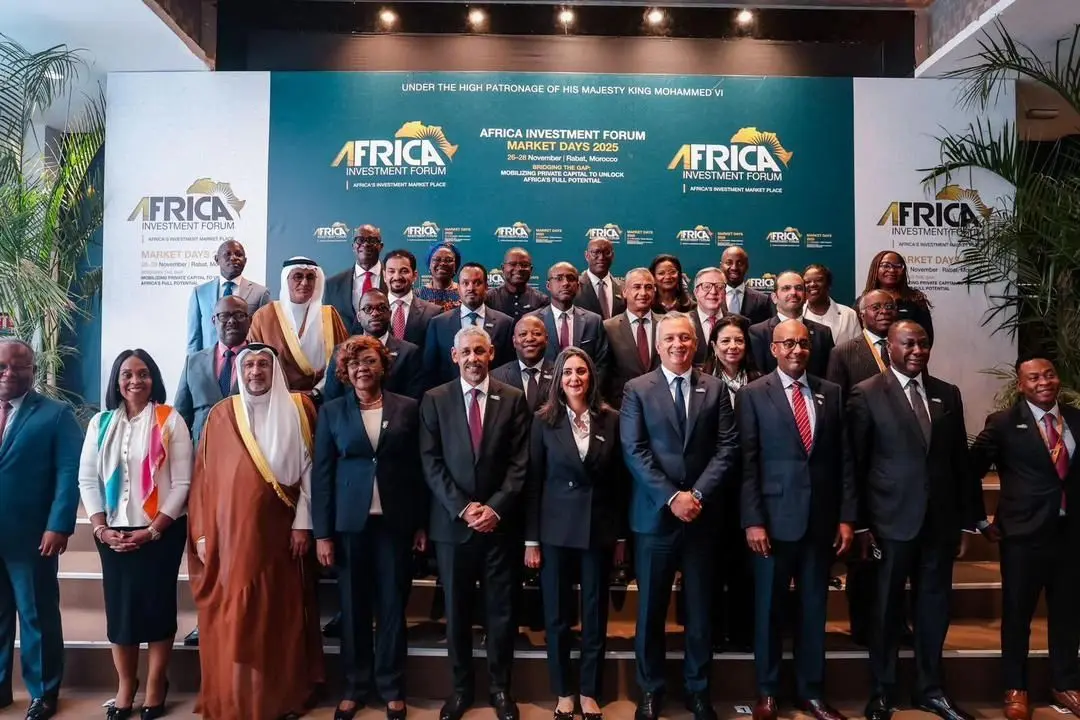
The Africa Investment Forum 2025 Market Days opened Wednesday in Rabat with an urgent call from African leaders and development finance experts for transformative change in how the continent finances its economic development. Under the high patronage of His Majesty King Mohammed VI, the three-day forum has assembled more than 2,500 participants from across the globe—government ministers, institutional investors, development finance institutions, and business leaders—to advance bankable projects that could reshape Africa’s economic trajectory.
The 2025 theme, “Bridging the Gap: Mobilising Private Capital to Unlock Africa’s Full Potential,” captures the critical challenge facing the continent: how to close a financing gap estimated at $1.3 trillion annually while traditional aid and public financing prove increasingly insufficient. Since its launch in 2018, the Africa Investment Forum has catalyzed more than $225 billion in investment interest, with $32 billion worth of transactions reaching financial close, establishing itself as Africa’s premier transactional platform for mobilizing capital.
Build the future you deserve. Get started with our top-tier Online courses: ACCA, HESI A2, ATI TEAS 7, HESI EXIT, NCLEX-RN, NCLEX-PN, and Financial Literacy. Let Serrari Ed guide your path to success. Enroll today.
Morocco’s Investment-Driven Development Model Takes Center Stage
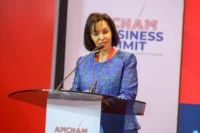
Opening the forum attended by more than 1,700 delegates, Morocco’s Minister of Economy and Finance, Nadia Fettah, delivered a powerful message about sovereign responsibility in creating investment-friendly environments. Representing King Mohammed VI, Fettah emphasized that attracting investment requires African nations to build foundations of political stability, strong institutions, modern regulatory frameworks, and transparent governance.
“Giving means doing our part—building infrastructure, supporting our entrepreneurs, embracing innovation, and driving major transitions in energy, digital, industrial, agricultural, and logistics sectors,” Fettah stated. “Receiving, on the other hand, is about forging meaningful partnerships and crowding in capital that fuels long-term development.”
Fettah highlighted the staggering global resource needs, noting that achieving the Sustainable Development Goals requires $4 trillion annually worldwide, with Africa needing nearly $1.3 trillion each year. She reaffirmed Morocco’s ambitious target for private investment to comprise two-thirds of national investment by 2035, reflecting the private sector’s pivotal role in job creation, innovation, and competitiveness.
Morocco’s commitment to this target represents a dramatic reversal of current investment patterns. Presently, public investment accounts for two-thirds of total investment in Morocco, with private investment at only one-third. Through its Investment Charter adopted in December 2022, Morocco has introduced comprehensive support mechanisms including tax breaks, grant schemes, simplified administrative processes, and strong legal protections designed to attract both domestic and foreign capital.
The Investment Charter targets strategic sectors including renewable energy, tourism, export-oriented industries, and local production, with specific incentives for projects that create jobs and contribute to regional development. Morocco’s aggressive push toward private sector-led growth includes plans to generate 550 billion dirhams (approximately $55 billion) of private investment and create 500,000 jobs between 2022 and 2026.
New Leadership Vision for the African Development Bank
Chairing the Market Days for the first time as President of the African Development Bank, Dr. Sidi Ould Tah outlined his leadership vision and the Bank’s “Four Cardinal Points,” aimed at strengthening Africa’s long-term competitiveness. Elected in May 2025 with a historic 76 percent of shareholder votes—the highest first-term margin in the Bank’s history—Dr. Ould Tah brings over 35 years of experience in African and international finance to the role.
The Four Cardinal Points strategy focuses on: massively mobilizing capital; reforming Africa’s financial architecture; transforming demographic growth into economic power; and building resilient infrastructure while expanding local value addition. “Our youth are our greatest asset,” Dr. Ould Tah emphasized, calling for targeted support for women and young entrepreneurs.
Dr. Ould Tah assumed office on September 1, 2025, succeeding Nigeria’s Dr. Akinwumi Adesina who completed two five-year terms. Prior to his election, Dr. Ould Tah served as President of the Arab Bank for Economic Development in Africa (BADEA) for a decade, where he led a transformation that saw the institution’s annual approvals rise twelvefold and disbursements increase eightfold. Under his leadership, BADEA achieved prestigious AAA/Aa1/AA+ credit ratings, placing it among the most trusted multilateral development institutions.
The new AfDB president has outlined an ambitious reform agenda focused on mobilizing equity capital through innovative financing instruments capable of multiplying each dollar invested by at least ten. He also emphasized plans to reform Africa’s financial architecture through a coordinated three-tier system operating at national, regional, and continental levels, enhancing synergy among financial institutions across the continent.
Dr. Ould Tah reiterated that AIF boardrooms are “about much more than transactions—they are investments in our shared future,” signaling his intention to use the forum as a platform for accelerating deal closure and demonstrating the bankability of African projects to global investors.
Unprecedented Project Pipeline Demonstrates Growing Investor Confidence
The centerpiece of Market Days is the boardroom sessions, where project sponsors present bankable deals to investors alongside government representatives, development institutions, and businesses working to move projects toward financial close. This year’s forum showcases a highly bankable pipeline of 41 projects—39 of them fully investment-ready—across energy, transport, logistics, agribusiness, digital transformation, and industrial development.
The share of investment-ready projects has risen markedly, from 81 percent in 2024 to an impressive 95 percent this year, building on momentum from previous editions. This dramatic improvement reflects the Forum’s maturation as a transactional platform and its effectiveness in helping project sponsors prepare bankable deals that meet investor requirements.
Sponsorship for the 2025 edition has more than doubled compared with last year, with 33 private-sector sponsors participating, up from 16 in 2024. This surge in private sector engagement signals growing confidence in the Forum’s ability to produce tangible results and facilitate meaningful partnerships between project developers and investors.
Infrastructure dominates the project pipeline by value, including flagship initiatives such as Ethiopia’s Bishoftu International Airport and regional transport corridors that support trade, mobility, and industrialization. These projects address Africa’s critical infrastructure deficit, which currently requires between $130 billion and $170 billion annually—far beyond what public budgets can provide.
Energy transition features prominently in this year’s portfolio, with 15 renewable-focused projects signaling the continent’s commitment to sustainable, resilient growth. These include the Facility for Energy Inclusion and Husk Power’s distributed energy expansion, which aim to accelerate electricity access while supporting climate goals.
Mission 300: Accelerating Universal Electricity Access
On the sidelines of the main forum, the African Development Bank Group and the World Bank Group, with support from The Rockefeller Foundation, the Global Energy Alliance for People and Planet, and Sustainable Energy for All, hosted the inaugural “Mission 300 Day” to galvanize action toward delivering electricity access to 300 million people across Africa by 2030.
Mission 300 represents an ambitious partnership bringing together African governments, the private sector, and development partners to address one of the continent’s most pressing development challenges. Currently, approximately 600 million Africans lack access to electricity, constraining economic development, limiting educational opportunities, and impeding health service delivery.
The special Mission 300 Day convened African government ministers, investors, and development financiers to spotlight national commitments, present implementation roadmaps, and discuss progress on regulatory reforms essential for unlocking private-sector investment. During the event, ministers from Comoros, Guinea, Gambia, and Lesotho presented implementation roadmaps with specific deadlines for achieving universal electricity access by 2030.
Twenty-nine African countries have already developed National Energy Compacts with time-bound targets to increase access, strengthen utilities, and attract private capital. These compacts represent concrete commitments backed by policy reforms and regulatory changes designed to create enabling environments for private investment in the energy sector.
Kevin Kariuki, Vice President for Power, Energy, Climate & Green Growth at the African Development Bank Group, emphasized that “Mission 300 will be underpinned by massive and speedy investments in generation, transmission, distribution, as well as last-mile connectivity infrastructure, which, when complemented by necessary reforms, will ensure affordability of tariffs, financial sustainability of utilities and energy sectors, and engender enhanced private-sector investments.”
One decision can change your entire career. Take that step with our Online courses in ACCA, HESI A2, ATI TEAS 7, HESI EXIT, NCLEX-RN, NCLEX-PN, and Financial Literacy. Join Serrari Ed and start building your brighter future today.
Strategic Partnerships Driving Continental Transformation
The Africa Investment Forum operates through a consortium of nine founding partners representing Africa’s leading development finance institutions. These partners include the African Development Bank Group, Afreximbank, Africa50, Africa Finance Corporation, the Development Bank of Southern Africa, the Islamic Development Bank, the European Investment Bank, the Trade and Development Bank, and the Arab Bank for Economic Development in Africa.
This multi-institutional approach enables the Forum to leverage complementary capabilities, share risk, and provide comprehensive support to project sponsors throughout the development cycle. The founding partners bring together expertise in project structuring, technical assistance, risk mitigation, and capital mobilization.
Speakers and decision-makers from these founding partner institutions led boardroom discussions designed to accelerate financial closure for transformative projects. Government ministers, CEOs, and institutional investors used the Forum to shape partnerships, negotiate terms, and address policy reforms that can unlock long-term investment flows.
The collaborative model pioneered by the Africa Investment Forum reflects a broader recognition that no single institution can address Africa’s financing gap alone. By creating a platform where public and private actors, domestic and international investors, and development finance institutions work together, the Forum facilitates the kind of coordinated action necessary to move projects from concept to completion.
Rome Process/Mattei Plan Advances Migration-Development Nexus
On the margins of the Africa Investment Forum, the Rome Process/Mattei Plan Financing Facility Governing Council held its first-ever in-person meeting, marking an important milestone for a facility designed to address the root causes of irregular migration through strategic development investments.
The Governing Council approved the facility’s 2026 work plan, which targets commitments of close to €100 million. These resources are expected to leverage more than €550 million in co-financing from the African Development Bank’s ordinary resources, directing investments toward inclusive growth, essential service delivery, climate resilience, and addressing migration drivers.
The Rome Process/Mattei Plan Financing Facility, approved by the African Development Bank Board of Governors in February 2025, operates through two financing windows: a non-reimbursable technical assistance window and an investment window providing concessional loans and grants. The facility focuses on climate-aligned sovereign infrastructure projects in energy, transport, and water sectors.
Sarah Jasim, Director of the Sustainable Development Department at the UAE Aid Agency, stated: “Our support for the RPFF reflects our dedication to empowering African nations with the resources needed to build resilient infrastructure, create opportunities, and improve the lives of their citizens.”
In its first few months of operation, the facility has already approved two projects demonstrating immediate commitment to on-the-ground impact. The Eastern Region Agricultural Value Chain Development Project in Angola received a €17 million concessional loan contribution to a €183 million project aimed at enhancing agricultural processing and value chain development.
A Track Record of Transformative Deal-Making
Since its inaugural Market Days in 2018, the Africa Investment Forum has established an impressive track record of mobilizing capital for African development. The first edition in Johannesburg secured investment interest for 49 projects worth $38.7 billion, demonstrating immediate market appetite for African opportunities when presented in a properly structured, investor-ready format.
The Forum’s evolution over seven years reflects both the maturation of its processes and the growing sophistication of African project sponsors in preparing bankable deals. Last year’s Market Days generated $29.2 billion in investment interest and attracted more than 2,300 participants from 83 countries, with 37 bankable projects advancing toward financial close.
The cumulative impact speaks to the Forum’s effectiveness as a deal-making platform. CEO of Africa 50, Alain Ebobisse, highlighted the Forum’s distinctiveness, noting that “it focuses not on speeches but on people transacting in boardrooms,” emphasizing the practical, results-oriented nature of the event.
The President and CEO of Africa Finance Corporation, Samaila Zubairu, articulated the ownership imperative underlying the Forum’s approach: “As Africans we have to take ownership of our development. The Africa Investment Forum is an initiative that demonstrates that.”
Addressing Persistent Investment Barriers
Despite the Forum’s success in mobilizing capital and advancing projects, significant barriers to investment in Africa persist. These include perceived risks that often exceed actual risks, inadequate project preparation, policy and regulatory uncertainty, infrastructure deficits, and limited local currency financing options.
The Forum addresses these challenges through multiple mechanisms. Its project preparation support helps sponsors develop investment-ready documentation, financial models, and risk mitigation strategies that meet international investor standards. The platform’s co-guarantee and co-financing mechanisms, backed by its founding partner institutions, help de-risk projects and make them more attractive to commercial investors.
Policy dialogue facilitated through the Forum enables investors to engage directly with government officials, addressing regulatory concerns and negotiating framework conditions that support long-term investment. The presence of African heads of state and government ministers in boardroom sessions signals high-level political commitment to creating enabling environments for private capital.
The Forum also serves an important function in changing perceptions about African investment opportunities. By showcasing successful deals, highlighting positive returns, and demonstrating the continent’s improving business environment, the platform helps counter outdated narratives and attract investors who might otherwise overlook African markets.
Youth and Women: Africa’s Untapped Economic Engine
A recurring theme throughout the 2025 Africa Investment Forum has been the imperative to harness Africa’s demographic dividend, particularly its youth population. Africa’s population is projected to represent one-quarter of the world’s population by 2050, with the youngest median age of any continent.
Dr. Ould Tah has consistently emphasized that “our youth are our greatest asset,” calling for targeted support for women and young entrepreneurs who represent enormous untapped economic potential. However, translating this demographic advantage into economic power requires massive investments in education, skills development, entrepreneurship support, and job creation.
The Forum’s focus on sectors such as digital transformation, agribusiness, and industrial development reflects recognition that these areas offer significant opportunities for youth employment and entrepreneurship. Technology-enabled businesses, in particular, allow young Africans to participate in global value chains and access markets beyond their immediate geographic locations.
Women entrepreneurs face particular challenges in accessing capital, with numerous studies documenting persistent gender gaps in business financing across the continent. The Africa Investment Forum has made deliberate efforts to include women-led businesses in its project pipeline and to create opportunities for women entrepreneurs to connect with investors and support institutions.
Looking Ahead: Sustaining Momentum and Scaling Impact
Both Minister Fettah and Dr. Ould Tah expressed confidence that the 2025 Forum will generate concrete partnerships to boost economic growth and improve livelihoods across Africa. The dramatic improvement in project readiness—from 81 percent to 95 percent investment-ready in just one year—demonstrates the platform’s effectiveness in building capacity among project sponsors.
However, sustaining this momentum will require continued effort on multiple fronts. African governments must follow through on policy reforms and regulatory improvements that create predictable, transparent frameworks for private investment. Development finance institutions must continue innovating in risk mitigation instruments and blended finance structures that crowd in commercial capital.
Institutional investors—pension funds, sovereign wealth funds, insurance companies—must overcome internal constraints and develop the expertise necessary to evaluate and execute African investments. The capacity of African financial markets must be strengthened to channel both domestic and international capital efficiently.
The Africa Investment Forum has established itself as an indispensable platform for African development finance, but its ultimate success will be measured not in billions of investment interest but in the tangible improvements in infrastructure, energy access, agricultural productivity, and industrial capacity that result from deals closed through its boardrooms.
As the 2025 Market Days continue in Rabat, participants are working intensively to advance projects from negotiation to commitment, from concept to construction, from promise to progress. The stakes could not be higher: Africa’s ability to achieve its development aspirations and improve the lives of its rapidly growing population depends fundamentally on mobilizing the capital necessary to finance transformation at scale.
The Forum’s tagline—”Africa’s Investment Marketplace”—captures its essential function: creating a space where capital seeking returns meets development seeking impact, where African ambition meets global capability, and where the continent’s vast potential moves decisively toward realization.
Catch Up With Our Other Headlines
28th November, 2025
Meta reportedly negotiating multi-billion dollar deal for Google chips,The Information reports
European Commission Plans Financial Relief for Baltic States Hit by Russia Sanctions
DR Congo Commits $500,000 to UN Partnership for Economic Transformation and Capacity Building
Ghana Central Bank Cuts Interest Rate to 18 Percent as Inflation Falls to Four-Year Low
Mars Wrigley Commits Sh4.3 Billion to Kenya Manufacturing Expansion, Shifts Production from Poland
Ready to take your career to the next level? Join our Online courses: ACCA, HESI A2, ATI TEAS 7 , HESI EXIT , NCLEX – RN and NCLEX – PN, Financial Literacy!🌟 Dive into a world of opportunities and empower yourself for success. Explore more at Serrari Ed and start your exciting journey today! ✨
Track GDP, Inflation and Central Bank rates for top African markets with Serrari’s comparator tool.
See today’s Treasury bonds and Money market funds movement across financial service providers in Kenya, using Serrari’s comparator tools.
Photo source: Google
By: Montel Kamau
Serrari Financial Analyst
28th November, 2025