











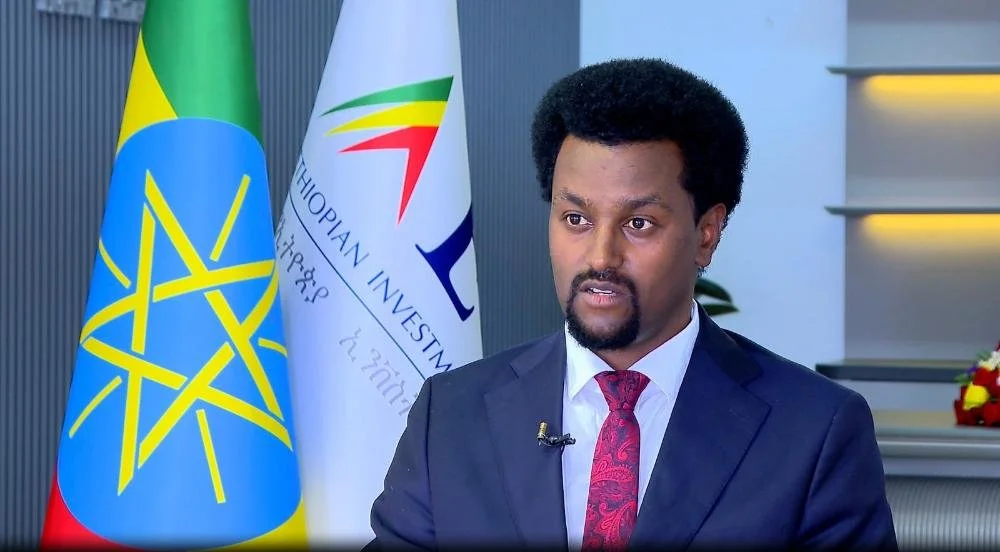
Ethiopia has firmly established itself as Africa’s second-largest destination for foreign direct investment, trailing only Egypt, in a development that underscores the East African nation’s growing appeal to global capital and the tangible impact of its ambitious economic reform agenda. The milestone was announced by Zeleke Temesgen, Commissioner of the Ethiopian Investment Commission (EIC), during a panel discussion titled “Ethiopia: The New Investment Destination” held in Addis Ababa on March 16.
Temesgen revealed that the country had attracted a cumulative $18.6 billion in FDI over the past five years, with $4 billion flowing in during the 2024/2025 Ethiopian fiscal year alone — a figure that represents a 22.7 percent year-on-year increase. The performance also made Ethiopia the highest-ranking FDI recipient in the entire East African region during the period.
The announcement comes at a pivotal moment for Ethiopia, a country of over 130 million people that is simultaneously navigating complex macroeconomic adjustments, post-conflict recovery, and one of the most far-reaching economic liberalisation programmes on the African continent. For investors and policymakers alike, the numbers point to a country that is increasingly translating reform rhetoric into real capital flows.
Markets move fast; don’t get left behind. We’ve paired the Serrari Group Market Index with a curated Marketplace and a comprehensive Financial Literacy Course to ensure you have the data—and the skills—to act on it.
China’s Dominant Role in Ethiopia’s Investment Landscape
The single most striking feature of Ethiopia’s FDI profile is the outsized role played by Chinese investors. Temesgen confirmed that Chinese companies account for the largest share of investment inflows into the country, a pattern that has been consistent for several years. Data from the United Nations Conference on Trade and Development (UNCTAD) shows that China accounts for approximately 60 percent of all FDI projects in Ethiopia, with substantial investments concentrated in the manufacturing and services sectors.
This concentration of Chinese capital is not accidental. Ethiopia has deliberately positioned itself as an attractive destination for Chinese manufacturers seeking to tap into lower labour costs, access African and global markets, and benefit from preferential trade agreements. Research from Johns Hopkins University’s China-Africa Research Initiative has documented the explosive growth of Chinese manufacturing investment in Ethiopia, noting that the Ethiopian government’s targeted investment promotion has consciously guided FDI from China and other Asian countries toward the manufacturing sector.
China’s investment footprint extends across Ethiopia’s industrial parks and special economic zones, which have been a central pillar of the government’s industrialisation strategy. Facilities like the Hawassa Industrial Park have attracted more than a dozen garment manufacturers, many of them Chinese-owned, creating thousands of jobs and establishing nascent supply chains in textiles, leather goods, and light manufacturing
However, the relationship is not without complexity. While Chinese investment has brought capital, jobs, and manufacturing capacity, some observers have noted concerns about the balance of trade between the two countries. African nations, including Ethiopia, have run consistent trade deficits with China, and critics have questioned whether the current pattern of economic engagement adequately supports long-term industrialisation and diversification. That said, Ethiopia’s emphasis on attracting manufacturing FDI — rather than resource extraction — distinguishes it from many other African recipients of Chinese capital.Beyond China, Saudi Arabia and Turkey have emerged as other significant investors, reflecting Ethiopia’s widening pool of international partners. The presence of Gulf capital, in particular, aligns with broader trends of Middle Eastern investment flowing into East African infrastructure, agriculture, and energy projects.
Sweeping Reforms Open Previously Restricted Sectors
The surge in FDI cannot be understood without examining the policy shifts that have reshaped Ethiopia’s investment environment. Under Prime Minister Abiy Ahmed’s government, Ethiopia has embarked on what officials describe as a Homegrown Economic Reform Agenda — a comprehensive programme aimed at correcting macroeconomic imbalances, opening key sectors to private and foreign participation, and laying the foundations for private sector-led growth.
Among the most consequential changes has been the opening of sectors that were previously off-limits to foreign investors. In June 2025, the Ethiopian Investment Board issued Directive No. 1082/2025, lifting long-standing restrictions on foreign participation in export, import, wholesale, and retail trade. The directive marked a significant departure from Ethiopia’s traditionally protectionist stance and is seen as part of a broader effort to integrate the country more closely with the global economy. As reported by Chambers and Partners, the directive authorises foreign investors to export commodities such as raw coffee, oilseeds, and livestock, while also liberalising retail trade subject to a minimum capital requirement of $2.5 million.
The liberalisation of property ownership represents another groundbreaking shift. In March 2024, Prime Minister Abiy Ahmed announced plans to introduce legislation permitting foreign nationals to own real estate in Ethiopia for the first time in the country’s modern legal history. Ethiopia’s Council of Ministers subsequently passed a draft law rescinding the half-century ban on foreign ownership of immovable property — a move that officials have said could stimulate foreign capital investment, increase affordable housing development, and generate employment.
Investment Commissioner Temesgen directly attributed the growing FDI to these policy shifts. “Allowing foreign nationals to legally own residential houses within the country has also encouraged foreign citizens and investors to invest their capital in Ethiopia,” he said, according to the African Press Agency. Over the past five years, authorities issued 1,477 investment permits to foreign investors.
The banking sector has seen parallel liberalisation. The 2025 amendment to the Banking Business Proclamation now enables foreign banks to acquire up to a 49 percent stake in domestic financial institutions or to establish wholly owned subsidiaries — another significant departure from Ethiopia’s historically closed financial system.
IMF Endorsement and Macroeconomic Momentum
International financial institutions have provided a significant stamp of approval for Ethiopia’s reform trajectory. In January 2026, the IMF completed the fourth review of Ethiopia’s Extended Credit Facility (ECF) programme, unlocking approximately $261 million in additional financing and bringing total disbursements under the programme to about $2.18 billion out of the $3.4 billion facility approved in July 2024.
The IMF noted that Ethiopia’s macroeconomic performance has exceeded earlier expectations. According to the Fund’s assessment, GDP growth is projected at 9.3 percent for 2025/26, while inflation — which averaged 32.5 percent in 2022/23 — is expected to fall to 11.9 percent in 2025/26. The value of goods exports has more than doubled within a year, government revenue collection has improved significantly, and foreign reserves have strengthened.
A central element of the reform programme has been the liberalisation of the foreign exchange regime in July 2024, which effectively eliminated the parallel market premium and improved transparency and price discovery in currency markets. This reform addressed one of the most persistent complaints from foreign investors — the chronic shortage of foreign currency that had long made it difficult to repatriate profits or finance imports.
For international investors evaluating Ethiopia, these developments serve as important signals regarding macroeconomic stability and policy credibility. The combination of accelerating growth, declining inflation, and a liberalised foreign exchange market creates a substantially more favourable investment environment than existed just two or three years ago.
Context is everything. While you follow today’s updates, use the Serrari Market Index and Marketplace to spot emerging shifts. Need to sharpen your edge? Our Financial Literacy Course turns these insights into a professional-grade strategy.
Strategic Advantages: Demographics, Location, and Market Access
Ethiopia’s investment appeal rests on several structural advantages that transcend any single policy reform. The country possesses Africa’s largest labour force — a workforce of approximately 56 million people that is young, growing, and available at wage levels that remain competitive by global standards. For labour-intensive industries like textiles, garments, and light manufacturing, this demographic profile is a powerful draw.
Geographically, Ethiopia occupies a strategic position in the Horn of Africa, offering proximity to markets in the Middle East, Europe, and Asia. The country’s connectivity is enhanced by Ethiopian Airlines, which links Addis Ababa to over 130 global destinations, making it one of the most connected capitals on the continent. Minister of Trade and Regional Integration Kassahun Gofe has emphasised that these advantages, combined with ongoing reforms aimed at expanding private sector participation, make Ethiopia an increasingly competitive investment hub.
Energy infrastructure is another area of strength. The Grand Ethiopian Renaissance Dam (GERD) has strengthened domestic power supply and enhanced the country’s potential as a regional electricity exporter, while also providing relatively affordable industrial power — a critical input for manufacturing-oriented FDI.
AfCFTA: Unlocking Continental Market Access
Ethiopia’s participation in the African Continental Free Trade Area (AfCFTA) is expected to provide a further catalyst for investment. The country officially launched the implementation of the AfCFTA Agreement in late 2025, with Prime Minister Abiy Ahmed describing regional integration as “the new frontier for Africa.”
The AfCFTA, which aims to establish a single continental market for goods and services with free movement of businesspersons and investments, represents a transformative opportunity for Ethiopia. The agreement’s investment protocol, currently being implemented across member states, is designed to create a more transparent, predictable, and investor-friendly environment across the continent.
For Ethiopia specifically, analysts at the Overseas Development Institute (ODI) have argued that the AfCFTA investment protocol could be leveraged to attract additional FDI, noting that the agreement can help catalyse domestic investment, facilitate technology and skills transfer, and create jobs. Ethiopia’s entry into AfCFTA trade opens new horizons for Ethiopian businesses, offering easier and more secure access to African markets for exports and investments while providing opportunities to diversify import sources.The government is actively working to implement the bloc’s investment protocol and align national regulations with AfCFTA requirements. Ethiopia’s accession to the agreement, combined with the trade facilitation and market-opening measures already underway, signals a clear policy shift toward greater regional integration and private sector participation. The country is also pursuing WTO membership, with a target completion date of 2026.
Challenges Remain Amid the Optimism
Ethiopia’s participation in the African Continental Free Trade Area (AfCFTA) is expected to provide a further catalyst for investment. The country officially launched the implementation of the AfCFTA Agreement in late 2025, with Prime Minister Abiy Ahmed describing regional integration as “the new frontier for Africa.”
The AfCFTA, which aims to establish a single continental market for goods and services with free movement of businesspersons and investments, represents a transformative opportunity for Ethiopia. The agreement’s investment protocol, currently being implemented across member states, is designed to create a more transparent, predictable, and investor-friendly environment across the continent.
For Ethiopia specifically, analysts at the Overseas Development Institute (ODI) have argued that the AfCFTA investment protocol could be leveraged to attract additional FDI, noting that the agreement can help catalyse domestic investment, facilitate technology and skills transfer, and create jobs. Ethiopia’s entry into AfCFTA trade opens new horizons for Ethiopian businesses, offering easier and more secure access to African markets for exports and investments while providing opportunities to diversify import sources.
The government is actively working to implement the bloc’s investment protocol and align national regulations with AfCFTA requirements. Ethiopia’s accession to the agreement, combined with the trade facilitation and market-opening measures already underway, signals a clear policy shift toward greater regional integration and private sector participation. The country is also pursuing WTO membership, with a target completion date of 2026.
A Nation Betting on Openness
Nevertheless, the overall direction of Ethiopia’s investment story is clear. A country that for decades maintained a cautious, state-led approach to economic development is now actively courting global capital across an expanding range of sectors. The $18.6 billion in FDI accumulated over five years — combined with a 22.7 percent year-on-year increase in the most recent fiscal year — demonstrates that the reform programme is yielding measurable results.
With its strategic location, vast workforce, ongoing IMF-backed reforms, new market access through the AfCFTA, and a government that has signalled it is firmly open for business, Ethiopia is positioning itself not just as Africa’s second-largest FDI destination, but as a potential gateway to the continent’s broader growth story. Whether the country can maintain reform momentum, resolve outstanding debt challenges, and translate investment commitments into sustainable, inclusive growth will determine whether this moment represents a lasting transformation or a fleeting window of opportunity.
Don’t just read the news—navigate it. Track trends with the Serrari Group Market Index, discover your next move in the Serrari Marketplace, and master the “how” with our Financial Literacy Course.
Article, Financial and News Disclaimer
The Value of a Financial Advisor
While this article offers valuable insights, it is essential to recognize that personal finance can be highly complex and unique to each individual. A financial advisor provides professional expertise and personalized guidance to help you make well-informed decisions tailored to your specific circumstances and goals.
Beyond offering knowledge, a financial advisor serves as a trusted partner to help you stay disciplined, avoid common pitfalls, and remain focused on your long-term objectives. Their perspective and experience can complement your own efforts, enhancing your financial well-being and ensuring a more confident approach to managing your finances.
Disclaimer: This article is for informational purposes only and does not constitute financial advice. Readers are encouraged to consult a licensed financial advisor to obtain guidance specific to their financial situation.
Article and News Disclaimer
The information provided on www.serrarigroup.com is for general informational purposes only. While we strive to keep the information up to date and accurate, we make no representations or warranties of any kind, express or implied, about the completeness, accuracy, reliability, suitability, or availability with respect to the website or the information, products, services, or related graphics contained on the website for any purpose. Any reliance you place on such information is therefore strictly at your own risk.
www.serrarigroup.com is not responsible for any errors or omissions, or for the results obtained from the use of this information. All information on the website is provided on an as-is basis, with no guarantee of completeness, accuracy, timeliness, or of the results obtained from the use of this information, and without warranty of any kind, express or implied, including but not limited to warranties of performance, merchantability, and fitness for a particular purpose.
In no event will www.serrarigroup.com be liable to you or anyone else for any decision made or action taken in reliance on the information provided on the website or for any consequential, special, or similar damages, even if advised of the possibility of such damages.
The articles, news, and information presented on www.serrarigroup.com reflect the opinions of the respective authors and contributors and do not necessarily represent the views of the website or its management. Any views or opinions expressed are solely those of the individual authors and do not represent the website's views or opinions as a whole.
The content on www.serrarigroup.com may include links to external websites, which are provided for convenience and informational purposes only. We have no control over the nature, content, and availability of those sites. The inclusion of any links does not necessarily imply a recommendation or endorsement of the views expressed within them.
Every effort is made to keep the website up and running smoothly. However, www.serrarigroup.com takes no responsibility for, and will not be liable for, the website being temporarily unavailable due to technical issues beyond our control.
Please note that laws, regulations, and information can change rapidly, and we advise you to conduct further research and seek professional advice when necessary.
By using www.serrarigroup.com, you agree to this disclaimer and its terms. If you do not agree with this disclaimer, please do not use the website.
www.serrarigroup.com, reserves the right to update, modify, or remove any part of this disclaimer without prior notice. It is your responsibility to review this disclaimer periodically for changes.
Serrari Group 2025