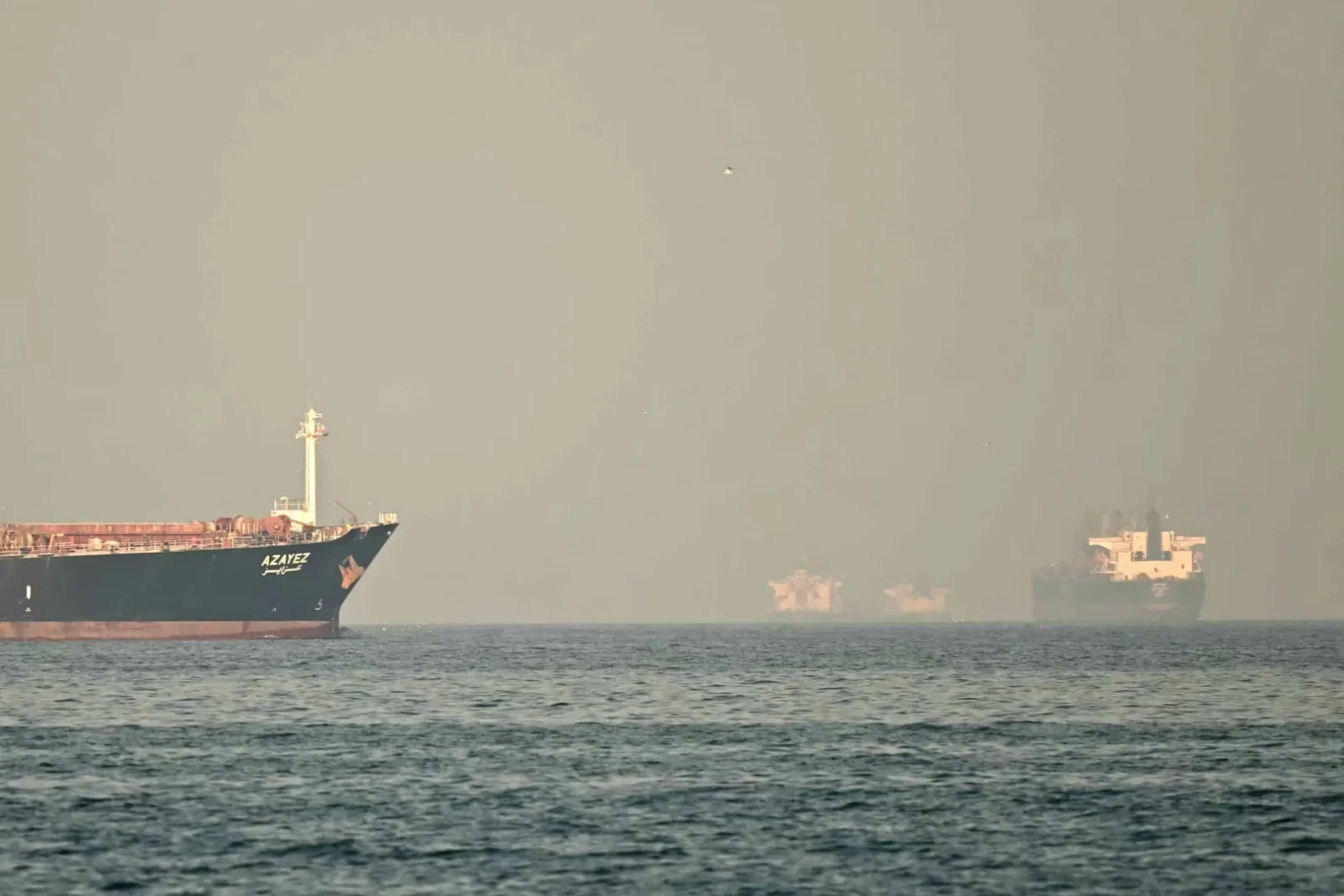
The joint US-Israeli military campaign against Iran has ignited one of the most serious threats to global energy security in decades, with the Strait of Hormuz — the narrow maritime corridor through which a fifth of the world’s oil flows daily — now sitting at the centre of a rapidly escalating crisis. Iranian officials have hinted at closing the waterway, major shipping firms have suspended transits, and oil prices have surged sharply, raising fears of an unprecedented supply shock that could tip the global economy into recession.
Build the future you deserve. Get started with our top-tier Online courses: ACCA, HESI A2, ATI TEAS 7, HESI EXIT, NCLEX-RN, NCLEX-PN, and Financial Literacy. Let Serrari Ed guide your path to success. Enroll today.
A Strike That Changed Everything
In the early hours of Saturday, 28 February 2026, US and Israeli forces launched coordinated strikes on Iranian military and nuclear sites, marking what analysts describe as an unprecedented escalation between Western powers and the Islamic Republic. Tehran responded swiftly, firing missiles at US military bases across the region, including facilities in Qatar, Kuwait, the UAE, and Bahrain, while also targeting Israeli positions and assets of allied nations.
The strikes have not only reshaped the regional military landscape but have sent shockwaves through global energy markets. Iran, the fourth-largest oil producer in OPEC with output of over 3 million barrels per day, shares a coastline with the Strait of Hormuz — giving it a unique geographic lever over global energy flows that no other country possesses.
What Is the Strait of Hormuz?
The Strait of Hormuz lies between Iran to the north and Oman and the United Arab Emirates to the south, linking the Persian Gulf with the Gulf of Oman and the Arabian Sea. Despite being only 33 kilometres wide at its narrowest point, with designated shipping lanes just 3 kilometres wide in each direction, it accommodates the world’s largest crude oil carriers and serves as the sole maritime exit for most Gulf oil exports.
According to the US Energy Information Administration (EIA), approximately 20 million barrels of oil and petroleum products — equivalent to about 20% of global petroleum liquids consumption — transited the strait every day in 2024. That volume represents more than a quarter of all seaborne oil trade globally, making the Strait of Hormuz, in the EIA’s own words, “one of the world’s most important oil chokepoints.”
The strait also plays a critical role in liquefied natural gas (LNG) trade. Around one-fifth of global LNG shipments moved through the corridor in 2024, with Qatar — the world’s second-largest LNG exporter — accounting for the vast majority of those volumes. The EIA estimates that Qatar ships approximately 9.3 billion cubic feet of LNG per day through the strait, alongside smaller UAE volumes, together representing roughly a fifth of all globally traded LNG.
Iran’s Warnings and the De Facto Closure
In the immediate aftermath of the strikes, an official from the European Union naval mission told Reuters that vessels in the region were receiving VHF radio transmissions from Iran’s Islamic Revolutionary Guard Corps (IRGC) instructing ships that passage through the Strait of Hormuz was not permitted. Although Iran has not formally closed the strait — a decision that would require approval from the country’s Supreme National Security Council and ultimately the Supreme Leader — the practical effect on shipping has been dramatic.
Shipping giant Maersk announced it was suspending all vessel crossings through the strait until further notice. Greece’s shipping ministry advised all Greek-flagged vessels to avoid the Persian Gulf, the Gulf of Oman, and the Strait of Hormuz. A senior executive at a major trading desk told Reuters: “Our ships will stay put for several days.”
Shipping data compiled by Reuters showed that at least 150 tankers — including crude oil and LNG carriers — had dropped anchor in open Gulf waters beyond the Strait of Hormuz, clustered off the coasts of Iraq, Saudi Arabia, and Qatar. According to analysis from energy intelligence firm Kpler, the strait is now effectively closed for commercial shipping, even if technically still open: insurance withdrawal has done the work that a physical blockade has not, with premiums having already reached six-year highs before the strikes. The outcome for cargo flows is, in practical terms, the same as a formal closure.
Muyu Xu, senior crude oil analyst at Kpler, told Al Jazeera that since the conflict began, there has been a sharp drop in vessel traffic through the strait, while the number of vessels idling on either side has surged. On Sunday, an oil tanker was struck off the coast of Oman — a development Xu described as “a clear escalation of the conflict and a shift in targets from purely military facilities to energy assets.” The United Kingdom Maritime Trade Operations (UKMTO) also confirmed it was aware of “significant military activity” in the strait and received a report of an incident two nautical miles north of Oman’s Kumzar.
Oil Prices Spike: Brent Eyes $100
Energy markets have reacted with alarm. Brent crude prices jumped 10% to approximately $80 per barrel in over-the-counter trading on Sunday — after having closed at a seven-month high of $73 per barrel on Friday ahead of the strikes.
Analysts at Eurasia Group told Reuters that should the conflict persist, oil prices could rise by $5–10 above the $73 baseline based on Iran’s claims to have closed the strait. Barclays analysts issued a starker warning: “Oil markets might have to face their worst fears on Monday,” they said, adding that Brent could hit $100 per barrel as markets grapple with the threat of a potential supply disruption amid a spiralling security situation.
Kpler’s own modelling projects Brent crude to open in the $85–90 range on Monday, up from Friday’s close near $73 per barrel, with some scenarios putting the intraday high above $88. Bob McNally, president of Rapidan Energy Group, who had advised clients for weeks that a conflict was a 75% probability, called the development “a very serious development” for global oil and gas markets. He warned that Iran possesses large stockpiles of mines and short-range missiles that could seriously disrupt traffic in the waterway.
“A prolonged closure of the Strait of Hormuz is a guaranteed global recession,” McNally said bluntly.
One decision can change your entire career. Take that step with our Online courses in ACCA, HESI A2, ATI TEAS 7, HESI EXIT, NCLEX-RN, NCLEX-PN, and Financial Literacy. Join Serrari Ed and start building your brighter future today.
The Historical Context: A Chokepoint Never Fully Closed
Iran has threatened to close the Strait of Hormuz repeatedly over the past two decades, using the waterway as a geopolitical bargaining chip during periods of heightened tensions with the United States and Israel. However, according to a Congressional Research Service analysis, the strait has never been completely closed. In the 1980s, Iran mined the waterway during the Iran-Iraq War, prompting US military action. Since 2018, when President Trump withdrew from the Iran nuclear deal and reimposed sanctions, incidents of ship seizures and harassment have multiplied significantly.
In February 2026, just days before the strikes, Iran temporarily closed sections of the strait for live-fire military drills — the first time it had done so since the US threatened military action. That incident was widely seen as a signal of what Tehran might do in the event of an attack.
For comparison, analysts at Longyield have noted that a full closure of the strait would represent a supply shock three to five times the magnitude of the 1973 Arab oil embargo — which removed roughly 4.4 million barrels per day from global supply and caused a 300% price increase. A Hormuz closure would remove 17–20 million barrels per day.
Asia’s Acute Exposure
The geographic concentration of the strait’s oil flows means that Asian economies face the most severe near-term risks. According to EIA data, 84% of crude oil and condensate shipments transiting the strait in 2024 were destined for Asian markets, with China, India, Japan, and South Korea together accounting for 69% of all crude and condensate flows. China alone receives approximately half of its crude oil imports through the Strait of Hormuz.
India is similarly exposed. According to Al Jazeera’s earlier analysis, almost half of India’s crude oil imports and about 60% of its natural gas supplies move through the strait. Samuel Ramani, an associate fellow at the Royal United Services Institute in the United Kingdom, warned that any disruption would have “severe inflationary effects for the global economy,” particularly as China leans on manufacturing and exports to sustain its economic growth.
Kpler’s analysis notes that India, facing the most acute near-term exposure, is likely to pivot immediately towards Russian crude, given proximity and established trade routes, while China’s strategic crude reserves — accumulated during the prior period of global oversupply — could provide a short-term buffer. However, Beijing may also position itself as a potential re-exporter to third markets if the supply crunch deepens.
Can Alternative Routes Absorb the Shock?
Analysts are cautious about the ability of alternative infrastructure to offset a meaningful closure. Saudi Arabia’s East-West Pipeline has a theoretical capacity of 7 million barrels per day and terminates at Red Sea ports, while the UAE’s Fujairah pipeline bypasses the strait entirely, terminating at the Gulf of Oman. However, Kpler notes that terminal infrastructure at Jeddah limits actual throughput significantly, and these routes could sustain only a portion of displaced volumes — not offset a full closure.
Tom Kloza, principal at oil and gas consulting firm Kloza Advisors, highlighted the insurance dimension: Iran’s missile attacks on Gulf neighbours have placed enormous pressure on insurers to either aggressively raise tanker rates for Strait of Hormuz travel or decline to underwrite any traffic at all. That dynamic is already effectively shutting the corridor to commercial operators, even without a physical blockade.
OPEC+ has announced plans to modestly increase output, but Helima Croft, head of commodity-markets strategy at RBC Capital Markets, cautioned that spare capacity is now effectively concentrated only in Saudi Arabia, with all other producers near maximum output. “Everything that you bring on now leaves less in reserve,” she said. Moreover, Kpler noted that a significant portion of Gulf spare capacity cannot reach global markets if the Strait of Hormuz remains inaccessible.
What a Full Closure Would Mean for the Global Economy
Ali Vaez, director of the Iran project at the International Crisis Group, described the potential scale of disruption with stark clarity: “Closure of the Strait of Hormuz would disrupt roughly a fifth of globally traded oil overnight — and prices wouldn’t just spike, they would gap violently upward on fear alone. The shock would reverberate far beyond energy markets, tightening financial conditions, fuelling inflation, and pushing fragile economies closer to recession in a matter of weeks.”
Hamad Hussain, a climate and commodities economist at Capital Economics, told Al Jazeera that if crude oil prices were to rise to $100 per barrel and remain at those levels, that could add 0.6–0.7% to global inflation. He warned that such a price shock would also flow through to natural gas markets, potentially slowing the pace of monetary easing by major central banks — particularly in emerging markets, where policymakers tend to be more sensitive to commodity price swings.
The Trump administration has the option of tapping the US Strategic Petroleum Reserve (SPR), which currently holds approximately 415 million barrels, to cushion the blow. The International Energy Agency (IEA) reports that government-controlled emergency oil stocks across member states — including obligated industry stocks — total approximately 1.5 billion barrels, theoretically covering roughly 75 days of the disrupted volume. However, Kevin Book of ClearView Energy Partners cautioned: “A full Hormuz crisis could outstrip offsets provided by strategic stocks in the US.” The LNG dimension is even more constrained, as no strategic natural gas reserve exists to mitigate disruptions, and LNG terminals outside the Persian Gulf already operate at near-maximum capacity.
Vandana Hari, CEO of energy research firm Vanda Insights, summarised the broader risk: “If it carries on for days with Iran and its proxies retaliating to the fullest extent, we are looking at the worst-case scenarios for oil, including a major disruption of oil flows through the Middle East.”
The Bigger Picture: A New Energy Geopolitics
The crisis has also laid bare structural shifts that were already underway in global energy markets. Russia’s competitive position in crude oil markets has materially improved, with both India and China now facing strong incentives to deepen reliance on Russian supply as Middle Eastern barrels face logistical disruption. Meanwhile, the JKM-TTF spread — the Asia-Europe LNG price differential — is expected to widen sharply as Asian buyers scramble for alternative supply, and US LNG export infrastructure is already operating near full capacity, limiting America’s ability to fill the gap.
Analysts at Longyield note that, in the longer term, a prolonged closure would accelerate structural shifts in global energy policy, including faster renewable energy deployment, reshored supply chains, and permanent diversification away from Gulf energy dependency. The winners in such a scenario would include non-Gulf energy exporters — US shale producers, Canada, Norway, and Brazil — alongside defence contractors. The losers would be airlines, petrochemical manufacturers, and energy-importing emerging markets across Africa and Asia.
For now, the strait remains technically open, with vessel tracking showing limited traffic continuing — primarily Iranian and Chinese-flagged ships. But for most of the global commercial shipping community, the de facto closure is already a reality. The world is watching one 33-kilometre-wide channel, and what happens there in the coming days may reshape the global economy for years to come.
Ready to take your career to the next level? Join our Online courses: ACCA, HESI A2, ATI TEAS 7 , HESI EXIT , NCLEX – RN and NCLEX – PN, Financial Literacy!🌟 Dive into a world of opportunities and empower yourself for success. Explore more at Serrari Ed and start your exciting journey today! ✨
Track GDP, Inflation and Central Bank rates for top African markets with Serrari’s comparator tool.
See today’s Treasury bonds and Money market funds movement across financial service providers in Kenya, using Serrari’s comparator tools.
photo source: Google
By: Montel Kamau
Serrari Financial Analyst
2nd March, 2026