China has long projected an image of invincibility in the global critical minerals race. Its refineries process the lion’s share of the world’s battery metals, its companies operate mines from the DRC to Indonesia, and its state-backed enterprises have locked up offtake agreements across Africa and Latin America for decades. Yet a landlocked African country’s decision to restrict cobalt exports has laid bare a structural weakness at the heart of Beijing’s supply chain strategy: China is a processing giant sitting atop a mining deficit.
In 2024, China accounted for 78% of global refined cobalt output, according to the International Energy Agency. That figure sounds formidable — until you look at where the raw material comes from. The Democratic Republic of Congo supplies the vast majority of cobalt intermediate products that Chinese smelters and refineries depend on, and when Kinshasa decided to restrict those exports, China’s entire downstream advantage was suddenly at risk.
Build the future you deserve. Get started with our top-tier Online courses: ACCA, HESI A2, ATI TEAS 7, HESI EXIT, NCLEX-RN, NCLEX-PN, and Financial Literacy. Let Serrari Ed guide your path to success. Enroll today.
The Export Ban That Shook the Battery World
The DRC’s cobalt intervention began in earnest in February 2025. Cobalt prices had been in freefall, sliding to a nine-year low below $10 per pound — a level not seen in more than two decades except for a brief dip in 2015. President Félix Tshisekedi’s government moved decisively, halting all cobalt exports in a bid to arrest the price collapse. The suspension lasted eight months, an extraordinary duration that sent shockwaves through battery supply chains in China, Europe, and beyond.
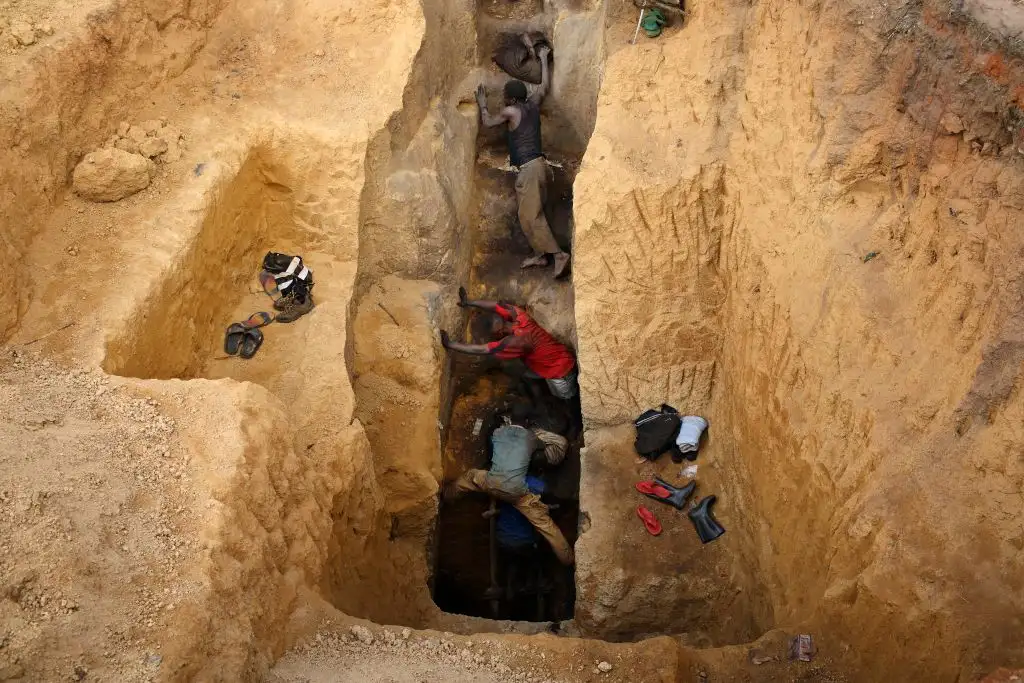
The DRC is not simply a major cobalt producer. It is, by an enormous margin, the dominant one. The country holds 71% of the world’s proven cobalt reserves, according to S&P Global, and accounts for the majority of global mined output. When it closes the tap, the market feels it immediately. Chinese imports of cobalt intermediate products from the DRC slumped by more than 90% in August 2025 compared with a year earlier, a collapse that no amount of stockpiling or alternative sourcing could easily offset.
A Quota System With a Painful Learning Curve
In October 2025, after intense negotiations, the DRC lifted the outright ban and replaced it with a quota system managed by ARECOMS — the country’s Authority for Regulation and Control of Strategic Mineral Substances’ Markets. Under the new framework, 18,125 metric tons of cobalt were allocated for export between mid-October and the end of December 2025. For 2026 and 2027, annual export quotas were set at 96,600 metric tons — less than half of the DRC’s 2024 output of roughly 220,000 metric tons.
The largest allocations went to the biggest producers in the country. China’s CMOC and Glencore received the largest quotas, while ARECOMS retained a 10% strategic reserve for projects of national importance. In theory, the system should have allowed a controlled resumption of exports. In practice, it created months of additional chaos.
New conditions layered on top of the quota framework — including a requirement that miners pay a 10% royalty in advance within 48 hours and obtain compliance certificates — left companies scrambling for clarification. Panmure Liberum analyst Duncan Hay noted that “Congo’s shifting export rules offer no certainty — last-minute royalty demands and complex paperwork will keep exports and prices volatile.” CMOC, which received a Q4 2025 quota of 6,650 tons, said the first shipments were unlikely to depart before January 2026. The first truck carrying cobalt under the new regime only left the country in January, and with the typical three-month shipping time to China, the practical effect was that Chinese processors faced an acute supply squeeze well into the first quarter of 2026.
To ease the bottleneck, ARECOMS issued Document No. 2025/006 in late 2025, extending the Q4 2025 cobalt export quotas to March 31, 2026. But even with that extension, the Shanghai Metal Market observed that quotas from the 2025 period “will only gradually arrive at ports around March–April 2026 at the earliest,” leaving China’s cobalt market facing “relatively tight supply of raw materials in Q1.”
Prices Soar, Inventories Drain
The market impact has been severe. The price of refined cobalt surged from $10 per pound in early 2025 to $25 — a more than doubling driven almost entirely by Congo’s export controls. European cobalt metal prices told an even sharper story: from $10.05 per pound in December 2024 to $24 per pound a year later, a rise of 139% according to S&P Global.
The squeeze has been even more acute for cobalt intermediates. Congolese hydroxide, a key feedstock for Chinese refineries, is priced as a percentage of the refined metal price — known as the “payable.” That payable, which was trading at around 55% of the metal price in February 2025, rose to an unprecedented 100% as buyers competed fiercely for limited supply. The reversal reflects just how dependent Chinese processors had become on a steady and affordable flow of Congolese hydroxide.
With intermediate products scarce, Chinese buyers turned to their domestic exchange inventories. Buyers withdrew more than 3,250 metric tons of cobalt metal from the Wuxi Stainless Steel Exchange — China’s foremost cobalt trading venue — by the end of January 2026, representing 37% of the exchange’s total registered inventory. That pace of drawdown signals not a measured inventory management strategy but a scramble for supply.
One decision can change your entire career. Take that step with our Online courses in ACCA, HESI A2, ATI TEAS 7, HESI EXIT, NCLEX-RN, NCLEX-PN, and Financial Literacy. Join Serrari Ed and start building your brighter future today.
The Broader Vulnerability: China’s Mining Deficit
The cobalt crisis has illuminated a structural flaw that extends well beyond a single metal. China’s strategy for critical minerals has long prioritised downstream processing and midstream refining over upstream mining — a rational approach when foreign raw materials were cheap and reliably available, but a liability when producer nations begin exercising sovereignty over their resources.
The IEA’s Global Critical Minerals Outlook 2025 notes that growth in refined material production between 2020 and 2024 was “heavily concentrated among the leading suppliers,” with roughly 90% of supply growth in cobalt coming from China alone. Yet the IEA also warns that Chinese companies own or operate as much as 80% of critical mineral production in the DRC — a dominance that is increasingly contested.
The cobalt situation mirrors vulnerabilities elsewhere. Even in rare earths — where China mines around 60% of global output — Beijing is heavily dependent on Myanmar for heavy rare earth elements like dysprosium and terbium, which are essential for the permanent magnets used in electric vehicles, wind turbines, and defence systems. According to the Heinrich Böll Foundation, China imported around 41,700 tons of rare earth materials from Myanmar in 2023 — more than twice China’s own domestic rare earth mining quota. Disruptions in Myanmar’s conflict-ridden Kachin State have repeatedly threatened this supply, with the Kachin Independence Army seizing key mining towns in October 2024 and prompting China to close border gates and halt shipments.
The pattern is consistent: China has built the world’s most sophisticated mineral processing infrastructure but has done so atop a foreign raw material base that is becoming increasingly contested.
Africa Reclaims the Narrative
The DRC’s export restrictions are part of a wider continental reassertion of mineral sovereignty. President Tshisekedi has explicitly described the export controls as “a real lever to influence this strategic market” after years of what he characterised as “predatory strategies” by international buyers. The policy has already delivered results — cobalt prices have rebounded approximately 170% from their January 2025 lows, vindicating the strategy even as implementation has been rocky.
The DRC is not alone. Zimbabwe banned exports of unprocessed lithium ore in December 2022 and plans to reinstate the ban in 2027. Namibia implemented a similar ban on raw lithium exports in June 2023. And in October 2025, Malawi announced a ban on all raw mineral exports, with the government arguing that local processing of rare earth minerals could generate up to $500 million annually. Across the continent, resource-rich nations are using export restrictions as tools of economic sovereignty — and the primary target of that strategy is China’s supply chain dominance.
Beijing’s model in the DRC — financing infrastructure, acquiring mines, and locking in offtake at below-market prices — worked for years because no alternative suitor was willing to absorb the political and commercial risks of operating in central Africa. That calculus is shifting. Chinese FDI in Africa surged 118.8% year-over-year to $3.96 billion in 2023, with mining accounting for 22% of total investment — a sign of intensified competition rather than comfortable dominance.
Washington Moves In
The United States has seized on the DRC’s pivot away from Chinese dependence with unusual urgency. The Trump administration invested significant diplomatic capital in brokering a peace deal between Kinshasa and Rwanda earlier in 2025, using security guarantees and infrastructure investment as leverage to secure preferential access to Congolese minerals.
At the centre of Washington’s strategy is the Lobito Corridor — a rail and port infrastructure project linking the DRC’s mining heartland to Angola’s Atlantic coast. In December 2025, the U.S. International Development Finance Corporation (DFC) signed a $553 million loan agreement with the Lobito Atlantic Railway, with the Development Bank of South Africa contributing an additional $200 million. The investment is designed to increase the corridor’s transport capacity tenfold to 4.6 million metric tons per year and cut transport costs by 30%.
Simultaneously, the DFC announced it was proposing up to $1 billion in financing for the rehabilitation of the Dilolo-Sakania railway line in the DRC itself, which would connect to the Lobito corridor and provide an alternative to Chinese-backed road and rail networks that currently dominate mineral transit in the region. Under the US-Congo strategic pact, Congo has committed that within five years, half of copper and 30% of cobalt controlled by DRC state-owned enterprises must flow west via the Lobito corridor.
The DFC has also announced plans to take a stake in a new joint venture between Gecamines — Congo’s state mining company — and Swiss commodity trader Mercuria, giving U.S. buyers a right of first refusal on copper and cobalt produced by the venture. It is a direct challenge to the commercial architecture China has spent decades building in the country.
China, for its part, has not stood still. In September 2025, China Civil Engineering Construction Corporation signed a $1.4 billion agreement to rehabilitate the Tanzania-Zambia (TAZARA) railway under a 30-year concession — a competing route serving the same Copperbelt region that ships minerals via Tanzanian Indian Ocean ports. The race for mineral corridor dominance in central Africa is, by any measure, intensifying.
What This Means for the Battery Industry
The cobalt squeeze is not simply a geopolitical story — it has direct consequences for the electric vehicle and battery industries that are central to the global energy transition. Higher cobalt prices increase the cost of lithium-cobalt-oxide and nickel-manganese-cobalt battery chemistries, putting pressure on EV manufacturers and battery cell producers.
Some analysts warn that the DRC’s restrictions could accelerate efforts to reduce or eliminate cobalt use in electric vehicle batteries, either through lithium-iron-phosphate chemistries that use no cobalt at all or through next-generation solid-state batteries. That transition, if it accelerates, could ultimately undermine the very leverage Kinshasa is trying to exert. ARECOMS has acknowledged this risk, noting that it reserves the right to adjust quota volumes if a “significant imbalance in the cobalt market” emerges.
For China, the more immediate concern is supply continuity. Cobalt demand is projected to grow 50-60% by 2040 under the IEA’s Stated Policies Scenario, driven primarily by EV battery deployment. As domestic Chinese demand grows, the country’s reliance on third-party suppliers for raw materials can only deepen, compounding its vulnerability to export controls and geopolitical disruptions.
A New Geopolitical Contest
Congo’s cobalt crackdown is a microcosm of a broader shift in the global minerals order. For decades, resource-rich developing nations accepted the terms offered by powerful consumers — whether Chinese state enterprises or Western commodity traders — because they lacked the leverage to do otherwise. That era is ending.
The DRC’s export controls have demonstrated that leverage is available to those willing to use it. Cobalt prices more than doubled in the span of a year. The first truck leaving the DRC under the new quota system was a modest logistical event; what it symbolised was something far larger — a producer country asserting the right to shape the market for its own resources.
For China, the lesson is uncomfortable. Its dominance in processing does not translate into security of supply when the countries providing the raw materials decide to change the rules. The cobalt squeeze in Congo, the rare earth vulnerabilities in Myanmar, the lithium export bans in Zimbabwe and Namibia — each is a separate crisis, but together they trace the outline of a systemic vulnerability that could reshape the global battery and electric vehicle industries for years to come.
Beijing built its critical minerals empire on the assumption that upstream supply would remain open, cheap, and compliant. The DRC’s export quotas are a reminder that assumptions are not the same as guarantees.
Ready to take your career to the next level? Join our Online courses: ACCA, HESI A2, ATI TEAS 7 , HESI EXIT , NCLEX – RN and NCLEX – PN, Financial Literacy!🌟 Dive into a world of opportunities and empower yourself for success. Explore more at Serrari Ed and start your exciting journey today! ✨
Track GDP, Inflation and Central Bank rates for top African markets with Serrari’s comparator tool.
See today’s Treasury bonds and Money market funds movement across financial service providers in Kenya, using Serrari’s comparator tools.
photo source: Google
By: Montel Kamau
Serrari Financial Analyst
27th February, 2026