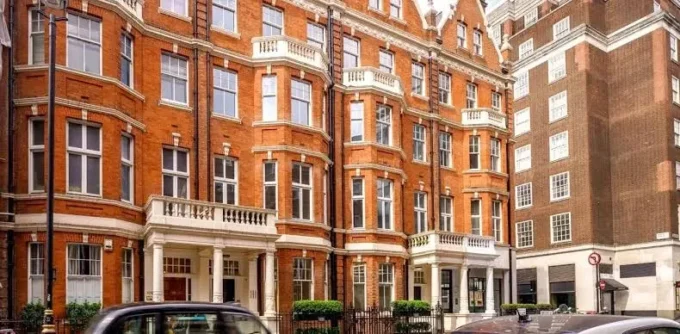
Johannesburg’s recent placement on the Global Power City Index (GPCI) — a ranking of the world’s most “magnetic” cities based on their ability to attract talent, capital, innovation and enterprise — marks more than a reputational milestone. It signals a structural shift in how global investors and high-net-worth individuals are reassessing Africa’s largest economic hub.
According to Berry Everitt, CEO of Chas Everitt International, the inclusion has coincided with a measurable acceleration in residential property activity across the city’s northern and affluent eastern suburbs. Sales volumes in these nodes are reportedly up to 40% higher than at the same point last year, while average achieved prices have risen between 6% and 15%.
In Sandton alone, total sales value has surged 60% year-on-year over the past six months. Waterfall and Bedfordview have seen value increases of up to 17%, alongside a marked rise in transactions exceeding R15 million.
These are not marginal movements. They represent early evidence of capital repositioning — both domestic and international — toward a city long considered the financial heart of Africa.
To understand why this matters, one must look beyond headline property growth and examine Johannesburg’s economic role, historical pricing cycles, regional capital flows and the emerging phenomenon of “reverse semigration.”
Build the future you deserve. Get started with our top-tier Online courses: ACCA, HESI A2, ATI TEAS 7, HESI EXIT, NCLEX-RN, NCLEX-PN, and Financial Literacy. Let Serrari Ed guide your path to success. Enroll today.
Johannesburg: Africa’s Financial Nucleus
Johannesburg is already widely regarded as Africa’s richest city by GDP concentration and private wealth metrics. It contributes approximately 16% of South Africa’s national GDP and hosts the headquarters of most of the country’s blue-chip corporations and major financial institutions.
The city houses:
- The Johannesburg Stock Exchange (JSE), Africa’s largest bourse
- Major banks and asset managers
- Multinational corporate headquarters
- Leading law and advisory firms
- The continent’s most sophisticated financial infrastructure
Historically, Johannesburg’s economic gravity has positioned it as the primary gateway for multinational capital entering sub-Saharan Africa.
However, over the past decade, sentiment cycles, infrastructure strain and governance challenges dampened enthusiasm in certain property segments. Capital flowed toward coastal regions — particularly Cape Town — as domestic buyers pursued lifestyle migration trends.
Now, early data suggests a recalibration.
The Global Power City Index Effect
The Global Power City Index evaluates cities across dimensions such as:
- Economic strength
- Research and development capability
- Cultural interaction
- Livability
- Environmental quality
- Accessibility
Inclusion signals recognition of structural competitiveness.
For global investors, city branding matters. Institutional capital allocators often benchmark urban exposure within global frameworks.
Johannesburg’s GPCI inclusion may therefore:
- Enhance foreign investor visibility
- Improve multinational relocation decisions
- Support regional headquarters consolidation
- Strengthen expatriate retention
City reputation influences property pricing.
Sales Volumes and Price Repricing
Chas Everitt’s data reflects early-stage repricing dynamics.
Key metrics include:
- 40% year-on-year increase in sales volumes in northern and eastern suburbs
- 6–15% rise in achieved average prices
- 60% surge in total sales value in Sandton
- Growing number of R15m+ transactions
Price growth between 6% and 15% exceeds inflation-adjusted norms in many mature markets.
The concentration of activity in affluent nodes suggests:
- High-income buyer participation
- Capital reallocation from other regions
- Institutional and corporate housing demand
Shrinking inventory is amplifying upward pressure.
Reverse Semigration: Capital Returns Inland
For years, South Africa experienced “semigration” toward the Western Cape, driven by perceptions of governance stability and lifestyle appeal.
Cape Town property prices surged accordingly, often reaching premium multiples relative to Johannesburg.
Now, a quiet countertrend is emerging.
Affluent families and returning expatriates are reportedly reconsidering Johannesburg due to:
- Significantly lower prime property pricing relative to Cape Town
- Proximity to business networks
- Larger property sizes at lower price points
- Corporate relocation incentives
If Cape Town’s prime markets trade at structural premiums, Johannesburg may represent relative value.
This relative valuation differential creates arbitrage appeal.
AfCFTA and Johannesburg’s Continental Gateway Role
The African Continental Free Trade Agreement (AfCFTA) is gradually reshaping regional trade flows.
As tariff barriers fall and intra-African trade expands, corporate investors require:
- Regional headquarters infrastructure
- Financial services hubs
- Legal and advisory ecosystems
Johannesburg’s depth in these sectors positions it as a natural AfCFTA beneficiary.
Entrepreneurs and investors seeking exposure to “fresh and lucrative” African markets may view Johannesburg as the operational gateway.
This gateway function supports:
- Corporate housing demand
- Executive relocation
- Commercial property leasing
- Long-term residential ownership
Property markets follow economic centrality.
Historical Property Cycles: Lessons from the Past
Johannesburg’s property market has historically moved in cycles tied to:
- Commodity price trends
- National GDP growth
- Interest rate shifts
- Political stability perceptions
During the early 2000s commodity boom, prime property appreciated strongly.
Post-2008 financial crisis volatility tempered growth.
The 2015–2022 period saw uneven performance relative to Cape Town.
Current data suggests the beginning of a new cycle driven by:
- Relative affordability
- Urban economic centrality
- Capital reallocation
However, sustainability depends on broader macro conditions.
One decision can change your entire career. Take that step with our Online courses in ACCA, HESI A2, ATI TEAS 7, HESI EXIT, NCLEX-RN, NCLEX-PN, and Financial Literacy. Join Serrari Ed and start building your brighter future today.
Pricing Relative to Cape Town
Prime properties in Johannesburg remain materially cheaper than equivalent Cape Town assets.
For high-net-worth individuals, this offers:
- Larger land parcels
- Premium security estates
- Modern corporate-linked housing
- Higher rental yields
Yield compression in Cape Town has made some segments less attractive to yield-focused investors.
Johannesburg’s rental yields often exceed those of coastal nodes, particularly in executive rental markets.
High-End Market Dynamics
The noticeable pickup in R15m+ transactions signals confidence among wealthy buyers.
High-end property sales often lead broader market cycles.
Luxury transactions reflect:
- Corporate bonus cycles
- Executive relocation
- Entrepreneur liquidity events
- International capital inflows
If sustained, this segment could anchor broader price appreciation.
Economic Multiplier Effects
Rising property values generate:
- Increased municipal revenue via rates
- Higher transaction taxes
- Construction sector expansion
- Job creation across legal, financial and brokerage services
Real estate functions as both a capital store and economic driver.
If sales momentum persists, multiplier effects could reinforce Johannesburg’s economic recovery trajectory.
Risks to Monitor
Despite positive momentum, several risks require consideration:
1. Infrastructure Constraints
Power supply stability remains critical.
2. Interest Rate Sensitivity
Higher mortgage rates could moderate demand.
3. Inventory Surge
Rapid new development could soften price gains.
4. Political Risk
Investor sentiment remains sensitive to governance signals.
5. Overconcentration in Affluent Nodes
If demand remains limited to specific suburbs, broader market spillover may lag.
Long-Term Outlook
1. AfCFTA Implementation and Johannesburg’s Continental Role
The African Continental Free Trade Agreement (AfCFTA) is designed to create the largest free trade zone in the world by number of participating countries.
If AfCFTA meaningfully deepens:
- Intra-African trade
- Cross-border investment
- Regional headquarters consolidation
- Corporate expansion into frontier markets
Johannesburg benefits structurally.
Why?
Because it already has:
- Deep financial markets (JSE)
- Sophisticated banking infrastructure
- Legal and advisory ecosystems
- International air connectivity
- Institutional corporate networks
In long-term urban economics, capital tends to cluster in cities that provide coordination advantages. Johannesburg has these advantages.
If AfCFTA accelerates trade flows across Africa, Johannesburg’s role as a coordination hub becomes more valuable — and executive housing demand follows.
That translates into:
- Sustained demand in Sandton and Waterfall
- Increased executive rental markets
- Growth in luxury residential absorption
If AfCFTA stalls, however, this tailwind weakens.
So this is a structural catalyst, but one dependent on continental execution.
2. Infrastructure Stability: The Real Constraint Variable
No property cycle sustains itself without infrastructure stability.
Johannesburg’s long-term property growth depends heavily on:
- Power supply reliability
- Water management
- Municipal service delivery
- Road and transport systems
Investors — especially foreign capital — price infrastructure risk directly into property valuations.
If South Africa stabilizes:
- Eskom’s grid
- Municipal finances
- Service delivery consistency
Then investor confidence expands.
If infrastructure deterioration continues, property growth could remain localized in secure estates while broader urban uplift stalls.
In short: infrastructure execution determines whether price growth spreads or stays narrow.
3. Relative Pricing vs Cape Town: Value Arbitrage
One of the strongest structural supports for Johannesburg property right now is relative affordability.
Prime Johannesburg homes remain significantly cheaper than equivalent properties in Cape Town.
Over the long term, price convergence tends to occur between major economic nodes unless:
- Lifestyle premiums justify divergence
- Supply constraints differ materially
Cape Town’s geographic constraints limit expansion. Johannesburg has more land flexibility.
But as Cape Town prices reach upper affordability limits for domestic buyers, Johannesburg becomes the rational alternative for:
- Corporate relocations
- Returning expatriates
- High-net-worth families seeking value
If Johannesburg maintains a pricing discount while strengthening economic positioning, gradual price normalization could continue.
However, if Cape Town cools sharply, that relative arbitrage diminishes.
4. Institutional Residential Investment
Globally, institutional investors have increasingly entered residential real estate markets.
In mature markets, pension funds and asset managers invest in:
- Rental housing portfolios
- Multifamily developments
- Build-to-rent strategies
South Africa has seen early-stage institutional residential participation.
If Johannesburg demonstrates:
- Stable rental demand
- Reliable municipal performance
- Predictable regulatory framework
Then institutional capital may increase allocation.
That would:
- Compress yields
- Increase liquidity
- Stabilize valuations
- Reduce volatility
Institutional participation is a key differentiator between speculative and structurally supported markets.
5. Interest Rate Environment
Property markets are rate-sensitive.
Over the next five years, if:
- South African interest rates gradually ease
- Inflation remains anchored
- Mortgage affordability improves
Then property demand broadens beyond affluent suburbs.
However, if rates remain elevated:
- Luxury buyers may remain active
- Mid-market growth may slow
Long-term, moderate rate normalization supports gradual price appreciation rather than boom-bust volatility.
6. Demographic and Talent Trends
Cities that grow attract people. People create housing demand.
Johannesburg’s demographic advantage lies in:
- Corporate employment concentration
- Entrepreneurial ecosystem depth
- Continental migration flows
If the city continues attracting:
- African professionals
- Multinational executives
- Skilled diaspora returnees
Then high-end residential absorption remains stable.
If talent drains to offshore markets or domestic semigration re-accelerates, momentum weakens.
Urban economic theory shows that property markets follow human capital clustering.
7. Luxury Segment as a Leading Indicator
The noticeable increase in R15m+ transactions is significant.
Luxury property segments typically lead market cycles because:
- Buyers are less rate-sensitive
- Liquidity events drive purchases
- Confidence appears first at the top
If high-end demand continues strengthening, it signals:
- Corporate earnings resilience
- Business confidence
- Capital inflows
If luxury sales stall, broader market growth may moderate.
Structural Scenarios for Johannesburg
Scenario 1: Structural Re-Rating (Bullish)
- AfCFTA deepens integration
- Infrastructure stabilizes
- Rates ease gradually
- Institutional investors enter residential
- Cape Town premium persists
Outcome:
Steady 5–8% annual price growth in prime nodes with moderate spillover to adjacent suburbs.
Scenario 2: Selective Strength (Base Case)
- Economic stability without major acceleration
- Continued demand in affluent nodes
- Mid-market remains range-bound
Outcome:
Luxury suburbs outperform; the broader market grows slowly.
Scenario 3: Infrastructure Drag (Bearish)
- Service delivery deteriorates
- Capital confidence weakens
- Rate environment tightens
Outcome:
High-end estates hold value; broader property stagnates.
What Is Most Likely?
Given current signals:
- Sales volumes rising
- Inventory shrinking
- Luxury transactions increasing
- Relative affordability attractive
The base case suggests selective but sustained strength, particularly in Sandton, Waterfall, Bedfordview and other high-security, high-service areas.
Johannesburg is unlikely to experience a speculative boom.
More probable is a gradual structural normalization, where:
- Prices rise moderately
- Yields compress slowly
- Liquidity improves
- Capital inflows become steadier
The Core Thesis
Johannesburg’s long-term property outlook hinges on whether it consolidates its position as:
Africa’s operational financial capital — not just South Africa’s business hub.
If it does, real estate becomes a beneficiary of:
- Corporate expansion
- Continental trade integration
- Talent clustering
- Capital inflows
If it fails to maintain infrastructure and governance stability, growth remains concentrated and uneven.
Why This Matters
Urban economic magnets drive national capital allocation patterns.
Johannesburg’s inclusion in the GPCI enhances:
- International investor confidence
- Talent attraction
- Corporate expansion signals
Property markets are forward-looking.
The early repricing in northern and eastern suburbs suggests that capital is responding to structural repositioning.
If Johannesburg consolidates its continental gateway role under AfCFTA, property demand could remain structurally elevated.
Conclusion
Johannesburg’s recognition on the Global Power City Index coincides with measurable acceleration in high-end property activity.
Sales volumes up 40%, price growth between 6% and 15%, and a 60% surge in Sandton’s sales value reflect renewed capital confidence.
Relative affordability compared to Cape Town, reverse semigration, AfCFTA-driven positioning, and corporate concentration all contribute to the shift.
While risks remain, early indicators suggest Johannesburg may be entering a new property cycle grounded in economic centrality rather than speculative exuberance.
For investors seeking exposure to Africa’s financial capital, Johannesburg’s real estate market may once again be commanding attention.
Ready to take your career to the next level? Join our Online courses: ACCA, HESI A2, ATI TEAS 7 , HESI EXIT , NCLEX – RN and NCLEX – PN, Financial Literacy!🌟 Dive into a world of opportunities and empower yourself for success. Explore more at Serrari Ed and start your exciting journey today! ✨
Track GDP, Inflation and Central Bank rates for top African markets with Serrari’s comparator tool.
See today’s Treasury bonds and Money market funds movement across financial service providers in Kenya, using Serrari’s comparator tools.
photo source: Google
By: Elsie Njenga
26th February,2026