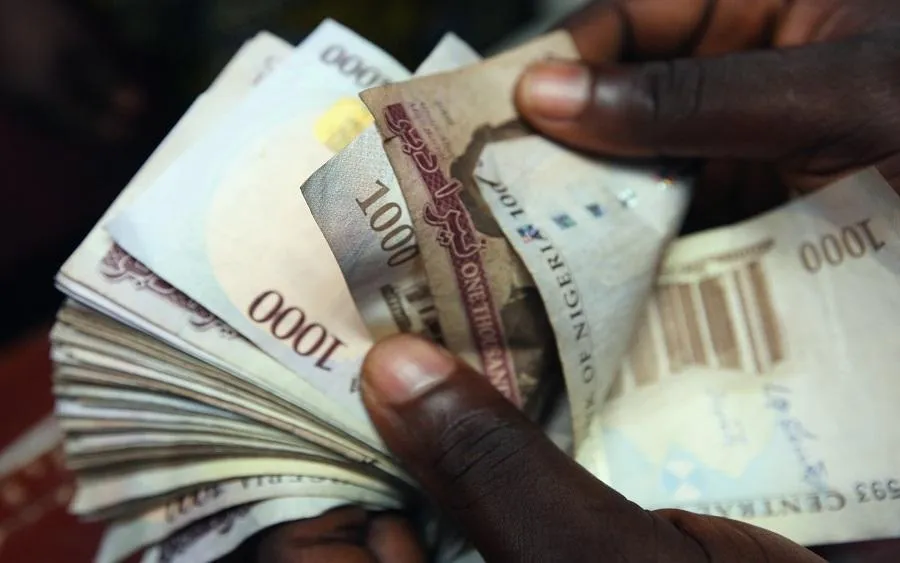
Nigeria’s foreign exchange market delivered a paradox this week. On the same day that the Central Bank of Nigeria (CBN) announced gross external reserves had climbed to a 13-year high of $50.45 billion, the naira weakened across both the official and parallel segments of the FX market.
At the Nigerian Foreign Exchange Market (NFEM) window, the naira depreciated by ₦6.13 to close at ₦1,355.37 per dollar, representing a 0.5% daily decline. In the parallel market, the depreciation was sharper: the currency slipped from ₦1,358 to ₦1,400 per dollar — a ₦42 loss, equivalent to roughly 3%.
The divergence between strengthening reserves and a weakening currency underscores a central tension in Nigeria’s macroeconomic environment: while external buffers have improved significantly, structural FX fragilities remain unresolved.
This episode provides a window into the dynamics of reserve accumulation, currency confidence, capital flows, oil dependency, monetary policy credibility, and the broader political economy of exchange rate management in Africa’s largest economy.
Build the future you deserve. Get started with our top-tier Online courses: ACCA, HESI A2, ATI TEAS 7, HESI EXIT, NCLEX-RN, NCLEX-PN, and Financial Literacy. Let Serrari Ed guide your path to success. Enroll today.
The Reserve Milestone: A 13-Year High
Governor Olayemi Cardoso disclosed at the conclusion of the 304th Monetary Policy Committee (MPC) meeting that gross external reserves reached $50.45 billion — the highest level in 13 years.
The CBN further indicated that:
- The reserve level provides approximately 9.68 months of import cover.
- External buffers are expected to rise to $51.04 billion in 2026.
- Accretion is supported by stronger oil receipts, remittance flows, and foreign portfolio inflows.
From a traditional macroeconomic standpoint, this is a powerful stabilization metric.
Import cover above six months is generally considered comfortable by international standards. Nigeria now exceeds that benchmark.
Reserves function as:
- A shock absorber against external volatility.
- A signal to international investors of solvency.
- A liquidity source for FX market interventions.
- A confidence anchor for sovereign credit profiles.
On paper, the macro narrative looks improved.
Yet the naira’s behavior tells a different story.
Why Did the Naira Weaken?
Currency markets price expectations, not just balance sheet metrics.
Despite higher reserves, several forces likely contributed to naira depreciation:
1. Market Liquidity Demand
Increased demand for dollars may have outpaced supply in the short term, particularly if corporates and importers anticipated volatility.
2. Parallel Market Psychology
The parallel market often reacts more aggressively to sentiment shifts. A widening spread can amplify speculative positioning.
3. Confidence vs Buffer Disconnect
Reserves may have risen due to:
- Short-term portfolio flows.
- Sovereign borrowing.
- Oil windfalls.
If markets believe reserves are not structurally diversified or sustainable, currency confidence may remain fragile.
4. Structural FX Backlogs
Nigeria has faced historical FX backlog issues, where unmet dollar demand accumulates.
Even with higher reserves, legacy demand pressure can persist.
Historical Context: Nigeria’s FX Cycles
Nigeria’s currency history over the past decade reveals a recurring pattern:
- Oil price surge → Reserve build-up → Currency stability.
- Oil price collapse → Reserve drawdown → Devaluation pressure.
- Administrative controls → Market distortion → Parallel market premium.
The 2016 oil crash triggered severe naira pressure and reserve depletion.
The COVID-19 pandemic compounded FX stress in 2020.
The 2023–2024 reform era introduced a more market-driven exchange framework.
This week’s developments must be viewed within that cyclical context.
Higher reserves do not automatically erase structural FX imbalances.
Oil, Remittances, and Portfolio Flows
The composition of reserves matters.
Nigeria’s reserve strength likely reflects:
- Improved oil production and pricing.
- Increased diaspora remittance inflows.
- Foreign portfolio investment in domestic debt.
However, these inflows differ in stability:
- Oil receipts are volatile.
- Portfolio flows are reversible.
- Remittances are relatively stable.
If reserves are heavily portfolio-driven, markets may remain cautious.
One decision can change your entire career. Take that step with our Online courses in ACCA, HESI A2, ATI TEAS 7, HESI EXIT, NCLEX-RN, NCLEX-PN, and Financial Literacy. Join Serrari Ed and start building your brighter future today.
Monetary Policy Signaling
The MPC’s communication emphasized confidence and continuity.
Governor Cardoso’s remarks suggest a commitment to reserve accumulation.
Monetary credibility is central to currency stabilization.
If markets trust that:
- Policy rates are aligned with inflation dynamics.
- FX interventions are disciplined.
- Fiscal coordination is credible.
Then reserves can reinforce currency stability.
If trust is partial, volatility persists.
The Official vs Parallel Market Spread
The divergence between the official rate (₦1,355.37) and parallel rate (₦1,400) highlights structural segmentation.
A persistent spread indicates:
- Access constraints.
- Liquidity bottlenecks.
- Confidence gaps.
Over time, narrowing spreads are critical for normalization.
Risks to Monitor
Several risks could influence future currency behavior:
Oil Price Volatility
Nigeria remains oil-dependent.
Portfolio Flow Reversals
Global risk sentiment shifts could reverse inflows.
Inflation Dynamics
Domestic price pressures affect rate decisions.
Fiscal Slippage
Budget imbalances can undermine reserve accumulation.
Political and Reform Fatigue
Sustained reforms require political endurance.
Long-Term Outlook: Buffer Strength Meets Structural Reform
If reserve growth continues sustainably and structural FX reforms hold, Nigeria could experience:
- Reduced volatility.
- Lower risk premiums.
- Stronger sovereign credit metrics.
- Narrowing parallel market spreads.
However, reserves alone are insufficient.
Structural diversification beyond oil is essential.
Manufacturing exports, service sector expansion, and digital economy inflows must grow.
Why This Matters
The fact that Nigeria’s external reserves have climbed to a 13-year high while the naira continues to weaken is not just a short-term currency story. It is a structural macroeconomic signal with implications that extend into financial stability, capital flows, fiscal policy, and even regional economic positioning.
Here are five key reasons why this development matters.
1. It Tests the Credibility of Nigeria’s Monetary Reform Agenda
Nigeria has undergone significant exchange-rate and monetary reforms in recent years. Moving toward a more unified and market-driven FX system was meant to restore investor confidence and reduce distortions that previously plagued the system.
When reserves rise but the currency still weakens, markets are essentially asking:
- Are reforms deep enough?
- Is liquidity sustainable?
- Are inflows structural or temporary?
If reserve accumulation translates into sustained currency stability over time, it validates the reform framework.
But if depreciation persists despite high reserves, it suggests that:
- Structural FX demand remains unresolved.
- Confidence recovery is incomplete.
- Market participants may doubt the durability of policy changes.
In emerging markets, credibility is currency.
This episode becomes a live stress test of Nigeria’s post-reform monetary architecture.
2. It Shapes Nigeria’s Sovereign Risk Perception
External reserves are one of the most closely watched indicators by credit rating agencies and global investors.
At $50.45 billion and nearly 9.7 months of import cover, Nigeria now appears better insulated from:
- Oil price shocks
- Capital flight
- External debt service pressure
This improves:
- Sovereign bond pricing
- Eurobond yield spreads
- Foreign portfolio investor confidence
- International lending conditions
However, the naira’s depreciation introduces complexity.
If markets interpret reserve growth as fragile or temporary, sovereign risk premiums may not fall as much as expected.
In other words:
Strong reserves should lower Nigeria’s borrowing costs — but only if markets believe they are sustainable.
This matters because Nigeria’s fiscal position remains sensitive to external financing costs.
3. It Affects Domestic Inflation and Living Standards
Exchange rate movements directly influence inflation in Nigeria due to high import dependency.
When the naira weakens:
- Imported goods become more expensive.
- Fuel costs can rise.
- Food inflation may accelerate.
- Manufacturing input costs increase.
Even if reserves are strong, a depreciating currency can:
- Erode purchasing power.
- Increase business operating costs.
- Strain household budgets.
For citizens and SMEs, the currency’s value matters more than reserve statistics.
If reserves eventually stabilize the naira, inflation pressures could moderate.
If not, domestic economic strain persists.
Thus, this situation has real social and economic consequences beyond financial markets.
4. It Signals Structural FX Demand Imbalances
A strong reserve position should theoretically strengthen a currency.
If it doesn’t, that implies deeper structural imbalances.
Possible structural pressures include:
- Persistent import demand
- Unmet FX backlog obligations
- Corporate dollar hedging
- Capital outflows
- External debt servicing demand
The parallel market weakening to ₦1,400 per dollar highlights confidence issues that reserves alone cannot immediately resolve.
This matters because:
- Structural FX imbalances distort pricing.
- They encourage speculation.
- They widen official–parallel spreads.
- They undermine policy transmission.
If Nigeria can convert reserve strength into improved FX market functionality — narrower spreads, smoother liquidity — the economy benefits.
If not, dual-market distortions remain entrenched.
5. It Influences Regional Economic Stability
Nigeria is Africa’s largest economy and a major regional trade anchor.
Its currency stability affects:
- West African trade corridors
- Cross-border settlements
- Investor appetite for African assets
- Regional financial confidence
A volatile naira can create:
- Trade settlement uncertainty
- Capital allocation hesitation
- Higher regional risk perception
Conversely, stable reserves combined with currency stabilization could:
- Strengthen Nigeria’s leadership role.
- Enhance ECOWAS economic integration.
- Attract long-term foreign direct investment.
In emerging markets, perception often drives capital allocation as much as fundamentals.
Nigeria’s currency trajectory therefore matters beyond its borders.
The Deeper Issue: Buffer Strength vs Structural Reform
The most important reason this matters is conceptual.
External reserves are a buffer.
Structural competitiveness is a foundation.
Reserves can:
- Buy time.
- Smooth volatility.
- Defend against shocks.
But they cannot replace:
- Export diversification.
- Productivity growth.
- Fiscal discipline.
- Investor trust.
If reserve accumulation becomes a bridge toward structural transformation, Nigeria strengthens.
If reserves are treated as the primary defense while structural weaknesses persist, currency fragility may resurface during the next external shock.
Final Perspective
The coexistence of a record reserve position and a weakening currency reveals that macroeconomic stabilization is not a single-variable equation.
It is a multi-layered process involving:
- Liquidity
- Confidence
- Policy consistency
- Structural competitiveness
- External conditions
This moment matters because it sits at the intersection of progress and vulnerability.
Nigeria has built a stronger external cushion than it has had in over a decade.
Now the challenge is converting that cushion into lasting currency credibility and structural resilience.
That is what will ultimately determine whether this reserve milestone marks a turning point — or simply a temporary high watermark.
Conclusion
Nigeria’s foreign reserves reaching a 13-year high of $50.45 billion represents a significant macroeconomic milestone.
Yet the naira’s simultaneous weakening reveals that buffers do not immediately translate into confidence.
Currency markets respond to structural expectations, liquidity dynamics, and reform credibility.
The coming months will test whether reserve strength evolves into sustained currency stability or remains a temporary cushion amid ongoing structural fragility.
Nigeria stands at a familiar crossroads — but with stronger reserves than it has seen in over a decade.
The question now is whether those reserves anchor confidence or simply postpone volatility.
Ready to take your career to the next level? Join our Online courses: ACCA, HESI A2, ATI TEAS 7 , HESI EXIT , NCLEX – RN and NCLEX – PN, Financial Literacy!🌟 Dive into a world of opportunities and empower yourself for success. Explore more at Serrari Ed and start your exciting journey today! ✨
Track GDP, Inflation and Central Bank rates for top African markets with Serrari’s comparator tool.
See today’s Treasury bonds and Money market funds movement across financial service providers in Kenya, using Serrari’s comparator tools.
By: Elsie Njenga
25th February,2026