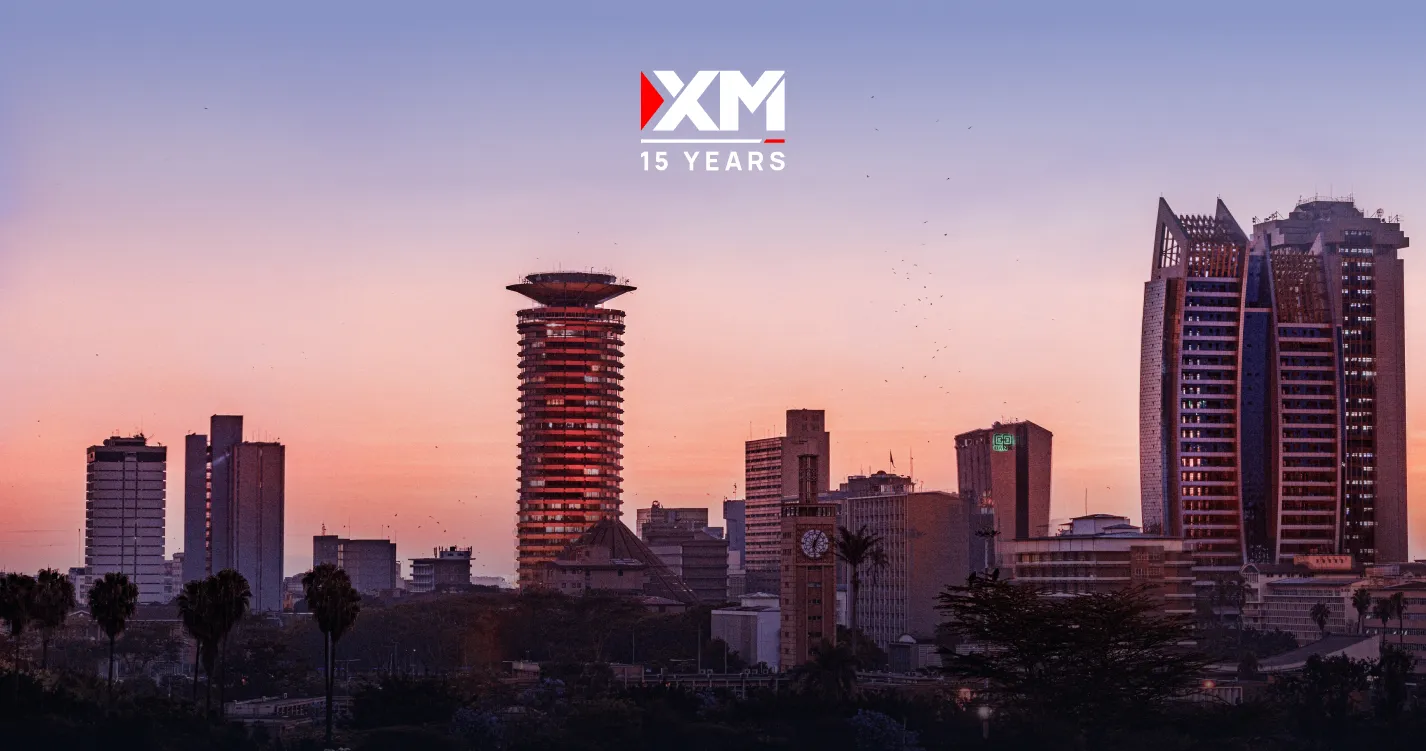
Global retail broker XM has obtained a licence from the Capital Markets Authority (CMA) of Kenya, becoming the latest international broker to seek local regulatory status in one of Africa’s most active and rapidly growing retail trading markets. The approval, announced on February 24, 2026, marks a significant step in XM’s strategic expansion across Africa and comes as the broker continues a broad push to deepen its regulatory footprint across multiple regions simultaneously.
The Kenya CMA licence allows XM to provide trading services, educational materials, and customer support to Kenyan clients under direct local regulatory oversight — a move the company says reflects its commitment to operating within established compliance standards and aligning with Kenya’s financial framework. To support the launch, XM has established a dedicated Kenyan website at xm.ke, through which clients can onboard and access the company’s full suite of trading products.
“Kenya represents a dynamic and rapidly growing financial market, and receiving authorization from the CMA is a testament to our commitment to regulatory excellence and market leadership,” said Menelaos Menelaou, co-Chief Executive Officer of XM. “We are proud to enhance our presence in Kenya, providing local traders with direct access to our world-class ecosystem of products and award-winning services under a robust, locally recognized regulatory framework.”
Build the future you deserve. Get started with our top-tier Online courses: ACCA, HESI A2, ATI TEAS 7, HESI EXIT, NCLEX-RN, NCLEX-PN, and Financial Literacy. Let Serrari Ed guide your path to success. Enroll today.
What the CMA Licence Means for Kenyan Traders
The Capital Markets Authority of Kenya was established in 1989 through the Capital Markets Act, Cap 485A, as an independent public agency responsible for licensing, supervising, and monitoring capital market intermediaries operating in the country. Its regulatory framework for online forex trading was introduced in 2017, making Kenya one of the few African countries with a comprehensive dedicated structure for retail forex and CFD regulation.
Under CMA rules, licensed brokers must maintain a minimum capital base, keep client funds in segregated accounts separate from company operational funds, and adhere to leverage caps of up to 1:400 to protect retail investors from excessive risk. Brokers are also subject to regular financial and operational audits and must participate in Kenya’s Investor Compensation Fund, which provides compensation to investors in the event of broker insolvency.
For Kenyan traders, the practical impact of XM’s CMA approval is substantial. It means all XM operations in the country will now adhere to the strict compliance and investor protection standards set by the Authority, providing a domestic legal framework for dispute resolution and investor redress that did not previously apply to XM’s Kenyan client base. Through the dedicated xm.ke website, Kenyan clients gain access to more than 1,400 financial instruments, along with fast execution, leverage options, promotional bonuses, and a range of trading tools subject to local regulations.
The CMA has licensed a growing number of international brokers to operate in Kenya in recent years, including Exness, which holds CMA license number 162, and Pepperstone, which operates under CMA license 128 via its local entity Pepperstone Markets Kenya Ltd. HFM Investments Limited and IC Markets are among other global names that have sought Kenyan regulatory approval as the country cements its position as East Africa’s leading centre for retail forex and CFD trading.
The Dubai SCA Licence: A Different Regulatory Model
The Kenya CMA approval follows closely on the heels of XM’s move into the United Arab Emirates, where the company secured a Category 5 licence from the Securities and Commodities Authority (SCA) of Dubai in September 2025, with the licence activated before the end of that year.
The SCA’s Category 5 licence operates on a fundamentally different model from a full brokerage licence. Under this category, firms may operate similarly to introducing brokers, promoting their services to potential clients in the UAE and directing them to be onboarded under non-UAE entities. Crucially, a Category 5 licence does not permit holding client funds or executing trades locally — activities that require the higher-tier Category 1 licence. XM’s UAE operations therefore function as a promotional and referral gateway to its international trading infrastructure, rather than as a standalone domestic brokerage.
The licence was granted to a locally formed entity, XM Financial Products Promotion, established specifically for this purpose. XM also opened a Dubai office in the city’s iconic Opus Building at Business Bay, signalling a meaningful physical commitment to the UAE market. A dedicated Arabic and English website was launched at xm.ae to support client acquisition in the country.
XM is not alone in pursuing the SCA Category 5 route. A number of other international brokers have taken the same path, including Exinity, VT Markets, Eightcap, EC Markets, and Taurex. A smaller cohort, including Plus500, XTB, and RoboMarkets, opted for Dubai’s full brokerage licence. The draw of the Middle East for brokers is well documented: Capital.com has reported that 52% of its first-half trading volume came from the region, and CFI Financial, a Middle East-focused CFDs broker, processed a record $1.51 trillion in trading volume in the second quarter of 2025 alone.
Separately, XM also operates under the Dubai Financial Services Authority (DFSA), a separate and more stringent regulator governing the Dubai International Financial Centre (DIFC), under licence number F003484. This gives XM a dual regulatory presence in the UAE — one under the SCA for mainland operations and one under the DFSA for activities within the DIFC free zone.
One decision can change your entire career. Take that step with our Online courses in ACCA, HESI A2, ATI TEAS 7, HESI EXIT, NCLEX-RN, NCLEX-PN, and Financial Literacy. Join Serrari Ed and start building your brighter future today.
XM’s Full Global Regulatory Architecture
The Kenya and UAE approvals are two elements of a broader, multi-jurisdictional licensing strategy that XM has pursued over more than 15 years of operations. The company now holds regulatory licences across several jurisdictions, each serving a different geographic or client base.
The foundational licence remains with the Cyprus Securities and Exchange Commission (CySEC), where XM’s EU entity, Trading Point of Financial Instruments Ltd, is authorised under CySEC licence number 120/10. As a Cyprus-based Investment Firm operating under the Markets in Financial Instruments Directive (MiFID II), XM’s EU entity has passporting rights across the European Economic Area, allowing it to serve clients throughout the EU under a single regulatory framework. CySEC-regulated entities must maintain minimum capital requirements, participate in the Investor Compensation Fund which provides client protection of up to €20,000, enforce negative balance protection for retail clients, and segregate client funds from company operational accounts.
Beyond Europe, XM’s international operations run through XM Global Limited, which is regulated by the Financial Services Commission (FSC) in Belize under licence number 000261/27. The Belize entity enables XM to accept clients from many countries globally that fall outside its EU regulatory coverage, including offering higher leverage options — up to 1:1000 in some cases — for traders in non-restricted jurisdictions who are not subject to European leverage caps.
For African clients outside Kenya, XM also holds a licence from the Financial Sector Conduct Authority (FSCA) of South Africa under licence number 49976. South Africa’s FSCA is one of the continent’s most established financial regulators, and the licence gives XM a regulated gateway for clients in the broader southern African region. In addition, XM International MU Limited operates under regulation from the Financial Services Commission (FSC) of Mauritius, providing regulatory coverage for clients in the Indian Ocean and broader offshore market.
Together with the CMA licence now secured in Kenya, XM’s African regulatory presence spans South Africa, Mauritius, and Kenya — three distinct regulatory frameworks covering a significant portion of the continent’s retail trading activity.
Kenya’s Retail Trading Market: Why Brokers Are Paying Attention
Kenya’s growing appeal to international brokers is not incidental. The country’s retail forex and CFD market has expanded considerably over the past decade, driven by widespread smartphone and mobile internet adoption, the ubiquity of mobile money platforms like M-Pesa that simplify broker deposits and withdrawals, and a youthful population with growing interest in financial markets as an income source.
The CMA’s regulatory framework for online forex trading has been in place since 2017, establishing Kenya as one of the few Sub-Saharan African markets with a comprehensive and enforced regime for retail trading. This has attracted a growing roster of global names seeking local licences, and the list of CMA-authorised brokers has expanded steadily in recent years. The regulator has licensed 10 or more non-dealing online forex brokers, a category that XM’s Kenyan entity now joins.
For traders, the distinction between using a CMA-regulated broker versus an unregulated offshore platform is significant. CMA regulation enforces strict rules: client fund segregation, regular audits, legal investor protection, and access to a domestic dispute resolution mechanism. Offshore brokers serving Kenyan clients without a CMA licence — a category the regulator has repeatedly advised traders against using — offer no such protections. The CMA’s own Investor Compensation Fund gives an additional safety net that offshore-only platforms cannot replicate.
XM serves more than 15 million clients globally across more than 190 countries, and its Kenya entry brings one of the world’s largest retail brokers fully into the country’s regulated market for the first time. The broker’s offering under the CMA licence will include access to over 1,400 financial instruments — spanning forex, commodities, indices, equities, and other asset classes — alongside educational content, customer support, and trading tools.
A Broader Pattern: International Brokers Racing for African Licences
XM’s Kenya approval fits a broader pattern of international brokers accelerating their push for local regulatory status across Africa’s emerging retail trading markets. The combination of favourable demographics, rising internet penetration, and relatively open regulatory environments has made several African jurisdictions increasingly attractive targets for global platforms looking to grow their client base beyond saturated European and North American markets.
Kenya’s CMA is arguably the most established forex-specific regulator on the continent, with a track record stretching back to 2017 and a growing list of licensees that includes some of the world’s most recognisable retail brokers. South Africa’s FSCA offers a similarly well-regarded framework for brokers targeting the southern African market. Mauritius and Seychelles, while smaller jurisdictions, serve as regulatory bases for a number of international platforms looking for an Africa-adjacent presence without the more stringent capital and operational requirements of the larger regulators.
As XM’s co-CEO Menelaou noted, the intent behind the Kenyan licence is to operate within a locally recognised regulatory framework that provides Kenyan traders with the same standards of transparency and investor protection that define XM’s operations in Europe and other regulated markets. Whether the broader pattern of global brokers seeking African licences translates into measurable improvements in retail trader outcomes on the continent will depend in part on how robustly regulators like the CMA enforce the rules they have put in place — and how effectively they extend their reach to the still-large offshore segment of the market that operates beyond their jurisdiction.
For now, XM’s entry into Kenya’s regulated market represents both a commercial bet on a fast-growing trading population and a signal that the continent’s most serious retail brokers are no longer content to serve African clients from a distance.
Ready to take your career to the next level? Join our Online courses: ACCA, HESI A2, ATI TEAS 7 , HESI EXIT , NCLEX – RN and NCLEX – PN, Financial Literacy!🌟 Dive into a world of opportunities and empower yourself for success. Explore more at Serrari Ed and start your exciting journey today! ✨
Track GDP, Inflation and Central Bank rates for top African markets with Serrari’s comparator tool.
See today’s Treasury bonds and Money market funds movement across financial service providers in Kenya, using Serrari’s comparator tools.
photo source: Google
By: Montel Kamau
Serrari Financial Analyst
25th February, 2026