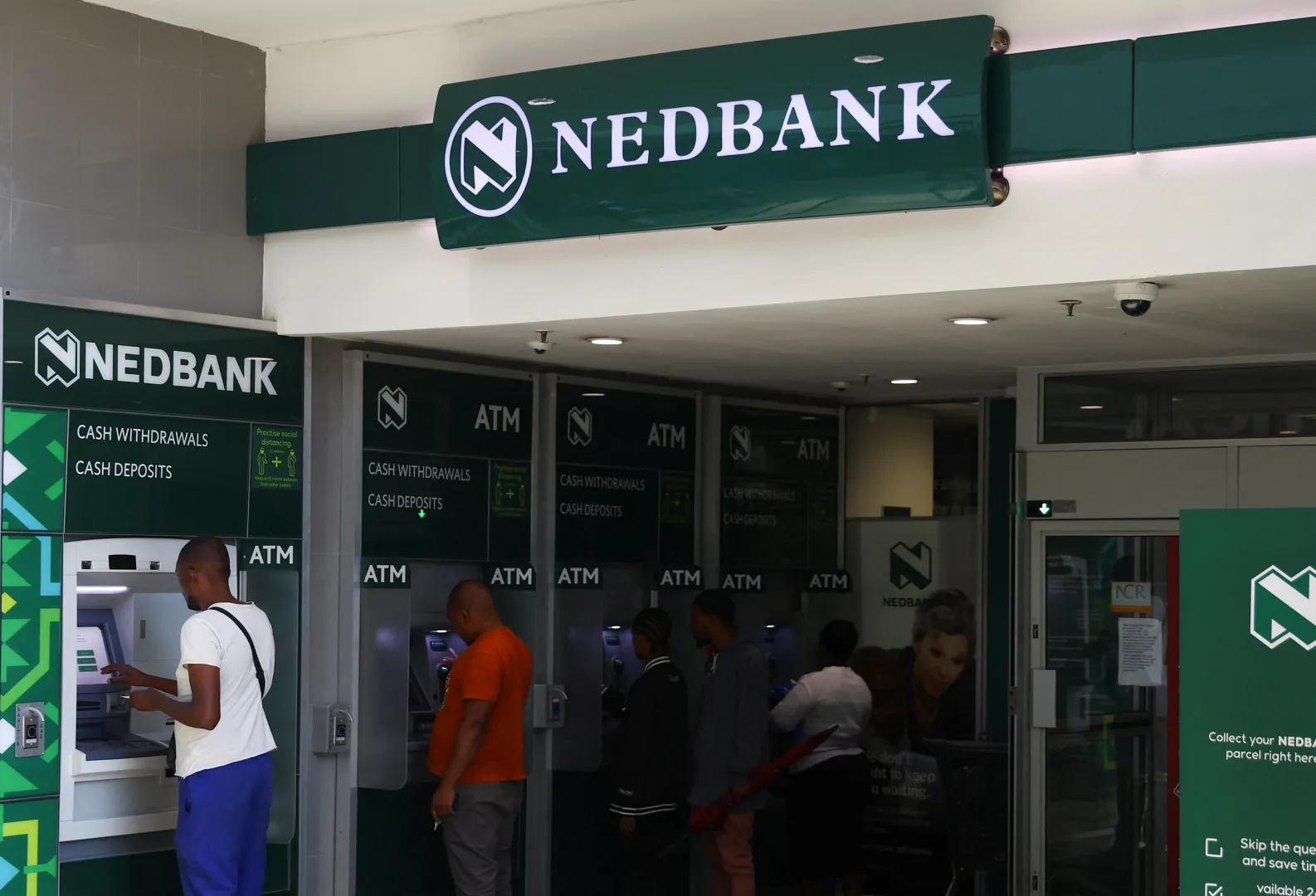
South Africa’s Nedbank Group has moved decisively closer to securing its largest-ever cross-border acquisition, after Kenya’s Capital Markets Authority granted a critical regulatory waiver and shareholder commitment to the deal climbed to 77.54 percent of NCBA’s total issued shares — up from 71.2 percent when the tender offer was first announced in January. The dual development, disclosed on February 23, 2026, signals that Nedbank’s audacious R13.9 billion bid for a controlling stake in Kenya’s NCBA Group is rapidly transitioning from aspiration to near-certainty, reshaping the competitive architecture of East African banking.
Build the future you deserve. Get started with our top-tier Online courses: ACCA, HESI A2, ATI TEAS 7, HESI EXIT, NCLEX-RN, NCLEX-PN, and Financial Literacy. Let Serrari Ed guide your path to success. Enroll today.
The Deal in Brief: What Nedbank Is Buying and What It Is Paying
On January 21, 2026, Nedbank Group formally submitted a tender offer to acquire approximately 66 percent of NCBA Group’s ordinary shares, a controlling stake in one of East Africa’s most prominent financial services groups. The total purchase consideration stands at around R13.9 billion — equivalent to approximately $856 million — based on Nedbank’s issue price of ZAR 250.00 per share at the time of the announcement.
The payment structure is notably equity-heavy. Shareholders who accept the tender offer will receive 20% of the consideration in cash, with the remaining 80% paid in newly issued Nedbank ordinary shares listed on the Johannesburg Stock Exchange. This structure limits the cash burden on Nedbank while simultaneously aligning NCBA shareholders with the long-term performance of the combined group — a design choice that analysts say reflects a deliberate capital-preservation strategy.
The proposed transaction values NCBA at 1.4 times its book value. This pricing matters in context: NCBA has delivered an average return on equity of approximately 19% since 2021, compared to Nedbank’s own return on equity of around 15%. The premium Nedbank is paying reflects not just NCBA’s current profitability but its strategic positioning as the continent’s most digitally advanced retail bank by customer numbers. The offer was priced at 105 Kenyan shillings per NCBA share, compared to a previous close of 90 shillings — a premium that provides immediate liquidity value for smaller shareholders.
Once the acquisition is completed, NCBA will become a subsidiary of Nedbank. The remaining 34 percent of NCBA shares will continue to trade publicly on the Nairobi Securities Exchange, preserving NCBA’s local listing status and maintaining the visibility and accountability that come with being a publicly traded entity in Kenya’s market.
The CMA Waiver: Why It Was Critical
Perhaps the most consequential development announced on February 23 was the granting of an exemption by Kenya’s Capital Markets Authority. Under the Capital Markets (Takeovers and Mergers) Regulations, 2002, acquiring above certain ownership thresholds in a publicly listed Kenyan company normally triggers a mandatory requirement to extend a takeover offer to all remaining shareholders. For Nedbank, proceeding with a 66% partial acquisition without such an exemption would have transformed the deal into a potentially far more expensive and operationally complex full buyout of 100% of NCBA’s shares.
The CMA granted the exemption on February 19, 2026, fulfilling one of the core conditions attached to Nedbank’s January circular. Nedbank had been required to secure this regulatory clearance by May 31, 2026 at the latest. Without it, the condition would have been waived, and the transaction would have automatically converted to a full takeover offer — a scenario that would have significantly altered the deal’s economics and its attractiveness to Nedbank.
By securing the CMA waiver, Nedbank preserves the partial acquisition structure that allows it to take strategic control of NCBA while leaving a meaningful float on the NSE. This balance is critical for several reasons: it maintains local investor participation, ensures continued compliance with Kenya’s listing requirements, and avoids the full delisting of one of the NSE’s most liquid banking stocks.
The offer remains subject to further conditions, including approvals from central banks across the jurisdictions in which NCBA and Nedbank operate. The transaction is expected to conclude by the third quarter of 2026, subject to the fulfilment of these remaining regulatory and customary requirements.
Rising Shareholder Commitment: Who Is Selling and Why
The increase in irrevocable undertakings from 71.2% to 77.54% of total NCBA shares is more than a numerical update — it reflects the depth of conviction among NCBA’s concentrated ownership base that the Nedbank deal is their optimal exit and reinvestment opportunity.
NCBA’s shareholder register reads like a who’s who of Kenya’s most prominent business and political families. The Ndegwa family, descendants of erstwhile Central Bank of Kenya Governor Philip Ndegwa, hold the largest stake at approximately 14.94% through First Chartered Securities. Close behind is the Kenyatta family, linked to a stake of about 13.2% through Enke Investments. Other significant holders include D&M Management Services LLP at roughly 11.5% and Brookshire Limited at approximately 8.63%.
The fact that shareholders representing over three-quarters of NCBA’s issued capital have committed — irrevocably — to accepting the Nedbank offer sends a powerful signal. Irrevocable undertakings are legally binding commitments to tender shares; they cannot be withdrawn if a superior offer emerges from a third party. The willingness of such a concentrated and sophisticated shareholder base to make that commitment suggests a high level of conviction that the deal’s terms are fair and that the regulatory path to completion is now sufficiently clear.
NCBA had, over time, attracted interest from multiple suitors. Business Day reported that Standard Bank, which already derives more than 40% of its earnings outside South Africa, was also interested in buying NCBA. NCBA CEO John Gachora revealed that the board ultimately chose Nedbank over rival bidders because it prioritised minimal disruption to its business, staff, and brand. Since Nedbank currently operates only a representative office in Kenya and has no overlapping banking presence in NCBA’s markets, the two institutions can combine without the painful systems integration, branch rationalisation, and job losses that have historically characterised East African banking mergers.
One decision can change your entire career. Take that step with our Online courses in ACCA, HESI A2, ATI TEAS 7, HESI EXIT, NCLEX-RN, NCLEX-PN, and Financial Literacy. Join Serrari Ed and start building your brighter future today.
NCBA: Africa’s Largest Bank by Customer Numbers
To understand what Nedbank is acquiring, one must grasp the scale and sophistication of NCBA’s franchise. Formed in 2019 through the merger of NIC Group PLC and Commercial Bank of Africa, NCBA has grown into the largest banking group in Africa by customer numbers, serving more than 60 million clients across a six-country footprint that spans Kenya, Uganda, Tanzania, Rwanda, Ivory Coast, and Ghana through 122 branches.
NCBA’s balance sheet is substantial: the bank manages KES 665 billion (approximately ZAR 84.4 billion) in assets. But perhaps the most striking single data point is its digital lending operation: NCBA disburses more than KES 1 trillion in digital loans annually — a scale of digital credit delivery that reflects its leadership in mobile-first financial services.
Central to this digital dominance is M-Shwari, NCBA’s flagship product developed in partnership with Safaricom. M-Shwari allows M-Pesa customers to save and borrow directly from their phones — a product that has become one of the most widely used financial tools in sub-Saharan Africa and a cornerstone of Kenya’s financial inclusion story. For Nedbank, which has deep corporate and investment banking capabilities but limited retail reach in East Africa, acquiring NCBA’s digital franchise represents a leap that organic growth could never have replicated within any reasonable timeframe.
Nedbank’s Strategic Logic: From South African Concentration to East African Scale
Nedbank’s pursuit of NCBA is rooted in an urgent strategic imperative. South Africa’s fourth-largest bank is acutely dependent on its domestic market: the South African franchise contributes 90% of Nedbank’s R1.4 trillion in assets and 79% of its headline earnings. By comparison, Standard Bank derives more than 40% of its earnings from 20 African countries outside South Africa. Nedbank’s geographic concentration is both a financial vulnerability and a strategic constraint.
CEO Jason Quinn, who took control of the group just over a year ago following the retirement of long-serving CEO Mike Brown, has moved rapidly to address this imbalance. Quinn has described the NCBA acquisition as a “milestone” in Nedbank’s strategy to grow its Southern and East African footprint, citing Kenya’s role as a regional financial hub supported by strong institutions, sophisticated capital markets, and a dynamic technology sector as a “natural anchor” for the bank’s East African ambitions.
The deal is also a deliberate course correction after Nedbank’s difficult experience in West Africa, where a 21% minority stake in Ecobank Transnational Incorporated failed to deliver the returns or the strategic influence the bank had hoped for. Nedbank has since sold that Ecobank stake for $100 million, signalling a deliberate pivot away from minority investments in volatile markets toward controlling stakes in high-growth, well-governed jurisdictions where it can exercise genuine operational direction.
East Africa fits that profile precisely. The region serves as a primary trade corridor linking Africa with the Middle East, India, and Asia, supported by a large and growing population, macroeconomic stability relative to other African subregions, and rapid digital adoption across financial services.
Looking Ahead: DRC, Ethiopia, and the Next Frontier
The ambition embedded in this deal extends well beyond NCBA’s current six-country footprint. NCBA Managing Director John Gachora has framed the partnership as a springboard for further regional expansion, noting that Nedbank’s strong balance sheet will enable the merged group to scale in existing markets and “explore the investment proposition that the Democratic Republic of Congo and Ethiopia have to offer.”
Both markets represent enormous untapped potential. Ethiopia — Africa’s second most populous country with a population exceeding 120 million — has begun cautiously opening its financial sector to foreign investment after decades of state-controlled banking. The DRC, sitting atop one of the world’s most mineral-rich territories, is increasingly attracting cross-border banking infrastructure as mining activity and regional trade intensify. For the combined Nedbank-NCBA entity, these frontier markets represent the next logical step in a pan-African build-out that few South African lenders have ever genuinely attempted.
For Kenyan retail investors and minority shareholders, the deal offers a more immediate benefit. The tender offer prices NCBA shares at KES 105 — a premium above the market price of KES 90 at the time of announcement — providing direct liquidity upside. And for the 34% of NCBA shareholders who do not tender their shares, the NSE listing will continue, with the added benefit of a better-capitalised parent company behind the bank.
The deal’s expected closure in Q3 2026 means that by year-end, East Africa’s banking landscape will look meaningfully different. A South African bank with the balance sheet depth and corporate banking expertise to challenge the incumbent East African lenders will, for the first time, hold a controlling stake in the region’s largest bank by customer numbers. Kenya’s financial sector — long defined by competition among local giants and select multinational banks — will gain a new heavyweight that is neither a traditional development finance institution nor a colonial-era retail franchise, but a modern, commercially-driven South African bank with a clear mandate to grow.
Sources: TechCabal, Business Day (South Africa), Nedbank Group Official Press Release, NSX (Namibia Stock Exchange SENS), BusinessTech, Business Daily Africa, CNBC Africa, Semafor, Billionaires Africa, Innovation Village, HapaKenya, Tuko.co.ke, Ecofin Agency
Ready to take your career to the next level? Join our Online courses: ACCA, HESI A2, ATI TEAS 7 , HESI EXIT , NCLEX – RN and NCLEX – PN, Financial Literacy!🌟 Dive into a world of opportunities and empower yourself for success. Explore more at Serrari Ed and start your exciting journey today! ✨
Track GDP, Inflation and Central Bank rates for top African markets with Serrari’s comparator tool.
See today’s Treasury bonds and Money market funds movement across financial service providers in Kenya, using Serrari’s comparator tools.
photo source: Google
By: Montel Kamau
Serrari Financial Analyst
24th February, 2026