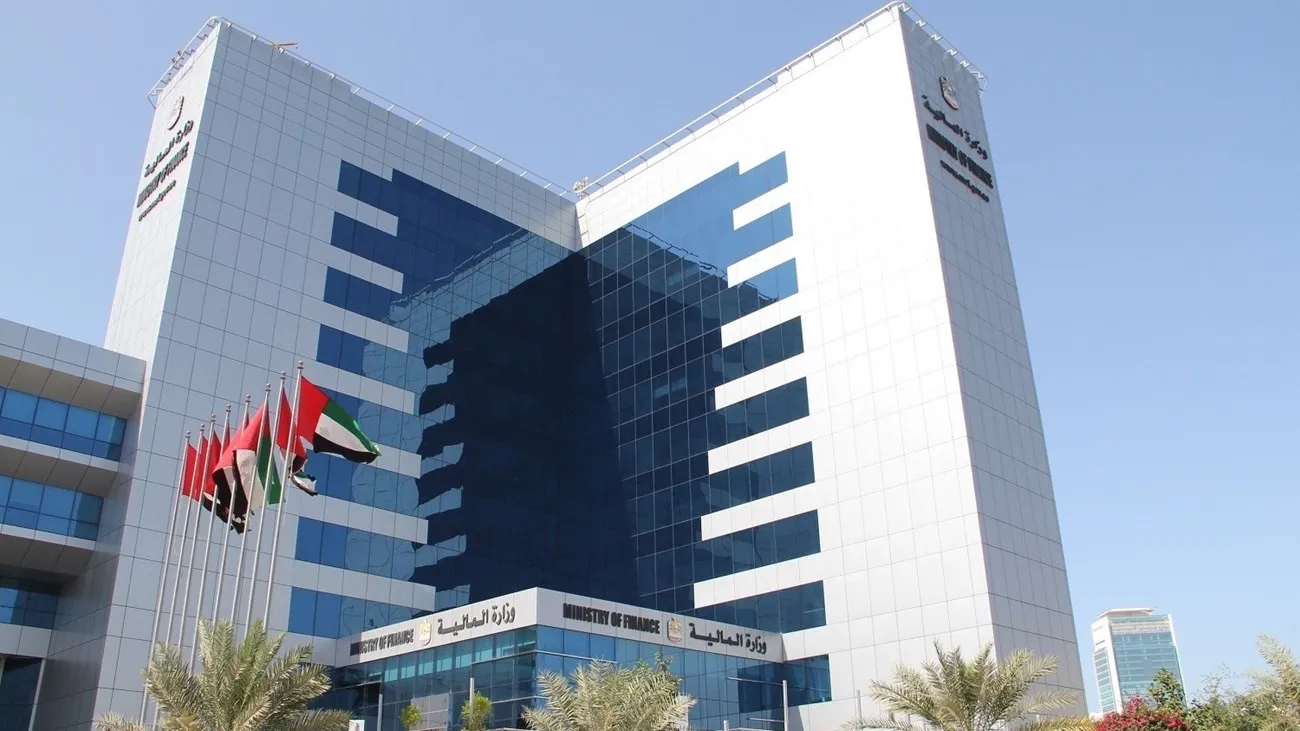
The United Arab Emirates has crossed a significant milestone in its capital markets journey. The UAE Ministry of Finance (MoF), in collaboration with the Central Bank of the UAE (CBUAE) as issuing and payment agent, announced the launch of the country’s first-ever 7-year tranche of UAE dirham-denominated Islamic Treasury Sukuk (T-Sukuk), valued at AED 550 million (approximately $150 million). The issuance marks the longest tenor ever issued under the programme to date, and it attracted overwhelming interest from institutional investors, cementing the UAE’s growing stature as a global hub for Sharia-compliant finance.
The new tranche received bids totalling approximately AED 3.1 billion — nearly six times the issuance size — a decisive signal of investor confidence in both the UAE’s creditworthiness and the resilience of its Islamic finance framework. The oversubscription ratio of approximately six times for the 7-year tranche alone reflects the depth of appetite in the market for longer-dated, Sharia-compliant government instruments denominated in the local currency.
Build the future you deserve. Get started with our top-tier Online courses: ACCA, HESI A2, ATI TEAS 7, HESI EXIT, NCLEX-RN, NCLEX-PN, and Financial Literacy. Let Serrari Ed guide your path to success. Enroll today.
Details of the February 2026 Auction
The 7-year tranche was issued as part of the broader February 2026 Islamic T-Sukuk auction, which saw a total issuance of AED 1.1 billion. The auction covered two tranches: one maturing in May 2030 and the historic first-ever 7-year tranche maturing in February 2033. Both tranches drew robust participation from the eight primary dealers that underpin the UAE’s domestic debt market infrastructure.
Across both tranches, total bids reached AED 5.88 billion, representing an overall oversubscription ratio of 5.3 times — a figure that underscores the strong appetite for UAE sovereign Islamic debt instruments. The auction achieved competitive, market-driven pricing: the May 2030 tranche priced at a yield to maturity (YTM) of 3.53 percent, while the February 2033 tranche — the new 7-year paper — priced at a YTM of 3.779 percent. Significantly, both tranches priced below comparable US Treasury yields at the time of issuance, a reflection of the UAE’s favourable sovereign credit standing.
The Sukuk are listed under the UAE Treasury Islamic Sukuk Programme on Nasdaq Dubai, an arrangement designed to enhance investor access in the secondary market and to attract a broader range of regional and international institutional buyers.
Extending the Dirham Yield Curve: Why This Matters
The introduction of a 7-year tenor is far more than an incremental addition to the UAE’s existing sukuk toolkit. It is a deliberate strategic step in the government’s multi-year effort to build out a comprehensive UAE dirham-denominated yield curve — a foundational pillar of any mature domestic capital market. A well-defined yield curve serves as the reference point for pricing a wide range of financial products, from corporate bonds and sukuk to long-term mortgage rates and infrastructure financing.
Prior to this issuance, the T-Sukuk programme had primarily offered shorter-dated instruments. The extension to seven years fills a meaningful gap in the yield curve, giving institutional investors — including banks, pension funds, and asset managers — a longer-duration, Sharia-compliant anchor point for portfolio construction. According to Khaleej Times, market participants noted that the introduction of longer-dated sukuk represents a meaningful development that provides institutional investors with more options along the dirham yield curve.
The Ministry of Finance has previously emphasised that establishing a yield curve in dirhams offers strategic advantages that support sustainable economic growth and market development. A robust dirham yield curve reduces reliance on foreign currency benchmarks for domestic pricing, deepens the local debt capital market, and offers the private sector access to alternative financing resources benchmarked against a credible sovereign reference rate.
Earlier in January 2026, the MoF had already commenced the year with momentum, announcing the first new T-Bonds tranche since March 2023 alongside a T-Sukuk issuance — both amounting to a combined AED 1.1 billion. That auction also reflected the government’s sustained commitment to deepening the AED yield curve, with strong participation and bid coverage confirming market appetite for dirham-denominated sovereign instruments.
UAE’s Record Sukuk Issuance Trajectory
The February 2026 issuance comes against the backdrop of a record-setting performance by UAE’s debt capital market. According to Fitch Ratings, the UAE’s debt capital market surpassed $325 billion in outstanding debt at the end of 2025, representing a 9.3 percent year-on-year increase, and is projected to surpass $350 billion by the end of 2026. Fitch’s global head of Islamic finance noted that the UAE registered the highest-ever annual sukuk issuance in 2025, with dollar sukuk issuance surging by more than 130 percent year-on-year.
The UAE ranked as the world’s second-largest dollar sukuk issuer in 2025 and the third-largest issuer of ESG-linked sukuk globally. GCC countries — led by Saudi Arabia and the UAE — accounted for 45 percent of total global sukuk issuance in 2025, according to S&P Global Ratings. Global sukuk issuance reached $264.8 billion in 2025, up from $234.9 billion in 2024, and S&P projects further growth to $270–$280 billion in 2026, driven by lower oil prices, higher financing needs, and potential Federal Reserve rate cuts.
Fitch separately reported that global sukuk outstanding crossed $1 trillion at end-2025 for the first time in history, with projections pointing to $2.16 trillion outstanding by 2028. ESG sukuk alone surged to over $50 billion in outstanding by year-end 2025, with UAE issuers holding a 20 percent share of this segment. These numbers position the UAE T-Sukuk programme not merely as a liquidity management tool, but as a critical instrument in the broader global Islamic finance ecosystem.
One decision can change your entire career. Take that step with our Online courses in ACCA, HESI A2, ATI TEAS 7, HESI EXIT, NCLEX-RN, NCLEX-PN, and Financial Literacy. Join Serrari Ed and start building your brighter future today.
UAE’s Islamic Finance Ambitions: A 2031 Vision
The 7-year T-Sukuk issuance is one piece of a much larger strategic puzzle. The UAE government has outlined an ambitious plan to nearly triple Islamic banking assets from AED 986 billion to AED 2.56 trillion by 2031. Locally listed sukuk are targeted to reach AED 660 billion, with international sukuk climbing to AED 395 billion within the same timeframe. This strategy — overseen by a committee chaired by the UAE Central Bank governor — is deemed credit positive by rating agencies and is expected to enhance profitability and liquidity management across the Islamic banking sector.
As of early 2026, UAE Islamic banking assets have already surpassed AED 1.15 trillion, with 45 licensed banks and Islamic banking representing approximately 25 percent of the total banking system. The sector has registered double-digit annual growth for the past five years. Moody’s Ratings has highlighted that the government’s Islamic finance strategy will allow banks to invest in higher-quality, higher-yielding sukuk, reducing reliance on low-yield cash placements and boosting fee income through increased business volumes.
The UAE’s Islamic fintech sector is thriving in parallel, with over 30 fintech startups offering digital payments, peer-to-peer financing, and Sharia-compliant digital solutions. The Islamic fintech industry in the UAE is projected to grow into a $6.43 billion sector by 2030, further reinforcing the country’s position as a global leader in Islamic finance innovation — a position that sovereign T-Sukuk issuances underpin from the top down.
Retail Sukuk and Broadening Investor Access
The deepening of the T-Sukuk programme comes alongside efforts to democratise access to sovereign Sharia-compliant instruments. In late 2025, the UAE government announced a retail sukuk initiative allowing UAE residents to invest in government sukuk from as little as AED 4,000 through participating commercial banks. This initiative represents a fundamental shift in the sukuk market’s reach — extending participation beyond the institutional investor segment to ordinary residents and savers.
The retail sukuk programme is designed to promote financial inclusion, encourage medium- to long-term savings, and generate a more diversified investor base that complements the domestic banking system. For residents, the instrument offers exposure to sovereign Islamic debt denominated in the local currency with minimal currency risk. For the government, it provides access to a more stable, domestic funding base in dirhams, reducing dependence on foreign-currency debt. Against this backdrop, the total outstanding bonds and sukuk in the UAE reached approximately $309.4 billion by Q1 2025, marking an 8.3 percent year-on-year rise.
What Pricing Below US Treasuries Signals
One of the standout features of the February 2026 auction is that both tranches priced below comparable US Treasuries at the time of issuance. This is a significant and telling outcome. In fixed income markets, pricing below a global benchmark like US Treasuries typically indicates that investors perceive the issuer as carrying minimal risk — often because of strong sovereign credit ratings, a stable macroeconomic environment, or a scarcity premium on the specific instrument.
For the UAE, this pricing outcome aligns with its strong sovereign credit standing. The country holds high investment-grade ratings from major rating agencies and has consistently demonstrated fiscal prudence and economic resilience. According to Fitch, 92.1 percent of the $28 billion in UAE sukuk rated by the agency in Q1 2025 were investment grade, with 39.2 percent in the ‘A’ category. Crucially, no rated Islamic finance issuer or sukuk in the UAE defaulted in 2024 or Q1 2025, underscoring the sector’s exceptional stability.
Furthermore, the ability to price below US Treasuries on a local-currency Islamic instrument signals that the UAE’s dirham sukuk market has matured to a point where it offers credible, liquid alternatives to foreign-currency benchmarks. This is precisely the kind of outcome that the government’s yield curve development strategy aims to generate over the long term.
Broader Market Context and Outlook
The UAE’s domestic sukuk push takes place within a globally favourable environment for Islamic finance. S&P Global expects global sukuk issuance to reach $270–$280 billion in 2026, supported by lower oil prices increasing borrowing needs in some GCC states, strong economic performance in core Islamic finance markets, and an expected 50 basis point US Federal Reserve rate cut in the second half of 2026. Lower global interest rates generally make sukuk more attractive relative to cash, boosting demand for longer-dated instruments.
Analysts expect the UAE government to continue deepening the T-Sukuk programme throughout 2026, with demand consistently outpacing issuance across every auction to date. The issuance calendar for 2025 had targeted an aggregate AED 9.9 billion in T-Sukuk issuances through six two-tranche auctions — and each auction has exceeded expectations. The February 2026 edition, with its historic 7-year tenor and a combined oversubscription of 5.3 times, continues that pattern with remarkable consistency.
The Emirates NBD precedent also illustrates the cascading effect of a robust sovereign yield curve. Following the UAE government’s establishment of the dirham yield curve through T-Bonds and T-Sukuk, Emirates NBD became the first bank to issue a dirham-denominated bond — a direct consequence of having a credible benchmark rate. As the yield curve deepens further with the addition of longer tenors, more private sector entities are expected to follow, further enriching the UAE’s local currency capital markets.
Conclusion: A Milestone With Long-Term Implications
The launch of the UAE’s first-ever 7-year Islamic Treasury Sukuk tranche is a watershed moment in the country’s financial market development narrative. Backed by AED 3.1 billion in bids — nearly six times oversubscribed — and priced below comparable US Treasuries, this issuance sends a powerful message about investor confidence in the UAE’s economic fundamentals and its Islamic finance credentials.
More broadly, the issuance reflects a deliberate and coherent strategy: to build a deep, liquid, and credible dirham-denominated yield curve that serves as the backbone for a modern domestic debt capital market. As the UAE’s debt capital market heads toward the $350 billion threshold in 2026 and as the government pursues its 2031 Islamic finance targets, sovereign sukuk programmes like the T-Sukuk will continue to play an indispensable role — providing the market infrastructure upon which banks, corporations, and retail investors can build their financial futures in compliance with Islamic principles.
For global investors, sovereign wealth funds, and Islamic finance institutions watching from Nairobi to Kuala Lumpur, this issuance demonstrates that the UAE remains not just a participant in the global Islamic debt market, but one of its most dynamic and innovative architects.
Ready to take your career to the next level? Join our Online courses: ACCA, HESI A2, ATI TEAS 7 , HESI EXIT , NCLEX – RN and NCLEX – PN, Financial Literacy!🌟 Dive into a world of opportunities and empower yourself for success. Explore more at Serrari Ed and start your exciting journey today! ✨
Track GDP, Inflation and Central Bank rates for top African markets with Serrari’s comparator tool.
See today’s Treasury bonds and Money market funds movement across financial service providers in Kenya, using Serrari’s comparator tools.
photo source: Google
By: Montel Kamau
Serrari Financial Analyst
23rd February, 2026