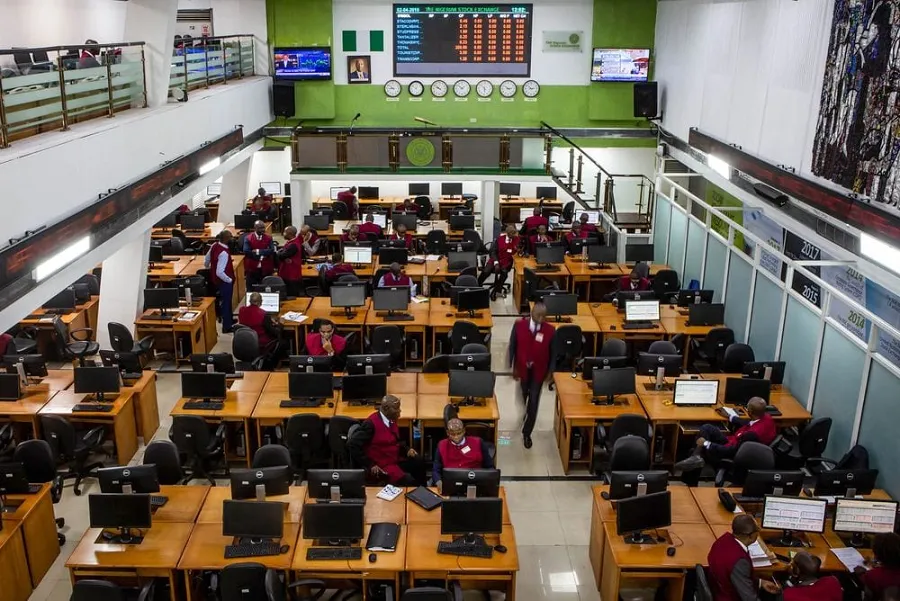
On the morning of February 18, 2026, the Nigerian Exchange Limited quietly rewrote the rules of its own market. For the first time in the Exchange’s history, a commercial paper instrument was formally admitted to trading — not over the counter, not through a dealer network, but on the floor of Nigeria’s premier bourse. The issuer was Dangote Cement Plc, Africa’s largest cement producer, and the transaction covered two series of commercial papers worth a combined ₦119.87 billion under the company’s ₦500 billion Commercial Paper Issuance Programme. It was a milestone that market practitioners had anticipated since the Exchange introduced its commercial paper listing framework in 2025 — and one that carries consequences far beyond the transaction itself.
The listing is not merely a product addition. It represents a structural shift in how Nigerian corporates can access short-term capital, how investors can participate in the money market, and how the country’s debt capital market is positioned relative to its African peers. Coming as it does within the broader context of sweeping reforms to Nigeria’s capital markets regulatory architecture — including a new SEC commercial paper framework that took full effect in July 2025 — the Dangote Cement listing signals that the era of opaque, over-the-counter commercial paper trading in Nigeria may finally be drawing to a close.
Build the future you deserve. Get started with our top-tier Online courses: ACCA, HESI A2, ATI TEAS 7, HESI EXIT, NCLEX-RN, NCLEX-PN, and Financial Literacy. Let Serrari Ed guide your path to success. Enroll today.
The Transaction: Two Series, One Historic Listing
The mechanics of the listing are instructive. Dangote Cement’s Series 1 Commercial Paper, valued at ₦19.95 billion, carries a tenor of 181 days and is scheduled to mature on May 20, 2026. The far larger Series 2 issuance, totalling ₦99.92 billion, has a 265-day tenor and matures on August 12, 2026. Both instruments were issued at a discount and will be redeemed at their par value of ₦1,000 upon maturity — a standard structure for discount-issued commercial paper that allows investors to capture yield through the differential between purchase price and par value.
The implied yields tell an important story about current market conditions in Nigeria. Series 1 was priced at an implied yield of 17.50%, while Series 2 commanded 19.00%, with the yield differential reflecting the duration premium investors demand for holding longer-tenor paper even within the sub-one-year maturity spectrum. In a Nigerian financial environment where the Central Bank’s Monetary Policy Rate sat above 27% through much of 2025 before its first rate cut in years, these yields represent competitive, market-clearing rates for a blue-chip corporate borrower of Dangote Cement’s standing.
The strong subscription levels and demand for both series underscore what market analysts have noted: institutional and qualified investors in Nigeria have a sustained and growing appetite for high-quality, short-tenor corporate debt instruments, particularly from issuers with established credit profiles and a track record of market engagement.
Why This Matters: From OTC Opacity to Exchange Transparency
To appreciate the significance of this listing, it is important to understand the traditional structure of Nigeria’s commercial paper market. Until now, commercial papers in Nigeria were traded exclusively over the counter — arranged privately between issuers, arrangers, and investors, with limited price transparency and virtually no secondary market liquidity. An investor who purchased a commercial paper effectively held it to maturity, with little ability to exit the position in an efficient manner.
This structure served the market reasonably well in its early stages, but as volumes grew — SEC-approved commercial paper programmes exceeded ₦1.3 trillion in total approved amount by October 2025 — the limitations became more apparent. Price discovery was inconsistent, secondary market tradability was limited, and participation was effectively restricted to large institutional players with access to dealer networks. Retail and smaller institutional investors were largely shut out of a market that offered attractive yields.
NGX’s commercial paper listing framework, which received SEC approval and was formally introduced in December 2025 following the enactment of the Investments and Securities Act 2025 by President Tinubu in March of that year, aims to address all of these structural deficiencies simultaneously. By bringing commercial papers onto a regulated exchange platform, it introduces mandatory disclosure standards, continuous price visibility, standardised settlement processes, and the foundation for genuine secondary market liquidity. The Dangote Cement listing is the first live demonstration that the framework is operational.
David Adonri, Vice Chairman of Highcap Securities Limited and a senior dealing member of the Exchange, confirmed Dangote Cement’s CP listing as NGX’s first, noting that the key objective is to ease capital formation for corporates and improve price discovery to enhance secondary market tradability. “The CP listing framework supports market liquidity and makes risk pricing more transparent,” he added. Adonri also described the development as evidence of increasing sophistication within Nigeria’s debt capital market, noting that the transaction sets a pricing benchmark for future commercial paper issuances and reinforces investor confidence in well-rated corporate names.
Dangote Cement: A Blue-Chip Trailblazer
The choice of Dangote Cement as the pioneer issuer for NGX’s commercial paper listing is not coincidental. As Africa’s largest cement producer with a total installed capacity of 55 million tonnes per annum across ten countries, Dangote Cement carries the kind of credit profile and market credibility that can anchor a new market instrument and attract institutional investor confidence.
The company’s recent financial performance reinforces that standing. In the first half of 2025, Dangote Cement posted group revenue of ₦2.07 trillion, up 17.7% year-on-year, while profit after tax surged 174.1% to ₦520.5 billion — nearly a threefold increase. The group’s EBITDA rose 41.8% to ₦944.9 billion, with an EBITDA margin expanding to 45.6%. Nigeria remained the company’s dominant revenue engine, contributing 67.89% of total group revenue at ₦1.44 trillion in H1 2025, a 45.5% year-on-year rise.
For the nine months ended September 2025, Nigeria’s revenue increased by 42.4% to ₦2,181.1 billion, with group EBITDA surging 57.2% to ₦1,428.2 billion. These are numbers that speak to a business generating substantial operating cash flows — and yet, even with such performance, Nigeria’s persistently high bank lending rates mean that accessing working capital through the banking system remains costly. In an economy where the cost of borrowing from commercial banks is too high, exchange-listed commercial papers offer manufacturers a competitively priced, transparent alternative.
Dangote Cement has historically relied on domestic capital markets for much of its local currency funding, including regular commercial paper issuances through various channels. Its willingness to serve as the pioneer issuer under the new NGX framework signals confidence in the platform and sets a template for other corporate issuers to follow.
One decision can change your entire career. Take that step with our Online courses in ACCA, HESI A2, ATI TEAS 7, HESI EXIT, NCLEX-RN, NCLEX-PN, and Financial Literacy. Join Serrari Ed and start building your brighter future today.
The Regulatory Architecture Behind the Milestone
The NGX commercial paper listing did not emerge in a vacuum. It sits within a comprehensive overhaul of Nigeria’s capital market regulatory framework that has been underway since at least 2024. The SEC’s issuance of new Commercial Paper Rules in December 2024, which took full effect on July 1, 2025, established for the first time full SEC regulatory oversight over the registration, issuance, and conduct of commercial paper transactions in Nigeria. Prior to this, the commercial paper market in Nigeria operated with limited formal oversight, contributing to the transparency deficits that the new framework seeks to address.
Under the SEC’s CP Rules, all professional parties involved in commercial paper transactions — arrangers, dealers, issuing and paying agents — must be registered as capital market operators with the SEC. Eligible issuers must be duly incorporated companies in operation for at least five years, possess three years of audited financial statements with the most recent not older than nine months, and maintain a minimum shareholders’ fund of ₦500 million along with an investment-grade credit rating from a SEC-registered rating agency. These requirements ensure that only financially credible issuers access the exchange-listed CP market, protecting investors while maintaining market integrity.
The listing also aligns directly with the SEC’s 2026 capital market deepening agenda, which prioritises product innovation and the expansion of Nigeria’s capital market offerings. While the SEC’s 2026 strategy has a longer-term focus on mobilising patient capital for infrastructure through bonds, REITs, and green finance instruments, it explicitly supports the formalisation and deepening of the short-term instruments market as a complementary pillar. The Dangote Cement CP listing represents a direct operationalisation of that agenda.
NGX CEO Jude Chiemeka has previously described the introduction of commercial paper listings as “a pivotal step in our strategy to position NGX as a comprehensive capital-markets infrastructure that accelerates capital formation across Africa.” The February 18 listing transforms that statement from aspiration to operational reality.
The NASD Context: Exchange Competition and Market Depth
It is worth noting that NGX is not the first Nigerian marketplace to provide a platform for commercial paper. The NASD OTC Securities Exchange has, over the past year, steadily evolved into a dominant platform for the issuance and quotation of commercial papers, effectively becoming a warehouse for short-term corporate funding. The NASD’s streamlined quotation process and growing investor participation have made it the preferred marketplace for many CP issuances.
The entry of NGX into the exchange-listed CP space introduces a new competitive dynamic. Whereas NASD’s model is rooted in OTC quotation with disclosure enhancements, NGX’s framework aims to create a fully exchange-traded environment with continuous price formation and a more structured secondary market. The two platforms serve complementary functions, and the coexistence of both is likely to deepen Nigeria’s overall short-term debt market rather than cannibalise either platform’s market share.
What the NGX listing specifically adds — and what distinguishes it from existing NASD quotations — is the formal exchange admission process, the higher visibility that comes with an exchange listing, and the potential for retail investor participation at some future stage as the framework matures. For issuers, an NGX listing carries brand cachet and signals a commitment to the highest standards of market transparency.
Implications for Nigeria’s Corporate Funding Landscape
The broader implications of this listing for Nigeria’s corporate sector are substantial. Nigeria’s high interest rate environment — the CBN’s Monetary Policy Rate remained at 27.50% for much of 2025 before a modest cut in September — has made bank lending prohibitively expensive for many corporates, particularly in the manufacturing sector. The average prime lending rate from commercial banks has hovered well above 30% in recent periods, pricing out businesses that need working capital financing but cannot sustain such borrowing costs.
Exchange-listed commercial papers offer an alternative. For investment-grade issuers like Dangote Cement, the ability to access institutional investors directly — at yields of 17% to 19% rather than bank rates exceeding 30% — represents a meaningful cost advantage. The savings on interest expense directly improve margins and free up cash for operational investment, capital expenditure, and dividend distributions.
Beyond cost, the formalisation of the CP market through an exchange listing removes some of the informational asymmetry that has historically disadvantaged smaller institutional investors in the commercial paper space. When pricing, terms, and issuer disclosure are standardised and publicly available through an exchange platform, even smaller fund managers and pension funds can participate on equal footing with the largest banks and asset managers.
The listing also creates a new class of investment product for Nigeria’s growing institutional investment base. Pension fund administrators, insurance companies, and fund managers seeking short-duration, high-quality fixed income assets now have a regulated, exchange-listed instrument with greater liquidity optionality than traditional OTC commercial papers.
What Comes Next: Building on the Benchmark
Market operators are already anticipating a pipeline of issuers following Dangote Cement’s trailblazing listing. In a market where SEC-approved CP programmes exceeded ₦683.8 billion as of October 2025 — covering a wide range of issuers across sectors — there is a substantial pool of existing CP issuers who could choose to shift their future issuances onto the NGX platform for the enhanced visibility and liquidity benefits it offers.
The Dangote Cement listing establishes a yield benchmark — 17.50% for sub-six-month paper, 19.00% for nine-month paper — that will serve as a reference point for pricing future issuances. This price discovery function is among the most valuable contributions an exchange listing can make to a nascent market segment. As more issuances follow and secondary market trading activity develops, yield curves for short-dated Nigerian corporate paper will become more defined, improving the overall efficiency of capital allocation in the money market.
The secondary market dimension deserves emphasis. A key limitation of the traditional OTC commercial paper market was the absence of a genuine secondary market, forcing investors to hold instruments to maturity. NGX’s platform introduces the infrastructure for investors to buy and sell listed commercial papers between admission and maturity — a development that, if secondary market liquidity develops as intended, will significantly improve the attractiveness of the instrument to a broader investor base.
For NGX itself, the commercial paper listing represents an important step in its evolution from a primarily equity-focused exchange to a truly comprehensive capital markets infrastructure. With equities, bonds, and now commercial papers on its platform, the Exchange is positioned to support Nigerian corporates across the full spectrum of their funding needs — from long-term equity capital to medium-term bond financing to short-term working capital instruments.
Conclusion: A Market at an Inflection Point
Nigeria’s capital market is at an inflection point. The confluence of regulatory modernisation under the ISA 2025, the SEC’s proactive market deepening agenda, NGX’s product innovation, and the growing funding pressures on Nigerian corporates in a high-rate environment has created the conditions for structural change in how corporate debt is originated, distributed, and traded in Africa’s largest economy.
The admission of Dangote Cement’s commercial papers to NGX on February 18, 2026 is the first concrete manifestation of that change in the short-term debt segment. It will not be the last. As more issuers follow, as secondary market trading develops, and as investor familiarity with exchange-listed commercial papers deepens, the architecture being established today will underpin a more transparent, liquid, and inclusive Nigerian debt capital market for years to come.
For now, the milestone belongs to Dangote Cement and to the Nigerian Exchange. But its significance extends to every corporate treasurer, institutional investor, and market regulator in the country — and, increasingly, across Africa.
Ready to take your career to the next level? Join our Online courses: ACCA, HESI A2, ATI TEAS 7 , HESI EXIT , NCLEX – RN and NCLEX – PN, Financial Literacy!🌟 Dive into a world of opportunities and empower yourself for success. Explore more at Serrari Ed and start your exciting journey today! ✨
Track GDP, Inflation and Central Bank rates for top African markets with Serrari’s comparator tool.
See today’s Treasury bonds and Money market funds movement across financial service providers in Kenya, using Serrari’s comparator tools.
photo source: Google
By: Montel Kamau
Serrari Financial Analyst
20th February, 2026