South Africa’s headline consumer inflation edged down to 3.5% year-on-year in January 2026, retreating from December’s 3.6% and landing back at its November 2025 level, according to data released by Statistics South Africa (Stats SA) on Wednesday. While the figure came in slightly above the median economist estimate of 3.4% — trimming forward-rate expectations for a March cut — it broadly affirmed the South African Reserve Bank’s (SARB) view that inflation has peaked and that the structural disinflationary trend remains intact.
The monthly change in the Consumer Price Index (CPI) was 0.2%, matching December’s pace, while core inflation — which strips out food, non-alcoholic beverages, fuel and energy — rose to a near one-year high of 3.4% from 3.3% in December, signalling that services-side pressures have not entirely dissipated. The data paints a picture of a two-speed inflation landscape: goods prices are retreating convincingly, but services and food remain stubborn battlegrounds for policymakers.
Build the future you deserve. Get started with our top-tier Online courses: ACCA, HESI A2, ATI TEAS 7, HESI EXIT, NCLEX-RN, NCLEX-PN, and Financial Literacy. Let Serrari Ed guide your path to success. Enroll today.
A Landmark Year in Context: The New 3% Target
The January reading carries additional significance because it is among the first CPI prints to be assessed against South Africa’s newly adopted 3% inflation target, which Finance Minister Enoch Godongwana announced in his Medium-Term Budget Policy Statement in November 2025, replacing the longstanding 3%–6% band that had been in place for a quarter of a century. The revised target — set at 3% with a tolerance band of one percentage point either side — immediately changed the calculus for monetary policy, effectively signalling that South Africa is aiming for a structurally lower inflation regime comparable to its major trading partners.
SARB Governor Lesetja Kganyago has been an ardent champion of the shift. Announcing the rate hold at the January 2026 MPC meeting, Kganyago noted that 2025’s average CPI of 3.2% was “close to our 3% objective” — the lowest average annual inflation rate in 21 years and below the central bank’s own forecast of 3.3%. The National Treasury’s formal endorsement of the framework has enhanced policy credibility and, according to analysts, is already helping to reduce the inflation risk premium embedded in domestic interest rates.
What Drove January’s Numbers: Fuel Offsets Food
The primary driver pulling headline inflation lower in January was transport — specifically, fuel prices. The fuel index fell 3.7% year-on-year in January, reversing the 0.6% increase recorded in December 2025 and more than offsetting the upward pressures emanating from the food basket. On a month-on-month basis, the transport category turned slightly negative — a meaningful swing factor when compared against December’s numbers, and one that reflects the combined benefit of the rand’s relative strength and lower global crude oil prices.
Stats SA Chief Director for Price Statistics Patrick Kelly confirmed that stable food inflation and lower fuel prices were the twin anchors of the lower headline rate, describing a January reading that returned comfortably to the territory last seen in November.
Goods inflation fell to 2.7% from 3.0%, continuing a clear deceleration that has been building over much of 2025. Services inflation, by contrast, remained sticky at 4.2%, unchanged from the prior month — a pattern consistent with the broader global experience, where the “last mile” of disinflation proves harder to close than the initial reduction in goods prices.
The Food Basket: Relief in Cereals, Alarm at the Meat Counter
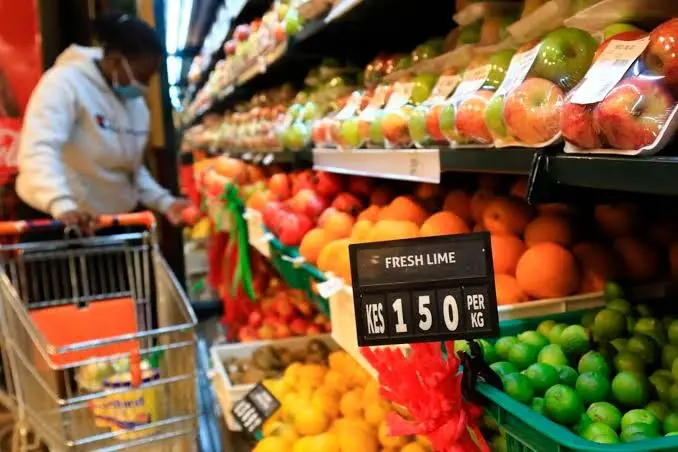
Food and non-alcoholic beverages inflation held steady at 4.4% for a third consecutive month — a stable if elevated reading that masks significant divergences within the category. On the encouraging side, cereal inflation fell sharply to 0.6% from 2.1% in December, with white rice recording an 11th consecutive month of deflation at -11.0%. Maize meal inflation eased dramatically, dropping from 9.5% in December to 2.6% in January. Egg prices also offered relief: the average price for a tray of six eggs was R22.90 in January — down from R24.51 a year ago, and well below the peak of R25.85 in December 2023.
The troubling counterweight was the meat category. The annual rate for meat accelerated to 13.5% in January from 12.6% in December — the highest reading since December 2017 when the rate was 13.9%. Three beef products led the surge across all 391 products in the CPI basket: beef steak (31.2%), stewing beef (30.3%), and beef mince (28.0%). Pork prices also climbed sharply, rising 19.5% from 11.5% in December.
The culprit is an ongoing outbreak of foot-and-mouth disease (FMD), which President Cyril Ramaphosa declared a national disaster during his State of the Nation Address. Agriculture Minister John Steenhuisen announced on 17 February that the first batch of one million high-potency vaccine doses from Biogénesis Bagó in Argentina is scheduled to arrive this weekend, with a further five million doses to follow in March — a development that could mark a turning point in controlling the outbreak.
Housing, Insurance, and the Services Overhang
Beyond food and transport, the other major contributors to January’s headline CPI reading were housing and utilities, which rose 4.8% year-on-year and contributed 1.2 percentage points to the total. Within the category, electricity, gas and other fuels rose 7.5%. Insurance and financial services — a relatively new index added to the CPI basket from January 2025 — climbed 6.8% on an annual basis, continuing to exert upward pressure on the services component.
Dr Elna Moolman, Standard Bank’s group head of South Africa macroeconomic research, described the January results as reflecting benign inflationary pressures overall. “Food inflation was 4.4% year-on-year, which may ease over the course of this year, supported by ample stocks and supply in many food types, both domestically and globally,” she said. Moolman also flagged that the FMD poses a near-term risk to meat prices, while noting encouraging progress in procuring vaccines.
January also marked the beginning of the new school year, with Stats SA noting that school uniform items — introduced to the CPI basket in January 2025 recorded higher inflation than the overall clothing and footwear print of 1.2%. School jerseys rose 7.0%, school skirts or dresses 3.2%, and school shoes 4.1% year-on-year.
One decision can change your entire career. Take that step with our Online courses in ACCA, HESI A2, ATI TEAS 7, HESI EXIT, NCLEX-RN, NCLEX-PN, and Financial Literacy. Join Serrari Ed and start building your brighter future today.
SARB’s Rate Hold and the Path Forward
The inflation data lands three weeks after the SARB’s MPC voted to hold the repo rate at 6.75% at its January 29 meeting — a decision that was not unanimous, with four members voting to hold and two favouring a 25 basis-point cut. The prime lending rate remains at 10.25%.
Kganyago’s statement at the time struck a cautious but forward-looking tone. He acknowledged that while goods inflation had been declining, services inflation remained above target, and risks around foot-and-mouth disease and electricity prices — with NERSA’s price correction potentially rising from R54 billion to R76 billion — warranted vigilance. Despite these risks, he expressed confidence that December’s 3.6% print represented the peak for this cycle and that inflation would trend lower from here.
The SARB’s Quarterly Projection Model reflects this optimism, with forecasts showing the benchmark rate declining to 6.31% by end-2026 and 6.05% by end-2027, implying roughly 75 basis points of cuts over the next 15 months. The model projects GDP growth at 1.4% in 2026 and 1.9% in 2027.
Frank Blackmore, lead economist at KPMG, told Business Report that the January CPI release was in line with expectations. “Initially, inflation was going to increase slightly due to base effects, but will eventually recede, ending somewhere to 3.3 to 3.4% for the year as a whole — and it should not disrupt interest rates. We expect a total reduction of about 50 basis points to the repurchase rate throughout the year.”
Nolan Wapenaar, head of fixed income and co-CIO at Anchor Capital, described it as a broadly contained inflation environment. “This inflation print remains comfortably within the SARB’s target band, with pressure concentrated in administered prices and services rather than broad-based goods inflation. Overall, a relatively uneventful print.”
Market Reaction: Rate-Cut Bets Trimmed at the Margin
The data had a modest but measurable impact on market pricing. According to Moneyweb, forward-rate agreements covering the March 26 MPC meeting priced in a 14 basis-point reduction after the CPI release — down marginally from 15 basis points before the data — reflecting the slight miss against the 3.4% consensus forecast. The market, however, continued to fully price in two 25 basis-point cuts by year-end, suggesting the overall rate-cutting narrative remains intact.
Standard Bank, in its assessment, expects the SARB to deliver another 50 basis points worth of cuts by end-2026, arguing that lower borrowing costs would reduce monthly expenses on home loans, vehicle finance and credit cards while creating a more favourable backdrop for wealth-building. FNB CEO Harry Kellan echoed the sentiment: “With the rand relatively stronger, fuel prices lower and inflation pressures limited, our projections suggest a strong likelihood of further rate cuts later in the year — providing welcome relief for consumers as the year progresses.”
Investec’s own forecast is more optimistic still, projecting that inflation will reach 3.0% in February 2026 and could fall as low as 2.7% by July — well inside the SARB’s target — creating scope for earlier and deeper easing than the baseline suggests.
Food Inflation Outlook: Moderating, but Not Yet Tamed
Economists broadly agree that consumer food price inflation will moderate in 2026, though the pace and extent of the decline depend heavily on how quickly the FMD outbreak is contained. Wandile Sihlobo, chief economist of the Agricultural Business Chamber of South Africa, argues that the structural factors point towards disinflation: South Africa’s 2025-26 summer grain and oilseed planting area has expanded by 2% to 4.54 million hectares, global rice and wheat supplies remain ample, and a stronger rand is reducing import costs.
Sihlobo notes that meat price dynamics during FMD outbreaks are more nuanced than they appear. When export markets close due to disease restrictions, more produce stays in South Africa — which can actually keep domestic prices in check over time despite short-term panic buying. He projects that meat prices are unlikely to record a sustained surge in 2026.
Nedbank economists, however, are more cautious in the near term, forecasting that inflation will trend modestly higher over the next two months, peaking around 3.7%, before easing. They note that progress in the vaccination rollout has been slow due to medication shortages and that meat inflation is only expected to fall back to single digits by around May. Overall, they expect inflation to average 3.4% in 2026 before declining towards 3.1% in 2027.
Structural Progress: Why This Cycle Is Different
What distinguishes South Africa’s current disinflation episode from earlier cycles is the combination of credible institutional anchoring and genuinely improved domestic fundamentals. The SARB’s January MPC statement described 2025 as “a watershed year for the South African economy,” noting that despite a volatile global backdrop, significant progress had been made on domestic reforms — including the new inflation target. These efforts have been rewarded with lower borrowing costs, a rapid decline in inflation expectations — with longer-term expectations now at record lows — and the longest unbroken phase of GDP growth since 2018.
The structural improvement in inflation expectations is particularly significant. The SARB’s framework holds that if price setters — from wage negotiators to retailers — internalise the 3% target as the new normal, the economy will gain space to achieve structurally lower rates faster, creating a virtuous cycle of lower inflation and more competitive interest rates.
Reza Hendrickse, Portfolio Manager at PPS Investments, noted the constructive nature of the latest CPI release, observing that January’s data reinforces the narrative of sustained, if uneven, disinflation. The prevailing data strengthens the case for maintaining a patient easing bias as the MPC moves through 2026.
For South African consumers, the near-term picture is a mixed one: declining fuel costs and cheaper cereals are providing genuine relief, even as meat, housing and services costs remain elevated. For investors and market participants, the direction of travel is clearer — barring a significant rand sell-off or an unexpected commodity shock, South Africa appears to be on track to deliver on its ambitious new 3% inflation mandate.
Ready to take your career to the next level? Join our Online courses: ACCA, HESI A2, ATI TEAS 7 , HESI EXIT , NCLEX – RN and NCLEX – PN, Financial Literacy!🌟 Dive into a world of opportunities and empower yourself for success. Explore more at Serrari Ed and start your exciting journey today! ✨
Track GDP, Inflation and Central Bank rates for top African markets with Serrari’s comparator tool.
See today’s Treasury bonds and Money market funds movement across financial service providers in Kenya, using Serrari’s comparator tools.
photo source: Google
By: Montel Kamau
Serrari Financial Analyst
19th February, 2026