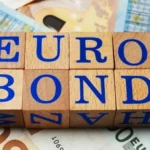
Kenya has returned to the international debt markets with a move that has become something of a signature play for the National Treasury: a Eurobond buyback financed through fresh long-term issuance. On February 18, 2026, the government announced a tender offer to repurchase up to $500 million (Ksh64.4 billion) of its outstanding sovereign bonds, targeting two active series and simultaneously signalling the imminent sale of new U.S. dollar-denominated notes. Reuters, via CNBC Africa, confirmed the operation as part of the government’s ongoing effort to reduce near-term repayment pressure and extend the country’s borrowing curve — a goal Finance Minister John Mbadi had telegraphed publicly just a week earlier.
LIVEKenya Eurobond yieldsSee yields →The offer, which appeared on the London Stock Exchange in a regulatory notice on February 18, targets up to $350 million (Ksh45 billion) of the 8.000 per cent amortising notes due May 22, 2032, and up to $150 million (Ksh19 billion) of the 7.250 per cent notes due February 28, 2028. Both amounts are inclusive of accrued interest. The tender window opened on February 18 and is set to close at 5:00 p.m. New York City time on February 25, 2026, unless the Republic decides to extend, reopen, amend, or terminate the offer.
Build the future you deserve. Get started with our top-tier Online courses: ACCA, HESI A2, ATI TEAS 7, HESI EXIT, NCLEX-RN, NCLEX-PN, and Financial Literacy. Let Serrari Ed guide your path to success. Enroll today.
The Pricing: Premium Over Par for Both Series
Kenya is offering investors a meaningful premium to encourage participation. For holders of the 2032 notes, the government will pay $1,055 per $1,000 principal — equivalent to 105.50 per cent of the accepted amount. The 2028 notes will be repurchased at $1,035 per $1,000, or 103.50 per cent. In both cases, accrued interest will be covered separately. The minimum tender is set at $200,000 principal, with increments of $1,000 thereafter, a threshold designed to restrict participation to institutional and qualified investors transacting through recognised clearing intermediaries.
Market conditions appeared to welcome the announcement. Bloomberg data showed secondary market yields for the 2028 notes falling to 6.14 per cent and those for the 2032 notes easing to 7.14 per cent on the morning of the announcement — levels that suggest investors view Kenya’s credit trajectory more favourably than they did during the acute market stress of 2024. The tightening of yields is significant: it is precisely these improved conditions that make the buyback economically viable and have given the Treasury the confidence to act now.
The Mechanics: A Liability Swap, Not a Debt Reduction
The buyback is explicitly conditional on the successful issuance of new notes. The government has confirmed it intends to announce the new Eurobond on the same day as the tender offer, with settlement of the repurchase contingent on completing that financing on terms deemed acceptable to the Republic. The new issuance is expected to be a dual-tranche dollar bond with a weighted-average maturity of seven and 12 years, according to Reuters. Noteholders who tender — or formally indicate an intention to tender — will receive preferential allocation consideration when the new notes are distributed. “The Republic intends to give preference to those noteholders who have tendered, or indicated firm intention to tender, notes of either series,” the government stated in its official notice.
However, as the African Sovereign Debt Justice Network (AfSDJN) has pointed out in its analysis of Kenya’s October 2025 buyback operation — a structurally identical transaction — this approach “essentially replaces one form of commercial debt with another.” The network noted that while new bonds are priced at blended yields below those of the notes being retired, “the move essentially replaces one form of commercial debt with another. This does little to reduce the country’s overall debt burden and instead perpetuates reliance on external market-based financing, which remains vulnerable to global interest rate shifts and currency volatility.” The Republic holds sole discretion to accept or reject any tenders, modify the maximum purchase amounts, or cancel the offer entirely. Any repurchased notes will be cancelled and will not be reissued.
A Pattern Emerges: Kenya’s Third Major Buyback in Two Years
Wednesday’s announcement is the latest in a sequence of liability management operations that the National Treasury has deployed with increasing frequency since 2024. The first major modern buyback occurred in February 2024, when Kenya raised $1.5 billion through a new Eurobond to partially retire its $2 billion 2014 debut sovereign bond ahead of its June 2024 maturity. That operation was credited with stabilising the Kenyan shilling, which had hit a record low of Ksh163.98 to the dollar in February 2024 amid fears of a sovereign default that ultimately did not materialise.
The second major operation came in October 2025, when Kenya successfully concluded a tender offer for the repurchase of $628.44 million of its 7.250 per cent notes due 2028, funded through proceeds from a $1.5 billion dual-tranche Eurobond. Bondholders received $1,037.50 for every $1,000 in principal — a 3.75 per cent premium over par — and all valid tenders were accepted without the need for proration, indicating broad institutional support. Daily Nation’s analysis noted that Kenya had also executed a buyback of its 2019 Eurobond in early 2025, targeting the $900 million seven-year tranche that was set to begin amortising that year.
Together, the three operations — February 2024, early 2025, and October 2025 — have seen Kenya raise roughly $3 billion in new long-term Eurobond financing to retire or reduce its shorter-dated obligations. As Bloomberg reported ahead of the February 2026 transaction, “Kenya has been rearranging its eurobond maturity profile to spread out repayments, raising $3 billion last year to retire notes due in 2027 and 2028.” Finance Minister Mbadi, quoted in the same report, described the current market window as “ideal” for further liability management, noting that while the redemption pipeline had improved, room remained to retire additional costly near-term obligations.
One decision can change your entire career. Take that step with our Online courses in ACCA, HESI A2, ATI TEAS 7, HESI EXIT, NCLEX-RN, NCLEX-PN, and Financial Literacy. Join Serrari Ed and start building your brighter future today.
Kenya’s Debt Landscape: High Risk, But Sustainable
The backdrop against which this buyback unfolds remains challenging. Kenya’s public debt stood at Ksh11.8 trillion ($91.4 billion) as of June 2025, representing approximately 67.8 per cent of GDP, according to Capital FM’s reporting on the National Treasury’s 2026–2029 Medium-Term Debt Management Strategy (MTDS). The domestic component was Ksh6.3 trillion, with external debt at Ksh5.5 trillion. The 2025 Debt Sustainability Analysis classified Kenya’s debt as sustainable but at a high risk of distress, with the present value of public debt at 65.3 per cent of GDP.
Kenya’s outstanding Eurobond stock, as of mid-2025, carried further maturities in February 2028, February 2031, May 2032, June 2034, and February 2048 — a repayment profile that Treasury CS Mbadi has consistently described as in need of smoothing. The 2028 bullet payment, in particular, has been a focal point of liability management efforts: the February 2026 operation targets the remaining stock of these notes yet again, following the October 2025 buyback that already reduced the outstanding amount by $628 million. Business Daily Africa had reported as early as July 2024 that the Treasury was eyeing a second buyback of the 2028 paper before its maturity date.
The broader debt management framework is outlined in the MTDS, which allocates just 18 per cent of new borrowing to external sources — largely concessional loans and sustainability-linked bonds — while targeting 82 per cent from the domestic market. The strategy projects the average maturity of domestic debt rising from 2.8 years in 2025 to over four years by 2029, alongside liability management measures such as buybacks and debt swaps to reduce refinancing and currency risk exposure.
LIVEKenya Eurobond yieldsSee yields →Africa’s Emerging Market Moment: Kenya Is Not Alone
Kenya’s transaction on February 18 was not an isolated move. Reuters noted that the Republic of Congo carried out a similar buyback earlier in the same month, and that Ivory Coast entered the market on February 18 itself to issue a 14-year dollar bond — a sign that investor appetite for African emerging market sovereign debt is currently robust. This pattern of simultaneous activity reflects a window in global capital markets where risk appetite for higher-yielding frontier and emerging market bonds has increased, allowing African sovereigns to access dollar financing at relatively competitive rates compared to the elevated yield environment of 2023 and early 2024.
For Kenya specifically, the recovery in bond prices since the June 2024 Gen Z protest crisis and the subsequent political turbulence has been noteworthy. Kenyan Wall Street observed that Kenya’s October 2025 issuance was priced at coupons below 9 per cent — a competitive outcome for a frontier market issuer, signaling a degree of restored investor confidence as the country navigated fiscal consolidation. By February 2026, yields had tightened further to the 6-7 per cent range for its shorter-dated notes, making a buyback and re-extension at longer maturities economically sensible.
The IMF Dimension
The timing of the buyback is also notable for its proximity to a planned IMF mission to Kenya later in February 2026. The Fund had flagged Kenya’s debt as remaining at a high risk of distress in its October 2024 review, and discussions around the country’s path to a new programme — or the terms of fiscal consolidation — are ongoing. The IMF’s publicly posted Q&A page confirms that Kenya formally requested a new IMF-supported programme, with preliminary discussions underway, and that an IMF staff mission was dispatched to Nairobi to initiate programme discussions. The 2025 Article IV consultation, which would provide a comprehensive assessment of Kenya’s economic and fiscal position, was rescheduled at the Kenyan authorities’ request to allow the programme request to take priority.
Analysts expect the February 2026 IMF mission to focus on Article IV consultations and debt sustainability assessments rather than a new funded disbursement. The successful execution of the Eurobond buyback and new issuance ahead of the mission would nonetheless strengthen Kenya’s negotiating position by demonstrating continued access to international capital markets — a key indicator of sovereign creditworthiness and fiscal credibility. Business Daily Africa has also noted Kenya’s stated ambitions to diversify its borrowing instruments beyond traditional Eurobonds, including green bonds, blue bonds, sustainable bonds, Panda bonds (renminbi-denominated), Samurai bonds (yen-denominated), and Sukuk bonds — a suite of instruments that could eventually reduce its dependence on dollar-denominated commercial issuance.
Critics: Rolling Debt Is Not Reducing It
Not all observers regard Kenya’s Eurobond strategy as a durable solution to its fiscal vulnerabilities. Critics — including financial analysts cited in Afronomicslaw’s coverage of the 2024 operation — have argued that the approach amounts to sophisticated debt rolling rather than genuine deleveraging. Viktor Szabo, an emerging market debt portfolio manager at Aberdeen (abrdn), noted at the time that “in theory no sovereign should issue at these levels” and that Kenya, given its access to concessional multilateral lending, “really should be using that.” John Espinosa, Head of EMD at Asset Manager Nuveen, said the buyback had “avoided a near-term problem,” but warned that challenges around debt sustainability remained for the medium term.
The German Institute for International and Security Affairs (SWP Berlin), in a July 2025 policy brief, described Kenya’s debt situation as close to debt distress levels, noting that approximately 60 per cent of the country’s tax revenues and almost 50 per cent of its budget are allocated to debt servicing — crowding out spending on health, education, and infrastructure. It noted that the IMF’s October 2024 review had deemed Kenya’s debt sustainable, while simultaneously flagging a high risk of external and public debt distress. The same brief highlighted that public discourse in Kenya attributes the debt crisis partly to governance failures and wasteful spending — tensions that were front and centre during the June 2024 Gen Z-led protests against proposed tax hikes.
What Happens Next
The tender offer closes on February 25, 2026, after which the Treasury will release results and confirm the terms of its new Eurobond issuance. The government retains full discretion to modify, extend, or cancel the offer if market conditions deteriorate or the new issuance does not proceed on acceptable terms. Any notes successfully repurchased will be cancelled, reducing Kenya’s outstanding external commercial debt on a nominal basis — though the new longer-dated notes issued to fund the buyback will add to the overall stock of sovereign obligations.
Kenya’s liability management strategy, as currently constituted, is ultimately a bet that global investor appetite for East African sovereign debt will remain strong enough — and yields low enough — for the Republic to keep rolling forward its maturities on progressively longer timelines. So far, that bet has paid off: from the shilling’s nadir in early 2024 to the relative calm of early 2026, Kenya’s return to markets has been smoother than many feared. Whether it translates into genuine debt sustainability — or merely a deferred reckoning — will depend on whether the government can simultaneously improve domestic revenue collection, contain the fiscal deficit, and attract the concessional financing needed to reduce its dependence on the Eurobond markets that it has, once again, turned to in February 2026.
Ready to take your career to the next level? Join our Online courses: ACCA, HESI A2, ATI TEAS 7 , HESI EXIT , NCLEX – RN and NCLEX – PN, Financial Literacy!🌟 Dive into a world of opportunities and empower yourself for success. Explore more at Serrari Ed and start your exciting journey today! ✨
Track GDP, Inflation and Central Bank rates for top African markets with Serrari’s comparator tool.
See today’s Treasury bonds and Money market funds movement across financial service providers in Kenya, using Serrari’s comparator tools.
photo source: Google
By: Montel Kamau
Serrari Financial Analyst
19th February, 2026