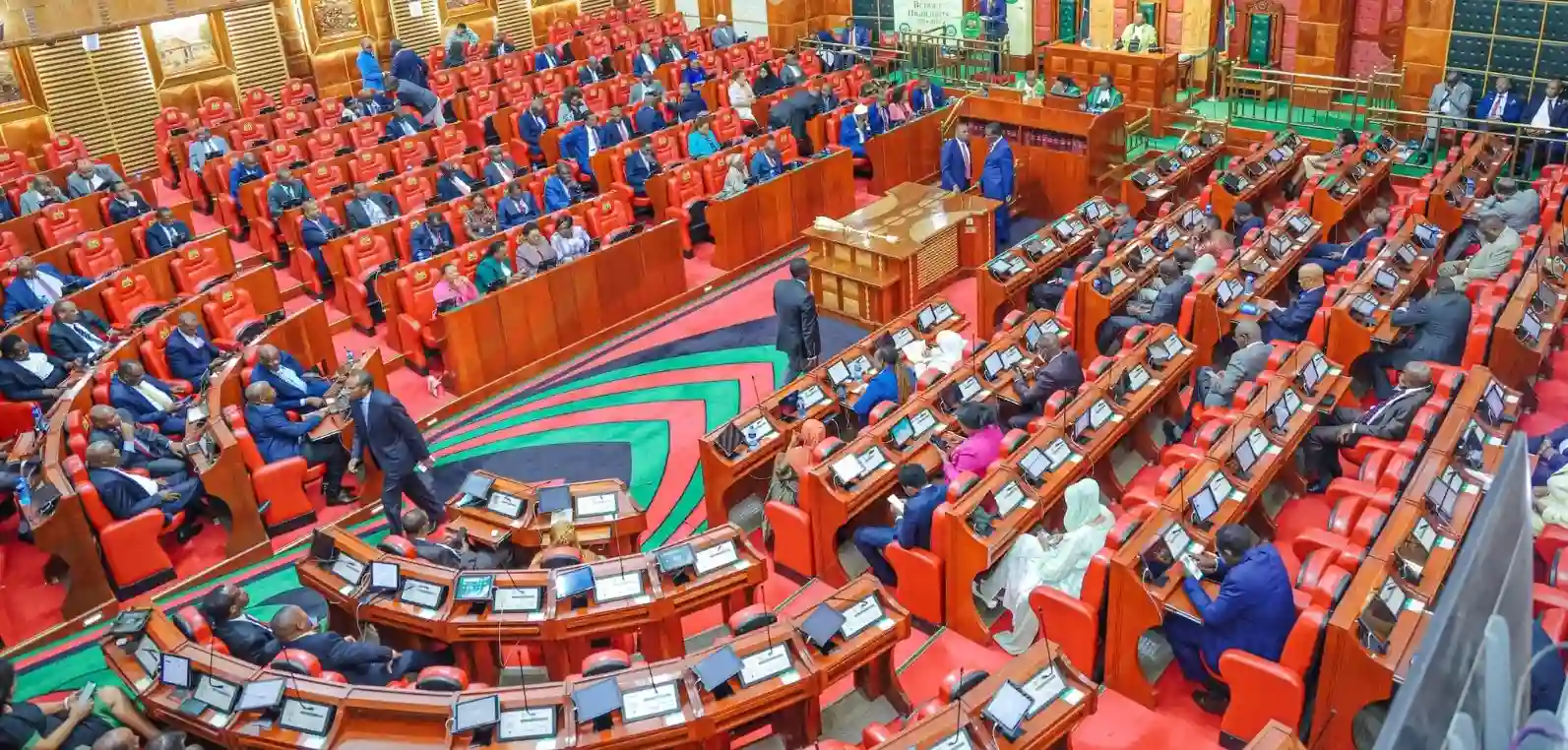
The Senate and National Assembly have invited Kenyans to submit their views on the government’s 2026 Budget Policy Statement and the Medium-Term Debt Management Strategy for 2026/27 to 2028/29, offering citizens a constitutional window to shape fiscal policy at a time of mounting debt pressures and ambitious development spending targets.
According to a notice by Senate Clerk Jeremiah Nyegenye, Kenyans have until February 20 to submit memoranda either by hand-delivery or email to the Senate Finance Committee. The National Assembly has provided a slightly extended deadline of February 23 for submissions to its Budget and Appropriations Committee and Public Debt and Privatization Committee.
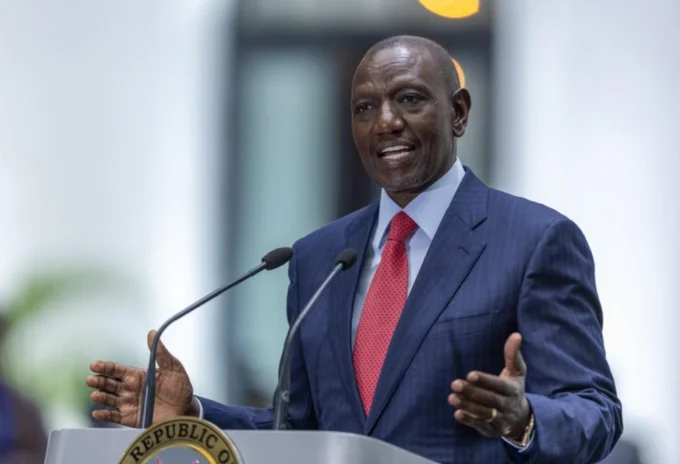
The move complies with Article 118(1)(b) of the Constitution, which requires Parliament to facilitate public participation in its legislative and oversight work. The National Treasury tabled both documents in Parliament on February 11, following Cabinet endorsement at a meeting chaired by President William Ruto on February 10.
Build the future you deserve. Get started with our top-tier Online courses: ACCA, HESI A2, ATI TEAS 7, HESI EXIT, NCLEX-RN, NCLEX-PN, and Financial Literacy. Let Serrari Ed guide your path to success. Enroll today.
Sh4.7 Trillion Budget: Expenditure Far Exceeds Revenue Projections
The Cabinet has endorsed a financial year 2026/27 Budget totaling Sh4.7 trillion, marking an increase of Sh173 billion from the current year’s Sh4.5 trillion. This represents the fourth Budget Policy Statement under the Kenya Kwanza Administration, themed “Accelerating Gains under the Bottom-Up Economic Transformation Agenda for Inclusive and Sustainable Growth.”
The government projects total revenues of Sh3.53 trillion, leaving a fiscal deficit of approximately Sh1.17 trillion to be financed through borrowing. The expenditure breakdown allocates Sh3.46 trillion for recurrent spending, Sh749.5 billion for development projects, Sh495.7 billion for transfers to county governments, and Sh2 billion for the Contingency Fund.
The increase in expenditure is driven primarily by higher recurrent costs, which rise to Sh3.5 trillion from Sh3.3 trillion in the current financial year. Development spending grows to Sh749.5 billion from Sh707.3 billion, while county allocations increase to Sh495.5 billion from Sh484.8 billion.
According to the draft Budget Policy Statement, the total resource envelope includes Sh3.32 trillion in total revenue, creating a fiscal deficit of Sh866 billion—or 4.6 percent of GDP—which will be financed through Sh586 billion in domestic borrowing and Sh280 billion from external sources.
Domestic Borrowing to Dominate Debt Strategy
The 2026-2029 Medium-Term Debt Management Strategy signals a marked shift toward domestic financing, with the Treasury planning to source 82 percent of gross borrowing from the domestic market and just 18 percent from external sources, mainly concessional loans and sustainability-linked bonds.
This represents a significant increase from the previous 2025 plan, which allocated 75 percent to domestic sources and 25 percent to external financing. The shift reflects efforts to reduce exposure to foreign exchange risks and dependence on international capital markets, though it raises concerns about crowding out private sector credit in the domestic market.
The National Treasury will additionally seek to borrow Sh890.4 billion domestically and Sh225.4 billion externally in the 2026/27 financial year. With a projected budget deficit of Sh1.1 trillion, the 82 percent domestic share corresponds to approximately Sh906 billion in local borrowing in a single year.
The strategy aims to reduce public debt costs and risks while extending the average maturity of domestic debt. According to the Treasury’s Medium-Term Debt Management Strategy document, the average maturity of domestic debt is projected to rise from 2.8 years in 2025 to over four years by 2029, alongside liability management measures such as buybacks and debt swaps to strengthen fiscal resilience.
Public Debt Stands at Sh11.8 Trillion
As of June 2025, Kenya’s public debt stood at Sh11.8 trillion, equivalent to 67.8 percent of GDP. This includes domestic debt of Sh6.3 trillion and external debt of Sh5.5 trillion. The debt-to-GDP ratio increased from 66.9 percent in June 2024, reflecting continued fiscal pressures despite efforts to consolidate public finances.
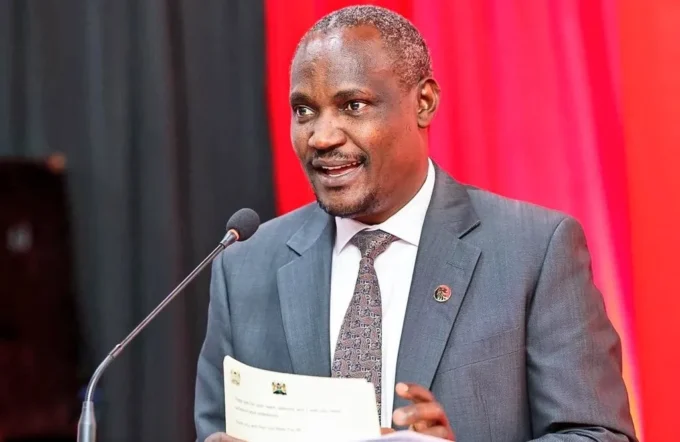
Finance Minister John Mbadi disclosed in October 2025 that the debt ratio in present value terms stood at 63.7 percent of GDP—a level assessed as sustainable but with elevated risk of distress. The present value calculation accounts for concessional loans at below-market interest rates, providing a more accurate measure of the debt burden.
The 2025 Debt Sustainability Analysis indicates Kenya’s debt remains sustainable but at high risk of distress, with the present value of public debt at 65.3 percent of GDP. The analysis shows that the present value of public and publicly guaranteed external debt-to-exports remains above the sustainability threshold of 180 percent through 2029, while debt service-to-revenue ratios breach the 18 percent threshold from 2024 to 2028 due to heavy maturities during the period.
During the 2024/25 fiscal year, the government spent Sh1.72 trillion servicing debt, comprising Sh1.14 trillion to domestic lenders and Sh579 billion to external creditors. This substantial debt service burden crowds out development spending and reduces fiscal space for priority interventions.
The outstanding government guaranteed debt to state-owned enterprises amounted to Sh83.24 billion as at end of June 2025. Kenya Power’s Kenya Electricity Transmission Company (Ketraco) leads with Sh43.11 billion in guarantees, followed by Kenya Ports Authority at Sh40.23 billion and Kenya Airways at Sh9.69 billion.
Revenue Shortfalls and Fiscal Constraints
Implementation of the current 2025/26 budget has been significantly affected by revenue underperformance. National Treasury Principal Secretary Chris Kiptoo revealed at the 2026 Legislative Retreat that ordinary revenue shortfalls amounted to Sh115.3 billion by December 2025, necessitating tighter expenditure controls and prioritization of ongoing projects through zero-based budgeting.
“We are tightening expenditure controls and prioritizing ongoing projects through a zero-based budgeting approach,” Kiptoo said, acknowledging the fiscal pressures confronting budget implementation. The revenue shortfall has forced the Treasury to seek Parliament’s approval for Supplementary Estimates to adjust for the underperformance and additional expenditure pressures.
Despite these challenges, Kiptoo noted that Kenya’s economy remains resilient, with GDP growth projected at 5.2 percent in 2026, supported by declining inflation of 4.5 percent in December 2025, a stable exchange rate of Sh129 to the dollar, and upgraded sovereign credit ratings from Moody’s and S&P Global.
The Budget Policy Statement projects economic growth to reach 5 percent in 2025 and rise to 5.3 percent in 2026, supported by favorable weather conditions, improved agricultural productivity, climate-smart investments, and continued implementation of the Bottom-Up Economic Transformation Agenda reforms.
Sectoral Allocations and Development Priorities
Priority spending in the 2026/27 Budget focuses on education, health, energy, infrastructure, agriculture, social protection, and national security. Under the draft 2026/27 Budget, education remains the top-funded sector with an allocation of Sh658.5 billion (15.7 percent of total expenditure).
Other major allocations include national security at Sh373.8 billion, health at Sh235.2 billion, and agriculture at Sh196.4 billion. The health sector’s funding is expected to support the rollout of the Social Health Insurance Fund (SHIF) and completion of county hospitals, while the agricultural budget focuses on irrigation and fertilizer subsidy programmes.
The fiscal framework also emphasizes structural reforms in public finance management, digitization of government services, restructuring of state-owned enterprises, and expansion of public-private partnerships. These reforms are intended to improve efficiency, reduce wastage, and create fiscal space for development priorities.
One decision can change your entire career. Take that step with our Online courses in ACCA, HESI A2, ATI TEAS 7, HESI EXIT, NCLEX-RN, NCLEX-PN, and Financial Literacy. Join Serrari Ed and start building your brighter future today.
County Allocations Under Scrutiny
Under the Division of Revenue Bill 2026, county governments will receive Sh420 billion as an equitable share, representing 21.9 percent of the most recent audited revenue in line with constitutional requirements. An additional Sh15.2 billion has been allocated to the Equalisation Fund, which targets marginalized areas.
Further allocations under the County Governments Additional Allocation Bill 2026 amount to Sh75.7 billion, bringing total proposed transfers to counties to Sh495.7 billion. This represents an increase from Sh484.8 billion in the current financial year, though county governments have consistently argued for a larger share of national revenue to adequately fund devolved functions.
The intergovernmental fiscal transfers include conditional allocations for specific purposes such as healthcare infrastructure, agricultural development, and water and sanitation projects. The Budget Policy Statement outlines mechanisms to isolate donor funds from government funds for additional allocations, ensuring proper accountability and tracking of development partner resources.
Debt Management Challenges and Sustainability Concerns
Kenya faces significant challenges in managing its public debt portfolio. The Treasury acknowledges that refinancing risks remain elevated, particularly given the concentration of short-term Treasury bills in the domestic debt portfolio and upcoming maturities of commercial external debt.
The 2026 Medium-Term Debt Management Strategy aims to reduce these risks by reducing reliance on short-term Treasury bills and issuing more medium- and long-term domestic securities. The strategy targets lengthening the average time to maturity and reducing the proportion of debt maturing within one year from current levels.
On the external side, the government plans to prioritize concessional borrowing from multilateral and bilateral development partners over expensive commercial loans. The strategy specifically targets sustainability-linked bonds and other innovative financing instruments that offer favorable terms while supporting climate and development objectives.
However, analysts caution that the shift to domestic borrowing carries its own risks. Heavy reliance on the local market could crowd out private sector credit, raising borrowing costs for businesses and potentially constraining economic growth. The financial sector’s capacity to absorb large government borrowing while maintaining adequate credit to the private sector remains a critical concern.
The Debt Sustainability Analysis recommends that the government adopt targeted policy measures to strengthen external debt indicators, specifically prioritizing broadening and diversifying the export base to enhance foreign exchange earnings while building robust gross international reserves to buffer against external shocks.
Parliamentary Oversight and Public Participation
National Assembly Speaker Moses Wetang’ula has urged legislators to approach the budget-making process with greater focus on policy coherence rather than mere numerical adjustments. Speaking at the 2026 Legislative Retreat, Wetang’ula emphasized the need for parliamentarians to scrutinize the strategic alignment of budget allocations with national development priorities.
“This Fifth Session gives Parliament a final window to shape Kenya’s economic governance legacy,” said Hon. Kuria Kimani, Chairperson of the Finance and National Planning Committee, adding that fiscal discipline, debt management, and equitable resource allocation will define the House’s legacy.
The invitation for public participation represents a critical opportunity for citizens, civil society organizations, business associations, and other stakeholders to influence fiscal policy. Memoranda submitted must clearly state the name and contact details of the individual or organization making the submission.
The Budget and Appropriations Committee will review submissions on the Budget Policy Statement, while the Public Debt and Privatization Committee will consider inputs on the debt management strategy. Both committees are expected to table reports in Parliament containing their recommendations before the House passes resolutions to adopt the documents with or without amendments.
The Public Finance Management Act requires the Cabinet Secretary for National Treasury to take into account resolutions passed by Parliament in finalizing the budget framework. This process ensures legislative oversight over executive fiscal decisions while maintaining space for technical adjustments based on emerging economic conditions.
Macroeconomic Projections and Assumptions
The Budget Policy Statement’s fiscal projections rest on several key macroeconomic assumptions. The Treasury projects that inflation will remain within the Central Bank of Kenya’s target range of 2.5 to 7.5 percent, supported by prudent monetary policy and stable food and fuel prices.
The exchange rate is assumed to remain relatively stable, averaging around Sh130 to the US dollar over the medium term. This assumption is critical given Kenya’s significant external debt denominated in foreign currencies. Any sharp depreciation would increase the shilling-denominated value of external debt and debt service obligations.
Global growth is projected at 3.3 percent in 2026, moderating slightly to 3.2 percent in 2027, reflecting elevated trade policy uncertainty, tighter financial conditions, and persistent geopolitical tensions. Notwithstanding the challenging external environment, the Budget Policy Statement argues that Kenya’s economy has demonstrated remarkable resilience, consistently outperforming global and regional averages over the past three years.
Domestic interest rates have declined in line with the easing of monetary policy by the Central Bank of Kenya, following a gradual reduction of the Central Bank Rate from 13.0 percent in August 2024 to 9.00 percent in December 2025. This monetary policy easing is intended to support private sector credit and economic activity while maintaining price stability.
Risks to Fiscal Projections
The Budget Policy Statement identifies several risks to the economic and fiscal outlook. On the external front, escalating global trade tensions, particularly involving major economies, could disrupt Kenya’s export markets and foreign investment flows. Geopolitical conflicts and their impact on commodity prices, especially oil, pose additional risks to inflation and the current account balance.
Climate-related risks remain significant, with the possibility of droughts or floods disrupting agricultural production and food security. Agriculture contributes approximately 21 percent of GDP and employs over 40 percent of the workforce, making the sector’s performance critical to overall economic growth and revenue generation.
Domestic risks include potential political instability, slower-than-expected implementation of reforms, and resistance to revenue-raising measures. The withdrawal of the Finance Act 2024 following public protests demonstrated the political challenges of implementing unpopular fiscal measures, even when justified by economic necessity.
Financial sector stability risks could emerge if heavy government domestic borrowing strains bank balance sheets or triggers liquidity pressures. The concentration of government securities in bank portfolios creates potential vulnerabilities, particularly if sovereign risk perceptions deteriorate.
Implementation Monitoring and Accountability
The Public Finance Management Act requires the National Treasury to prepare quarterly budget implementation reports and an annual Budget Review and Outlook Paper. These documents track actual revenue collection and expenditure against approved estimates, explaining variances and proposing corrective measures.
Parliament’s Budget and Appropriations Committee conducts regular oversight hearings with accounting officers from ministries, departments, and agencies to monitor budget execution. The Controller of Budget also issues quarterly reports on budget implementation, highlighting cases of over-expenditure, under-expenditure, or irregular spending.
The Office of the Auditor General conducts annual audits of government accounts, flagging instances of financial mismanagement, procurement irregularities, or non-compliance with regulations. These audit reports inform parliamentary accountability processes and can trigger investigations or sanctions against erring officials.
Civil society organizations and the media play crucial roles in monitoring budget implementation and advocating for fiscal transparency. The Open Budget Survey regularly assesses Kenya’s budget transparency, participation, and oversight practices, providing benchmarks for improvement.
Conclusion: Balancing Development Ambitions with Fiscal Prudence
Kenya’s 2026/27 Budget Policy Statement and Medium-Term Debt Management Strategy present an ambitious fiscal framework that seeks to maintain development momentum while managing elevated debt levels. The Sh4.7 trillion budget reflects continued prioritization of key sectors including education, health, infrastructure, and agriculture, aligned with the government’s Bottom-Up Economic Transformation Agenda.
However, the significant gap between projected expenditure and revenue—necessitating borrowing of over Sh1 trillion—underscores persistent fiscal challenges. The shift toward domestic borrowing reduces foreign exchange risks but raises concerns about crowding out private sector credit and maintaining financial sector stability.
The public consultation process opening this week provides citizens and stakeholders a constitutional opportunity to scrutinize these fiscal plans and propose alternatives. With public debt at 67.8 percent of GDP and classified as sustainable but at high risk of distress, the choices made in finalizing the 2026/27 budget will have lasting implications for Kenya’s fiscal sustainability and development trajectory.
As the February 20 and 23 deadlines for submissions approach, the quality and substance of public participation will test the effectiveness of Kenya’s constitutional framework for fiscal governance. Parliament’s consideration of these inputs—and its willingness to make meaningful amendments based on evidence and public interest—will ultimately determine whether the budget-making process genuinely serves as a vehicle for democratic accountability and sound economic management.
Ready to take your career to the next level? Join our Online courses: ACCA, HESI A2, ATI TEAS 7 , HESI EXIT , NCLEX – RN and NCLEX – PN, Financial Literacy!🌟 Dive into a world of opportunities and empower yourself for success. Explore more at Serrari Ed and start your exciting journey today! ✨
Track GDP, Inflation and Central Bank rates for top African markets with Serrari’s comparator tool.
See today’s Treasury bonds and Money market funds movement across financial service providers in Kenya, using Serrari’s comparator tools.
photo source: Google
By: Montel Kamau
Serrari Financial Analyst
17th February, 2026