When a nationalised bank in Maharashtra sold a life insurance policy to a 90-year-old man with an annual premium of ₹2 lakh and a maturity year of 2124 it sounded implausible. It was not. The case surfaced in supervisory channels and drew the attention of the Reserve Bank of India (RBI), which in its February 2026 policy statement proposed comprehensive guidelines to curb mis-selling by banks. The recommendations included mandatory suitability assessments, stronger accountability for frontline staff, and clearer oversight of sales incentives.
The episode crystallised a long-simmering problem in India’s financial services industry: product-driven distribution often overrides client suitability. Regulation can tighten guardrails. But families especially first-time policy buyers need something more durable than compliance checklists. They need advice that is structurally aligned with their interests.
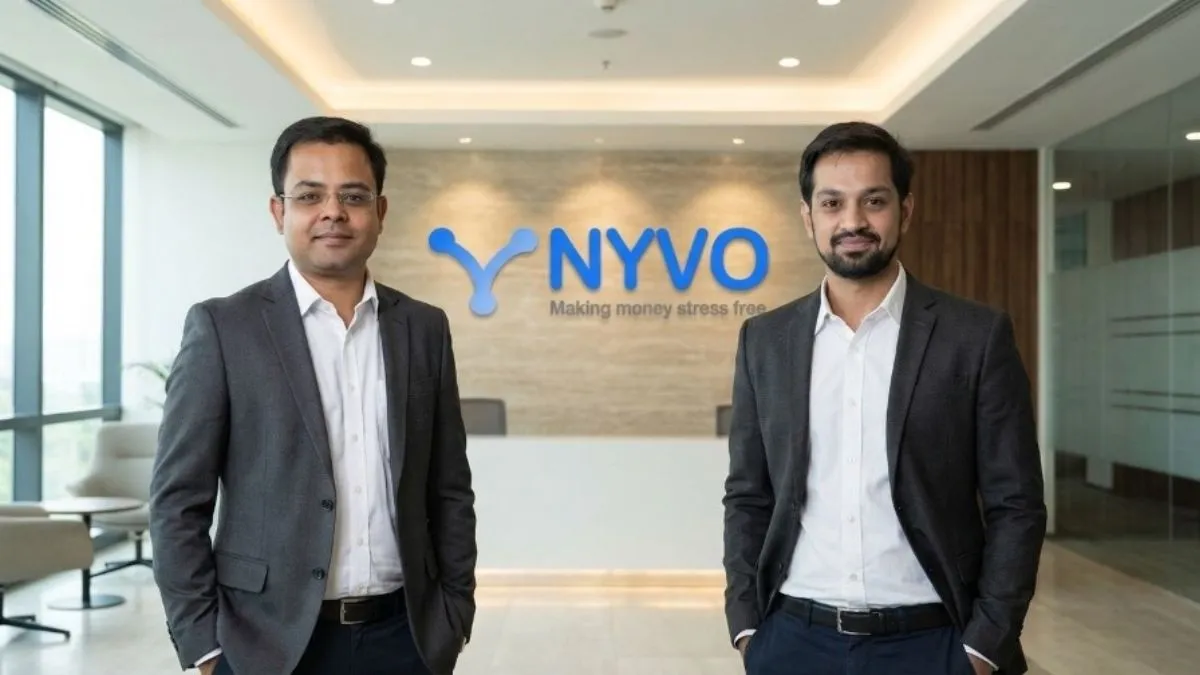
This is the backdrop against which NYVO, an IRDAI-licensed advisory firm founded by industry veterans Harsh and Kshitij, was launched. The firm’s premise is simple but ambitious: put families first, even if that means recommending the cheapest policy on the shelf.
Build the future you deserve. Get started with our top-tier Online courses: ACCA, HESI A2, ATI TEAS 7, HESI EXIT, NCLEX-RN, NCLEX-PN, and Financial Literacy. Let Serrari Ed guide your path to success. Enroll today.
The Case That Sparked a Reckoning
The Maharashtra policy was not a clerical mistake. It was a systemic failure an illustration of what happens when incentives reward premium size and complexity rather than suitability. A 90-year-old policyholder, a maturity date nearly a century out, and an annual premium that would strain most retirees these details underscore a breakdown in fiduciary logic.
The RBI’s response was swift and public. In February 2026, it proposed tighter norms aimed at reducing mis-selling, including:
- Mandatory suitability assessments before product issuance
- Clear documentation of customer risk profiles and objectives
- Enhanced accountability and potential penalties for misaligned sales practices
- Improved disclosure standards
The regulator’s message was clear: mis-selling is not a one-off aberration; it is a risk to household financial stability and trust in the banking system.
A Structural Problem, Not an Isolated Error
India’s insurance and investment distribution ecosystem has expanded rapidly over the past two decades. With rising incomes, a growing middle class, and deeper banking penetration, financial products have proliferated. So have incentives.
In many distribution models, frontline advisors earn higher commissions for selling complex, high-premium products often bundled or long-tenure instruments such as ULIPs (Unit Linked Insurance Plans) rather than straightforward term insurance or low-cost policies that may be more suitable for customers.
This incentive architecture can create predictable outcomes:
- Over-selling of high-ticket products
- Inadequate risk assessment
- Minimal long-term review of suitability
- Client confusion over fees and lock-ins
The result is not just regulatory friction—it is erosion of trust.
The Founders’ Perspective: Experience from the Inside
Harsh and Kshitij, co-founders of NYVO, did not arrive at their thesis as critics from the outside. They built their careers inside the system.
Harsh spent more than sixteen years in financial services. His early career included investment banking roles at Bank of America, SBI Capital Markets, and Kotak Investment Banking, where he advised on high-profile public offerings, including DMart, Embassy REIT, LIC, Star Health, and SBI Life. Collectively, these mandates involved transactions exceeding $50 billion in capital raised.
He later served as CFO and Head of Liabilities & New Initiatives at Slice, overseeing P&L responsibilities for liabilities and insurance across more than 160 branches. From that vantage point, he saw how incentive systems operate at scale.
In his words, advisors were consistently rewarded for pushing complex, higher-premium products—even when simpler, lower-cost policies were more appropriate.
When It Became Personal
For Harsh, the inflection point came not in a boardroom, but at home. While planning an education corpus for his daughter, Nysha, he encountered the same misalignment he had observed professionally. Despite decades in finance and experience structuring billion-dollar transactions, he found it surprisingly difficult to access unbiased, advice-led recommendations for his own family.
He was offered ULIP products as default solutions for a long-term education plan. The experience exposed a gap: if industry insiders struggled to access objective advice, what chance did ordinary households have? This personal frustration became the seed for NYVO—short for “New Voice.”
One decision can change your entire career. Take that step with our Online courses in ACCA, HESI A2, ATI TEAS 7, HESI EXIT, NCLEX-RN, NCLEX-PN, and Financial Literacy. Join Serrari Ed and start building your brighter future today.
NYVO’s Model: Advice Before Product
NYVO is licensed by the Insurance Regulatory and Development Authority of India (IRDAI). The firm positions itself as advice-led rather than product-led. In practice, this means:
- Conducting structured suitability assessments
- Separating advisory conversations from commission incentives
- Recommending products based on need—even if the optimal choice is the lowest-cost option
The philosophy challenges a deeply embedded industry norm: that product complexity equates to sophistication. Instead, NYVO’s thesis is that simplicity often aligns better with family financial outcomes.
Historical Context: India’s Long Battle with Mis-Selling
Mis-selling controversies are not new in India. Over the past decade, regulators have intervened repeatedly across financial segments:
- ULIP commission caps and transparency reforms in the early 2010s
- Mutual fund direct-plan regulations to reduce expense ratios
- Stricter KYC and risk profiling requirements
- Enhanced disclosure norms for bancassurance partnerships
Each intervention addressed a symptom. Yet the core issue—misaligned incentives—proved persistent. The Maharashtra 2124 maturity case revived a debate that has surfaced periodically: can regulation alone fix structural misalignment?
Why Regulation Helps—but Is Not Enough
The RBI’s proposed guidelines are meaningful. Suitability assessments and accountability mechanisms introduce friction against abuse. But rules operate after the fact. Advice, by contrast, shapes decisions before commitments are made.
Regulatory oversight can:
- Penalise misconduct
- Raise compliance standards
- Improve transparency
But it cannot replace judgment. Nor can it fully rewire sales cultures without parallel shifts in incentive design.
Why This Matters for Families
The consequences of mis-selling are not abstract. For retirees, inappropriate high-premium policies can erode savings. For young families, misaligned products can lock up capital in suboptimal instruments for decades. For middle-income households, liquidity constraints can become acute when premium obligations exceed realistic affordability.
At scale, such distortions:
- Reduce household financial resilience
- Increase surrender rates and losses
- Undermine long-term wealth creation
Advice-led models seek to mitigate these outcomes by starting with goals, risk tolerance, and life stage—not commission schedules.
Broader Implications for India’s Financial Sector
India’s financial inclusion push has brought millions into formal banking. Insurance penetration, while improving, remains below many developed markets. Trust is therefore critical.
If households associate financial products with confusion or exploitation, adoption slows. Conversely, transparent advisory models can:
- Deepen insurance penetration responsibly
- Strengthen household balance sheets
- Reduce future regulatory burdens
NYVO’s launch represents one experiment in shifting the distribution paradigm.
A Market Opportunity in Disguise
Ironically, episodes of mis-selling often create space for differentiated players. As compliance tightens and awareness rises, advisory models that emphasise suitability gain traction.
This dynamic has played out in other markets. In the UK, post-RDR (Retail Distribution Review) reforms separated advice from commission structures. In the U.S., fiduciary standards have periodically reshaped advisory practices. India’s regulatory landscape may be approaching a similar inflection.
The Road Ahead
The RBI’s February 2026 policy signals increased scrutiny of bancassurance practices. IRDAI oversight continues to evolve. Digital platforms are reshaping how policies are compared and purchased.
Against this backdrop, advice-led firms like NYVO face both opportunity and challenge:
- Opportunity to build trust with transparency
- Challenge to scale without replicating incentive distortions
Sustainable success will depend on maintaining alignment between recommendation and remuneration.
Conclusion: From Incident to Inflection
The 2124 maturity policy was more than a headline it was a mirror held up to an industry.
It exposed how easily complexity can mask misalignment, and how vulnerable families can be when advice is secondary to incentives. Regulators have responded with guidelines. Entrepreneurs have responded with new models.
Whether India’s insurance ecosystem evolves meaningfully will depend on how deeply these lessons are internalised not only by policymakers, but by advisors and institutions themselves.
If NYVO and similar initiatives succeed, the episode may one day be remembered not merely as a mis-selling scandal, but as the moment that catalysed a shift toward advice that truly serves families.
Ready to take your career to the next level? Join our Online courses: ACCA, HESI A2, ATI TEAS 7 , HESI EXIT , NCLEX – RN and NCLEX – PN, Financial Literacy!🌟 Dive into a world of opportunities and empower yourself for success. Explore more at Serrari Ed and start your exciting journey today! ✨
photo source: Google
By:Elsie Njenga
16th February, 2026