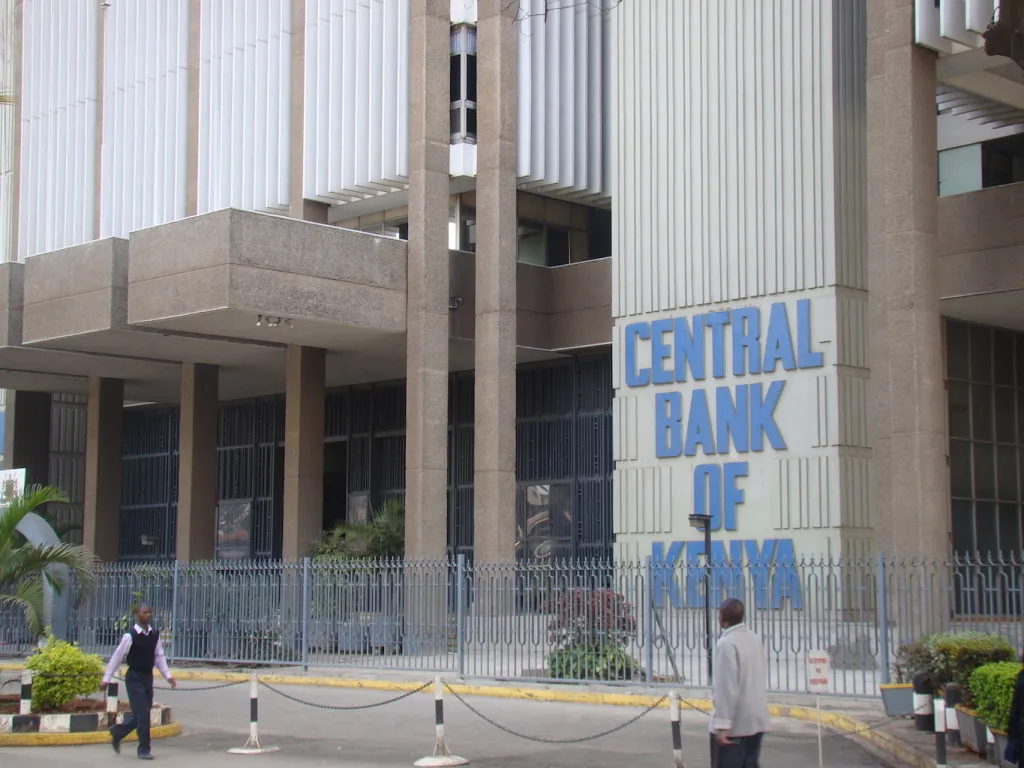
Kenya’s domestic debt market delivered another strong signal of investor confidence after the Central Bank of Kenya (CBK) raised KSh100.5 billion in its February 11, 2026 Treasury bond auction — more than double its initial target of KSh50 billion.
The auction, which reopened two long-term government bonds, attracted total bids worth KSh213.7 billion, representing more than four times the advertised amount. The final combined bid-to-cover ratio stood at 2.13, underscoring sustained demand for long-dated government securities.
The sale involved two reopenings:
- A 15-year bond (FXD3/2019/015, ISIN KE6000001328) with 8.4 years remaining to maturity (July 10, 2034)
- A 25-year bond (FXD1/2018/025, ISIN KE5000068549) with 17.3 years remaining to maturity (May 25, 2043)
The results reflect more than just strong subscription. They signal shifting portfolio allocations, stable macroeconomic expectations, and continued appetite for double-digit fixed returns in Kenya’s domestic market.
Build the future you deserve. Get started with our top-tier Online courses: ACCA, HESI A2, ATI TEAS 7, HESI EXIT, NCLEX-RN, NCLEX-PN, and Financial Literacy. Let Serrari Ed guide your path to success. Enroll today.
Strong Demand Forces CBK to Double Target
Originally, CBK had sought to raise KSh50 billion through the reopening of the two long-term bonds. However, overwhelming demand prompted the regulator to accept KSh100.5 billion, effectively doubling the intended raise.
Total bids received: KSh213.7 billion
Total accepted: KSh100.5 billion
Combined bid-to-cover ratio: 2.13
In bond markets, oversubscription typically signals:
- Strong liquidity conditions
- Attractive yields relative to risk
- Institutional demand for duration
- Confidence in sovereign repayment capacity
Kenya’s bond market has seen similar oversubscriptions in recent months, including January 2026, where long-term papers also attracted aggressive bidding from pension funds, insurers, and asset managers.
Breakdown of the 15-Year Bond (FXD3/2019/015)
The 15-year paper attracted the larger share of demand.
Total bids received: KSh133.8 billion
Amount accepted: KSh54.8 billion
Bid-to-cover ratio: 2.44
Accepted bids were split between:
- KSh33.7 billion in competitive bids
- KSh21.1 billion in non-competitive bids
The weighted average accepted yield cleared at 12.1835%, slightly below the prevailing market weighted average of 12.3876%.
The bond was priced at KSh101.7358 per KSh100 face value, meaning investors paid above par, reflecting strong demand pressure.
Importantly, the coupon rate remains at 12.34%, consistent with its original issuance.
Clearing slightly below the market yield suggests that competition among bidders pushed rates downward — a favorable outcome for the government, as it lowers borrowing costs.
Breakdown of the 25-Year Bond (FXD1/2018/025)
The longer-dated 25-year bond also saw robust participation.
Total bids received: KSh79.9 billion
Amount accepted: KSh45.7 billion
Bid-to-cover ratio: 1.75
Accepted bids comprised:
- KSh36.0 billion in competitive bids
- KSh9.7 billion in non-competitive bids
The weighted average accepted yield cleared at 13.3621%, below the market weighted average of 13.4496%.
The bond was priced at KSh102.5321 per KSh100 face value, also above par. The coupon remains at 13.40%, offering investors stable long-term income.
Why Long-Term Bonds Are Attracting Heavy Demand
Several structural factors explain the strong appetite:
1. Attractive Yields Above 12%
In an environment where Treasury bill yields have moderated, long-term bonds offering 12–13% coupons appear compelling for institutions seeking predictable returns.
2. Pension and Insurance Mandates
Kenya’s pension funds and insurance companies require long-duration assets to match liabilities. Long-term government bonds are ideal for this purpose.
3. Stable Inflation Outlook
With inflation hovering around 4.4%, real yields remain attractive.
4. Improving Macro Fundamentals
Declining non-performing loans, stable exchange reserves, and contained inflation reinforce sovereign risk perceptions.
One decision can change your entire career. Take that step with our Online courses in ACCA, HESI A2, ATI TEAS 7, HESI EXIT, NCLEX-RN, NCLEX-PN, and Financial Literacy. Join Serrari Ed and start building your brighter future today.
Historical Context: Oversubscriptions Becoming a Pattern
Kenya has witnessed repeated bond oversubscriptions since late 2025.
In January 2026, a similar reopening also attracted bids well above target. This pattern mirrors previous periods of strong domestic liquidity:
- 2020–2021 during post-pandemic stimulus
- 2018 during stable macro cycles
Oversubscription often coincides with:
- Institutional liquidity build-up
- Limited alternative high-yield instruments
- Stable sovereign outlook
Kenya’s domestic bond market remains one of the deepest in East Africa, supported by:
- Growing pension assets
- Expanding insurance penetration
- Increasing fund manager participation
Price Above Par: What It Signals
Both bonds cleared above KSh100 face value.
When bonds trade above par:
- Investors are willing to pay a premium
- Yield compression is occurring
- Market confidence is high
This reduces the effective borrowing cost for the government.
It also signals that demand is not merely opportunistic, but strategic.
Competitive vs Non-Competitive Bids
Competitive bids are submitted with specified yield demands. Non-competitive bids accept the auction yield.
The large share of competitive bidding in both papers reflects active price discovery rather than passive allocation.
This suggests sophisticated institutional participation.
Implications for Kenya’s Fiscal Strategy
Kenya’s fiscal financing plan for FY2025/26 targets net domestic borrowing of over KSh600 billion.
Strong bond demand supports Treasury’s strategy to:
- Lengthen debt maturity
- Reduce rollover risk
- Lock in fixed rates
- Lower reliance on short-term Treasury bills
By accepting KSh100.5 billion — double its initial plan — CBK capitalized on favorable market conditions.
Why This Matters
The results matter for multiple stakeholders:
Government
- Lower effective borrowing costs
- Extended maturity profile
- Reduced refinancing pressure
Investors
- Stable double-digit income streams
- Capital preservation
- Duration matching for pension obligations
Financial Stability
- Signals confidence in macro stability
- Demonstrates liquidity strength
- Supports yield curve development
Market Sentiment
- Reinforces Kenya’s improving sovereign narrative
- Attracts foreign interest in secondary markets
Comparison With Previous Yield Cycles: Where Does 2026 Stand?
Kenya’s current bond market strength does not exist in isolation. To properly assess its significance, it is useful to examine how today’s yield environment compares to previous cycles over the last decade.
2017–2019: Infrastructure Expansion and High Issuance
During the infrastructure-heavy years of 2017 to 2019, Kenya ramped up domestic borrowing to finance large-scale projects including roads, energy investments, and standard gauge railway extensions. Yields during this period frequently traded in the 12–14% range, reflecting strong borrowing needs but stable macro conditions.
Bid-to-cover ratios were generally healthy, though not consistently above 2.0 as seen in the latest auction. Investor demand was strong, but fiscal pressure and rising public debt concerns occasionally pushed yields higher.
The key distinction:
In that cycle, strong demand was driven by infrastructure optimism.
In the current cycle, demand is driven by liquidity depth and yield stability.
2020–2021: Pandemic Liquidity Surge
During the COVID-19 period, Kenya—like most countries—experienced a liquidity surge. Monetary policy globally turned accommodative. Domestic institutions increased government bond allocations as private credit slowed.
However, yields during that period were more volatile due to:
- Revenue shortfalls
- Fiscal stress
- IMF program adjustments
- Currency pressure
Bid-to-cover ratios occasionally spiked, but market confidence was uneven.
The 2026 cycle differs because macro fundamentals are stronger, inflation is contained, and asset quality in banks is improving rather than deteriorating.
2023–2024: Inflation and Currency Stress
The most recent stress phase came during 2023 and early 2024 when:
- Global interest rates rose sharply
- The U.S. dollar strengthened
- Kenya’s shilling weakened
- Domestic inflation accelerated
During this period, long-term bond yields climbed above 14% at times. Investors demanded higher risk premiums, and the Treasury faced elevated refinancing costs.
Bid-to-cover ratios were mixed. Some auctions struggled.
Fast forward to February 2026:
- Accepted yields around 12–13%
- Bonds priced above par
- Combined bid-to-cover ratio above 2.0
- Oversubscription exceeding 4x the target
This represents a material improvement in investor confidence compared to the stress period just two years earlier.
What Has Changed Since the Stress Cycle?
Several structural shifts explain the improved bond market dynamics:
- Inflation has stabilized near 4–5%.
- Foreign exchange reserves have strengthened above 5 months of import cover.
- Non-performing loans have begun trending downward.
- Treasury bill yields have moderated.
- Institutional liquidity has deepened.
These improvements reduce sovereign risk perceptions and support longer-duration allocations.
Risks to Monitor: What Could Reverse the Trend?
While the February auction results were strong, bond markets are inherently forward-looking. Several risks warrant close attention.
1. Inflation Reacceleration
Kenya’s inflation remains manageable at around 4.4%. However, risks remain:
- Food price shocks from adverse weather
- Oil price spikes due to geopolitical tensions
- Exchange rate pass-through
If inflation rises above target, the CBK may need to pause easing or even tighten policy, pushing bond yields higher.
2. External Financing Pressures
Kenya’s external debt profile includes Eurobond maturities and multilateral obligations. Although refinancing pressures have eased, global financial conditions remain unpredictable.
If global risk appetite deteriorates:
- Foreign participation in secondary bond markets could decline.
- Currency volatility could increase.
- Domestic yields could face upward pressure.
3. Crowding Out of Private Credit
Heavy domestic borrowing by the government can crowd out private-sector credit if banks prioritize sovereign debt over business lending.
Currently, private credit growth is improving, but if domestic issuance remains elevated:
- Banks may allocate excess liquidity to safe government paper.
- SME lending could slow.
- Growth momentum could weaken.
This balancing act will remain critical in 2026–2027.
4. Fiscal Slippage
Kenya’s fiscal discipline remains under scrutiny. If deficits widen beyond projections:
- Debt sustainability concerns could resurface.
- Risk premiums could increase.
- Long-term yields could drift upward again.
Bond investors remain highly sensitive to fiscal signals.
5. Global Rate Reversal
Should global central banks resume tightening due to renewed inflation abroad:
- Emerging market yields could rise in sympathy.
- Capital flows could shift away from frontier markets.
- Domestic yields may need to adjust upward.
While this risk appears moderate today, it cannot be ignored.
Long-Term Outlook: Structural Demand for Duration
Despite these risks, several long-term structural forces support continued demand for Kenyan long-term bonds.
1. Expanding Pension Assets
Kenya’s pension assets under management have grown steadily over the past decade. Pension funds require:
- Long-duration assets
- Predictable income streams
- Capital preservation
Government bonds remain the primary instrument for meeting these mandates.
As pension assets grow, structural demand for long-term bonds increases.
2. Insurance Sector Growth
Insurance penetration is gradually rising. Insurers need long-dated assets to match policy liabilities.
The 25-year bond, in particular, aligns well with insurance asset-liability matching strategies.
3. Yield Curve Deepening
Repeated oversubscriptions at long tenors help deepen Kenya’s yield curve.
A well-developed long-term yield curve:
- Enhances price discovery
- Attracts foreign institutional interest
- Supports corporate bond market development
This strengthens overall capital market sophistication.
4. Transition Away from Short-Term Bills
Kenya’s Treasury has signaled a preference for:
- Reducing reliance on short-term Treasury bills
- Lengthening average debt maturity
- Locking in fixed rates
Strong demand for 15–25 year bonds supports this strategy.
Over time, longer maturity profiles reduce rollover risk and smooth fiscal planning.
Looking Ahead: What to Expect in the Next 12–18 Months
1. Continued Strong Subscription—If Inflation Remains Stable
If inflation holds near 4–5% and growth remains above 5%, bond auctions may continue seeing oversubscription, though perhaps not at 4x levels.
2. Gradual Yield Compression
If macro stability persists, long-term yields could compress modestly toward the low 12% range.
However, sharp compression is unlikely unless inflation declines further.
3. Greater Institutional Dominance
Pension funds, insurers, and asset managers are likely to remain the dominant participants in long-tenor bonds.
Retail participation may increase slightly but will remain secondary.
4. Enhanced Secondary Market Activity
Strong primary market demand often spills into secondary trading.
Improved liquidity in the secondary market could attract foreign portfolio investors.
5. Fiscal Strategy Adjustments
The Treasury may opportunistically accept higher amounts during oversubscribed auctions to front-load financing at favorable yields.
However, prudent acceptance levels will be necessary to avoid excess liquidity absorption.
Conclusion: A Strong Auction in a Stabilizing Macro Environment
The February 2026 bond auction stands out not simply because it was oversubscribed, but because of what it represents.
Kenya has transitioned from:
- A period of inflation and currency stress
- Elevated NPLs
- High borrowing costs
To a more stable macro environment characterized by:
- Declining bad loans
- Controlled inflation
- Strengthened reserves
- Resilient growth forecasts
The strong demand for both 15-year and 25-year bonds reflects a vote of confidence in sovereign stability and macro management.
However, bond markets reward discipline and punish complacency. Sustained investor confidence will depend on:
- Fiscal prudence
- Inflation control
- External stability
- Continued banking sector repair
For now, the domestic debt market remains a pillar of Kenya’s financing strategy.
If current fundamentals hold, long-term government securities will likely continue serving as the anchor asset class for institutional portfolios in 2026 and beyond.
The key question is not whether demand exists—it clearly does.
The real question is whether macro stability can be maintained long enough to convert short-term confidence into durable structural strength.
Ready to take your career to the next level? Join our Online courses: ACCA, HESI A2, ATI TEAS 7 , HESI EXIT , NCLEX – RN and NCLEX – PN, Financial Literacy!🌟 Dive into a world of opportunities and empower yourself for success. Explore more at Serrari Ed and start your exciting journey today! ✨
Track GDP, Inflation and Central Bank rates for top African markets with Serrari’s comparator tool.
See today’s Treasury bonds and Money market funds movement across financial service providers in Kenya, using Serrari’s comparator tools.
photo source: Google
By: Elsie Njenga
16th February,2026