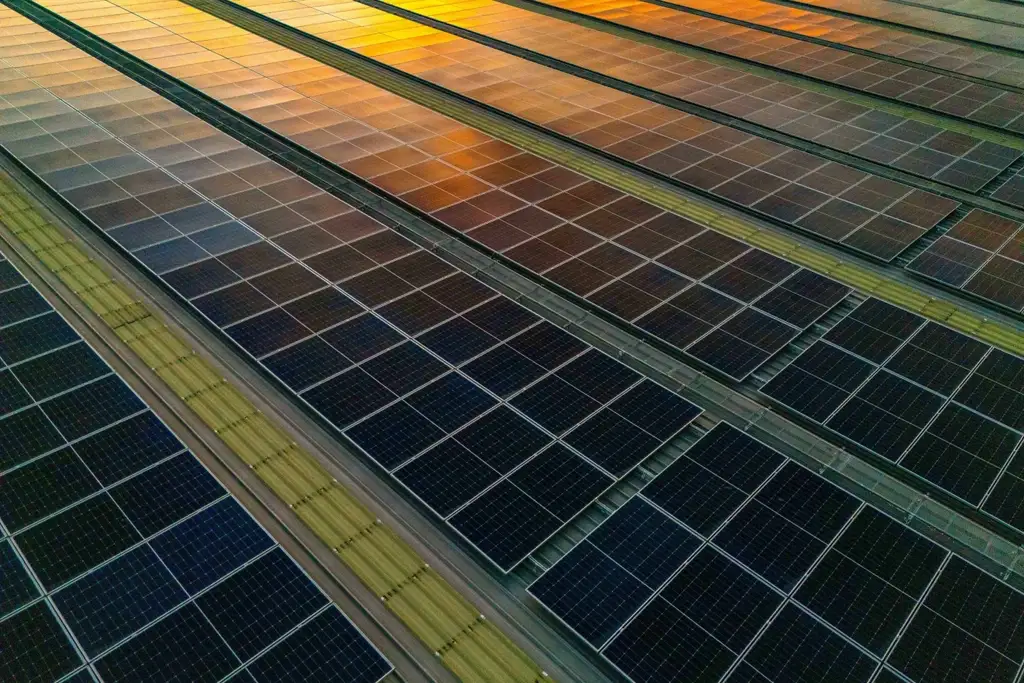
Global investment in the energy transition reached an unprecedented $2.3 trillion in 2025, marking an 8% increase from the previous year according to BloombergNEF’s annual Energy Transition Investment Trends report. While the figure represents continued growth in clean energy financing, the rate of expansion has decelerated significantly from the 27% growth recorded in 2021, signaling a maturing market facing new challenges including regulatory uncertainty and economic headwinds.
The landmark achievement comes at a critical juncture for global climate action, as investment patterns reveal both encouraging progress and concerning gaps in the transition away from fossil fuels. The data demonstrates that clean energy technologies are becoming increasingly mainstream, yet the pace of investment falls dramatically short of what climate scientists say is necessary to meet international climate targets.
Build the future you deserve. Get started with our top-tier Online courses: ACCA, HESI A2, ATI TEAS 7, HESI EXIT, NCLEX-RN, NCLEX-PN, and Financial Literacy. Let Serrari Ed guide your path to success. Enroll today.
Electrified Transport Emerges as Dominant Investment Category
Electrified transport captured the largest share of energy transition funding at $893 billion, representing a substantial 21% increase from 2024. This category encompasses spending on electric vehicles, charging infrastructure development, and related technologies that are rapidly transforming the global automotive sector.
The surge in transport electrification reflects both consumer demand and supportive policy frameworks across major markets. In the United States, despite political headwinds from the Trump administration, charging infrastructure deployment accelerated significantly, with the National Electric Vehicle Infrastructure program adding nearly 100 new federally-funded charging stations and close to 500 new ports throughout 2025.
The charging infrastructure buildout is particularly significant as it addresses one of the primary barriers to widespread EV adoption. Heavy-duty electric vehicle charging infrastructure is emerging as a critical growth segment, with the market projected to expand from $7.15 billion in 2024 to $127.3 billion by 2035, exhibiting a compound annual growth rate of nearly 30%.
Globally, the International Energy Agency reports that public charging infrastructure continues to expand rapidly, with the European Union seeing 11 out of 27 countries increase their public charging networks by more than 50% in 2024. Ultra-fast charging networks are proliferating, with France’s “Charge France” initiative committing €4 billion to expand ultra-fast charging points from over 17,000 to 40,000 by 2028.
Renewable Energy Investment Declines Amid Chinese Market Reforms
Despite the overall growth in energy transition investment, renewable energy funding fell 9.5% year-on-year to $690 billion in 2025. This decline was primarily driven by China, the world’s largest renewable energy market, which experienced its first drop in renewables investment since 2013.
The Chinese market downturn stems from significant power market reforms introduced in 2025. Starting June 1, 2025, China replaced its feed-in tariff system with a fully market-driven renewable energy pricing model, requiring all electricity from renewable energy projects to be sold through market transactions. This fundamental shift introduced new uncertainty for developers and investors who had previously relied on guaranteed pricing mechanisms.
The transition to market-based pricing represents China’s broader effort to shift electricity system operations toward more market-based signals rather than administratively set prices. However, the reforms also reflect growing challenges in managing the integration of renewables into the system, with record wind and solar capacity additions creating what analysts describe as “conflict” with coal power.
Despite the investment decline, China continues to lead globally in renewable energy deployment. In 2024, wind and solar electricity generation rose by 25% compared to the previous year, and in the first half of 2025, it was 27% higher than in the first half of 2024. China’s wind and solar capacity more than doubled in the three years to 2024, from 635 GW to 1,408 GW, with the combined capacity overtaking coal in early 2025.
The Chinese government’s comprehensive Energy Law, which came into effect on January 1, 2025, aims to promote renewable energy development while maintaining energy security through a balanced approach that includes both clean energy expansion and “clean and highly efficient use” of coal. This dual approach reflects Beijing’s prioritization of energy security amid geopolitical tensions while pursuing carbon neutrality goals.
Grid Infrastructure Investment Surges to Support Renewable Integration
Power grid investment reached $483 billion in 2025, registering a robust 17% increase as utilities and governments worldwide expanded and modernized electrical infrastructure to accommodate growing renewable energy capacity. This surge in grid spending reflects the critical importance of transmission and distribution networks in enabling the energy transition.
China alone invested more than $80 billion in power grid infrastructure in 2024, including ultra-high-voltage lines that connect remote renewable generation facilities with coastal demand centers. The country’s grid investment rose 22% from the first half of 2024 to the first half of 2025, supporting the integration of record renewable capacity additions.
The grid investment surge is driven by the fundamental challenge of integrating variable renewable energy sources. China’s power market reforms issued in April 2025 establish national standards for ancillary service markets and accelerate electricity spot market development to mobilize flexible resources and promote efficient renewable integration.
In the United States, grid modernization is increasingly linked to the rapid expansion of data centers, which are placing unprecedented demands on electrical infrastructure. The buildout of AI-focused computing facilities requires substantial transmission and distribution upgrades to deliver reliable power to these energy-intensive operations.
Data Center Investment Drives Energy Transition Momentum
One of the most significant findings in the BloombergNEF report is that data center investment reached approximately half a trillion dollars in 2025, positioning it ahead of overall solar investment but behind electrified transport. This massive capital deployment reflects the computing infrastructure buildout driven primarily by artificial intelligence development.
The scale of data center investment has profound implications for energy demand and grid planning. Data centers consumed 183 terawatt-hours of electricity in the United States alone in 2024, accounting for more than 4% of the country’s total electricity consumption. By 2030, this figure is projected to grow by 133% to 426 TWh.
Globally, the International Energy Agency estimates that electricity consumption for data centers will double to reach around 945 TWh by 2030 in its base case scenario, representing just under 3% of total global electricity consumption. The surge is primarily driven by artificial intelligence applications, with AI-focused hyperscale data centers annually consuming as much electricity as 100,000 households.
The data center boom is influencing energy transition investment patterns in multiple ways. Tech giants including Amazon, Microsoft, Google, and Meta collectively spent over $200 billion on capital expenditures in 2024, representing a 62% year-over-year increase. Looking ahead, Amazon’s total capital expenditure in 2025 is projected to surpass $100 billion, while Microsoft’s and Google’s are each expected to exceed $80 billion.
This unprecedented investment is driving demand for both clean power generation and grid infrastructure. Albert Cheung, Deputy CEO at BloombergNEF, noted that “as many economies look to strengthen energy security and build domestic supply chains, clean energy investment will continue to rise, especially as it relates to global data center buildouts.”
The data center sector’s energy demands are also creating new challenges for electricity grids, particularly in regions where facilities are geographically concentrated. In Virginia’s Loudoun County, data centers accounted for 21% of total power consumption in 2023, surpassing domestic consumption. Similar concentration effects are emerging across major data center hubs, prompting policymakers and utilities to develop new frameworks for managing this rapid demand growth.
Clean Energy Outpaces Fossil Fuels for Second Consecutive Year
A critical milestone documented in the report is that clean energy supply investment outpaced fossil fuel supply for a second consecutive year in 2025, with the gap widening to $102 billion from $85 billion in 2024. This represents a fundamental shift in global energy investment patterns.
While clean energy investment—encompassing renewables, nuclear, carbon capture, hydrogen, energy storage and power grids—continued to grow, fossil fuel supply investment fell for the first time since 2020, declining by $9 billion year-on-year. This drop was driven primarily by reduced spending on upstream oil and gas exploration and production, which fell by $9 billion, and fossil power generation, which decreased by $14 billion.
However, these reductions were partially offset by higher investment in gas and coal infrastructure, particularly in regions prioritizing energy security. The persistence of fossil fuel investment alongside clean energy growth underscores the complex dynamics of the energy transition, where security concerns and economic considerations continue to support some conventional energy development.
Regional Investment Patterns Reveal Diverging Trajectories
Asia Pacific remained the dominant region for energy transition investment, accounting for 47% of the global total in 2025. Within the region, China maintained its position as the largest single market with $800 billion in investment, despite posting its first decline in renewables funding since 2013.
India emerged as a growth leader in the region, with investment climbing 15% to $68 billion. This expansion reflects India’s aggressive push to scale renewable energy capacity, supported by government initiatives including the PM E-DRIVE scheme, which allocated approximately $240 million to charging infrastructure with a focus on urban centers and heavily-used transport corridors.
The European Union demonstrated remarkable resilience in 2025, overcoming economic headwinds to achieve 18% growth in energy transition investment, reaching $455 billion. This performance made the EU the largest contributor to the global uptick in investment, driven by stringent emission regulations, the European Green Deal, and the Alternative Fuels Infrastructure Regulation mandating high-powered charging stations every 60 kilometers along major highways.
United States investment recorded a more modest 3.5% increase to $378 billion, demonstrating resilience despite the Trump administration’s efforts to slow the energy transition. This growth came mainly from investments in the electricity grid and electrified transportation, which offset a small decrease in renewable energy spending. Analysts attribute this resilience to the maturity of energy transition technologies and businesses, which are now less dependent on subsidies than during the first Trump term in 2017.
Supply Chain Investment and Manufacturing Capacity
Clean energy supply chain investment grew 6% to $127 billion in 2025, reflecting spending toward new clean-tech product factories and battery metal production assets. This figure encompasses the value of factories commissioned in 2025 for solar, battery, electrolyzer and wind equipment, as well as mines and processing facilities for battery metals.
Growth in 2025 was largely driven by increasing battery manufacturing and battery materials investment. However, overcapacity continues to weigh on all clean energy supply chain sectors, creating downward pressure on clean-tech product prices that is expected to persist.
China continues to account for a clear majority of global supply chain investment, and BloombergNEF expects this dominance to continue for at least the next three years. Chinese manufacturing capacity for solar panels exceeds 80% of global production, while the country also manufactures 60% of wind turbines and 75% of electric vehicles and their batteries worldwide.
However, China’s share of annual investment is gradually declining as the United States, European Union, and India work to onshore clean-tech supply chains. This shift reflects both strategic considerations around supply chain resilience and responses to trade tensions, with China increasingly pivoting its clean-tech exports toward emerging markets.
One decision can change your entire career. Take that step with our Online courses in ACCA, HESI A2, ATI TEAS 7, HESI EXIT, NCLEX-RN, NCLEX-PN, and Financial Literacy. Join Serrari Ed and start building your brighter future today.
Climate-Tech Equity and Debt Markets Show Recovery
Climate-tech companies raised $77.3 billion in private and public equity throughout 2025, up 53% year-on-year and marking the first year of growth after three consecutive years of decline. This recovery was led by companies working in clean power, energy storage and low-carbon transport.
Activity in public equity recovered and drove this growth, mostly due to multibillion dollar deals from Asia, while venture funding for startups fell for the third consecutive year. The divergence between public and private equity markets suggests that while large-scale, proven clean energy technologies are attracting significant capital, early-stage ventures face a more challenging fundraising environment.
Merger and acquisition activity remained strong, ending 2025 with $99.1 billion in closed deals, reaching a 37% increase from the prior year. This increase was attributed to acquisitions from companies in the clean power and buildings sectors gaining traction for global data center buildouts, demonstrating how the computing infrastructure boom is creating new opportunities for consolidation in the clean energy sector.
Energy transition debt issuance totaled $1.2 trillion in 2025, up 17% from 2024. This rise was credited to the growth in corporate and project finance flows, each up 20% respectively, offsetting a dip in government debt sales as labeled issuances were scaled back for mature transition sectors like renewables.
Investment Challenges in Emerging Technologies
While established technologies like solar, wind, electric vehicles, and energy storage attracted the vast majority of funding, emerging technologies faced significant headwinds. Hydrogen investment fell to just $7.3 billion in 2025, while nuclear attracted $36 billion—both representing declines from previous years.
These figures highlight a persistent challenge in the energy transition: the difficulty of scaling technologies that are not yet commercially mature or cost-competitive. Across all sectors, supply chain investment is expected to continue growing at a pace far beyond the spending required by BloombergNEF’s Economic Transition Scenario, though wind manufacturing is at risk of lagging behind.
Maintaining alignment with net-zero pathways will require a major uptick in wind manufacturing spending, while battery metals could face long-term misalignment if the pace of future additions slows as currently projected. The disparity in investment between mature and emerging technologies underscores the need for continued policy support and de-risking mechanisms to advance critical but less-proven clean energy solutions.
The Investment Gap and Climate Targets
Despite reaching record levels, current energy transition investment remains dramatically insufficient to meet global climate goals. BloombergNEF estimates that investment would need to average approximately $5.6 trillion annually from 2025 to 2030 to align with pathways limiting global warming to 1.5°C consistent with the Paris Agreement. At current levels of $2.3 trillion, annual investment represents only about 41% of what is required.
This massive gap highlights the scale of the challenge ahead. The deceleration in investment growth—from 27% in 2021 to just 8% in 2025—raises questions about whether the pace of change can accelerate sufficiently to meet mid-century climate targets. The slowdown reflects multiple factors including higher interest rates, policy uncertainty, supply chain constraints, and the maturation of markets for established technologies.
Climate scientists and economists emphasize that investment needs to grow much faster for the world to avoid severe costs related to climate change. Femke Nijsse, deputy director of Exeter Climate Policy at the University of Exeter, characterized the report’s findings as “moderately positive” while noting that BloombergNEF’s analysis doesn’t include key decarbonization factors such as investment in walking infrastructure, public transportation, and other demand-reduction measures.
Policy and Market Dynamics Shaping Investment Flows
The 2025 investment landscape was significantly influenced by policy developments across major economies. In China, the comprehensive Energy Law that took effect January 1, 2025, represents the country’s first unified legislation for the energy sector after nearly 20 years of development. The law prioritizes renewable energy development while also promoting the “clean and highly efficient use” of coal, reflecting China’s dual focus on decarbonization and energy security.
The law also includes provisions enabling Beijing to “take corresponding measures” when other countries impose discriminatory policies on China in renewable and other energy sectors, providing a legal framework for potential retaliatory actions in trade disputes. This reflects the increasingly geopolitical nature of energy transition investment and supply chains.
In the United States, investment resilience in 2025 came despite Trump administration policies aimed at slowing the transition. The growth was attributed to the maturity of clean energy technologies and the fact that they are now less dependent on subsidies than during previous Republican administrations. However, political uncertainty continues to create headwinds for long-term planning and investment decisions.
The European Union’s regulatory framework continues to drive investment through mechanisms including the Alternative Fuels Infrastructure Regulation and emissions standards. The region’s commitment to achieving net-zero emissions by 2050 provides long-term policy certainty that supports sustained investment in clean energy infrastructure and technologies.
Technology Cost Trends and Market Maturity
The energy transition is being fundamentally enabled by dramatic cost reductions in key technologies. Solar panel costs have fallen by more than 90% over the past decade, while battery costs for electric vehicles have declined by approximately 80% over the same period. These cost improvements have made clean energy technologies increasingly competitive with conventional alternatives without subsidies.
However, overcapacity in manufacturing—particularly in China—continues to exert downward pressure on prices across the clean energy supply chain. While this benefits consumers and accelerates adoption, it also creates challenges for manufacturers seeking adequate returns on investment and can discourage new capacity additions.
The maturation of renewable energy, electric vehicles, and energy storage as mainstream technologies is evident in their dominance of investment flows. These sectors benefit from established business models, proven performance, and relatively low technological risk. In contrast, emerging technologies like green hydrogen, carbon capture, and advanced nuclear face challenges related to affordability, technology maturity, and commercial scalability that limit their ability to attract capital at scale.
Infrastructure Bottlenecks and Grid Modernization Needs
One of the most significant findings from the investment data is the critical importance of grid infrastructure in enabling the energy transition. The 17% increase in grid investment to $483 billion reflects growing recognition that transmission and distribution networks must be substantially upgraded and expanded to accommodate variable renewable generation, bidirectional power flows from distributed resources, and new large loads from electrification and data centers.
Grid constraints are emerging as a major bottleneck in multiple regions. In China, rapid renewable deployment has outpaced grid expansion, leading to higher curtailment rates—periods when renewable generation must be reduced because the grid cannot absorb or transmit the power. Heatwaves and industrial demand spikes have exposed weaknesses in transmission infrastructure, while ultra-high-voltage lines are being constructed to transmit renewable power from resource-rich western regions to demand centers in the east.
Similar challenges are emerging in other major markets. In the United States, interconnection queues for new generation projects have grown to unprecedented levels, with projects waiting years for grid connection approvals. The data center boom is exacerbating these challenges, with some facilities facing substantial delays in obtaining the grid connections and power supply they require.
Addressing these infrastructure bottlenecks will require sustained high levels of grid investment over the coming decade. BloombergNEF estimates that grid investment of approximately $15.8 trillion is needed between now and 2050 to support the energy transition, representing a substantial increase from current annual investment levels.
Outlook and Future Investment Trajectories
Looking ahead, BloombergNEF projects that in its baseline Economic Transition Scenario, average annual investment in the global energy transition will reach approximately $2.9 trillion over the next five years. This represents continued growth from current levels but still falls short of what would be required to align with net-zero emissions pathways.
Several factors will shape investment trajectories in the coming years. Interest rate environments will significantly influence the cost of capital for clean energy projects, which are typically capital-intensive with returns realized over long time horizons. Policy stability and supportive regulatory frameworks will be critical in providing the long-term certainty that large-scale infrastructure investments require.
Technology innovation continues to open new opportunities for investment while also creating uncertainty about which solutions will ultimately prove most viable. Advances in energy storage, grid management software, carbon capture, and hydrogen production could unlock new investment flows, while continued cost reductions in established technologies will expand the geographic and sectoral scope of economically viable deployments.
The interplay between energy transition investment and broader economic trends—including industrial policy, trade relations, and geopolitical dynamics—will increasingly shape capital allocation decisions. As clean energy technologies become strategic economic assets and supply chain security gains prominence, investment patterns may be influenced as much by industrial policy objectives as by pure economics.
Implications for Stakeholders
The record investment levels and evolving patterns documented in the BloombergNEF report carry important implications for diverse stakeholders across the energy ecosystem.
For policymakers, the data underscores both the momentum behind the energy transition and the need for continued and enhanced support to accelerate progress toward climate targets. The investment gap relative to climate goals suggests that existing policies, while enabling substantial private sector investment, remain insufficient to drive the pace of change required. Attention to emerging technologies, grid infrastructure, and supply chain resilience will be critical policy priorities.
For investors, the maturing of major clean energy technologies into mainstream, relatively low-risk investment opportunities is creating a large and growing asset class with long-term growth potential. However, selectivity will be important given overcapacity challenges in some sectors and the varying degrees of policy support across geographies. Emerging technologies present higher-risk, potentially higher-return opportunities that require careful evaluation of technology readiness and market development timelines.
For utilities and grid operators, the rapid growth in renewable generation, electrification of end uses, and emergence of large new loads from data centers is fundamentally transforming the operational and planning challenges they face. Substantial investment in grid modernization, flexible resources, and sophisticated management systems will be essential. New business models and regulatory frameworks may be needed to align utility incentives with energy transition objectives.
For technology companies and manufacturers, robust demand growth in electric vehicles, renewable energy equipment, energy storage, and charging infrastructure provides significant market opportunities. However, overcapacity risks in some segments and the potential for trade barriers to fragment global markets create challenges that require strategic responses including geographic diversification and technological differentiation.
Conclusion
The achievement of $2.3 trillion in global energy transition investment in 2025 represents both remarkable progress and a stark reminder of the scale of the challenge ahead. The doubling of clean energy investment over the past decade, driven by dramatic technology cost reductions and supportive policies, has made the transition to clean energy systems economically viable and increasingly unstoppable.
Yet with investment growth rates slowing and current levels representing less than half of what is needed to meet climate targets, the urgency of accelerating the pace of change has never been clearer. The transition from subsidized demonstration projects to mainstream economic activities is well advanced for solar, wind, electric vehicles, and batteries. The task ahead is to achieve similar transitions for emerging technologies while building out the massive infrastructure—particularly grids and charging networks—needed to support a fully decarbonized energy system.
The resilience of energy transition investment in 2025 despite policy headwinds in major markets, regulatory uncertainty in China’s renewable sector, and broader economic challenges provides grounds for optimism that the momentum behind clean energy development can be sustained. However, translating this momentum into the accelerated investment growth required to meet mid-century climate targets will demand sustained policy support, continued technology innovation, and unprecedented levels of international cooperation and capital mobilization in the years ahead.
Ready to take your career to the next level? Join our Online courses: ACCA, HESI A2, ATI TEAS 7 , HESI EXIT , NCLEX – RN and NCLEX – PN, Financial Literacy!🌟 Dive into a world of opportunities and empower yourself for success. Explore more at Serrari Ed and start your exciting journey today! ✨
Track GDP, Inflation and Central Bank rates for top African markets with Serrari’s comparator tool.
See today’s Treasury bonds and Money market funds movement across financial service providers in Kenya, using Serrari’s comparator tools.
photo source: Google
By: Montel Kamau
Serrari Financial Analyst
16th February, 2026