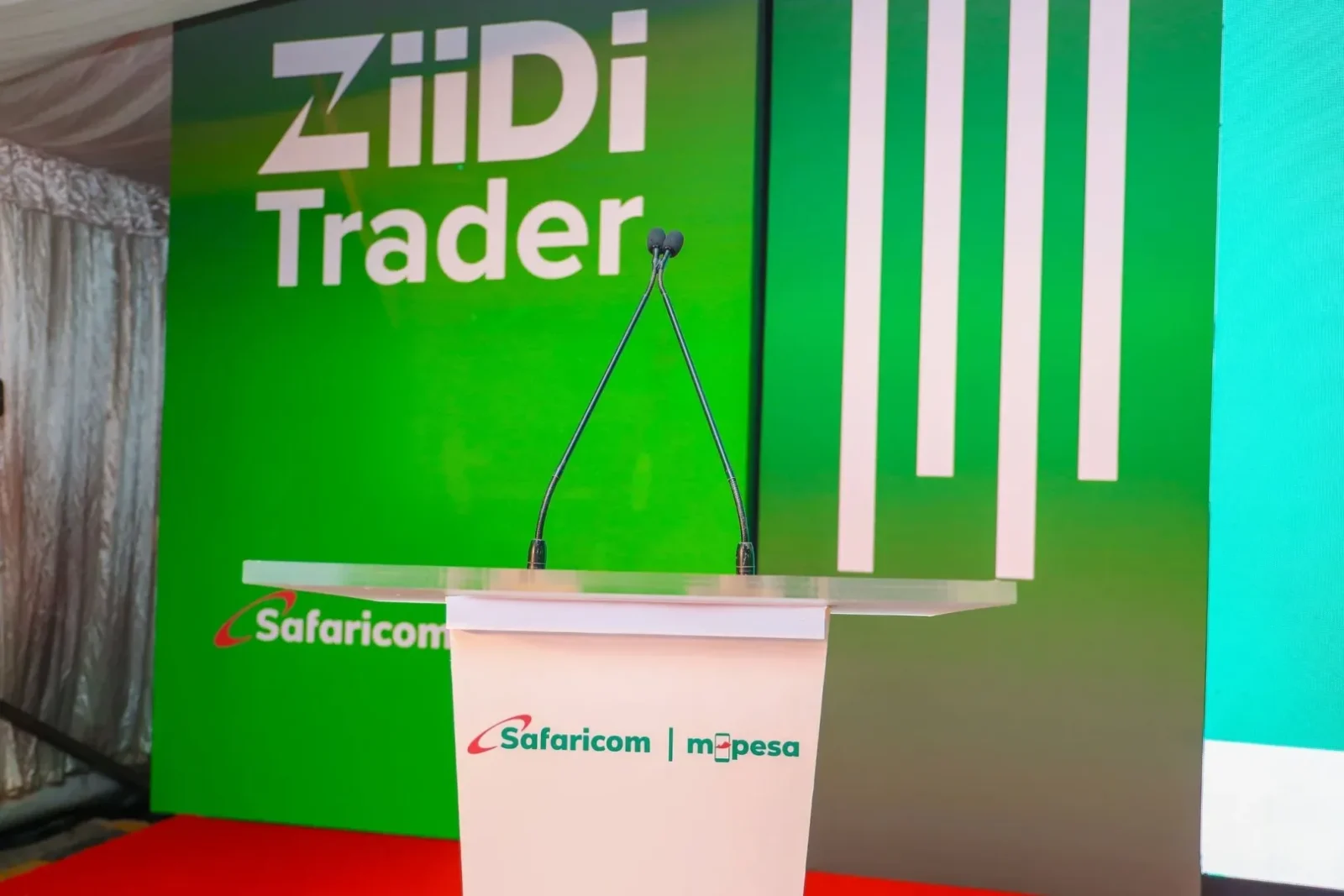
The Nairobi Securities Exchange has entered uncharted territory as Safaricom’s newly launched Ziidi Trader platform triggers unprecedented retail participation, fundamentally reshaping market dynamics and accessibility across Kenya’s capital markets. Trading activity has surged to levels never before witnessed on the bourse, with transaction volumes and values reaching milestones that signal a structural transformation rather than temporary enthusiasm.
LIVENSE market summarySee NSE data →On February 11, 2026, equity deals settled at a record 25,799 trades, representing the highest daily transaction count in the exchange’s 72-year history. This remarkable figure extended a sharp acceleration that began when Ziidi started piloting on Thursday, February 5, marking an inflection point that has redefined participation thresholds for Kenya’s retail investing public.
Build the future you deserve. Get started with our top-tier Online courses: ACCA, HESI A2, ATI TEAS 7, HESI EXIT, NCLEX-RN, NCLEX-PN, and Financial Literacy. Let Serrari Ed guide your path to success. Enroll today.
Exponential Growth Trajectory From Launch
The platform’s impact on trading volumes has followed a steep exponential curve since its soft launch. Activity jumped to 8,713 deals on the first pilot day, then accelerated dramatically to 12,893 transactions on February 6. The momentum continued building, reaching 14,300 deals on February 9, before touching 15,700 mid-session on February 11 and ultimately closing even higher at the unprecedented 25,799-trade mark.
This trajectory represents a radical departure from recent trading norms. Between October 2025 and January 2026, the NSE typically recorded roughly 4,000 to 7,800 daily trades—a range that had become the established baseline for market activity. The sudden multiplication of transaction counts to levels more than three times the previous upper bound suggests that Ziidi Trader has unlocked latent demand from retail investors previously excluded from market participation by structural barriers.
The significance extends beyond mere volume metrics. Market observers note that this represents a structural lift in participation rather than a temporary spike driven by novelty or speculation. The sustained nature of elevated activity across multiple consecutive trading sessions, combined with the breadth of counters attracting interest, indicates genuine democratization of market access rather than concentrated speculative positioning.
Liquidity Surge Accompanies Transaction Growth
Monetary turnover has moved in tandem with transaction count increases, with the bourse posting substantial billion-shilling sessions that would have been exceptional in prior months. The exchange recorded KSh 2.439 billion in equity turnover on February 10, followed by KSh 1.830 billion on February 11—only the second back-to-back streak of KSh 1 billion-plus daily turnover recorded in 2026.
Perhaps more striking, midway through trading on February 11, turnover had already reached KSh 1.6 billion, representing the strongest two-hour performance since December 19, 2025. This intraday velocity indicates that not only are more transactions occurring, but capital deployment per session has intensified, suggesting both broader participation and increased confidence among active traders.
The liquidity profile has important implications for market efficiency. Higher turnover enables tighter bid-ask spreads, reduces price impact for individual transactions, and generally improves price discovery mechanisms—all factors that enhance market quality and attractiveness for both retail and institutional participants.
Transaction Leadership Across Multiple Counters
Deal count leadership on February 11 highlighted both the platform’s accessibility and the broad appetite for established blue-chip counters. Kenya Power logged 3,039 trades worth KSh 27.53 million, demonstrating that even relatively modest transaction values could generate substantial deal counts when barriers to entry fall dramatically.
Safaricom itself dominated value metrics with 2,921 deals worth KSh 612.02 million, accounting for a significant portion of overall market turnover. The telecommunications giant recorded trading of 18.5 million shares on February 11, substantially higher than typical daily volumes observed in prior months. This concentration reflects both the company’s central role in enabling the platform and investor familiarity with Kenya’s most recognizable listed corporation.
Other heavily traded counters included KenGen, Absa, Co-operative Bank, Equity Group, KCB Group, CIC Insurance Group, Kenya Airways, and Britam—a cross-section that spans power generation, banking, insurance, and aviation sectors. This breadth suggests that Ziidi users are not simply chasing a narrow set of momentum plays, but rather building diversified positions across Kenya’s economic landscape.
The democratization effect becomes particularly evident when examining transaction sizes. Traditional brokerage minimums and fee structures historically made small purchases economically unviable. By enabling fractional participation and charging fees closer to 1.5%—below the prevailing 1.8% to 2.5% market range—Ziidi has made micro-investing mathematically sensible for the first time in Kenya’s capital markets history.
Foreign and Domestic Flow Dynamics
International investor positioning on February 11 showed notable reversal from recent patterns, with foreign participants emerging as net buyers purchasing KSh 600 million against KSh 210 million in sales. This represented a significant shift from several recent sessions when offshore flows had leaned negative, potentially reflecting external capital’s recognition that increased retail participation improves market liquidity and sustainability.
However, broader weekly data revealed that local participation accounted for 75.4% of turnover during the first week of February 2026, while offshore participation fell to 24.6%. This domestic dominance suggests that Kenyan retail investors are absorbing selling pressure from foreign institutions, providing market stability through broad-based local participation rather than dependence on fickle international flows.
The shift toward domestic investor dominance carries strategic implications for market resilience. Historically, emerging market exchanges with concentrated foreign ownership have experienced heightened volatility during global risk-off episodes, as international capital withdraws rapidly. By broadening the domestic investor base through accessible platforms like Ziidi Trader, the NSE potentially reduces susceptibility to external shock transmission while creating more sustainable long-term demand for Kenyan equities.
Record Index Levels and Price Momentum
Market indices have responded to the surge in participation and liquidity with broad-based rallies that have carried benchmarks to unprecedented levels. The NSE All Share Index printed a record 202.73 during the first week of February, surpassing all previous highs in the index’s history and confirming that the market-wide rally extends beyond isolated sectoral movements.
Supporting indices demonstrated similar strength. The NSE 20 rose 1.46% to 3,347.53, while the NSE 25 surged 2.24% to 5,441.21, and the NSE 10 climbed 2.33% to 2,094.47. The Banking Index edged up 1.62% to 218.51, reflecting heavy activity in Equity Group, KCB, and Stanbic Holdings—institutions that collectively represent substantial portions of Kenya’s financial sector market capitalization.
Individual stock performance revealed remarkable breadth, with five counters reaching all-time highs: Equity Group, I&M Holdings, KCB Group, Standard Chartered, and Sameer Africa. An additional six stocks hit multi-year peaks, including Safaricom and Kenya Power. This dispersion across sectors and market capitalizations indicates a market-wide rally driven by genuine buying interest rather than speculative concentration in narrow segments.
The rally has pushed total market capitalization to KSh 3.199 trillion, a new peak that reflects both price appreciation and the expanding investor base. When combined with increased liquidity and transaction counts, this valuation milestone suggests the NSE is experiencing a fundamental re-rating as accessibility improvements attract capital that was previously directed elsewhere or remained uninvested.
Platform Design Eliminates Traditional Friction Points
Ziidi Trader’s impact derives fundamentally from how thoroughly it addresses barriers that historically limited retail participation in Kenya’s capital markets. By embedding share trading inside M-Pesa, Safaricom has eliminated the most significant friction points: opening separate Central Depository System accounts, completing extensive paperwork, coordinating with traditional stockbrokers, and managing separate funding mechanisms for trading accounts.
The integration means that Kenya’s approximately 38 million monthly active M-Pesa users can now access NSE trading through an interface they already trust and use daily. This familiarity dramatically reduces psychological barriers alongside practical obstacles, transforming stock trading from an arcane activity requiring specialized knowledge into a straightforward financial service accessible through a familiar mobile application.
Critically, the platform preserves essential shareholder rights despite the streamlined access model. Shares purchased through Ziidi are held in a Safaricom-Kestrel omnibus account, with individual holdings tracked separately. Investors retain full dividend and voting rights—ensuring that accessibility improvements do not compromise fundamental ownership benefits that make equity investing attractive relative to other asset classes.
The fee structure reinforces accessibility. According to detailed analysis, a purchase of 100 shares valued at KES 4,500 attracts total transaction charges of KES 68.50, representing approximately 1.52% in all-inclusive costs covering brokerage commissions and statutory charges. Traditional stockbrokers often charge minimum commissions (e.g., KES 100) regardless of trade size, which mathematically punishes small investors and makes micro-investing economically irrational.
This pricing innovation means that investors can build positions gradually through small, regular purchases—a strategy consistent with disciplined wealth accumulation principles but previously unavailable to most Kenyans due to fixed-cost barriers. The ability to invest as little as one share removes capital requirements as a participation constraint, theoretically enabling anyone with smartphone access and minimal savings to begin equity investing.
One decision can change your entire career. Take that step with our Online courses in ACCA, HESI A2, ATI TEAS 7, HESI EXIT, NCLEX-RN, NCLEX-PN, and Financial Literacy. Join Serrari Ed and start building your brighter future today.
Presidential Endorsement and Policy Alignment
The platform’s launch received high-level political backing, with President William Ruto attending the February 10 launch event at the Nairobi Securities Exchange and publicly endorsing the democratization agenda. Ruto framed Ziidi Trader as directly responding to his administration’s challenge to capital market participants to leverage innovation and technology for broader financial inclusion.
“I challenged the capital markets to democratise access through innovation and technology,” Ruto stated at the launch. “Today, I am pleased to note that this challenge has been answered. The Safaricom Ziidi Trader clearly demonstrates what becomes possible when private sector innovation aligns with public purpose and national vision.”
The President specifically highlighted informal sector workers as key beneficiaries, noting that “from today, this is a pathway for my friends, the Mama Mbogas and the boda boda guys, to own a home”. This populist framing positions equity market participation as a wealth-building tool accessible to market vendors and motorcycle taxi operators—demographics previously entirely excluded from formal capital markets.
The endorsement carries strategic significance beyond mere publicity. It signals government alignment with financial inclusion objectives and suggests regulatory support for continued platform development. Given that capital markets regulation falls under state oversight through the Capital Markets Authority, presidential backing provides political cover for innovative approaches that might otherwise face bureaucratic resistance from traditional market intermediaries concerned about disruption to established business models.
Strategic Context of Kenya Pipeline IPO
The timing of Ziidi Trader’s launch coincides with—and directly enables—Kenya’s most ambitious privatization initiative in nearly two decades. The Kenya Pipeline Company IPO remains open on Ziidi, offering 65% of the state-owned petroleum transporter’s shares to public investors at KSh 9.00 per share in what is expected to become East Africa’s largest initial public offering in local-currency terms.
The IPO subscription period, which opened January 19 and closes February 19, with a scheduled March 9 listing, seeks to raise approximately KSh 106.3 billion (roughly $825 million) through the sale of 11.8 billion shares. This transaction significantly surpasses the 2008 Safaricom IPO, which raised just over KSh 50 billion, making it the largest offering in Kenya’s capital markets history measured in local currency.
President Ruto has characterized the KPC offer as “the country’s largest IPO and the first fully electronic public offer in Kenya’s capital markets history”, emphasizing that the Ziidi platform enables participation from citizens across the country without requiring travel to Nairobi or physical interaction with financial intermediaries. This accessibility represents a fundamental break from historical IPO processes that effectively limited participation to urban elites with established banking relationships.
Finance Minister John Mbadi defended the privatization program as necessary given fiscal constraints. “The traditional methods of financing our budget, taxation and debt, there is no longer any space,” Mbadi stated at the KPC IPO launch ceremony. “We must turn to innovative financing mechanisms to fund our infrastructure and public service projects.”
The allocation structure demonstrates deliberate effort to broaden ownership: 15% of shares are reserved for oil marketing companies operating in Kenya, Uganda, Rwanda, and the Democratic Republic of Congo; 5% for KPC employees; and the remainder distributed among local retail investors (20%), local institutional investors (20%), East African Community citizens (20%), and foreign investors (20%). The government will retain a 35% stake post-listing.
Market analysts have noted both opportunity and risk in the offering. Eric Musau, head of research at Standard Investment Bank in Nairobi, observed that “while the accessible pricing is set to draw in retail participants, we are also likely to see significant interest from institutional energy sector players,” given KPC’s monopoly position in Kenya’s petroleum distribution infrastructure.
LIVENSE market summarySee NSE data →However, some regional analysts have expressed valuation concerns. Analysis by Old Mutual Investment Group Uganda estimates a fair value of KSh 4.61, approximately half the KSh 9.00 offer price, suggesting the shares may be priced at a premium that constrains near-term upside. These analysts anticipate post-listing repricing as market forces enable price discovery more closely aligned with intrinsic value assessments.
Ziidi Ecosystem and Prior Market Success
Ziidi Trader represents the latest expansion of Safaricom’s broader Ziidi wealth management brand, which has rapidly established itself as a formidable force in Kenya’s asset management landscape. The Ziidi Money Market Fund, launched in early 2025, quickly amassed over KSh 7.5 billion in assets under management by leveraging the same “opt-in and earn” simplicity that characterizes the broader platform approach.
The money market fund’s success validated Safaricom’s thesis that embedded financial services accessible through M-Pesa can rapidly achieve scale by meeting customers where they already conduct financial activities. Rather than requiring users to download separate applications, open new accounts, or navigate unfamiliar interfaces, Ziidi products integrate seamlessly into the M-Pesa ecosystem that already commands dominant market share across Kenya’s mobile money landscape.
Ziidi reached 1.15 million customers as of September 2025, representing approximately 47.9% of the 2.4 million individual investors in unit trust schemes according to June 2025 regulatory data. This market penetration in less than one year demonstrates exceptional customer acquisition velocity and suggests that Ziidi Trader could similarly achieve rapid adoption given Kenya’s even larger pool of potential equity investors currently excluded from markets by access barriers.
The platform’s design philosophy prioritizes simplicity over sophistication. Users can start investing from as little as one share, create watchlists for companies they wish to track, view real-time stock prices, and execute buy-sell orders using funds directly from M-Pesa wallets. Dividends from owned shares are sent directly to M-Pesa accounts, maintaining the integrated experience that reduces friction at every touchpoint in the investment lifecycle.
Disruption to Traditional Brokerage Models
The Ziidi Trader launch has generated significant discussion within Kenya’s stockbroking community, where established firms face potential displacement by a platform that commoditizes their core value proposition. Business Daily reports indicate that sections of the brokerage community raised concerns that the NSE was encroaching on functions traditionally performed by licensed brokers, with disagreement escalating to the point where some broker groups questioned NSE leadership.
The tension reflects understandable anxiety about structural disruption. Traditional brokers built business models around providing market access as a specialized service requiring expertise, infrastructure, and regulatory compliance. When access becomes embedded in a platform used by tens of millions for everyday transactions, the specialized intermediary faces potential disintermediation regardless of technical competence or service quality.
Under the current Ziidi structure, Kestrel Capital serves as the initial trading partner, providing the licensed brokerage function while Safaricom handles the customer interface and technology platform. This hybrid model preserves regulatory compliance while fundamentally altering the customer relationship, with Safaricom rather than the broker owning the direct connection to end investors.
For standalone fintech applications like Hisa, which pioneered democratized NSE access before Ziidi’s launch, the competitive threat appears particularly acute. User sentiment toward Hisa has reportedly soured over the past year, with complaints regarding slow support, buggy interfaces, and stagnant user experience. Safaricom does not need to be more innovative than competitors; it simply needs to be more reliable and accessible—advantages it enjoys through M-Pesa’s established infrastructure and brand trust.
Market observers anticipate consolidation or “panic-innovation” from banks and independent trading apps responding to Ziidi’s market entry. Financial institutions that previously treated retail brokerage as a peripheral service may need to either significantly upgrade their digital offerings or accept marginalization in a market segment where Safaricom has established overwhelming distribution and branding advantages.
Investor Education and Behavioral Considerations
While accessibility improvements deliver clear benefits, they simultaneously introduce risks associated with inexperienced investors making consequential financial decisions without adequate knowledge or risk assessment frameworks. The platform’s ease of use—allowing stock purchases “as easy as buying a betting slip,” as one analyst characterized it—creates potential for impulse trading by unsophisticated investors treating the NSE like a casino rather than a long-term wealth-building venue.
Safaricom conducted street surveys in Nairobi CBD in February 2026 asking Kenyans about NSE awareness. The modal response—”nimewahi skia” (I’ve heard of it)—captured a critical gap: awareness without understanding, interest without education, desire without direction. This knowledge deficit represents both opportunity and obligation for platform operators and regulators.
The “Use Best Price” feature that enables convenient market orders carries particular risk in an illiquid market like the NSE, where sudden spread gaps can cause executions at unfavorable prices if there are insufficient offsetting orders at expected price levels. Users accustomed to fixed-price mobile money transactions may not fully appreciate that stock prices fluctuate continuously and that market orders guarantee execution but not price.
Ziidi Trader does not provide financial advice, recommendations, or price forecasts—a legally prudent position but one that leaves users to independently make investment decisions that can have significant financial consequences. The platform provides the tool; users bear full responsibility for investment outcomes. For sophisticated investors, this represents appropriate allocation of risk. For first-time market participants with limited financial literacy, it creates vulnerability to poor decisions driven by incomplete information or emotional reactions.
The NSE’s five-year strategy aims to grow active retail investors to 9 million by 2029, a substantial increase from current engagement levels. While Safaricom’s M-Pesa infrastructure provides the technical means to reach that scale, success ultimately depends on three factors beyond platform functionality: comprehensive investor education ensuring users understand both opportunities and risks; sustained positive market performance that doesn’t punish early participants with losses that sour broader sentiment; and system reliability capable of handling thousands of simultaneous retail trades without technical failures that erode trust.
Infrastructure Capacity and System Reliability Questions
The sudden influx of retail trading activity raises legitimate questions about whether NSE infrastructure can handle sustained high-volume participation without performance degradation or system failures. The exchange was designed and scaled for a market characterized by relatively low transaction counts dominated by institutional participants executing large-block trades. The shift toward mass retail participation with thousands of small transactions creates fundamentally different infrastructure demands.
Can the NSE infrastructure handle a sudden influx of thousands of retail trades per second? This question, posed by technology analysts, highlights potential bottlenecks in matching engines, settlement systems, and data distribution mechanisms that could create latency, failed trades, or inaccurate price information—any of which would damage the credibility essential for mass-market adoption.
Early evidence from the record trading days suggests systems have absorbed the initial surge without major publicized failures. The successful processing of 25,799 trades on February 11 without reported widespread technical issues indicates that either existing capacity exceeds previous assumptions or that rapid infrastructure scaling has occurred behind the scenes. However, sustained growth could eventually test limits, particularly during periods of market stress when trading activity spikes simultaneously with heightened volatility.
Settlement and custody infrastructure faces similar scaling challenges. The Central Depository and Settlement Corporation, which maintains shareholder records and facilitates post-trade settlement, must accommodate exponentially growing transaction counts while maintaining accuracy in record-keeping that determines ownership rights, dividend eligibility, and voting power. Errors in this foundational infrastructure would create disputes, litigation, and loss of investor confidence that could permanently damage market development efforts.
Broader Financial Inclusion and Economic Development Implications
The Ziidi Trader phenomenon transcends narrow capital markets significance, representing potential progress toward broader financial inclusion objectives that have challenged Kenyan policymakers for decades. Despite Kenya’s leadership in mobile money innovation through M-Pesa’s original launch in 2007, equity market participation remained stubbornly concentrated among urban elites with formal banking relationships and disposable capital.
Safaricom CEO Peter Ndegwa characterized the platform as “a powerful step in democratizing wealth for our customers. For eighteen years, M-Pesa has transformed how Kenyans live, work and do business. Today, in partnership with the NSE, we are extending that impact to how our customers build and grow their wealth.”
This ambition aligns with development economics research suggesting that broad-based asset ownership contributes to economic stability, reduces wealth inequality, and creates stakeholder constituencies that support market-oriented policies. When citizens own shares in companies operating across the economy, they develop direct financial interests in corporate profitability, which in turn depends on macroeconomic stability, rule of law, and business-friendly regulatory environments.
NSE CEO Frank Mwiti emphasized that “by making NSE trading available through M-Pesa, we are making it easier for more people, both locally and abroad, to invest and play an active role in Kenya’s economic growth.” This framing positions equity investing not merely as personal wealth accumulation but as participation in national economic development—a narrative that could resonate across demographic groups motivated by patriotic or community advancement objectives alongside profit motives.
The platform’s success could also catalyze corporate governance improvements as companies face more diffuse shareholder bases. Historically, NSE-listed companies dealt primarily with institutional investors and high-net-worth individuals capable of exercising shareholder rights through established channels. Broader retail ownership creates pressure for improved investor relations, transparent disclosure, and responsiveness to shareholder concerns—governance dimensions that strengthen corporate performance and market integrity.
Looking Forward: Sustainability and Evolution
As Ziidi Trader’s initial surge moves beyond launch excitement toward sustained operation, several factors will determine whether current momentum represents durable transformation or temporary enthusiasm. Platform reliability will prove crucial: any significant technical failures, settlement errors, or security breaches could trigger rapid erosion of the trust essential for mass-market financial services adoption.
Market performance itself will significantly influence retention and continued adoption. If early Ziidi users experience positive returns and successful dividend collection, they will likely become platform advocates whose personal networks expand the user base organically. Conversely, if market corrections occur before users have developed sufficient education to maintain long-term perspectives, negative experiences could sour broader sentiment and slow adoption regardless of platform quality.
Regulatory evolution will shape the competitive landscape. The Capital Markets Authority faces delicate balancing between encouraging innovation that expands access and maintaining investor protection standards that prevent exploitation of unsophisticated participants. Regulatory decisions around fee caps, disclosure requirements, suitability assessments, and leverage limitations will influence both platform economics and user experience in ways that could either accelerate or constrain adoption.
The broader fintech ecosystem’s response will also prove consequential. Banks holding stockbrokerage licenses may respond through their own mobile integration efforts, potentially creating competition that improves service quality across providers. Alternatively, recognition of Safaricom’s distribution advantages may drive consolidation as smaller brokers exit or seek partnership arrangements that preserve regulatory licenses while ceding customer relationships to platforms with superior reach.
For Kenya’s capital markets, the Ziidi Trader phenomenon represents a potential inflection point comparable to M-Pesa’s original impact on financial services. Just as mobile money transformed payments, remittances, and basic banking by removing access barriers through familiar technology, stock trading integration into M-Pesa could fundamentally reshape equity market participation, liquidity profiles, and the composition of Kenya’s investor base. The record trading days of early February 2026 may be remembered as the moment when Kenya’s capital markets genuinely began serving the broader population rather than remaining the preserve of a privileged minority.
Ready to take your career to the next level? Join our Online courses: ACCA, HESI A2, ATI TEAS 7 , HESI EXIT , NCLEX – RN and NCLEX – PN, Financial Literacy!🌟 Dive into a world of opportunities and empower yourself for success. Explore more at Serrari Ed and start your exciting journey today! ✨
Track GDP, Inflation and Central Bank rates for top African markets with Serrari’s comparator tool.
See today’s Treasury bonds and Money market funds movement across financial service providers in Kenya, using Serrari’s comparator tools.
photo source: Google
By: Montel Kamau
Serrari Financial Analyst
13th February, 2026