One of South Africa’s most established industrial companies has concluded its 124-year tenure as a publicly traded entity following a R23 billion ($1.4 billion) acquisition by a Saudi-led consortium, signaling a transformative moment for both the Johannesburg Stock Exchange and the broader landscape of foreign investment in African industrial assets.
The transaction, led by Newco—a consortium anchored by Saudi Arabia’s Zahid Group through Gulf Falcon Holding—alongside Entsha, an investment vehicle associated with Barloworld CEO Dominic Sewela, represents one of the most significant Middle East-Africa corporate takeovers in recent years. After securing acceptance from more than 97.6% of shareholders, the consortium invoked South Africa’s compulsory squeeze-out provisions under Section 123 of the Companies Act to acquire the remaining shares, completing the transaction on January 22, 2026.
Barloworld delisted from both the JSE and A2X on January 27, 2026, formally closing a public listing that spanned more than 80 years and removing from South Africa’s capital markets a company that has long served as a cornerstone of the nation’s industrial landscape.
Build the future you deserve. Get started with our top-tier Online courses: ACCA, HESI A2, ATI TEAS 7, HESI EXIT, NCLEX-RN, NCLEX-PN, and Financial Literacy. Let Serrari Ed guide your path to success. Enroll today.
A Strategic Industrial Asset With Continental Reach
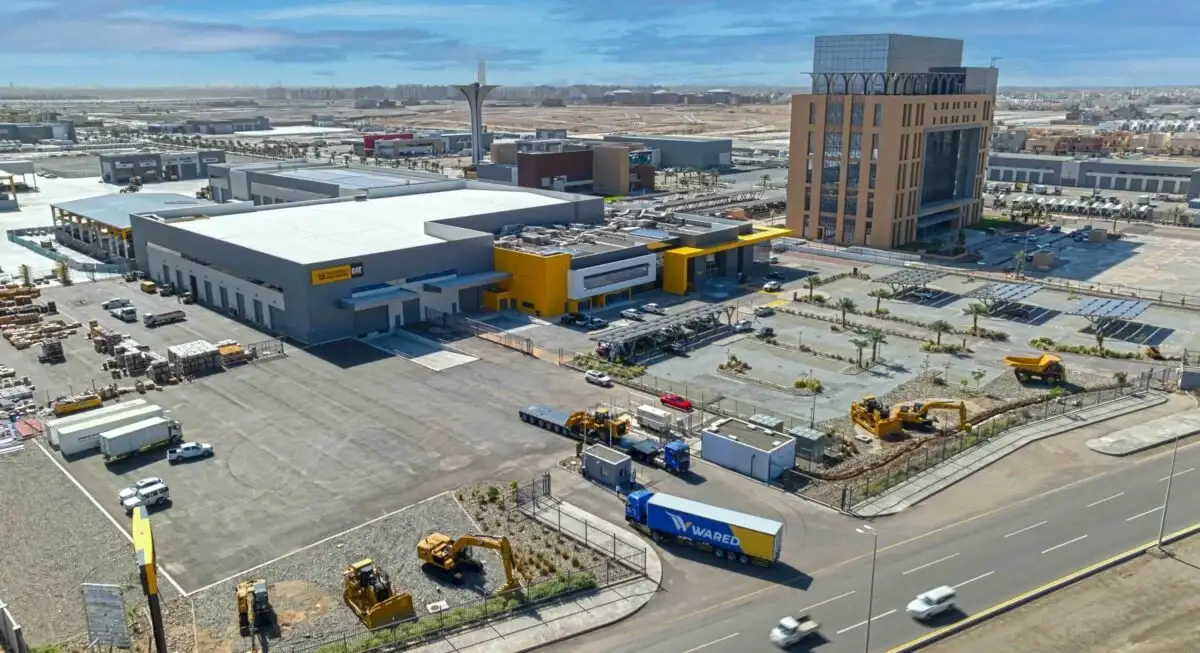
Barloworld’s significance extends far beyond its market capitalization. The company has established itself as the exclusive Caterpillar equipment distributor across Southern Africa, with operations spanning 16 countries including South Africa, Zambia, the Democratic Republic of Congo, Malawi, and Angola. Its business encompasses mining, construction, energy systems, and logistics services—positioning it at the heart of large-scale infrastructure and resource development throughout the region.
The group also operates Barloworld Logistics, which supports complex industrial and supply chain movements across multiple sectors, and Ingrain, its starch and ingredients business serving food and industrial markets. These divisions place Barloworld inside mining operations, civil engineering projects, manufacturing plants, distribution networks, and energy developments throughout Southern Africa.
In its final year as a listed entity, Equipment Southern Africa finished with a strong order book driven by orders in coal, copper, and uranium sectors. This operational strength underscored the strategic value that attracted Saudi investment at a premium to market valuations.
Zahid Group’s Calculated Expansion into African Markets
The acquisition represents a strategic convergence of complementary industrial capabilities. Founded in Jeddah in 1943, Zahid Group is a family-owned Saudi conglomerate with operations spanning construction, energy, manufacturing, finance, hospitality, and oil services across more than 30 countries. The group’s full buyout builds on an existing minority stake acquired progressively over the previous four years, with Zahid Tractor and Heavy Machinery holding 18.9% of Barloworld shares prior to the acquisition announcement.
The strategic alignment between the two firms runs particularly deep. Zahid Group has served as Caterpillar’s authorized dealer in Saudi Arabia for over 75 years, while Barloworld has represented the U.S. machinery giant in Southern Africa for nearly a century. The 2025 calendar year marked both the 100th anniversary of Caterpillar and the 75th anniversary of Zahid Tractor’s partnership with the equipment manufacturer, adding symbolic weight to the transaction.
The deal effectively unites two regional powerhouses under a shared industrial legacy focused on heavy equipment distribution and support services. This vertical integration of Caterpillar distribution capabilities across both the Middle East and Southern Africa positions the combined entity to better serve multinational mining and construction companies operating across both regions.
Zahid Group’s investment decision reflects broader confidence in Africa’s industrial trajectory. The construction sector across Africa is projected to grow by 27% by 2029 due to government investments in infrastructure totaling approximately R4.8 trillion and the strengthening of consumer markets. This growth projection provided economic justification for the premium acquisition price.
Transaction Structure and Ownership Configuration
The final ownership structure reflects both international capital and local continuity. Under the completed arrangement, Entsha now holds a 51% majority shareholding, ensuring Barloworld remains South African-led, while Zahid Group participates as a 49% minority partner positioned as a long-term financial investor. Entsha is a 100% black-owned South African investment company associated with the Sewela family.
This structure addresses potential concerns about foreign control while maintaining strategic alignment with international capital. The transaction was described as operator-led and anchored by Sewela, whose leadership journey within Barloworld spanned nearly two decades. He was appointed CEO of Equipment South Africa in 2007, advanced to chief operating officer in 2011, became CEO of Barloworld Equipment Southern Africa in 2012, and was appointed group chief executive in February 2017.
However, the dual role of the CEO as both company leader and participant in the acquiring consortium attracted scrutiny. The structure, while legally compliant under South African regulations, prompted criticism from certain pre-consortium shareholders who expressed concern over potential conflicts of interest and whether all shareholders received optimal consideration.
The transaction’s complexity was compounded by procedural challenges. The initial Scheme of Arrangement, the first formal attempt to facilitate the acquisition, failed to secure necessary shareholder approval. This setback triggered activation of the Standby Offer, which subsequently became the main vehicle for the transaction. The Takeover Regulation Panel ruled that offer consideration needed adjustment, resulting in an additional R225 million being added to the acquisition cost to account for changes in both the scheme terms and the standby offer structure.
Regulatory Scrutiny and Transaction Timeline
The path to completion faced additional obstacles beyond shareholder approval processes. Barloworld had previously submitted a voluntary disclosure to the U.S. Commerce Department over potential export control issues related to its Russian operations, delaying the deal’s timeline. The company’s Russia subsidiary, VT (Vostochnaya Technica), had been subject to internal investigation into possible sanctions violations.
By late 2025, investigations concluded with no violations of U.S. sanctions found, clearing the final regulatory obstacles to the takeover. VT was currently trading close to breakeven with adequate capital reserves to maintain self-sufficiency for the foreseeable future, according to the group’s final annual report as a listed entity.
Speaking on the transaction timeline, Sewela explained that the process took time largely because of the legal and governance scrutiny involved, particularly given the need to ensure shareholders received fair value throughout the various procedural iterations.
Management’s Case for Private Ownership
The rationale for delisting extended beyond acquisition mechanics to fundamental questions about optimal corporate structure for cyclical industrial businesses. In interviews following the transaction’s completion, Sewela articulated a comprehensive case for private ownership that resonated with broader debates about the costs and benefits of public market participation for certain business models.
“If you’re listed, you spend a lot of time with analysts and asset managers, trying to explain the business and put numbers in their models,” Sewela explained in a Moneyweb Radio interview. “It can be very time-consuming and sometimes takes you away from what matters.”
He characterized the delisting as enabling management to escape the “high fees” and relentless short-term pressures of public markets. The argument centered on the mismatch between quarterly reporting cycles and the operational realities of cyclical industrial businesses that require patient capital through economic downturns.
“When you have a cyclical business, you’ve got to be able to support it through a trough, and some of that support is supporting your own customers,” Sewela noted. He added that being private allows the company to decide whether to pay dividends in any given year, rather than being “hard pressed” by shareholder expectations that may conflict with operational necessities.
Barloworld had evolved into a smaller and more focused business than in previous decades, following unbundlings and the sale of non-core operations. “What’s core to us now is a business that’s cyclical, that requires attention to detail,” Sewela observed, suggesting that this concentrated profile made private ownership more appropriate than during earlier periods when Barloworld operated as a diversified conglomerate.
The CEO emphasized that “this transition allows us to move beyond the short term and adopt the long-term perspective” required to drive sustainable growth and create intrinsic value for stakeholders. He invoked the company’s history: “The reason why Barloworld has been around now for going on 124 years is precisely the long-term view that the founders of this business had.”
This philosophical position reflected a broader tension in contemporary capital markets between the liquidity and capital-raising benefits of public listing versus the operational flexibility and reduced compliance burden of private ownership—particularly for industrial companies in emerging markets facing economic headwinds.
Broader JSE Delisting Trend and Market Implications
Barloworld’s departure from public markets represents more than an isolated corporate transaction; it exemplifies an accelerating trend that has raised significant concerns about the depth and vitality of South Africa’s capital markets. The JSE has witnessed a pronounced contraction in listed entities, with approximately 40 companies exiting in the past five years while only 12 new listings occurred, reflecting broader economic challenges facing the nation.
The number of listings on the JSE has declined by more than half since the 1990s, with today’s exchange featuring far fewer companies than during its peak years. This contraction has accelerated in recent periods, with 2024 seeing 12 delistings against eight new listings, while 2023 recorded three listings versus 23 delistings.
Several high-profile transactions helped shape the delisting landscape in 2025 and early 2026. Adcock Ingram was taken private in a R4 billion acquisition by Natco Pharma, while MultiChoice delisted after a R56 billion takeover by French media giant Canal+. Both transactions followed similar patterns of foreign or private equity capital acquiring established South African companies at premiums to market valuations, then removing them from public markets.
The JSE released simplified Listings Requirements in December 2025, which became effective on January 13, 2026 for new listings and February 16, 2026 for all other purposes. The exchange also split its Main Board into Prime and General segments to better cater to companies of different sizes and needs, recognizing that regulatory complexity had become a deterrent to maintaining public listings for smaller firms.
One decision can change your entire career. Take that step with our Online courses in ACCA, HESI A2, ATI TEAS 7, HESI EXIT, NCLEX-RN, NCLEX-PN, and Financial Literacy. Join Serrari Ed and start building your brighter future today.
Multiple Drivers Behind the Delisting Wave
Analysis of JSE delisting trends reveals several interconnected factors driving the exodus of established companies from public markets. Private equity buyouts have become increasingly active, with firms identifying undervalued South African industrial assets and executing take-private transactions that offer shareholders immediate premiums while removing companies from quarterly scrutiny.
Economic uncertainty has played a significant role. South Africa has faced persistent challenges including slow growth, high unemployment, and political instability. These macro-level headwinds have made companies more cautious about the value proposition of public listing, particularly when compliance costs remain high relative to market capitalizations.
The regulatory environment itself presents challenges. While JSE requirements maintain international standards befitting Africa’s largest exchange by market capitalization, the cost, administrative load, and regulatory complexity of maintaining a listing can be overwhelming for firms with low trading volumes. For companies like Barloworld, which had become smaller and more focused after years of asset disposals, the burden-to-benefit calculation shifted decisively toward private ownership.
Weak local equity valuations have created opportunities for strategic buyers. Many South African companies trade at substantial discounts to net asset values or to comparable companies in developed markets. This valuation gap makes them attractive acquisition targets for international buyers or private equity firms willing to pay premiums that still represent compelling value relative to replacement cost or strategic worth.
Global competition for listings has also intensified. South African companies now have more options for raising capital internationally, with exchanges in the United States, Europe, and Asia offering alternatives that may provide greater liquidity and higher valuations. This optionality reduces the imperative to maintain JSE listings, particularly for companies with international operations or aspirations.
Countervailing Positive Signals Amid Concern
Despite legitimate concerns about the delisting trend, some commentators have identified countervailing positive signals. The buyout of Mediclinic at a 50% premium and the bidding war for Royal Bafokeng Platinum delivered direct value to shareholders, suggesting that foreign capital still sees strategic value in South African assets even if choosing private ownership structures.
The latter half of 2025 witnessed two multi-billion-rand initial public offerings: Optasia (previously Channel VAS) raised R6.5 billion in November, while Cell C’s debut saw R2.7 billion raised. Though Cell C’s raise fell short of its original R7.7 billion target, these transactions demonstrated continued appetite for quality new listings.
Looking ahead to 2026, two massive secondary listings promised to add substantial market capitalization to the JSE. Canal+ committed to secondarily listing on the JSE as part of its MultiChoice acquisition, bringing a current market value of approximately R57 billion. Separately, Coca-Cola HBC planned to list on the JSE following its acquisition of 75% of Coca-Cola Beverages Africa, which would add a company with a current market capitalization exceeding R300 billion to the exchange.
These prospective additions suggest that while established South African industrial companies may be exiting, international companies see value in JSE listings for accessing South African investor capital and meeting local stakeholder expectations.
Middle Eastern Investment Flows into African Infrastructure
The Barloworld transaction fits within a broader pattern of escalating Middle Eastern investment in African industrial and infrastructure assets. Gulf capital has become increasingly active across the continent, positioning itself as a long-term partner in Africa’s development as traditional Western capital has become more cautious.
Examples of this investment trend abound beyond the Barloworld deal. Saudi company ACWA Power signed a memorandum of understanding to invest $10 billion in South Africa’s renewable energy industry over the next decade. Dubai-based logistics giant DP World manages assets of nine African ports, demonstrating sustained commitment to continental infrastructure.
The investment flows align with Saudi Arabia’s Vision 2030 agenda, which emphasizes economic diversification away from hydrocarbon dependence through strategic international investments. The deal includes commitments around skills development and youth training, including a Saudi-South Africa upskilling programme that ties the transaction to broader bilateral economic cooperation objectives.
For South Africa, the acquisition underscores continued foreign investor confidence in strategic assets despite domestic economic pressures. For Saudi Arabia and the broader Gulf Cooperation Council region, it represents a calculated bet on Africa’s industrial future—not as a short-term financial play, but as a generational investment in industrial capacity that will support resource extraction, infrastructure development, and economic growth across multiple decades.
Governance and Stakeholder Considerations
Despite the transaction’s completion, governance considerations continue to generate discussion within South Africa’s investment community. The participation of the CEO in the acquiring consortium—while legally compliant with South African corporate law and approved by appropriate regulatory bodies—represents a structure that invites scrutiny around transparency and alignment of interests.
Some market commentators noted that executives received incentive payments tied to awards that would have vested had the company remained listed, including disclosed payments to CEO Sewela as part of broader incentive figures. While these arrangements followed contractual obligations and were properly disclosed, they contributed to perceptions among some shareholders that management’s interests in facilitating the transaction may not have perfectly aligned with maximizing shareholder value through alternative strategic paths.
The broader question extends to whether South African corporate governance frameworks adequately address management-led buyouts in contexts where information asymmetries between insiders and public shareholders may be pronounced. Chairman Lulu Gwagwa, in the company’s final integrated report as a listed entity, emphasized that “looking ahead under private ownership, our priorities are clear: to safeguard the well-being of our people” while upholding the board’s duty to act in the organization’s best interests by integrating diverse stakeholder perspectives.
Board changes announced in October and November 2025 reflected the ownership transition. Non-executive directors Nicola Chiaranda, Nomavuso Mnxasana, Vuyisa Nkonyeni, Bashirat Odunewu, and Peter Schmid retired, while new appointments included Erdi Kursunoglu, Augostino Sfeir, Hamza Zahid, and chairman-designate Haytham Zahid, bringing Saudi representation to board level while maintaining South African operational leadership.
Strategic Focus and Operational Continuity
Despite the dramatic ownership change, Barloworld’s operational trajectory appears positioned for continuity rather than disruption. The company retains its name, management team, staff complement, and regional footprint. Headquarters and operational base are expected to remain in South Africa, maintaining employment and economic contribution to the domestic economy.
The strategic focus will remain on strengthening core equipment distribution business, expanding service offerings, and navigating the shifting dynamics of mining and infrastructure investment across Africa. The company’s strong order book in copper, coal, and uranium sectors positions it to benefit from ongoing commodity demand driven by energy transition requirements and economic development across the African continent.
Management emphasized that private ownership enables greater focus on customer relationships and operational excellence. “This transition allows us to concentrate on building real value, supporting our customers, and running the business the right way”, Sewela stated, articulating a vision of enhanced customer service and operational agility freed from quarterly earnings pressures.
The consortium structure ensures continuity through existing leadership while benefiting from Zahid Group’s capital resources and global industrial network. Zahid’s continued investment reflects sustained confidence in Barloworld’s leadership, strategic direction, and future prospects as it transitions to private ownership.
Implications for South African Capital Markets
For South Africa’s capital markets, the departure of a 124-year-old industrial heavyweight represents more than a corporate milestone—it underscores the growing challenge of retaining major companies within the public investment ecosystem amid global competition for assets and capital.
The transaction crystallizes tensions inherent in emerging market exchanges: the need to maintain rigorous standards that attract international capital versus the regulatory burden that may drive companies toward private ownership or offshore listings. The JSE’s recent simplification initiatives represent attempts to address these tensions, but whether regulatory reform alone can stem delisting trends remains uncertain.
Market depth concerns are legitimate. Each major delisting reduces the pool of investable assets available to South African pension funds, asset managers, and retail investors. This contraction can create liquidity challenges, reduce portfolio diversification options, and potentially increase market concentration among remaining large-cap companies.
However, the counterargument suggests that delistings driven by fair-value acquisitions may benefit shareholders through immediate realization of value that markets had failed to recognize. The significant premiums paid in many recent take-private transactions—including Barloworld’s—indicate that public markets were undervaluing these assets relative to their strategic worth to informed buyers.
The ultimate assessment may depend on whether new listings emerge to replace departed companies. The technology sector has shown some promise, with several tech companies choosing the JSE as a platform to raise capital and gain visibility. Environmental, Social, and Governance (ESG) listings and green bonds have also seen growth, aligning with global sustainability trends.
As South Africa navigates persistent economic challenges including slow growth, unemployment, and fiscal constraints, the vitality of its capital markets will significantly influence the country’s ability to finance infrastructure development, support entrepreneurship, and attract the international capital necessary for sustainable economic growth.
Looking Forward: A New Chapter Begins
As Barloworld embarks on its journey as a privately held company, the industrial group faces both opportunities and challenges inherent in its new structure. The combination of Entsha’s local knowledge and majority control with Zahid Group’s international capital and Middle Eastern market access creates potential synergies in serving multinational mining and construction customers operating across both Southern Africa and the Arabian Peninsula.
The heavy equipment distribution business remains fundamentally sound, supported by ongoing infrastructure investment across Africa and commodity demand driven by global energy transitions. Copper demand for electrical infrastructure, uranium for nuclear power, and coal for emerging market industrialization all support order books for the machinery Barloworld distributes.
Operational challenges persist, including managing cyclical exposure to commodity prices, navigating complex regulatory environments across multiple African jurisdictions, and maintaining equipment availability and service quality across geographically dispersed operations. The private ownership structure provides flexibility to address these challenges with longer time horizons than public markets typically permit.
For the broader South African economy, the transaction sends mixed signals. On one hand, it demonstrates that well-managed industrial assets continue to attract significant foreign investment, suggesting confidence in the underlying economy despite macro-level challenges. The commitment to maintain South African headquarters and operations preserves employment and economic contribution.
On the other hand, the exit of another major industrial listing from the JSE raises questions about the exchange’s ability to retain companies as they mature and face strategic decisions about optimal capital structure. The trend toward private ownership or foreign acquisition of established South African companies, if continued, could gradually erode the public market’s role in the economy.
As the dust settles on this landmark transaction, stakeholders across the investment ecosystem will watch closely to see whether private ownership delivers on its promise of operational focus and long-term value creation, or whether the loss of public market discipline and transparency creates unforeseen challenges. The Barloworld story—124 years in the making—now enters a new chapter, written not on the trading screens of the JSE, but in the boardrooms and equipment yards where industrial strategy meets African economic reality.
Ready to take your career to the next level? Join our Online courses: ACCA, HESI A2, ATI TEAS 7 , HESI EXIT , NCLEX – RN and NCLEX – PN, Financial Literacy!🌟 Dive into a world of opportunities and empower yourself for success. Explore more at Serrari Ed and start your exciting journey today! ✨
Track GDP, Inflation and Central Bank rates for top African markets with Serrari’s comparator tool.
See today’s Treasury bonds and Money market funds movement across financial service providers in Kenya, using Serrari’s comparator tools.
photo source: Google
By: Montel Kamau
Serrari Financial Analyst
13th February, 2026