Kenya’s economy is demonstrating signs of stabilization as the country emerges from a challenging period marked by slower growth, with projections indicating GDP expansion between 4.9 and 5.2 percent in 2026, according to forecasts presented at the 2026 Economic Outlook Forum. However, analysts caution that external shocks, global economic uncertainties, and persistent domestic challenges could moderate the anticipated recovery, underscoring the need for strategic policy interventions and private sector agility to sustain the growth trajectory.
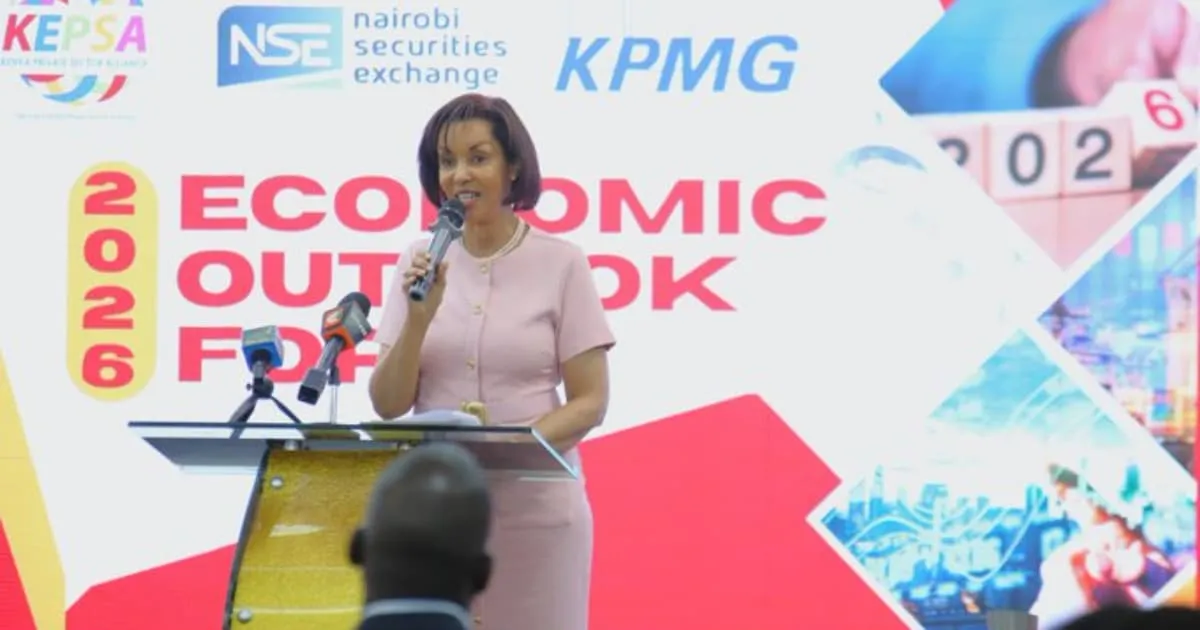
The comprehensive economic assessment was presented at a forum hosted by the Kenya Private Sector Alliance (KEPSA) in partnership with the Nairobi Securities Exchange (NSE) and KPMG, bringing together key stakeholders from business, government, and financial sectors to evaluate Kenya’s economic prospects. The gathering highlighted a cautiously optimistic landscape for businesses following the slower growth experienced in 2024, while acknowledging the substantial gap that remains between current projections and the pre-pandemic historical average of around six percent.
Build the future you deserve. Get started with our top-tier Online courses: ACCA, HESI A2, ATI TEAS 7, HESI EXIT, NCLEX-RN, NCLEX-PN, and Financial Literacy. Let Serrari Ed guide your path to success. Enroll today.
Macroeconomic Stabilization and Inflation Dynamics
A central theme emerging from the economic outlook is the stabilization of key macroeconomic indicators that create a more predictable operating environment for businesses and investors. Analysts at the forum noted that inflation has moderated to a manageable 3-5 percent range, representing a significant improvement from the elevated levels experienced in recent years when consumer price increases peaked above seven percent during periods of global commodity price shocks and domestic supply disruptions.
The Central Bank of Kenya has projected an even more benign inflation outlook, expecting consumer prices to ease to approximately 3.7 percent by June 2026, down from 4.5 percent recorded in recent months. This optimistic assessment reflects exchange rate stability, improved food supply conditions, and subdued growth in core inflation, which excludes volatile food and fuel prices and accounts for approximately 81 percent of the inflation basket.
However, projections from international institutions present a slightly different picture. The International Monetary Fund expects inflation to increase to 5.2 percent in 2026, up from a projected 4.0 percent in 2025, signaling that stronger demand and recovering investment could exert upward pressure on prices as economic activity accelerates. Similarly, the World Bank’s Kenya Economic Update indicates inflation stabilizing at 5.0 percent in 2026, unchanged from forecasts for 2025 and 2027, suggesting that the economic recovery must be carefully balanced against cost-of-living considerations.
The Kenyan shilling has demonstrated relative stability against major currencies, a development that has contributed significantly to inflation moderation by reducing the cost of imported goods, particularly fuel and manufactured products. Recent data shows the shilling trading below KSh 129 against the US dollar, supported by foreign exchange reserves that stood at $12.384 billion (approximately KSh 1.59 trillion) in early January 2026, providing a healthy import cover of 5.3 months that exceeds the Central Bank’s legal requirement to maintain at least a four-month buffer.
Private Sector Perspectives and Growth Opportunities
KEPSA Vice Chair Brenda Mbathi articulated the dual nature of the current business environment, acknowledging both challenges and opportunities. “Businesses are operating in a landscape marked by global uncertainty, shifting trade dynamics, and rapid technological transformation,” Mbathi stated. “Yet within these challenges lie significant opportunities. The private sector remains central to unlocking inclusive growth through investment, job creation, and productivity.”
This perspective reflects a recognition that while macroeconomic fundamentals are improving, businesses must navigate a complex array of headwinds including persistently volatile food and fuel prices that remain exposed to global market swings, fiscal pressures as government seeks to balance debt sustainability with development spending needs, and rising compliance costs that could constrain domestic investment. The forum emphasized that successful navigation of these challenges will require businesses to demonstrate agility, embrace innovation, and maintain a proactive approach to both external shocks and domestic policy shifts.
The growth projections of 4.9 to 5.2 percent for 2026 represent a gradual improvement from the 4.7 percent expansion recorded in 2024, when Kenya’s economy faced multiple headwinds including tight financial conditions, softer household demand, and disruptions from floods and political unrest. The anticipated acceleration reflects several positive developments including easing inflation that supports household purchasing power, accommodative monetary policy as the Central Bank has cut benchmark rates multiple times, and a pickup in credit growth that is beginning to support both household consumption and business investment.
The International Monetary Fund shares a broadly similar assessment, projecting real GDP growth to rise to 4.9 percent in 2026 from a forecasted 4.8 percent in 2025. Meanwhile, the World Bank projects real GDP growth to average 4.9 percent over the 2025 to 2027 period, underpinned by macroeconomic stability, a gradual recovery in private sector activity, and supportive fiscal and monetary policies aimed at stimulating economic activity while maintaining price stability.
Regional Context and Continental Growth Dynamics
Kenya’s growth prospects must be understood within the broader African economic context, which presents both opportunities and challenges for the East African nation. Sandeep Main, Tax Partner and Head of Private Enterprise in Africa at KPMG, provided essential continental perspective at the forum, noting that global growth is expected to edge up slightly to 2.7 percent. More significantly for Kenya, “Africa’s growth is projected to rise modestly from 3.9% in 2025 to 4.1% by 2027,” Main stated, emphasizing the critical importance of strategic sourcing and robust risk mitigation strategies.
This regional growth trajectory means Kenya’s projected 4.9 to 5.2 percent expansion significantly outpaces the continental average, positioning the country as one of East Africa’s better-performing economies. However, Main specifically highlighted the ripple effects of US-China technology tensions and rare-earth export disputes, which continue to test supply chains across Africa, creating vulnerabilities that could impact even relatively insulated economies like Kenya’s through disruptions to trade flows, technology access, and global demand patterns.
The forum’s analysis underscored that African economies, including Kenya, are operating in an increasingly fragmented global trading system where geopolitical tensions create uncertainty for businesses dependent on international supply chains. This fragmentation manifests in various ways including restricted access to critical technologies, volatile commodity prices driven by sanctions and trade restrictions, and unpredictable shifts in trade policy that complicate long-term business planning and investment decisions.
Capital Markets and Domestic Financing Challenges
One of the forum’s most pointed messages addressed Kenya’s underutilization of capital markets for business expansion and economic development financing. NSE Chief Executive Frank Mwiti delivered a particularly memorable challenge to Kenyan businesses, urging them to leverage the capital markets more aggressively to fund growth initiatives. “Capital has a memory. It remembers markets that opened when things were hard and those who chose transparency and integrity,” Mwiti stated, invoking both the benefits of accessing public markets and the responsibilities that accompany such access.
Mwiti expressed concern over what he characterized as a puzzling reluctance among Kenyan businesses to tap the capital markets despite their substantial potential for providing patient, long-term capital. “I still don’t understand why businesses are not utilising the massive opportunities of the capital markets to raise capital,” he remarked. “We intend to work closely with KEPSA to help businesses access and sustain capital in 2026.”
This emphasis on capital markets reflects broader concerns about domestic financing constraints that could limit Kenya’s growth potential. Traditional bank lending, while recovering, has been constrained by various factors including banks’ risk aversion following periods of economic uncertainty, the crowding out effect of government borrowing which absorbs available credit, and structural issues in Kenya’s financial sector that limit access to affordable credit particularly for small and medium enterprises that drive much of the country’s employment and innovation.
The forum’s call for greater capital markets utilization represents a strategic response to these financing gaps. By accessing public equity and debt markets, Kenyan businesses can diversify their funding sources, reduce dependence on bank credit, and tap into both domestic and international investor pools. However, success in capital markets requires meeting higher standards for corporate governance, financial transparency, and regulatory compliance—requirements that can be challenging for businesses accustomed to operating with less formal structures.
One decision can change your entire career. Take that step with our Online courses in ACCA, HESI A2, ATI TEAS 7, HESI EXIT, NCLEX-RN, NCLEX-PN, and Financial Literacy. Join Serrari Ed and start building your brighter future today.
Persistent Vulnerabilities and Risk Factors
Despite the positive indicators around stabilizing inflation and gradual growth acceleration, the Economic Outlook Forum was careful to underscore persistent vulnerabilities that could derail Kenya’s recovery trajectory. Food and fuel prices, which represent significant components of household consumption baskets, remain highly exposed to global market fluctuations that are beyond Kenya’s control. International commodity markets can be severely disrupted by geopolitical events, extreme weather affecting major producing regions, and shifts in global supply-demand balances, any of which could translate rapidly into domestic price pressures for Kenyan consumers.
Fiscal pressures represent another critical vulnerability. Kenya’s public debt stands at approximately 65.7 percent of GDP, placing the country at high risk of debt distress according to assessments by both the IMF and World Bank. Around 65 percent of government revenues are now allocated to servicing both domestic and foreign debt, severely constraining fiscal space for crucial sectors including health, education, and infrastructure. This debt burden limits the government’s ability to respond to economic shocks with fiscal stimulus and creates ongoing pressure to increase tax revenues, which can weigh on private sector profitability and investment.
Rising compliance costs present an additional challenge for businesses. As Kenya strengthens regulatory frameworks across various sectors including tax administration, environmental protection, labor standards, and corporate governance, businesses face increasing costs associated with meeting these requirements. While stronger regulation can enhance market integrity and protect stakeholder interests over the long term, the short-term compliance burden can be particularly challenging for smaller firms with limited administrative capacity and resources.
The external environment adds further complexity to Kenya’s growth outlook. Global uncertainties include the trajectory of major economies particularly in Europe and North America where recession risks remain elevated, geopolitical tensions in various regions that could disrupt trade and investment flows, and the evolving stance of major central banks on monetary policy, which affects global financial conditions and capital flows to emerging markets like Kenya.
Historical Context and Recovery Trajectory
Understanding Kenya’s current growth projections requires contextualizing them against the country’s economic history. Before the COVID-19 pandemic, Kenya’s economy had been performing robustly, with GDP growth of 6.3 percent in 2018 followed by a deceleration to approximately 5.6 percent in 2019. These pre-pandemic growth rates represented what analysts considered Kenya’s potential output, supported by broad-based expansion across services, industry, and agriculture sectors.
The pandemic dealt a severe blow to this growth trajectory. Economic activity contracted sharply in 2020 before recovering to record 7.5 percent growth in 2021 as the economy rebounded from lockdown-induced suppression. However, this strong rebound proved temporary, with growth moderating to 4.8 percent in 2022 and 4.7 percent in 2024 as base effects dissipated and various headwinds emerged including adverse weather shocks that impacted agriculture, tightening of monetary conditions to combat inflation, and political uncertainties surrounding electoral cycles.
The forum’s projections for 4.9 to 5.2 percent growth in 2026 therefore represent continued recovery from pandemic-induced disruption, but fall meaningfully short of the historical average of approximately six percent that characterized Kenya’s economy in the decade before COVID-19. According to the forum’s analysis, achieving a sustainable return to six percent growth levels will require not just stabilization of current trends but transformative efforts including significant productivity improvements through technology adoption and process innovation, infrastructure development that reduces business costs and improves connectivity, and enhanced competitiveness through regulatory reforms and skills development.
Sectoral Dynamics and Growth Drivers
Recent quarterly data provides insight into which sectors are driving Kenya’s economic recovery and which continue to face headwinds. The economy grew 4.9 percent in the third quarter of 2025, with growth particularly strong in construction, manufacturing, and transport sectors, while agriculture showed more mixed performance reflecting both improved harvests in some regions and ongoing climate-related challenges in others.
The construction sector has been recovering strongly, supported by a reduction in monetary policy rates that has made project financing more affordable, increased public investment in infrastructure including roads and energy projects, and payment of arrears to contractors which has improved liquidity in the sector. This construction rebound has positive multiplier effects throughout the economy, creating employment opportunities, generating demand for building materials and related inputs, and improving Kenya’s infrastructure stock which supports longer-term productivity growth.
The services sector, which contributed over half of Kenya’s value-added in recent years, continues to demonstrate resilience. Key subsectors including financial services, telecommunications, retail trade, and professional services have shown sustained growth, driven by Kenya’s relatively large and educated urban middle class, ongoing digital transformation that is creating new business models and revenue streams, and the country’s position as a regional hub for East Africa that attracts multinational companies and regional organizations.
Agriculture, while showing some recovery, remains vulnerable to weather patterns and climate variability. The sector employs a large portion of Kenya’s workforce and contributes significantly to rural livelihoods, making its performance critical for inclusive growth and poverty reduction. Recent initiatives including the government’s agricultural transformation programs, improved access to inputs and extension services, and efforts to develop agricultural value chains aim to enhance productivity and resilience, but structural challenges including small farm sizes, limited irrigation, and market access constraints continue to limit the sector’s growth potential.
Policy Implications and Strategic Imperatives
The Economic Outlook Forum’s findings carry important implications for both government policy and private sector strategy. For policymakers, the stabilizing macroeconomic environment provides an opportunity to focus on structural reforms that can unlock higher sustainable growth rates. Priority areas identified by various stakeholders include fiscal consolidation to reduce debt vulnerabilities while protecting critical social and development spending, regulatory reforms to reduce the cost and complexity of doing business in Kenya, infrastructure investment particularly in energy, transport, and digital connectivity, and human capital development through improved education quality and skills training aligned with labor market needs.
For the private sector, the message from the forum was clear: the improving macroeconomic environment creates opportunities, but success will require businesses to be proactive rather than reactive. This includes embracing technological transformation to improve productivity and competitiveness, exploring diverse financing options including capital markets rather than relying solely on bank credit, investing in skills development to build workforce capability, and adopting more sophisticated risk management practices to navigate global uncertainties and local volatilities.
The forum particularly emphasized the importance of productivity growth as a driver of sustainable economic expansion. While Kenya has achieved reasonable GDP growth rates historically, much of this growth has come from factor accumulation—more workers, more capital—rather than productivity improvements. Achieving higher sustainable growth rates will require addressing bottlenecks that constrain productivity including unreliable infrastructure, complex regulatory environments, skills gaps, and limited access to technology and innovation.
Forward-Looking Considerations
As Kenya navigates 2026, several critical factors will determine whether the economy can meet or exceed the 4.9 to 5.2 percent growth projections. Weather patterns will be crucial given agriculture’s significant contribution to GDP and employment, with favorable rains essential for crop production and pastoral livelihoods. Global economic conditions, particularly growth in Kenya’s major trading partners and tourism source markets, will influence demand for Kenyan exports and services. Domestic political stability, especially as the country approaches future electoral cycles, affects investor confidence and business planning horizons.
The successful implementation of fiscal consolidation plans represents another pivotal factor. Kenya’s government has committed to reducing its fiscal deficit and bringing debt to more sustainable levels, but revenue underperformance has repeatedly frustrated these efforts. Achieving fiscal targets without severely constraining growth-enhancing expenditure will require both improved revenue collection through enhanced tax administration and strategic prioritization of spending to maximize developmental impact.
The evolution of monetary policy will also shape economic outcomes. The Central Bank’s recent rate cuts have begun to stimulate credit growth, with private sector credit expanding at approximately five percent year-on-year as of late 2025. Sustaining this credit expansion while keeping inflation contained within the target range will require careful calibration of monetary policy in response to incoming data on growth, prices, and financial conditions.
Finally, the success of efforts to leverage capital markets for business financing could significantly affect investment rates and economic growth. If Kenyan businesses respond to the NSE’s challenge by increasingly accessing public equity and debt markets, this could alleviate financing constraints, improve corporate governance standards, and deepen Kenya’s financial markets in ways that support long-term development.
Conclusion
The 2026 Economic Outlook Forum presented a balanced assessment of Kenya’s economic prospects: stabilization is underway with improving macroeconomic fundamentals creating a more predictable business environment, but the path back to pre-pandemic growth rates remains challenging and uncertain. The projected 4.9 to 5.2 percent GDP growth represents meaningful progress from the slower expansion of recent years, but falls short of the six percent that characterized Kenya’s pre-COVID performance and that is necessary to create sufficient employment for the one million young Kenyans entering the labor force annually.
Success in 2026 and beyond will require coordinated efforts from both public and private sectors: government must pursue fiscal consolidation while maintaining critical investments, implement structural reforms to enhance competitiveness, and ensure macroeconomic stability through prudent monetary and exchange rate policies. The private sector must embrace innovation and productivity improvements, explore diverse financing options including capital markets, and maintain agility in the face of global uncertainties and domestic challenges.
The forum’s message was ultimately one of cautious optimism: Kenya possesses significant economic strengths including a large and growing domestic market, a relatively educated workforce, ongoing digital transformation, and improving infrastructure. However, realizing the country’s growth potential will require sustained commitment to reforms, strategic investments in productivity-enhancing areas, and effective management of risks from both external shocks and domestic vulnerabilities. Whether Kenya can achieve and eventually exceed the 4.9 to 5.2 percent growth projections for 2026 will depend on how effectively stakeholders across government, business, and civil society rise to these challenges in the months ahead.
Ready to take your career to the next level? Join our Online courses: ACCA, HESI A2, ATI TEAS 7 , HESI EXIT , NCLEX – RN and NCLEX – PN, Financial Literacy!🌟 Dive into a world of opportunities and empower yourself for success. Explore more at Serrari Ed and start your exciting journey today! ✨
Track GDP, Inflation and Central Bank rates for top African markets with Serrari’s comparator tool.
See today’s Treasury bonds and Money market funds movement across financial service providers in Kenya, using Serrari’s comparator tools.
photo source: Google
By: Montel Kamau
Serrari Financial Analyst
3rd February, 2026